

If you need to clean up a pet accident on apartment floors, the first job is simple and easy to get wrong: blot the wet spot, do not scrub it deeper, and do not reach for an ammonia-heavy cleaner that can smell like urine to a dog or cat. This article is a practical plan for urine or a small mess on hardwood, vinyl, tile, or an area rug in a rental. It is not a potty-training schedule, not a litter-box cleaning routine, and not a guide to buying washable pee pads.
This is general information for US and UK pet parents in flats and small rentals, not a veterinary diagnosis. A single accident is a cleanup job. Repeated accidents, straining, blood, or a house-trained pet that suddenly starts going inside can be medical, so contact your veterinarian. Do not punish the pet. Do not use strong ammonia or a mystery bleach mix on a rental floor, and do not claim any product erases odor forever.
What this cleanup is, and what it is not
The work starts after the mess is already on the floor. If you are still building a puppy schedule, puppy potty training in an apartment is the place for that plan. If the problem is a dirty box rather than a puddle on the hallway floor, how to clean a litter box in a small apartment covers the box itself, and cat litter box setup for apartments is the place to rethink where the box sits. Washable pads and indoor potties can reduce how often you need a towel, but they are shopping topics, not this cleanup. See best washable pee pads for apartments and best indoor dog potties for apartments when you are choosing those tools.
Move the pet aside, keep people from walking through the spot, and start blotting. Do not lecture or scold. A dog or cat mid-accident cannot unwind it, and punishment after the fact often makes the next mess harder to find because the pet hides.
If the mess landed on a bed, a blanket, or a soft toy, treat that item as laundry once you have lifted what you can. How to wash dog beds, toys, and leashes at home and how to wash cat beds, blankets, and soft toys at home are the wash routines. If it happened in a carrier, how to clean a pet carrier at home is the right follow-up. The floor plan below still applies to whatever reached the hallway or the living-room rug.
First steps: blot, do not scrub, and skip ammonia

Start with dry material, not with a soaked mop. Fold a stack of paper towels or a clean, dedicated cloth, press it onto the wet area, and lift. Repeat until the cloth comes up only slightly damp. Take liquid up and out, rather than spreading it into vinyl seams or rug backing.
Do not scrub in circles while the spot is still wet. Scrubbing drives urine into grout, rug padding, or wood-floor joints. If there is a small solid mess, lift it into a bag first, then blot the damp ring that is left. Keep the used paper and the waste in a bag you can tie closed and take out.
Skip cleaners that are heavy on ammonia. To a dog or cat, that smell can read like urine and invite a return visit to the same patch of floor. A mystery bleach mix is a poor second choice on a rental surface you did not install, because bleach can dull finish, discolor vinyl or grout, and leave fumes in a small room. If the finish is unknown, stay with blotting and an enzyme cleaner made for pet messes, used as the bottle directs.
Work from the outside of the spot toward the center so you do not enlarge the damp ring. If you can, slip a dry towel under the edge of a rug while you blot the top. On a sealed hard floor, a slightly damp cloth after the first blot can pick up what is left. Then dry it. Standing water sends liquid into edges and under trim.
A small-apartment kit you can actually store

You need a kit you can grab in one motion and put back on a shelf or in a caddy. Four pieces cover most small accidents:
- Paper towels or a dedicated cloth you do not mind retiring if it stays stained.
- An enzyme cleaner labeled for pet urine or pet messes, in a bottle you can store upright.
- A backup towel for a second blot or for drying the surface after the cleaner has done its work.
- A bag for the wet waste, so used paper and a scooped mess do not sit in an open kitchen bin.
Keep the kit together. A cloth in the bathroom and a bottle under the sink is how you end up improvising. A small caddy or a bag on a high shelf is enough.
An enzyme cleaner is a helper, not a promise. It can break down residue that plain soap and water often leave behind, but it does not remove every trace of odor and will not reset a rug that has been soaked many times. Use it after you have lifted as much liquid as you can. Follow the bottle, give the surface the time it asks for, and then blot again with the backup towel so the floor is not left wet.
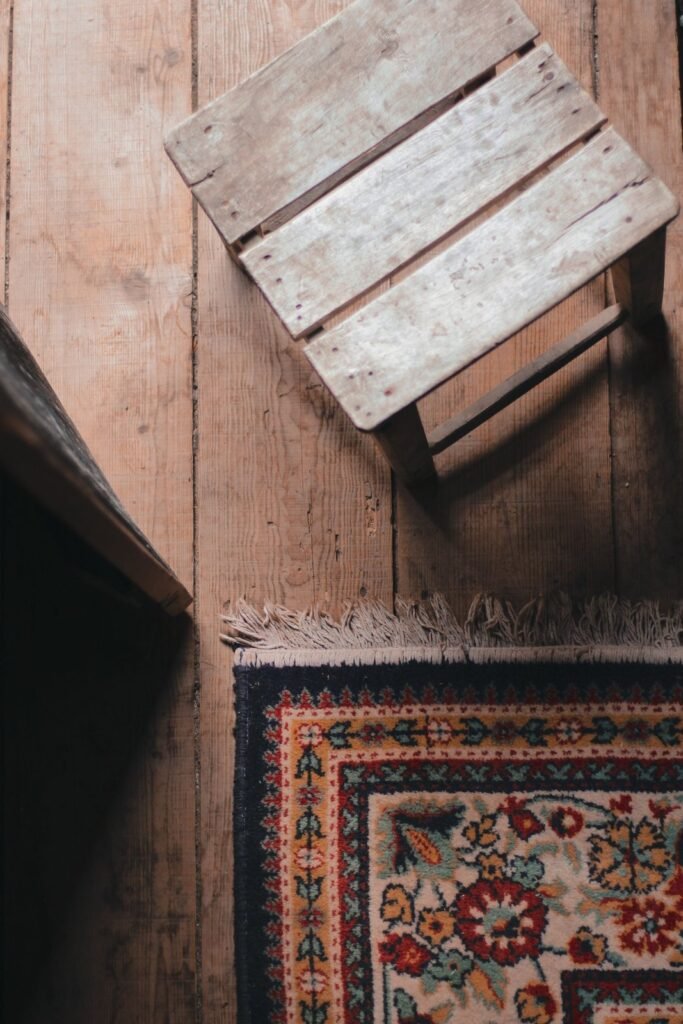
If a cloth is still smelly after a wash, retire it from the kit. The towels in the photo above are a stand-in for that spare, not a claim that decorative bathroom linens belong in the cleanup caddy.
How the surface changes the job

Sealed hardwood, vinyl, and tile are the simpler case, as long as the finish is intact. After you blot, a damp wipe and an enzyme spray on the remaining film are usually enough. Dry the surface so water does not sit in a seam. If liquid has already reached a gap or an unsealed edge, blot again and do not flood the area. If a finish looks cloudy, lifted, or swollen after a large accident, stop and tell the landlord or building manager rather than guessing at a repair product.
A washable area rug is a different job. Lift what you can from the top, then, if the rug is small enough and the care label allows it, take it to a machine or a tub. Get as much moisture out before you move it, so you are not dripping through a hallway. Wash on the setting the label supports, and dry it fully before it goes back down. A damp rug can leave a mark on the floor underneath. If the rug is too large or too delicate for a home machine, blot, treat with the enzyme cleaner as directed, and dry it in place with airflow, lifting the edges if you can.
Wall-to-wall carpet, or a rug you cannot drag to a machine, needs more patience and less water. Blot, apply the cleaner to the affected area, and press the backup towel in until the spot is damp, not wet. Do not pour a bucket into padding you cannot see. Excess water can leave a long-lasting smell in foam and underlay. If the odor is still obvious after the area has dried, you may need a professional cleaner or a conversation with the building, not a second round of household bleach.
Walk the area only when it is dry enough that you are not tracking residue into the next room.
Keep the room from smelling after you are done

Odor lingers when residue is still in the floor or when the wet waste stays in the room. Take the bag out, wash or discard the cloth, wash your hands, and wash the backup towel on a hot cycle if the fabric can take it. A window or a fan helps a small room air out, but airflow is not a substitute for lifting the mess.
Do not mask the smell with a heavy room spray and call the job done. Perfume on top of leftover urine is still leftover urine to a dog or cat. If the spot still smells after it is dry, treat it again with the enzyme cleaner. If a second pass still leaves a strong odor in padding or in a rug you cannot wash, that is a limit of a home kit, not a sign that you should mix stronger chemicals.
Check nearby soft items even if the puddle looked like it stayed on the floor. A throw or the bottom edge of a sofa can wick liquid you did not see at first. If those items are washable, add them to the laundry plan linked above. If they are not, blot and treat only what you can reach, and keep the pet off a still-damp cushion.
Once the floor is dry, put the kit back together. Refill paper towels, replace a cloth you had to throw away, and keep the enzyme bottle closed and upright.
A starting plan, and when to get help
Use this as a first draft:
- Move the pet aside, keep people from walking through the spot, and start blotting. Do not scrub a wet mess deeper.
- Lift any solid waste into a bag, and keep used paper in that bag.
- Skip ammonia-heavy products and mystery bleach mixes on a rental floor. After the first blot, use an enzyme cleaner as directed, then dry the area.
- Treat a sealed hard floor in place. Wash a small, labeled-washable rug if you can, and dry it fully before it goes back down. On carpet you cannot move, blot, treat, and avoid soaking the padding.
- Take the waste out, wash or retire the cloth and towel, and air the room. Do not rely on a heavy scent to hide what is left.
- Do not punish the pet. A single accident is a cleanup job.
Contact your veterinarian if accidents keep happening, if you see straining or blood, or if a house-trained pet suddenly starts going inside. Stress can be part of the picture for some dogs, and signs your dog is stressed can help you read the everyday signals, but it is not a diagnosis and it does not replace a veterinary visit when the pattern has changed. This plan does not invent a medical fix, and it does not promise that any cleaner will erase odor forever. If a rental floor looks damaged after a large mess, stop and involve the landlord or building manager rather than trying a harsher mix.
FAQ
Should I scrub a pet accident into an apartment floor?
No. Blot with paper towels or a dedicated cloth and lift the liquid. Scrubbing a wet spot can drive urine into seams, grout, or rug padding and can fray fibers. Lift any solid waste first, then blot the damp ring that is left, working from the outside toward the center.
Can I use ammonia or bleach after a pet accident on a rental floor?
Do not reach for an ammonia-heavy product. That smell can read like urine to a dog or cat and may invite a return visit to the same spot. A mystery bleach mix is also a poor choice on a rental floor you did not install, because it can damage finish, discolor vinyl or grout, and leave fumes in a small room. After you blot, an enzyme cleaner used as directed is the safer follow-up.
What belongs in a small-apartment pet-accident kit?
Keep a compact kit you can store in one place: paper towels or a dedicated cloth, an enzyme cleaner labeled for pet messes, a backup towel, and a bag for the wet waste. You do not need a large cupboard of specialty tools. Put the kit back together after you use it so the next accident is not a hunt through mixed cabinets.
How do I clean an area rug versus a carpet I cannot move?
If the rug is small and the care label allows a machine or a tub wash, blot first, then wash it and dry it fully before it goes back on the floor. A damp rug can mark the surface underneath. On wall-to-wall carpet or a rug you cannot drag to a machine, blot, apply an enzyme cleaner to the affected area, and avoid soaking the padding. Do not pour a bucket of water into a floor you cannot lift.
When is a pet accident a reason to call the veterinarian?
A single accident is often just a cleanup job. Contact your veterinarian if accidents keep happening, if you see straining or blood, or if a house-trained pet suddenly starts going inside. Those patterns can be medical. Do not punish the pet, and do not treat a cleaner or a homemade mix as a medical fix.
[…] blot first, work from the outside in, and avoid rubbing urine deeper into a carpet — belongs in a guide to cleaning a pet accident on apartment floors and carpets. This article is about choosing the cleaner you reach for after that first blot, and about knowing […]