


If you are looking for the best enzyme cleaners for pet accidents in apartments, start with a narrower question than which bottle sits at the top of a list. The useful question is whether a dedicated enzyme cleaner earns a place in the cupboard, or whether the all-purpose spray you already own is the right tool for the mess in front of you.
This is a buying-style guide for dog and cat parents in US and UK flats, not a ranked test, not a price list, and not a veterinary diagnosis. It will not name brands or invent scores. A bottle can help break down organic stains and odors; it does not erase odor forever, and it does not fix every stain. If a pet is straining, passing blood, drinking far more than usual, or having accidents after a long stretch of reliability, contact your veterinarian. A cleaner treats a surface. It does not explain a sudden change in toileting.
The cleanup method for a fresh wet mess — blot first, work from the outside in, and avoid rubbing urine deeper into a carpet — belongs in a guide to cleaning a pet accident on apartment floors and carpets. This article is about choosing the cleaner you reach for after that first blot, and about knowing when a different product is the wrong match.
When a dedicated enzyme cleaner earns a cupboard spot
An all-purpose spray is built for everyday dirt on sealed surfaces: a sticky counter, a muddy paw print, a general wipe-down. It may contain perfume, surfactants, or bleach-based disinfectants. Those ingredients can make a room smell “clean” for an hour and still leave the organic residue that a dog or cat can smell, which is often why the same spot gets reused. If you have already wiped a hard floor and the odor is gone the next day, you may not need a second bottle for that mess.
A dedicated enzyme cleaner earns a spot when the mess is organic — urine, feces, or vomit — and especially when it has reached a carpet, a rug, a mattress edge, or upholstery, where residue sits below the surface you can see. On a sealed hard floor, you may still want an enzyme product if odor lingers after the visible wetness is gone, but you do not need a specialist bottle for every drop that you already wiped off a washable tile. Keep the specialist for the jobs the general spray cannot finish.

The unlabeled household bottles in a still life like the one above are a useful reminder: most cupboard cleaners are general tools. An enzyme product is a narrower one. You do not need both in every room. You need to know which job you are doing. Hair on a sofa is a different job again, and the tools for that live in a guide to pet hair removers for apartments and a guide to deshedding tools for dogs and cats, not in the stain bottle.
Washable pads can reduce how often urine reaches a carpet, but they do not replace a cleaner when something misses the pad or soaks through. For pad options, see washable pee pads for apartments. If you are still building a house-training routine, a guide to puppy potty training in an apartment will cut down accidents over time. You will still want a plan for the ones that happen.
What “enzyme” means, without miracle claims
In plain language, an enzyme cleaner uses proteins that help break down the organic compounds in urine, feces, and vomit — the parts that leave both a stain and a smell. It is not a perfume that covers the odor, and it is not a bleach that only bleaches what you can see. Used as directed, and given enough contact time on a surface it is meant for, it can help the residue come apart so you can lift more of it out.
That is also the limit. Enzymes are not magic. They need the mess to be reachable, which is why blotting a fresh accident still comes first. They need time; wiping a product off in ten seconds is not the same as letting it work. Moisture and temperature matter too, which is why a soaked pad in a cold room can still smell after a light mist. They do not promise that a year-old stain in a thick carpet will vanish, or that a pad of subfloor under a poorly sealed joint will smell like nothing again. If a label shouts that one spray eliminates all odor forever, treat that as marketing, not as a plan.
Read the label for the surfaces it names, the contact time, and any note about testing a hidden area. If the only instructions you can find are a lifestyle photo and a slogan, pick a different bottle. You are choosing a household product to leave on a rental floor, not a scent to spritz in the air.
Carpets, sealed hard floors, and upholstery are different jobs
Carpet and area rugs give urine room to spread downward and sideways. A product meant for carpet usually needs enough liquid to reach the pad without soaking a ceiling below you, and enough time to work before you blot or extract. A hard, sealed floor — finished wood, vinyl, or tile with intact grout and no open seams — is a simpler surface if you get to it quickly, because the mess sits on top. Unsealed grout, worn finish, or gaps between boards can still hold odor, and those are closer to a porous-surface problem than to a quick mop.
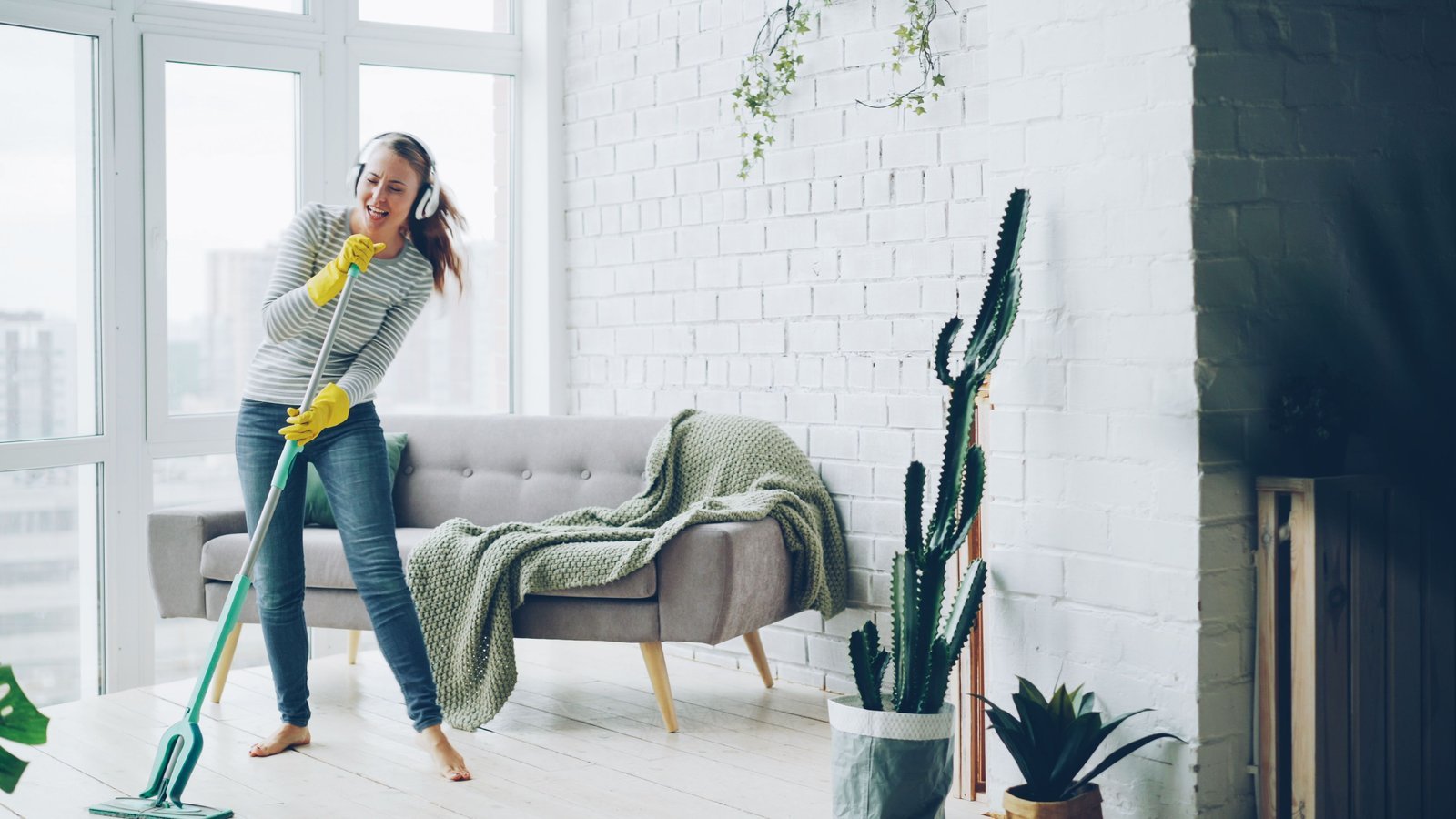
Upholstery and mattress edges are slower, more delicate jobs. Too much liquid can leave a wet core that smells worse as it dries. Too little never reaches the residue. Check whether the cleaner is named for fabric, test a hidden seam, and go slowly. If the accident is on a cushion cover you can zip off, follow the fabric care label and treat the foam only if the product allows it.
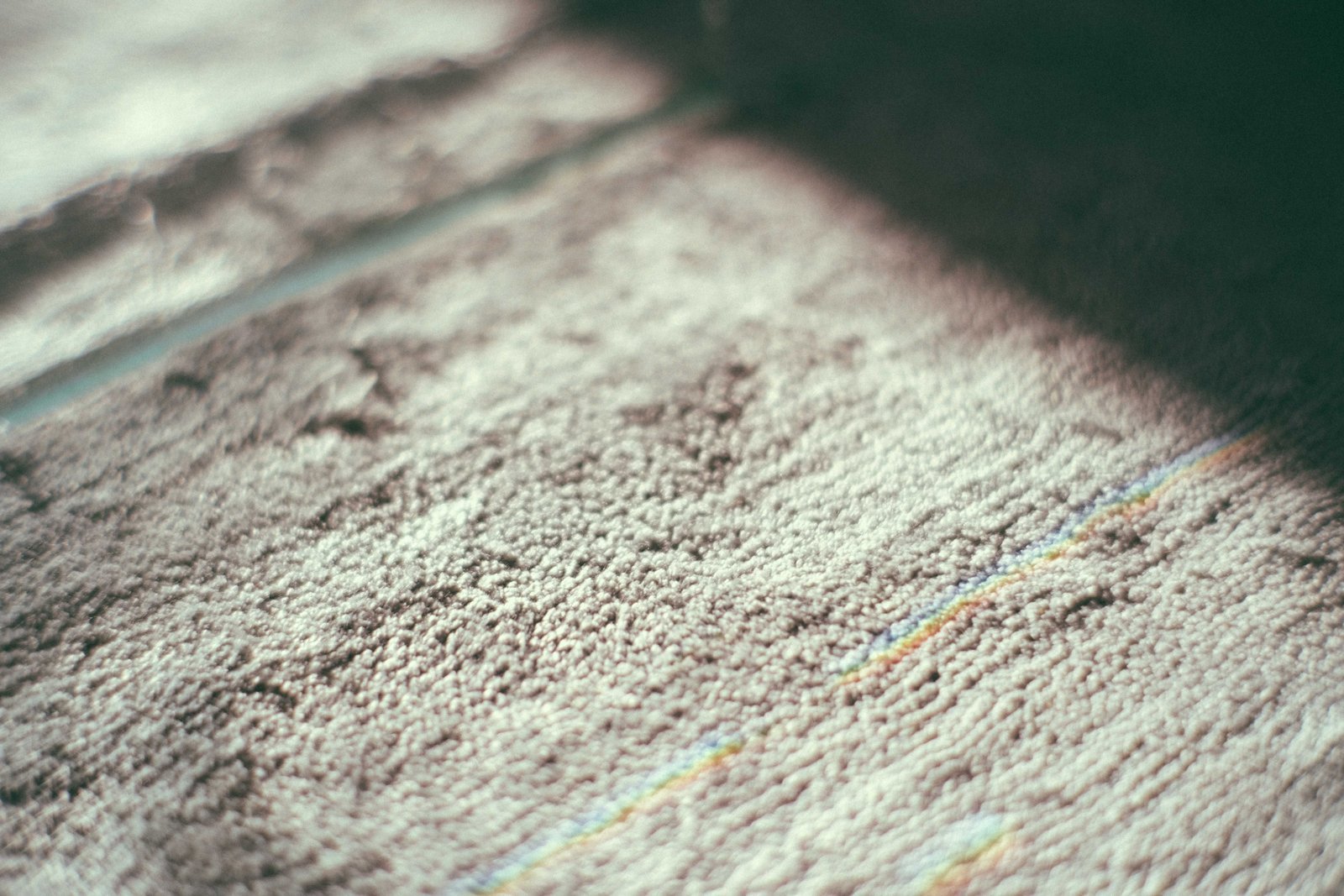
The close-up above is a clean textured rug, not a stained one, and that is the point: carpet fibers hide residue you cannot see from a standing height. If a general spray leaves the surface looking fine and the odor returns when the room warms up, the job was not finished, and an enzyme cleaner meant for carpet is the more precise tool.
Do not mix jobs. A floor mop is not an upholstery plan. A carpet product may be too wet for a wood finish. When in doubt, read the surface list on the bottle and use less rather than flooding a rental floor.
Rental-safe use, and what never to mix
Apartments add a constraint houses sometimes hide: the flooring may not be yours, and a bleach ring or a cloudy patch of finish is hard to explain at move-out. Test a hidden spot first, especially on dyed carpet, sealed wood, and any stone. Wait until it dries before you judge color change. Do not bleach the wrong surface. Bleach can discolor carpet, damage some hard floors, and react badly with the wrong chemistry.
Never mix bleach with ammonia, and never pour bleach on top of an enzyme cleaner. Those mixes can create dangerous fumes or waste the enzyme product you just applied. If you already used a bleach or ammonia product on a spot, ventilate, let it dry, and read the enzyme label before you layer anything else on the same area. If the label says to rinse a previous cleaner first, do that.
Open a window if you can, and keep pets off the wet area until it is dry. A cone, a gate, or a closed door is more useful here than another spray. If the area is a hallway everyone has to cross, a towel over the damp patch is a temporary barrier, not the treatment. If you also need a simple kit for cuts and punctures, that is a different cupboard item, covered in a guide to pet first-aid kits for apartments.
Treating a stain is not the same as covering a smell
A fragranced spray can make a room smell like citrus while the urine residue is still in the carpet. Your pet will often still find that spot. Treating the stain means breaking down and lifting the organic material, then letting the area dry. Covering a smell means adding a new scent on top. They are not interchangeable, and a cover-up can make it harder to tell whether the original mess is actually gone.
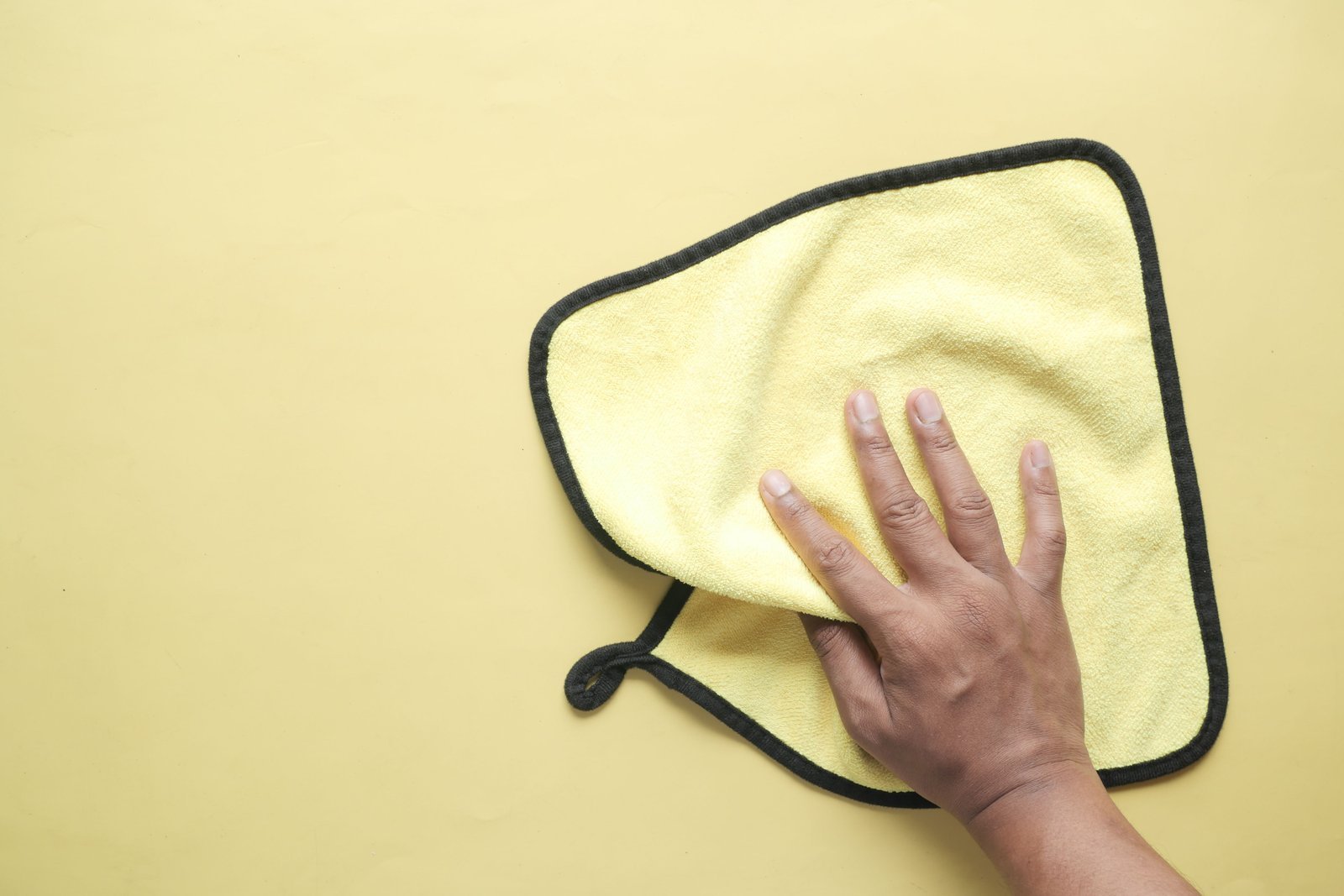
A fresh accident still starts with a cloth or towel and blotting, not with a heavy spray. The yellow cloth above is a stand-in for that first step, not a picture of a stained floor. Once the excess liquid is up, apply the cleaner the label describes, give it the time it asks for, and only then decide whether a second pass is needed. If odor lingers on a dog between baths, that is a grooming question, not a floor question, and it belongs in a guide to freshening a smelly dog between baths in an apartment. Shedding that dulls a carpet is also a separate routine, covered in how to manage dog shedding in an apartment and how to manage cat shedding in an apartment.
Accidents that happen while you are out are a management problem as well as a cleaning one. A guide to leaving a dog home alone in an apartment can help with timing and setup. If a cat is peeing away from the box, check health first, then look at litter box setup in an apartment before you assume the floor cleaner was the weak link.
Choose the bottle for the surface and the kind of mess, not for a slogan and not for a year on the label. Keep one dedicated enzyme cleaner for organic accidents on carpet, fabric, or lingering floor odor. Keep a general spray for everyday dirt. Blot first, test a hidden spot, skip bleach on the wrong surface, and do not pour bleach onto an enzyme product. That is a cupboard plan you can repeat, without a ranked list or a promise the odor will never return.
FAQ
Do I need an enzyme cleaner if I already have an all-purpose spray?
An all-purpose spray is often enough for everyday dirt on a sealed surface. A dedicated enzyme cleaner is more useful for organic messes — urine, feces, or vomit — especially on carpet, rugs, or upholstery, where residue can sit below the surface and keep attracting your pet back to the same spot.
What does an enzyme cleaner actually do?
In plain language, it uses proteins that help break down the organic compounds in a pet accident, which can reduce both stain and odor. It is not a perfume and it is not a guarantee. It needs contact time, a reachable mess, and a surface the label names. It does not erase odor forever or fix every old stain.
Can I use the same bottle on carpet, wood, and the sofa?
Not always. Carpets, sealed hard floors, and upholstery take different amounts of moisture and have different risks. Read the surface list, test a hidden spot, and avoid flooding fabric or an unsealed or worn wood finish. When a product is named for only one surface, believe that limit.
Is it safe to use bleach on a pet accident in a rental?
Do not bleach the wrong surface, and never mix bleach with ammonia or pour bleach on top of an enzyme cleaner. Bleach can discolor carpet and damage some floors, and the wrong mix can create dangerous fumes. Test a hidden area with the product you do intend to use, and follow the label.
Should I spray first or blot first?
Blot a fresh wet mess first. That cleanup sequence belongs with the accident-cleaning method, not with a heavy first spray. Once the excess liquid is up, apply the enzyme cleaner as the label describes and give it time to work before you decide on a second pass.