

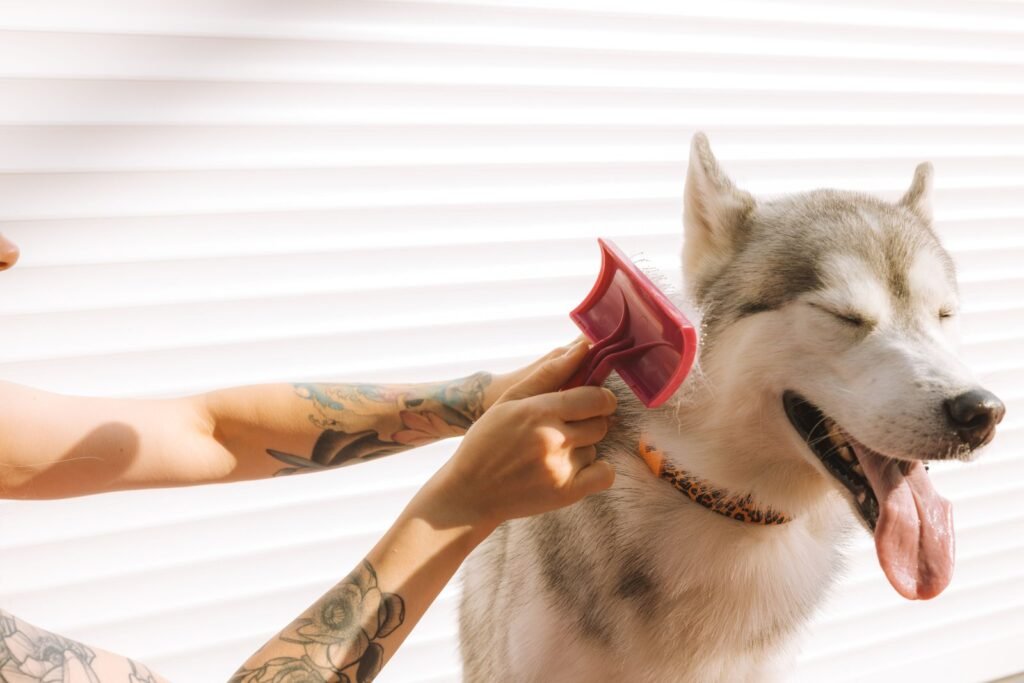
If you are looking for best deshedding tools for dogs and cats, you are not shopping for a scorecard. You are deciding whether one tool is worth the drawer space in a small home: a tool that can pull loose undercoat during a heavy shed, without scratching the skin, and without promising that the sofa will stay clean forever.
This is general information for US and UK pet parents in flats and small homes, not a veterinary diagnosis and not a grooming-school lesson. These tools do not stop shedding. They collect hair that is already ready to come out. There are no honest model lists, prices, or “90% less hair” claims in this guide. If you see sudden patchy hair loss, irritated skin, or flea dirt, that is a veterinary question, not a reason to buy a more aggressive tool.
When a deshedding tool actually helps
A deshedding tool is most useful when there is a dense undercoat, or when a seasonal blow-coat is already coming out in handfuls. Some double-coated dogs drop a striking amount of soft undercoat once or twice a year. A few cats with a thick undercoat do something similar, though many cats shed a little all year. In those weeks, a tool designed to reach loose undercoat can shorten the job and keep more of the hair on a towel instead of on the floor.
It is less useful – and sometimes the wrong tool – when the coat is short and single, when the pet already hates grooming, or when the hair you want gone is not loose undercoat but a mat, a dirty coat, or a medical change. If you are only seeing a light year-round shed, and a regular brush already collects it in a few minutes, you may not need another tool in the drawer. A regular brush, used in a calm routine, is often the more honest everyday choice. Brushing a dog at home and brushing a cat at home are that regular routine. This article is the extra tool you might buy, and when it is worth owning.
A bath and a thorough dry can also loosen a lot of hair, especially on a dog. That does not mean a bath is a weekly default. How often to bathe a dog depends on the coat and the skin, and bathing a dog in an apartment bathroom is a separate, wet job. Bathing a cat at home is even more limited. A deshedding tool is not a substitute for a bath when the coat is dirty, and a bath is not a substitute for a tool when you only needed to collect loose undercoat.
If the coat is a serious project – a heavy blow-coat, a pet that will not stay still, or a long coat that is heading toward tangles – a professional groomer can be the kinder choice. That is not a failure of the drawer tool. It is an honest read of what you can do safely at home.
Undercoat rakes, deshedding combs, and rubber curries
Tool names on a package can be vague, so it helps to think in types.
An undercoat rake has a row of widely spaced, often fairly long teeth. It is meant to reach through a longer topcoat and collect loose undercoat. Used gently, in the direction of the coat, it can help a dense, double-coated dog during a blow-coat. Used with a heavy hand, or on a thin or short coat, it can scratch the skin. It is usually a poor first choice for a cat that will not stand for a long, raking stroke.
A deshedding comb or deshedding blade-style tool has a finer edge or closer teeth designed to collect loose hair from the undercoat. Some people do well with one on a thick dog coat, in short passes, lifting the tool often so hair does not pack in the teeth. It is still a regular grooming tool, not a guarantee. If you cannot see the skin now and then as you work, you are going too long or too hard.
A rubber curry – a rubber palm brush or a similar flexible rubber tool – is often a gentler option on a short coat, and some dogs enjoy the massage. It can lift loose hair and bring it to the surface, especially after a walk or a dry-down. It is not magic on a long, dense undercoat, and it should not be used as a scrub on irritated skin.
A regular slicker, pin brush, or soft bristle brush still belongs in the same drawer. For many short coats, and for many cats, that everyday brush is the tool you will actually use. If a photo or a product page shows a slicker or a pin brush, treat it as a regular brush, not as a specialized deshedding tool. Buy the type that matches the coat you have, not the type with the strongest claim on the package.
Whatever you choose, start lighter than you think you need. Hold the skin steady with your other hand so you are not pulling the hide. Work in the direction the coat grows, in short strokes, and lift the tool at the end of each pass. Pause and look at the skin. If it looks pink, or the pet flinches, switch to a gentler tool or stop. Empty the teeth or the rubber face often; packed hair makes the next stroke harsher than you intended. Do not saw back and forth in one spot, and do not press until you feel the tool against bone or a thin-skinned area such as the flank, the armpit, or the belly.
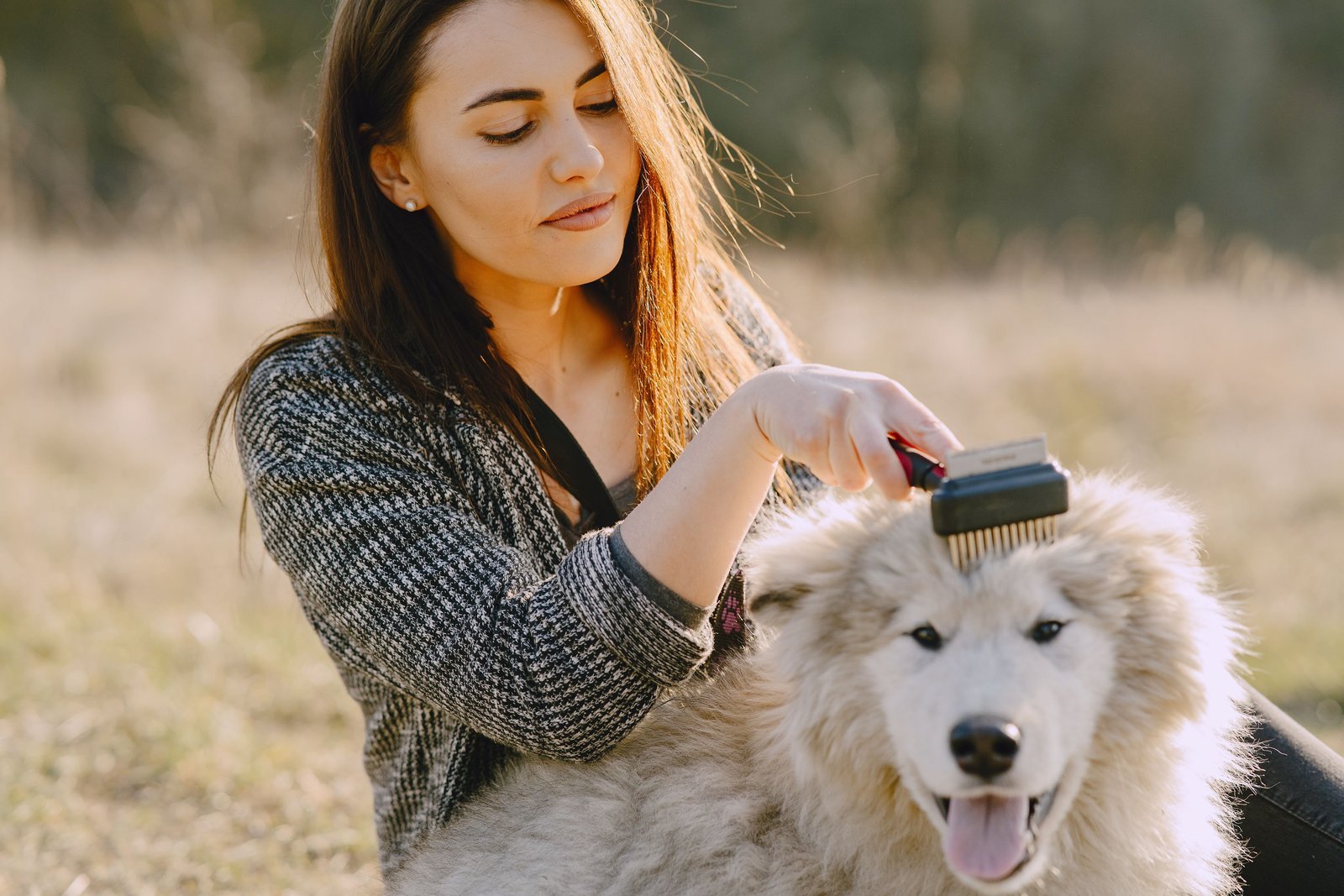
A towel, a window-light spot, and a floor pass
In an apartment, the tool is only half the job. Put a towel, a sheet, or a washable mat down first, and work over it so the loose hair has a place to land. A window-light spot helps you see what you are doing and whether you are getting too close to the skin. You do not need a salon table. A bathroom floor, a hallway, or a corner of the living room with enough clearance is enough, as long as the pet can stand, sit, or lie comfortably.
Work in short passes. Stop and pull the hair out of the tool often. Praise, and take a break before the pet wriggles off. During a heavy blow-coat you may need several short sessions in a week rather than one long one. Off-season, once a week, or whenever you already brush, may be plenty, and some pets will not need the specialized tool at all for months. When you are done, fold the towel inward, take it to the bin or the wash, and do a quick floor pass with a vacuum, a lint roller, or a damp cloth so the rest of the home does not inherit the session. Managing dog shedding in an apartment and managing cat shedding in an apartment are the broader home-cleaning plans. This session is one source of hair those plans have to catch.
If the pet sleeps on a bed or a sofa throw, plan to wash that cover after a heavy shed session rather than leaving a dense layer to work into the fabric. Washing dog beds, toys, and leashes at home is that laundry step. It is not a reason to skip the towel on the floor while you groom.
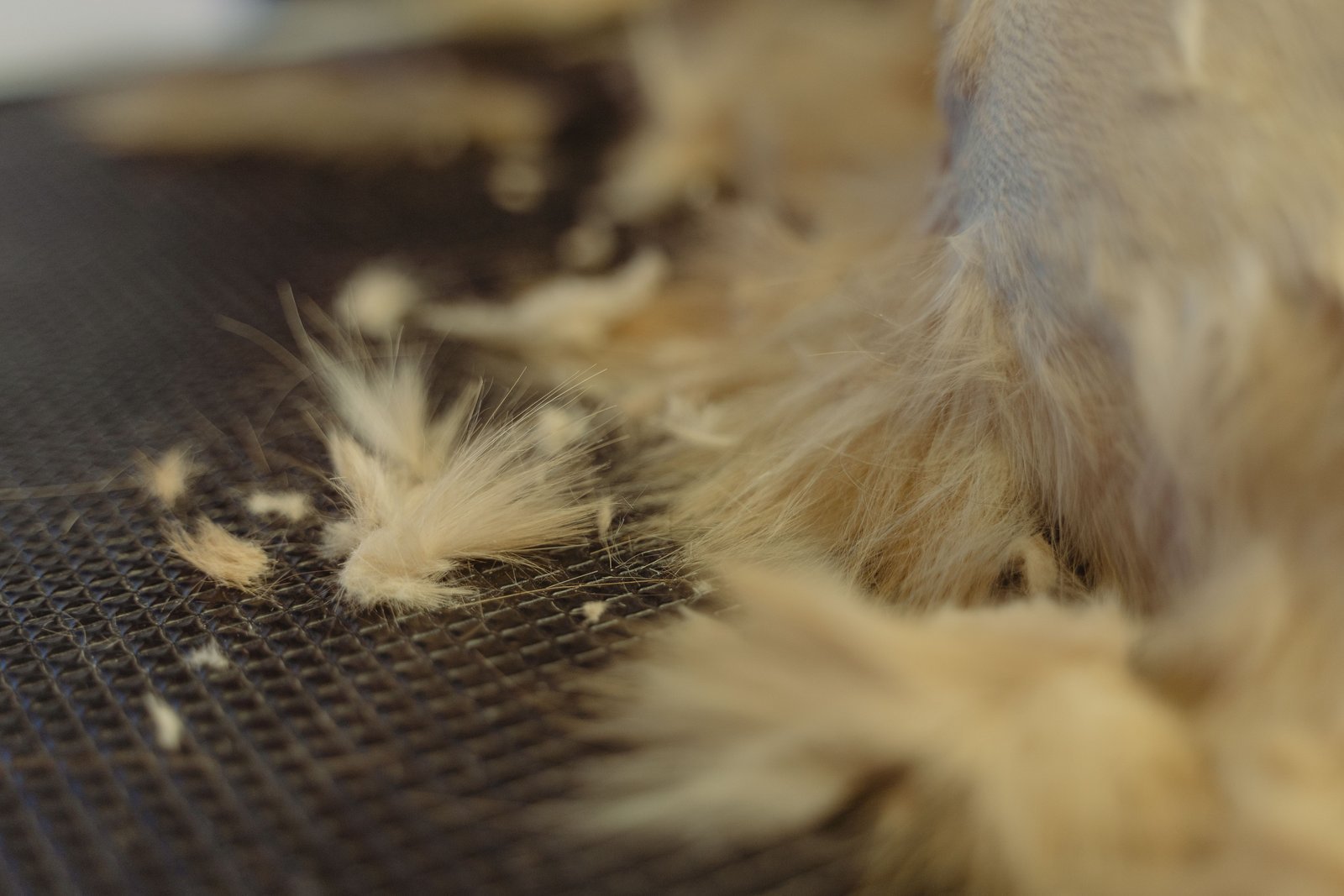
Dogs, cats, short coats, and long coats
A dog with a dense undercoat, especially during a blow-coat, is the typical candidate for an undercoat rake or a deshedding comb, used gently and not every day. A short-coated dog may do better with a rubber curry or a regular brush, and may only need the specialized tool rarely, if at all. Do not shave a double coat as a default “deshed hack.” Shaving can change how the coat grows back and does not “turn off” shedding. If a groomer or a veterinarian has a specific reason to clip, that is their advice, not a general shortcut.
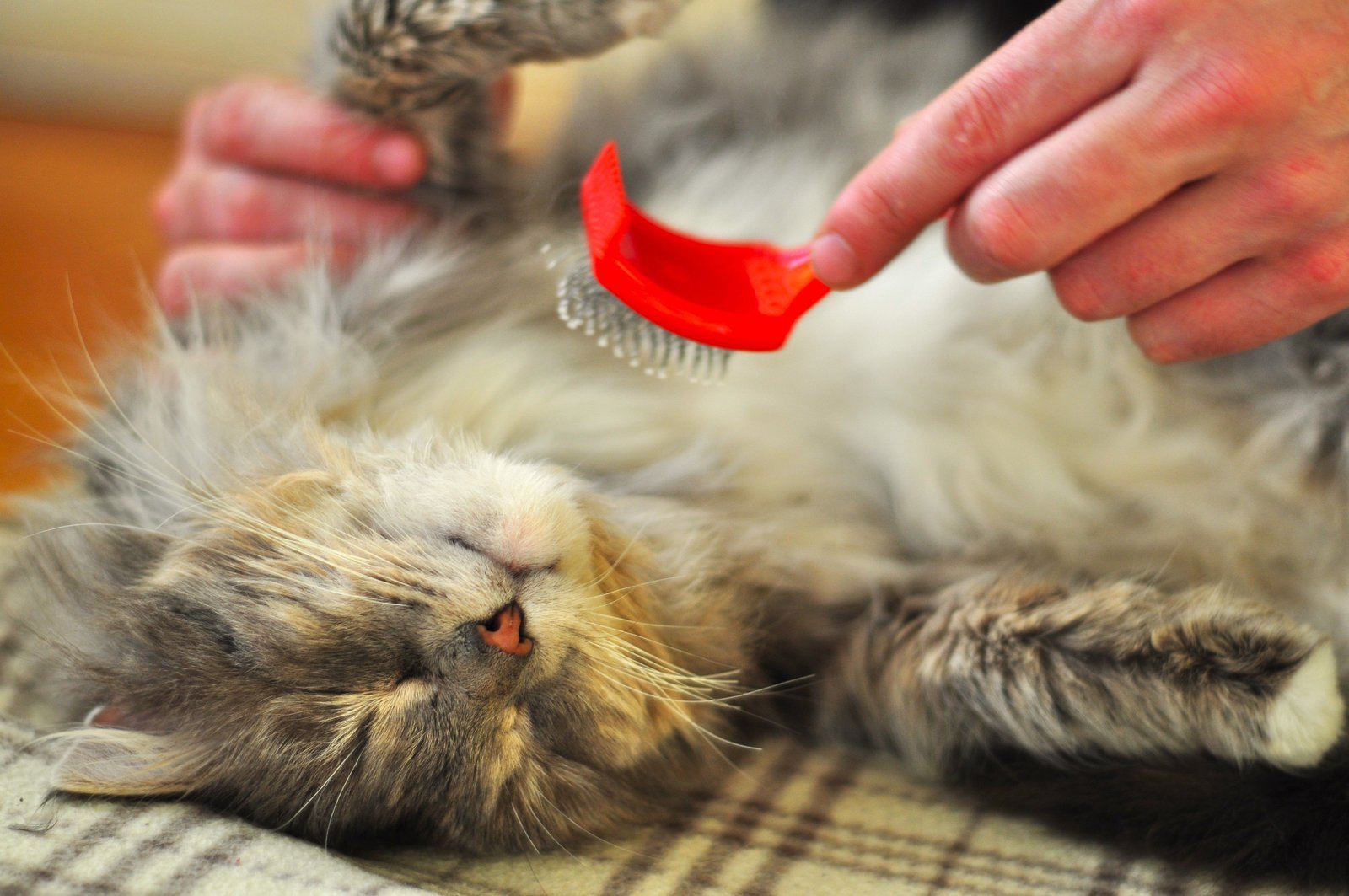
A cat is usually a shorter, more careful session. Many cats accept a soft brush or a metal comb for a minute or two and then leave. A heavy rake is often too much. Never use a tool on a squirming cat that may get cut, and never use a deshedding tool to try to pull out mats. Removing mats from a cat at home is a different, slower problem. If the mat is tight, close to the skin, or the cat will not stay still, stop and get professional help.
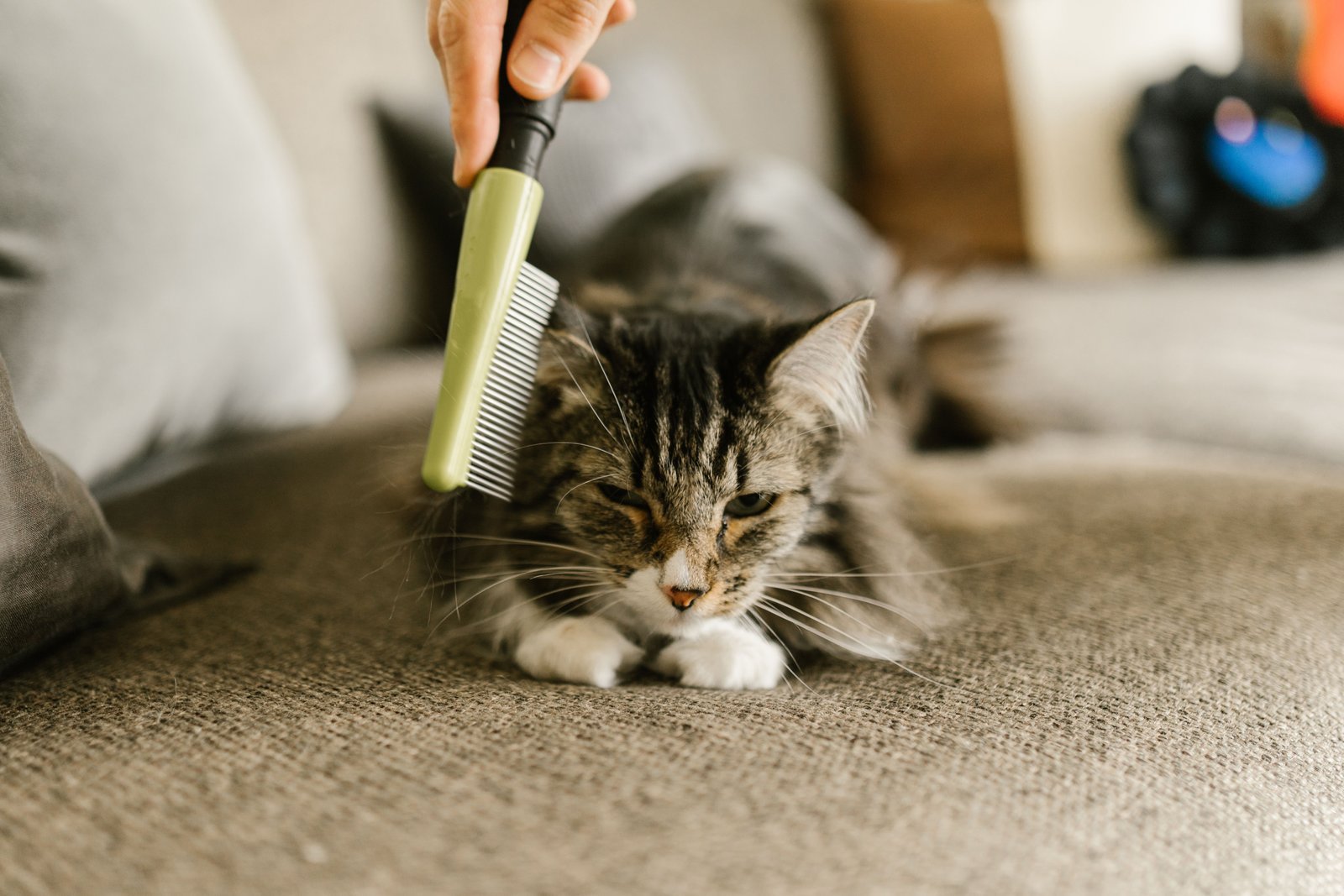
Long coats, in either species, need you to work in sections and to watch for tangles as you go. Short coats need a lighter touch so the tool does not scrape. In both cases, stop if the skin looks pink, the pet flinches, or you are only getting a little hair and a lot of protest.
What these tools cannot do, and when to stop
A deshedding tool cannot stop shedding, “waterproof” a sofa, or replace the regular brush you should already be using. It cannot treat irritated skin, flea dirt, or sudden patchy hair loss. Those are veterinary questions. It cannot safely go through mats. And it cannot make a frightened pet enjoy the process because the package promised a faster shed.
Stop if the skin is pink, sore, or flaky, if you see flea dirt, or if the pet cries, snaps, or tries to bolt. Stop if the tool is catching and pulling hair that is not ready to come out. Leave enough time that you can end on a quieter note, even if some loose hair remains. You can do another short session later. You cannot undo a scratch or a bad fright.
If you are not sure which type of tool fits this coat, a veterinarian or a groomer who can see the pet is a better guide than a ranked list. The honest test in a small home is simple: does this tool collect loose hair without hurting the skin, and can you use it in a short, calm session that you will actually repeat? If the answer is no, a regular brush, a bath-and-dry when it is appropriate, or a professional appointment is the better use of the drawer.
FAQ
Will a deshedding tool stop my dog or cat from shedding?
No. These tools collect hair that is already loose or ready to come out. They do not stop shedding, and no honest guide can promise a set percentage less hair on the sofa. A regular brush, a towel, and a floor pass still matter.
When is a deshedding tool worth buying?
It is most useful for a dense undercoat or a seasonal blow-coat, when loose hair is already coming out in handfuls. For many short coats, and for many cats, a regular brush or a gentle comb is the more honest everyday tool. A professional groomer is the better choice if the pet will not stay still or the coat is a serious project.
Can I use the same tool on a dog and a cat?
Sometimes a soft brush or a rubber curry can be used on both, but a heavy undercoat rake that suits a thick dog coat is often too much for a cat. Use a lighter touch on a cat, keep the session short, and never work on a squirming cat that may get cut. When in doubt, keep a gentler tool for the cat.
Should I shave a double coat to reduce shedding?
No. Do not shave a double coat as a default shortcut. Shaving can change how the coat grows back and does not turn shedding off. If a veterinarian or a groomer has a specific reason to clip, follow that advice rather than treating a close shave as a home “deshed” method.
The skin looks irritated, or the hair is coming out in patches. Should I keep brushing?
Stop. Irritated skin, flea dirt, and sudden patchy hair loss are veterinary questions, not a reason to use a more aggressive tool. Do not work over mats either. Resume only if a veterinarian has said the coat and skin are all right to groom.
[…] group when they fit in a closet or a hall cupboard. A tool you use on the coat is a different job. Best deshedding tools for dogs and cats covers on-animal grooming. How to brush your dog at home and how to brush a cat at home are the […]