

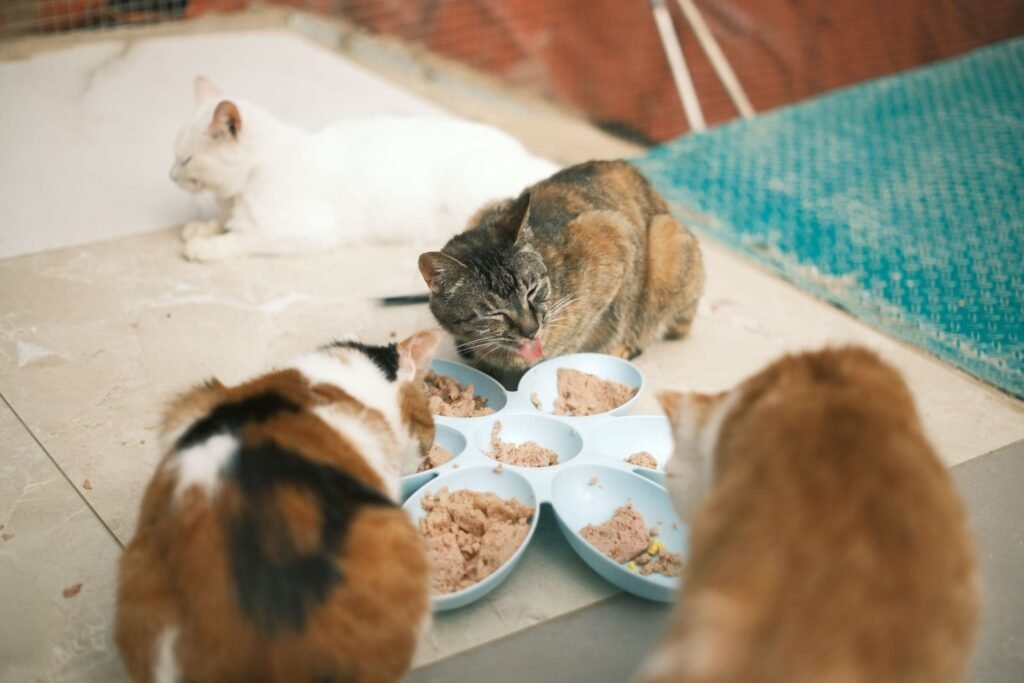
If you want to switch a cat from dry food to wet food, treat it as a texture-and-format change, not as a new-brand rollout and not as a debate about which format is “better.” The useful plan is a gradual overlap: the familiar kibble stays in the rotation while wet food is added in small amounts, and you watch stool and appetite before you take the dry food away.
This is general information for cat parents in the US and UK, not a veterinary diagnosis. It is not a reason to invent a urinary, kidney, or similar medical story for the switch. If your veterinarian has already recommended wet food, follow that plan and still make the change gradually unless the clinic gave you a different schedule.
What this switch is, and what it is not
Wet versus dry cat food is the format comparison. This page is the practical move from a dry-only bowl to a bowl that includes, and may later become, wet food. How to switch cat food is the broader changeover article, including formula or brand changes. Use that plan if you are also changing the recipe. Here, the hard part is often the texture itself: a cat that has only ever eaten kibble may sniff a pate, lick the gravy, or walk away.
If the cat is already a hesitant eater, how to get a picky cat to eat is the fussier-appetite article. A topper can help some cats try a new wet food, but using cat food toppers without overfeeding is the portion article; do not stack toppers on a full dry ration and a full wet ration at the same time. If the cat currently grazes all day, switching a cat from free feeding to scheduled meals may need to happen alongside this change, because wet food should not sit out for hours the way some dry food does.
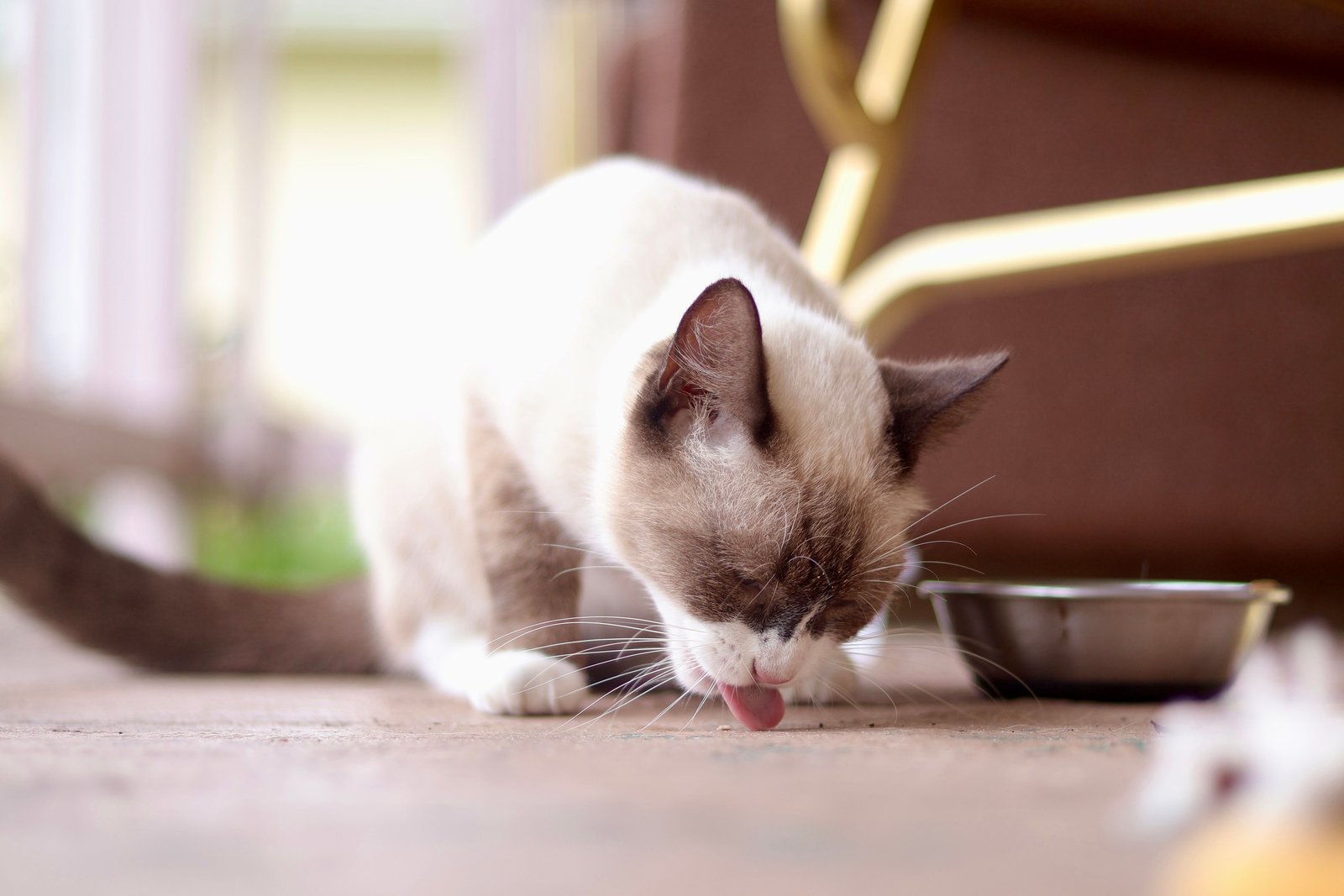
The official title mentions a food bowl outdoors; what you can see is a metal bowl on a hard floor and a cat licking the floor beside it, with a chair in the background. This is not a photograph of an apartment counter, and you cannot see whether the bowl holds wet or dry food. It is still a useful reminder that wet food can travel, drip, and get cleaned up around the bowl. A shallow dish, a wipeable mat, and a short serving window help more than a deep bowl left out all afternoon.
A gradual overlap, not an overnight flip
Keep the current dry food available at first. Offer a small amount of wet food at one meal, then increase the wet portion and decrease the dry portion over days, not over one evening. There is no single calendar that fits every cat. A cautious overlap is usually kinder than a sudden empty kibble bowl and a new texture the cat will not touch.
Serve the wet food slightly warm, or at least not fridge-cold, if the cat hesitates. Stir a little of the new wet food into a small amount of the familiar kibble, or place a teaspoon of wet food beside the dry food in the same dish, so the smell is there without a full texture swap. If the cat finishes the wet food and leaves the kibble, you can slowly shift the ratio. If the cat ignores the wet food, go back to a smaller amount and try again at the next meal rather than leaving a full tray out until it dries.
Watch stool and appetite every day of the overlap. Loose stool, a sudden refusal to eat, or a cat that hides at mealtime is a reason to slow the change, go back a step, or contact your veterinarian if the change is sharp. A slightly softer stool for a day can happen when a diet changes. A cat that stops eating, vomits repeatedly, or has a lasting litter-box change needs a clinic, not a new flavor.

This cat is eating from a bowl, but the photograph is a sunset silhouette, not a small-kitchen serving shot, and you cannot tell the format of the food. That is still the job in week one: the cat is actually eating. A perfect plated wet-food photograph is less useful than a bowl the cat will use.
How much you should feed a cat and how to read a cat food label help you compare calories and feeding amounts when you add a second format. Wet food and dry food are not cup-for-cup equivalents. Follow the label as a starting point, then adjust with your veterinarian if the cat is a kitten, a senior, or already on a prescribed diet. Choosing food for an indoor cat and choosing food for a senior cat are the life-stage articles; they do not replace a gradual texture change.
Serving and storing wet food in a small kitchen
Opened wet food does not keep like a sealed bag of kibble. In a small kitchen, that is the practical problem as much as the cat’s opinion. How to serve wet cat food in a small apartment is the serving article, and how to store cat food in a small apartment is the storage article. Use them. The short version for this switch is: serve only what the cat is likely to finish in one sitting, cover and refrigerate leftovers promptly, and throw out food that has sat out too long rather than offering it again.
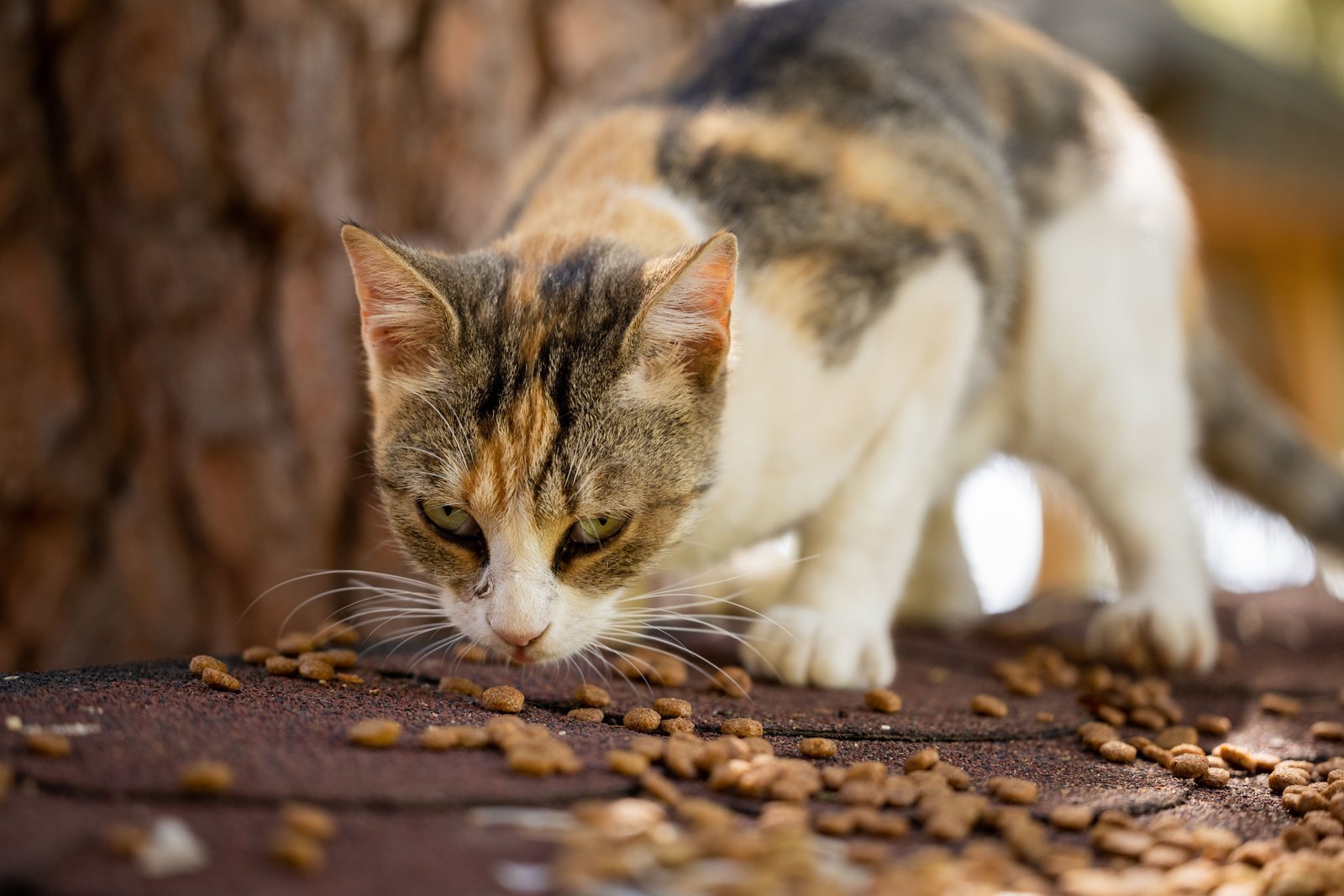
This is clearly dry food, and it is outdoors, not in a kitchen. The official title only says a cat is eating; the visible food is scattered kibble. That is a fair picture of the starting diet, not of the wet food you are adding. During the overlap, keep the familiar kibble in a bowl or a measured meal, not spread across a floor, so you can actually see how much the cat is eating.
A small apartment also makes waste more annoying. Single-serve trays or a can split across two meals can be easier than opening a large can you cannot finish. How to tell if cat food has gone bad is the spoilage article; if the food smells off, looks dried out, or has been sitting in a warm room, do not serve it. Wash the dish between wet meals so old food does not put the cat off the new texture.
If the cat will only lick the gravy and leave the pate, you can mash the food, add a few drops of warm water, or try a different texture later. You do not have to win the format change in one week. You also do not have to finish every can if the cat has made it clear that flavor will not be eaten. A slow, uneventful overlap is the goal, not a pantry full of rejected trays.
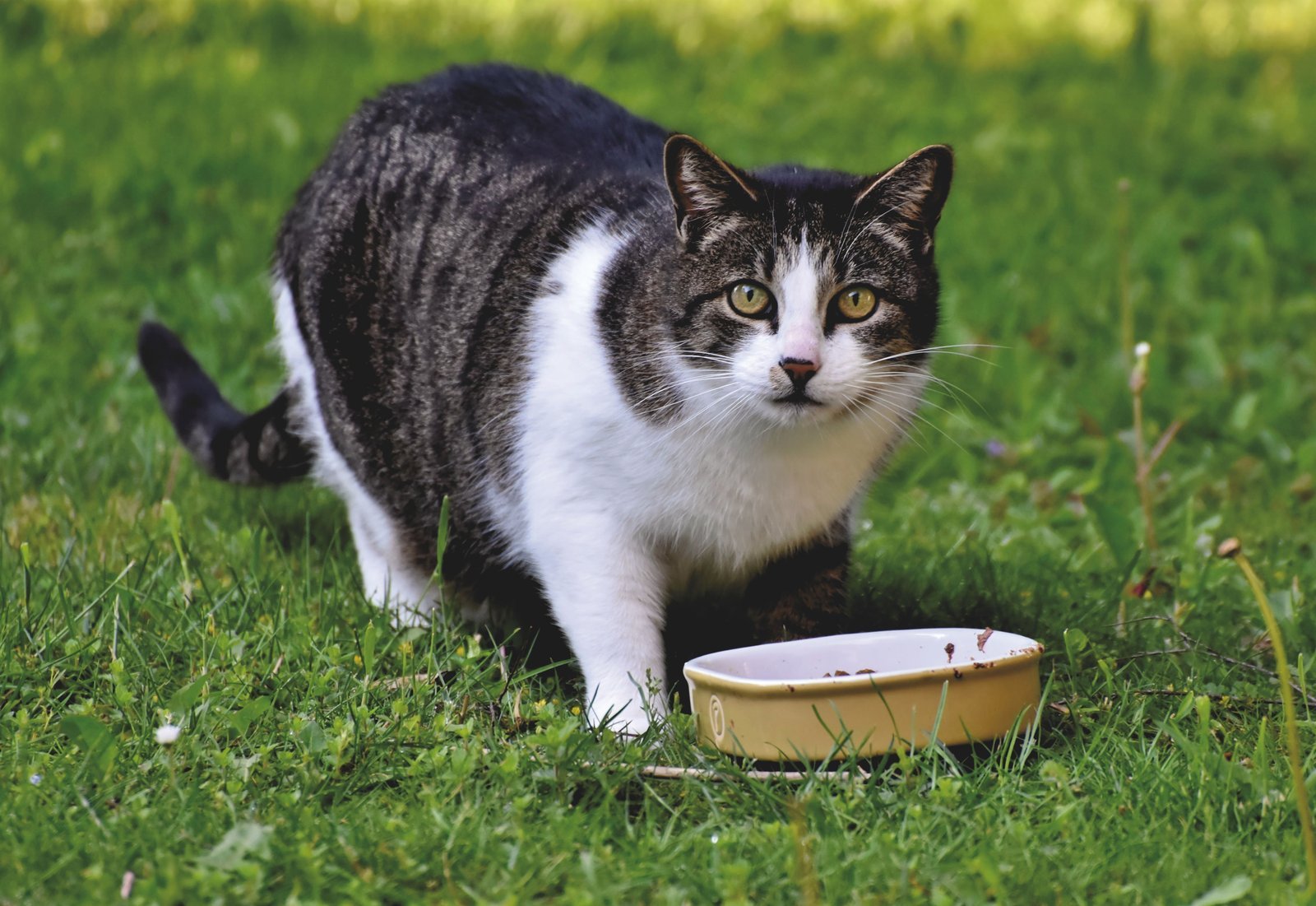
The official title says the cat is eating on the grass; what you can see is a cat standing beside a yellow dish outdoors, looking at the camera, with a little residue in the dish. This is not an indoor kitchen, and it is not a clear mid-bite of wet food. It is still a useful picture of a shallow serving dish, which is often easier for a texture change than a deep bowl the cat has to fold into.
Give the change time, and keep the overlap honest. If a veterinarian asked for wet food, do not delay the start, but do not skip the gradual steps unless you were told to. If you are making the change for convenience, palatability, or a preference of your own, the same gradual rule still applies. A cat that keeps eating, uses the box as usual, and slowly accepts the new texture is doing the job, even if some kibble remains in the plan for a while.
If the cat stalls, and how long to keep some kibble
Some cats accept a new wet texture in a few meals. Others stall after the first sniff and need a longer overlap. If the cat walks away, do not turn the next meal into a standoff. Put the uneaten wet food away, offer the familiar dry food so the cat still eats, and try a smaller wet portion later in the day. A hungry cat is not automatically a more willing cat, especially when the problem is texture rather than appetite.
You can also change one variable at a time. Keep the same wet recipe for several days before you try a new flavor, and keep meal times consistent so you can tell whether the cat is refusing the food or is simply not hungry yet. If you recently changed the brand or the calorie amount as well as the format, slow down and return to the familiar dry food plus a teaspoon of wet food until eating looks steady again.
It is fine if some kibble stays in the plan after the cat is eating wet food well. This article is not a rule that every cat must become wet-only. Some households keep a measured amount of dry food for convenience or for a food-dispensing toy, and keep wet food for the main meals. What matters is that the change you did make was gradual, that portions still add up, and that leftover wet food is not sitting out.
If you share a small kitchen with a dog, feed the cat in a quiet spot the dog cannot reach, and pick up the wet dish when the meal is over. A dog that finishes the cat’s tray will make the overlap look more successful than it is, and it can also teach the cat to rush or to walk away. The same clean-up habit helps if you have more than one cat: serve separately at first so you can see which cat is actually eating the new food. A short, calm meal in a predictable place will tell you more than a free-for-all around one shared tray, and it keeps the overlap easier to judge from one day to the next. If you cannot see who ate what, you cannot tell whether the new texture is actually working.
FAQ
Can I switch a cat from kibble to wet food overnight?
It is usually kinder not to. Keep the familiar dry food in the rotation, add wet food in small amounts, and change the ratio over days while you watch stool and appetite.
What if my veterinarian already recommended wet food?
Follow the clinic’s plan, and still make the texture change gradually unless you were given a different schedule. This article is general feeding help, not a diagnosis and not a reason to invent a medical story for the switch.
What should I watch during the overlap?
Appetite and stool, first. Slow down or step back if the cat stops eating or has a lasting litter-box change, and contact your veterinarian if the cat will not eat, vomits repeatedly, or seems unwell.
How do I serve opened wet food in a small kitchen without waste?
Offer only what the cat is likely to finish in one sitting, cover and refrigerate leftovers promptly, and throw out food that has sat out too long. Wash the dish between wet meals.
What if the cat only licks the gravy and leaves the rest?
Try a smaller amount, mash the food, or add a few drops of warm water. You can also keep a longer overlap with the familiar kibble rather than forcing a full tray the cat will not finish.