


If you are looking for the best cat carriers for vet visits and apartment travel, you probably need a way to get a cat from a third-floor flat to a clinic, or down a corridor to a friend’s car, without a dash into the stairwell and without a carrier that has no place to live afterward.
A useful mindset is this: you are choosing a secure, well-ventilated box or bag your cat can eventually tolerate, and practicing with it at home long before the appointment. The “best” carrier is the one that fits your cat, zips or latches reliably, and can be stored in a rental. It is not a ranked score, and it is not a personality transplant.
This is general information for cat parents in the US and UK, not a product test and not a promise that every cat will ride calmly. Cats vary. If your cat seems painful, has trouble breathing, overheats, or panics to the point of injury, stop and contact a veterinarian or seek urgent help rather than pushing through a journey.
What a carrier has to do in an apartment, not on a packing list
A carrier has three jobs: keep the cat inside, let them breathe and settle, and get you through doors, lifts, and pavements with both hands reasonably free. In a building hallway, a loose wrap-and-hope dash is a bad idea. A startled cat can slip into a stairwell, a neighbour’s landing, or a closing lift.
The carrier is also a piece of furniture you have to store. If it only comes down from a high shelf once a year, your cat will treat it as a trap. A model that folds flat can help in a studio. A rigid carrier that doubles as a familiar hide can help in a different way. Neither is automatically better.
This is not a harness guide and not a dog-travel article. A carrier is the standard, safer way to move most cats through public spaces. If a trip already has your cat hiding or overgrooming, take signs your cat is stressed seriously and build in more at-home practice, rather than buying a second style of bag in a rush.
Hard-sided, soft-sided, and backpack-style: choose a type, not a ranking

You will see three broad types. None of them wins a universal “best” title. They trade rigidity, weight, storage, and how you carry the cat.
Hard-sided carriers are typically plastic shells with a grated door and a top or side opening. They are often easier to brace in a car, easier to wipe after a messy visit, and harder for a determined cat to collapse or claw through, though they take more cupboard space. Some open from the top, which can make lifting a reluctant cat in or out calmer than pushing them through a front door.
Soft-sided carriers are fabric bags with a frame, mesh panels, and zippers. They are usually lighter and can squash into a closet more kindly than a hard shell. Zippers must actually close, seams should not gap, and the bag should keep its shape enough that it cannot fold onto the cat in a crowded lift. A soft carrier is not automatically “gentler.” A frightened cat can sometimes work a weak zipper.
Backpack-style carriers put the cat on your back or against your chest, often with a window or mesh. They can free your hands on stairs, which matters when you are also holding keys or a door code. They are a poor choice if the cat cannot sit or turn comfortably, if ventilation is only a small panel, or if you cannot monitor the cat in heat or on a packed train. A backpack is still a carrier. It should latch securely and should not be treated as a fashion accessory with a loose opening.
Choose the type that matches your real trips: a short taxi to the clinic, a walk to a local practice, or occasional travel to a family home. If you fly, read the airline’s current rules yourself; this guide cannot certify a cabin bag. For many clinic visits, a stable hard-sided or well-structured soft carrier is a more practical starting point than the most unusual backpack.
Size, security, and comfort—without a score sheet
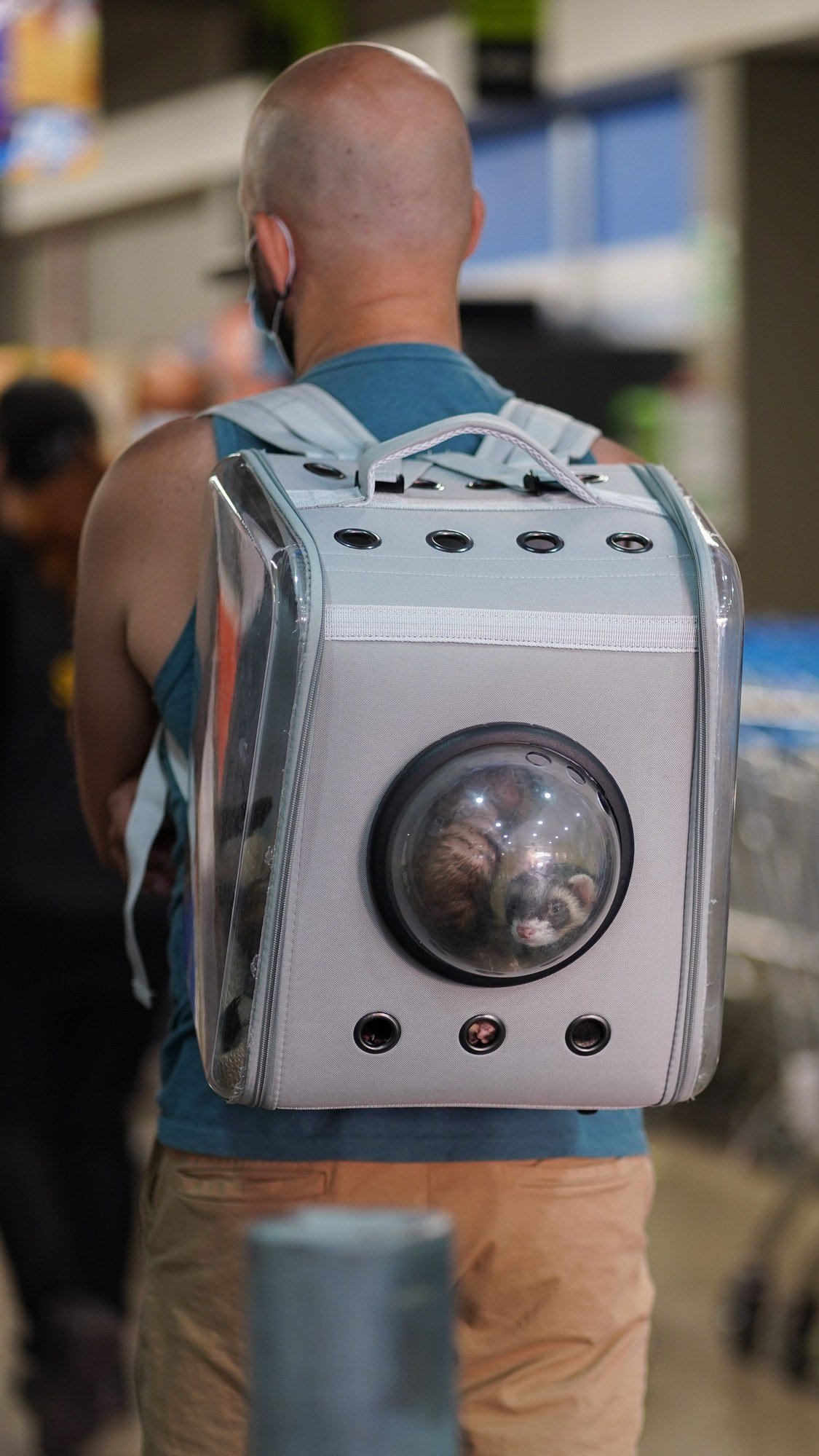
Size is not “as small as will zip shut.” Your cat should be able to stand, turn around, and lie down in a natural position. A tight capsule may feel easier to stash, and it can also make a stressed cat hotter and more trapped. If you have a growing kitten, or a large or long cat, ignore “one size for most cats” claims and measure your cat, then the carrier, at home.
Security means the cat cannot open the door by accident, and you cannot drop the load. Check:
- Latches or zippers that close fully and, where designed, can be clipped or locked.
- A handle or strap you can hold while opening a building door.
- A base that does not sag onto the floor when the cat shifts.
- Mesh or grilles that stay attached, with no gap a head or limb can force.
Comfort is ventilation, a washable or lined floor, and a familiar towel that smells like home—not a pile of toys that can tangle. Airflow matters more than a cute window. Never drape a carrier so heavily that air cannot move, and never leave a cat in a parked car.
A carrier should also be something you can get a cat into without standing in an open doorway. Top-loading hard cases help some households; a soft carrier that opens widely can help others. Practice the entry at home, on the floor, with the hallway door already closed. If your cat is already fast at thresholds, the carrier is part of an exit routine, not a last-second scoop on the welcome mat.
Renter storage: where the carrier lives between trips
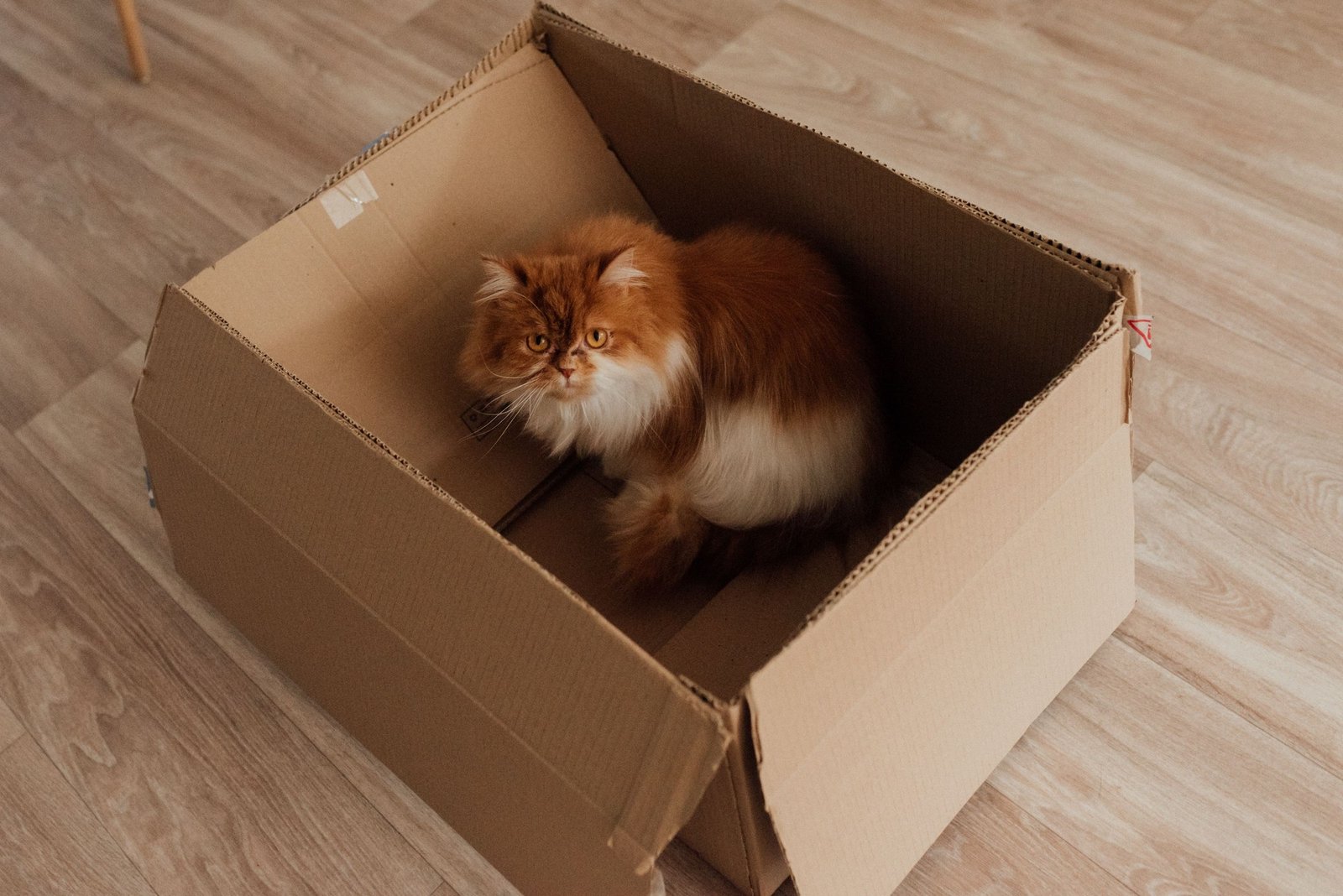
In a rental, the carrier cannot live in a garage you do not have. The honest options are usually a closet shelf, under the bed, a high cupboard, or—better for training—out in the open.
A hard-sided carrier that sits in the living room with a soft towel inside can become a hide, which is useful square footage rather than dead storage. A folding soft-sided or backpack style can live on a closet shelf, but unpack it days before a vet visit so it is part of the room again. Keep it dry and ready, not in a damp locker.
Think about stairs and lifts as well as cupboards: a bulky shell may be steadier in a car, and awkward on a narrow staircase. A backpack leaves your hands free for doors, but still has to come off before a tight entry. Measure the folded or standing size against the place you actually have.
If space is already tight, choose the smaller footprint that still fits the cat, not the smallest box the cat can be forced into. Leaving the real carrier out is more useful than hiding it until the morning you need it.
Acclimate at home before a vet appointment

The most useful work happens on an ordinary Tuesday, not in the ten minutes before you leave. Leave the carrier out, door open, in a quiet corner, with a familiar towel or a small treat nearby, and let the cat investigate without being stuffed inside.
A simple progression many households can use:
- Carrier as furniture, door open, nothing asked.
- Treats or a meal near the entrance, then just inside, if your cat is food-motivated.
- A short sit inside with the door still open, then closed for a few seconds, then opened again before protest becomes panic.
- Brief lifts of the carrier, a walk to the hallway door and back, then a longer sit at home.
Stop while the session still looks mostly easy. Forcing a practice car ride on a cat who will not yet step in will rehearse fear. If your cat freezes, hisses, or tries to scramble out with real distress, go back a step and try again another day. Some cats need weeks. That is still kinder than a wrestling match on appointment morning.
Keep other handling separate if you can. A nail trim, a brush-out, and a carrier session in the same hour can be too much. How to brush a cat at home and how to trim a cat’s nails at home are useful skills, and they are easier when they are not stacked onto a vet departure.
If you are also settling a new cat, do not make the first carrier trip the same week you change rooms and introductions. How to introduce a new cat already asks for a slow plan; add carrier practice as a quiet, separate session once the cat has a safe room. Indoor cat enrichment ideas can make ordinary weeks fuller; they are not a substitute for carrier practice.
Vet-day and short apartment travel
On the day, set the carrier up before you are late. Place it on the floor, use the routine you practiced, and close the apartment door before you move into the hallway. A second person helps in a studio if the cat is fast. Bring a towel that smells like home, and a way to cover part of the carrier in a busy waiting room without blocking airflow.
In a car, brace or belt the carrier so it cannot slide. The floor behind a seat or a belted seat is usually more stable than a lap. On foot or on public transport, keep the carrier close, upright, and out of the way of doors and wheels. Do not open it “just to comfort them” on a platform or in a lift.
If the cat vomits, pants heavily, or becomes unresponsive, that is no longer a training problem. Get to the clinic or urgent care and tell them what happened.
After you come home, leave the carrier out with the door open and something pleasant nearby, so it does not only predict a vet visit. Wipe it when it is dry enough to clean, and put it back where your cat can still see it.
A calm starting plan you can repeat
Use this as a first draft, then adjust to your cat and your flat:
- Choose a type—hard-sided, soft-sided, or backpack-style—based on security, ventilation, and where you will store it, not a ranked “best” list.
- Measure so your cat can stand, turn, and lie down, and check that latches or zippers actually hold.
- Give the carrier a frequent place to live, not only a dusty top shelf.
- Practice at home, in short easy sessions, before the appointment.
- Close your own door before you enter the hallway, and keep the carrier shut until you reach a safe room.
- Stop and get help if your cat is in obvious distress, overheated, or may be injured.
The best cat carrier for vet visits and apartment travel is the one you can use kindly on a weekday, store in a rental, and introduce before you are late. The aim is a secure ride you can repeat. If travel or the clinic looks painful or panicky, ask your veterinarian how to make the next visit easier rather than buying another carrier in a hurry.
FAQ
How big should a cat carrier be?
Your cat should be able to stand, turn around, and lie down in a natural position. A carrier that only just zips shut may be easier to stash, and it can also leave a stressed cat hotter and more trapped. Measure your cat and the carrier at home rather than trusting a “fits most cats” claim, especially if you have a large, long, or still-growing cat. Comfort also depends on ventilation and a stable floor, not only on length.
Is a backpack carrier safe for a vet visit?
It can be, if it is a real carrier: secure closures, enough room to sit and turn, and ventilation you can trust in a lift or on a warm pavement. A backpack can free your hands on stairs, which is useful in an apartment building. It is a weaker choice if the opening is loose, if you cannot monitor the cat, or if the pack collapses when you set it down. For many clinic trips, a stable hard-sided or well-structured soft carrier is the more straightforward starting point. This is not a ranking of brands.
How long does it take to get a cat used to a carrier?
It depends on the cat. Some will nap in an open carrier within a few days if it is left out with a familiar towel. Others need weeks of short, easy sessions: investigating, sitting just inside, then a closed door for a few seconds, then a brief lift. Stop while the session still looks mostly easy. A last-minute wrestle on appointment morning usually teaches the opposite of what you want. If the cat panics or seems painful, pause and ask your veterinarian for advice.
Where can I store a cat carrier in a small apartment?
A closet shelf, under the bed, or a high cupboard can work for a folding soft-sided or backpack style, as long as you bring it back out several days before you need it. A hard-sided carrier often does better left in the room with a towel inside, so it can double as a hide and stay familiar. Avoid a damp locker if you can. The better storage plan is the one that still lets your cat see and enter the carrier on an ordinary day.
Should I let my cat out of the carrier in the clinic waiting room?
Usually no. A waiting room is a busy, unfamiliar space, and an open door can turn into a chase past other animals and automatic doors. Keep the carrier closed, set it somewhere stable and off the main walkway if you can, and wait until a staff member has you in a room. If your cat is highly distressed, tell the clinic; they may be able to move you sooner or reduce the visual fuss without opening the carrier in the lobby.
[…] in a carrier you already have. It is not a buying guide; for size, style, and what to look for, use best cat carriers for vet visits and apartment travel. It is also not the same job as how to introduce a new cat to your home, which covers a new cat’s […]