

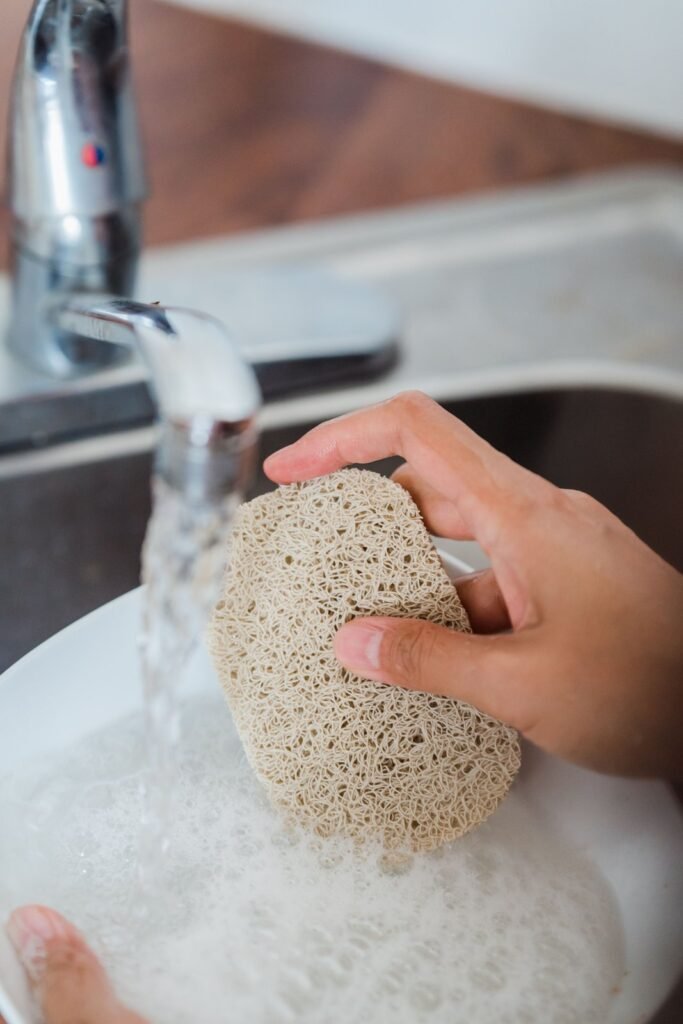
If you want a practical plan for how to clean dog bowls, the useful question is not which sterilizing spray to buy. It is whether you can wash the food bowl, the water bowl or fountain, and the feeding mat often enough in a small kitchen, dry them so they are not left sitting wet, and notice when a bowl is too stained or cracked to keep using.
A useful mindset is this: you are keeping everyday feeding gear clean, not running a laboratory. A full wash with hot water, ordinary dish soap, and a soft sponge does the real work. A quick rinse can get you through a rushed morning. Neither one needs invented temperatures or a claim that a method kills all bacteria.
This is general information for dog parents in the US and UK, not a veterinary diagnosis, and not a treatment for dental disease or stomach upset. If your dog suddenly refuses to drink, if you see blood in the saliva, or if the mouth smells markedly worse than usual, contact a veterinarian. A cleaner bowl is still the right household habit, not the next clinical step.
This is a wash habit, not a product guide
The job here is the sink, the soap, and the drying space you already have. It is not a rewrite of how to store dog food in a small apartment, which is about keeping the bag or bin sealed and out of the way. If you also keep cat food at home, storing cat food in a small apartment is about the bag and the bin, not the daily wash of the dish.
It is also not a buying guide to dog water fountains, slow-feeder bowls, or automatic dog feeders. Those articles help you choose a product. This one is what you do after the meal. A slower bowl still needs washing. A timed feeder still drops food into a dish that should be cleaned. How much goes in the bowl belongs in a portion guide for your dog, not in this wash routine.
If the home also has a cat fountain, use the same habit: take it apart, wash the reservoir and reachable parts with soap and a soft sponge, and dry them before you refill. Choosing one is covered in the cat water fountain guide. This is not a two-species buying guide.
Think of three jobs:
- A rhythm you can keep. Wash often enough that food film and a slimy water bowl do not become the normal state of the kitchen corner.
- A full clean when it is due, and a rinse when that is all you can do. A splash of water should not quietly replace the real wash.
- Dry, then replace when the bowl is past saving. A wet bowl left in a tight rack stays damp. A cracked or peeling bowl is not a cleaning problem.
How often to wash the bowl, fountain, and mat
There is no single medical timetable that fits every flat. For most households, wash the food bowl after meals, or at least once a day if the dog is fed more than once. Wet food leaves a film sooner than dry kibble. If you get the dish into the sink before the residue dries on, the wash is easier and you are less tempted to scrape with something harsh.
A water bowl or fountain reservoir should be emptied, washed, and refilled on a similar daily rhythm. If the water looks cloudy, if you can feel a slick film, or if kibble has been dropped in, do not wait. Topping up dirty water is not the same as cleaning the vessel. Make the empty-and-wash step part of the same pass as the food bowl, so the fountain is not left until it runs low.
Fountain parts beyond the open reservoir need a fuller session on a schedule you can actually repeat. That usually means the lid, the reservoir, and any pump or impeller the design lets you remove. Follow the unit’s instructions for filters and parts that should not be soaked. This article will not invent a number of days that “keeps a fountain safe,” and it will not tell you that a certain soak kills all bacteria. Clean the parts often enough that you are not waiting until the water smells or the pump sounds strained.
The feeding mat picks up spit, kibble dust, and drips. Wipe it after the meal when you can, and wash it with soap when it feels greasy, stays wet, or has food stuck in the texture. A mat left damp under the bowl does not dry well. If two animals share a kitchen, wash enough dishes for the stations you actually use. Do not rinse one bowl and move it between a dog and a cat.
A full clean versus a quick rinse
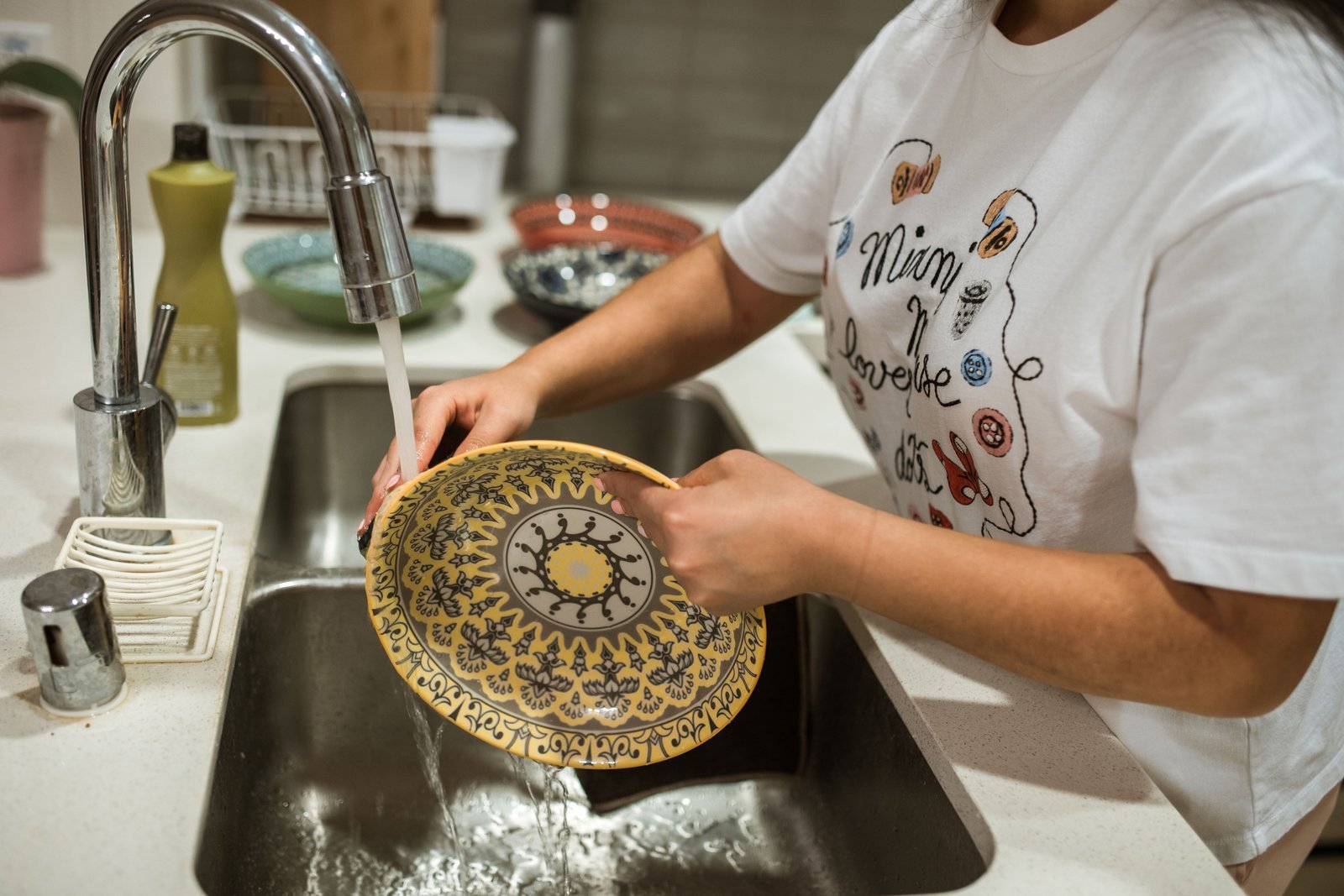
The photo above is a person rinsing a decorative dish at a kitchen sink, with soap already on the counter. The dish in the picture is not a dog bowl, but the work still happens at the sink you already use, with ordinary soap.
A quick rinse is what you do when you need the bowl back in service and you only have a minute. Empty the leftovers, rinse off loose food or cloudy water, and, for a water bowl, refill with fresh water. A rinse is better than leaving yesterday’s food in the dish, but it is not a full clean. If rinses replace washes for days, film builds, especially on plastic and on fountain parts that stay wet.
A full clean is a wash with hot water, ordinary dish soap, and a soft sponge or cloth. Do the inside, the rim, and the underside, including the ring where the bowl sits on the mat. For a fountain, take off the lid and wash the reservoir. If the pump or impeller is designed to come out, clean the parts you can reach without forcing them. Rinse thoroughly so the next fill does not taste of detergent. If you use a dishwasher for a stainless or ceramic bowl, check that the piece is actually made to go in one. Many fountain pumps, lids with seals, and coated bowls are not. When you are unsure, wash by hand.
Skip harsh oven cleaner and skip steel wool on coated or painted bowls. Those tools can scratch or strip a finish, which then holds more dirt. A soft sponge and a bottle brush for narrow fountain parts will do more than a harsh shortcut. This guide will not give you a sterilization temperature, and it will not claim that a cycle in any machine kills all bacteria. Aim for a bowl that looks and feels clean, smells like rinse water rather than old food, and is dry before it goes back on the mat.
Dry the gear so it is not left wet in a tight rack
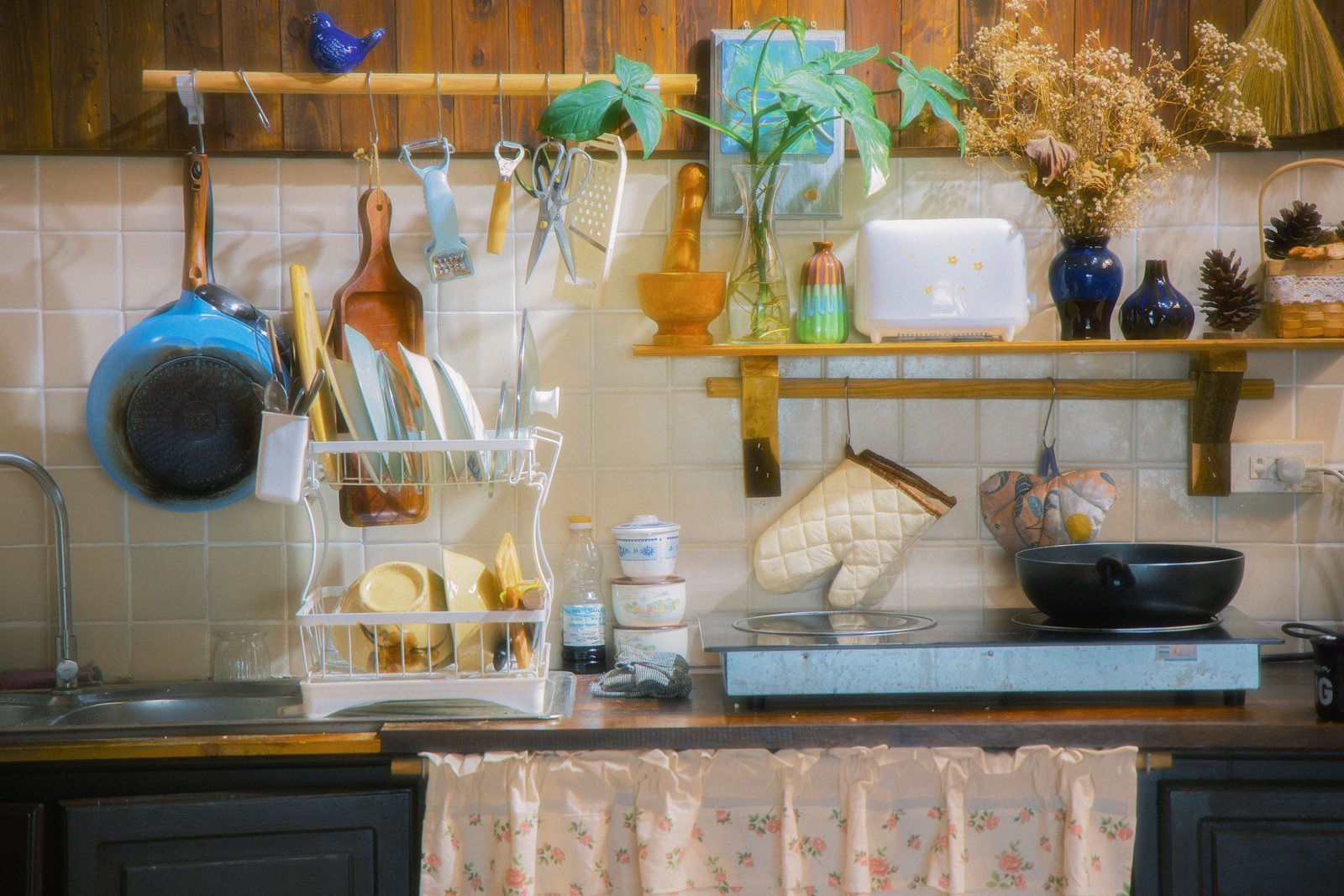
The photo above is a tight kitchen with a two-tier rack already holding bowls and plates, a constraint many apartments have. If you drop a still-wet dog bowl into a crowded rack, it can sit against another dish and stay damp for hours.
Give the bowl space, or towel-dry it and put it away dry. Reassemble a fountain with parts dry enough that you are not trapping wash water under a lid, then fill it with fresh water. Stand, hang, or lay out the feeding mat so air can reach both sides. Do not stack a wet mat under the bowl and call the station ready.
When a stained or cracked bowl should be replaced
The photo above is a compact, empty sink, the kind of tight station where it is tempting to keep using the same bowl because there is no spare. Replacement still matters more than one more harsh scrub.
Replace a bowl that is cracked, chipped, or has a coating that is peeling or flaking. Those edges can hold residue after a normal wash, and a peeling finish does not belong in a food or water dish. Deep scratches that stay dirty after soap and a soft sponge are a similar sign, especially in well-used plastic. A stain you can still wash clean is not automatically a reason to discard the bowl. A stain or odor that survives a proper wash, or plastic that stays sticky, is a reason to retire that piece.
Do not try to rescue a coated bowl with oven cleaner or steel wool. You are more likely to damage the surface than to reset it. This is not a ranked list of materials or brands, and not a reason to replace a sound bowl on a schedule. If the dish is no longer a smooth, intact vessel, stop using it. The same judgment applies to a cracked fountain reservoir, a lid that no longer sits flush, or a broken pump housing.
When cleaning is not the next step
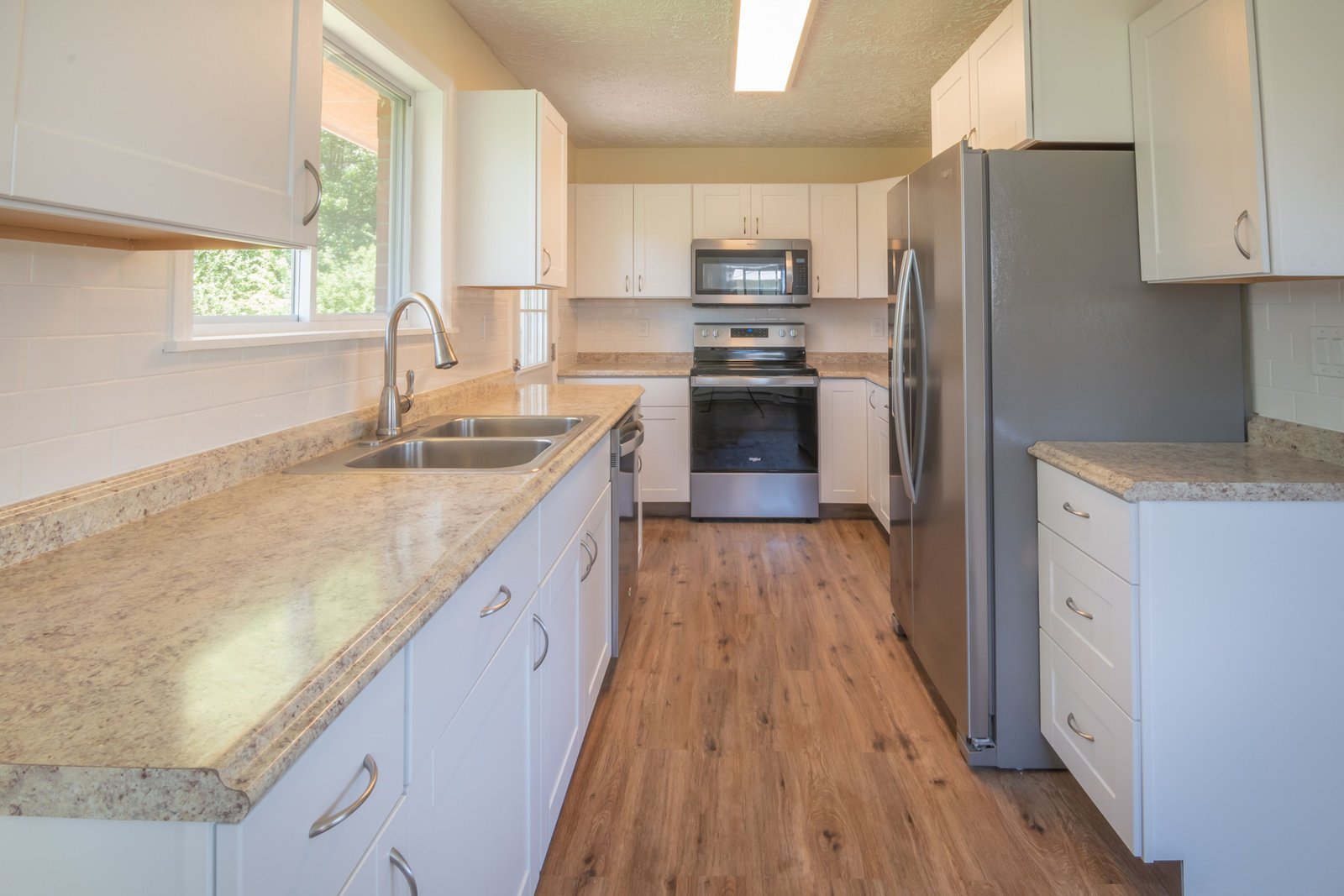
The photo above is an empty kitchen with a sink and clear counters. A clean station is the point of the habit, not proof that a dog is healthy.
If a dog suddenly refuses to drink, if you see blood in the saliva, or if the mouth smells markedly worse than usual, contact a veterinarian. Those signs are not a cue to scrub the bowl again and wait. Cleaning feeding gear is not a treatment for dental disease or stomach upset. Daily tooth care, when you do it, lives in a separate routine such as dog dental care at home. A washed bowl supports ordinary hygiene. It does not diagnose a sore mouth, and it does not replace a veterinary exam. Do not treat a cloudy film as a homemade medical finding. If the dog’s drinking, saliva, or breath has changed in a worrying way, call a veterinarian rather than adding a harsher cleaner.
A calm starting plan you can repeat
- Wash the food bowl after meals when you can, and at least once a day as a baseline habit. Empty, wash, and refill the water bowl or fountain reservoir on a similar daily rhythm.
- Use a full clean with hot water, dish soap, and a soft sponge for the bowl, the mat when it is greasy or wet, and the fountain parts you can safely remove. Use a quick rinse only as a short stopgap, not as the only wash for days on end.
- Dry the bowl, mat, and fountain parts so they are not left wet in a tight dish rack or stacked damp under the station.
- Replace a bowl or fountain part that is cracked, chipped, peeling, or still dirty and smelly after a normal wash. Do not use oven cleaner or steel wool on coated bowls.
- If the dog suddenly will not drink, if there is blood in the saliva, or if the mouth smells markedly worse, contact a veterinarian. A cleaner bowl is not the treatment for that situation.
A washed, dried, and intact bowl is more useful than hoping a special product will do the habit for you.
FAQ
How often should I wash my dog’s bowl and fountain?
A practical baseline is to wash the food bowl after meals, or at least once a day, and to empty, wash, and refill the water bowl or fountain reservoir on a similar daily rhythm. Fountain pumps and lids need a fuller clean on a schedule you can actually keep. This is a household habit, not a medical timetable, and it is not a claim that a certain interval kills all bacteria.
Is a quick rinse enough?
A rinse is a useful stopgap when you only have a minute, and it is better than leaving food or cloudy water in the dish. It is not a full clean. If rinses quietly replace soap-and-sponge washes for days, film builds on bowls and fountain parts. Return to a full wash as soon as you can.
Can I put dog bowls and fountain parts in the dishwasher?
Only if the piece is actually made to go in one. Many stainless or ceramic bowls can, but fountain pumps, sealed lids, and some coated dishes cannot. When you are unsure, wash by hand with hot water, dish soap, and a soft sponge, and rinse well. A dishwasher cycle is not a sterilization guarantee.
When should I replace a bowl instead of washing it again?
Replace a bowl that is cracked, chipped, peeling, or so deeply scratched or stained that it stays dirty or smelly after a normal wash. Do not try to rescue a coated bowl with oven cleaner or steel wool. A stain you can still wash clean is not automatically a reason to throw the bowl away.
When is a dirty bowl not the thing to focus on?
If your dog suddenly refuses to drink, if you see blood in the saliva, or if the mouth smells markedly worse than usual, contact a veterinarian. Cleaning the bowl is still good practice, but it is not a treatment for dental disease or stomach upset, and it is not a reason to wait.