


If you are looking for the best slow feeder bowls for dogs, you are usually trying to solve a weekday problem: meals disappear in a few gulps, the bowl skates across a small kitchen, or you want a slightly longer dinner without turning the floor into a puzzle fair. A slower feeder can help some dogs. It is not a ranked shortlist or a medical device.
A useful mindset is this: you are choosing a serving tool that makes the same portion take a little more time, in a space you can keep clean. The right size, a stable base, and a design you can actually wash will do more than a complicated bowl that frustrates the dog.
This is general information for dog parents in the US and UK, not a veterinary diagnosis and not a treatment for bloat, gulping, or a prescribed feeding plan. If your dog coughs, chokes, gags, struggles to get food, or is on a diet your veterinarian has directed, ask that veterinarian before you change the bowl.
Who a slower mealtime bowl may help — and who needs a different plan
Some dogs eat so quickly that dinner is over before you have washed the scoop. A slow feeder — a bowl or insert with ridges, channels, or a shallow maze — is meant to make the dog work around obstacles to reach the same food. For some pets, that turns a gulp into a few calmer minutes. For others, it is annoying, and they paw the bowl, flip it, or give up.
This tool may be worth trying if your dog otherwise seems well, finishes meals very fast, and you want a modestly longer meal at home. It is not the right tool for every fast eater, and it is not a cure for a medical problem.
It is the wrong first move if your dog coughs or chokes while eating, brings food back up, seems painful, or has been told to follow a specific feeding method. Those signs belong with a veterinarian. It is also the wrong tool if the real job is portion size, a timed meal when you are out, or mental work that lasts longer than dinner. Those jobs live in how much you should feed your dog, best automatic dog feeders, and best puzzle toys for dogs.
A slow feeder does not change how much food the dog should get. Measure the same daily amount you already use, then place it in the feeder; do not over-pour to fill the pattern. Treats used to smear a lick mat still count toward the day; best training treats for dogs is useful when those extras start to add up.
The goal is a livable mealtime, not a miracle and not a promise that a bowl will prevent bloat or stop gulping for good.
Bowl, insert, or lick-mat-style feeder

“Slow feeder” is a family of shapes, not one product. The three patterns you will see most often are a dedicated maze bowl, an insert that drops into a bowl you already own, and a lick-mat-style surface for wet food or a smear of food.
A dedicated slow-feeder bowl is a single piece with ridges, petals, or a spiral built in. It is simple to put down, as long as it is not so wide that it colonizes the only stretch of floor. Look at the depth and the gap size, not only at how busy the pattern looks in a photo. Very tight channels can frustrate a large muzzle or a short-faced dog; a wide, shallow maze may be too easy for a determined eater.
An insert sits inside a regular bowl and adds the obstacles. That can be handy if you already have a heavy or non-slip bowl you like. It should fit so it cannot pop out and become a chew toy. If it rattles or lifts, it is the wrong size for that bowl.
A lick-mat-style feeder is usually a flat or slightly textured mat you spread with wet food or a soft food your dog already eats. It slows some dogs by making them lick rather than swallow mouthfuls of kibble. It is not a better bowl for every meal, and it needs a wash and a place to dry. Use only foods that are appropriate for your dog.
None of these is the same as a puzzle toy you fill for a longer session, or a hopper that releases meals while you are out. Keep those in their own lanes: best puzzle toys for dogs and best automatic dog feeders. A regular open bowl, like the smooth white bowl in the photo at the top of this guide, remains the right starting point for many dogs.
If you feed more than one dog, think about space and guarding, not only about speed. Two maze bowls in a narrow galley can create more tension than one calm regular bowl. Separate the stations if meals already cause stiff bodies or hard stares.
Size, material, and a bowl that stays put
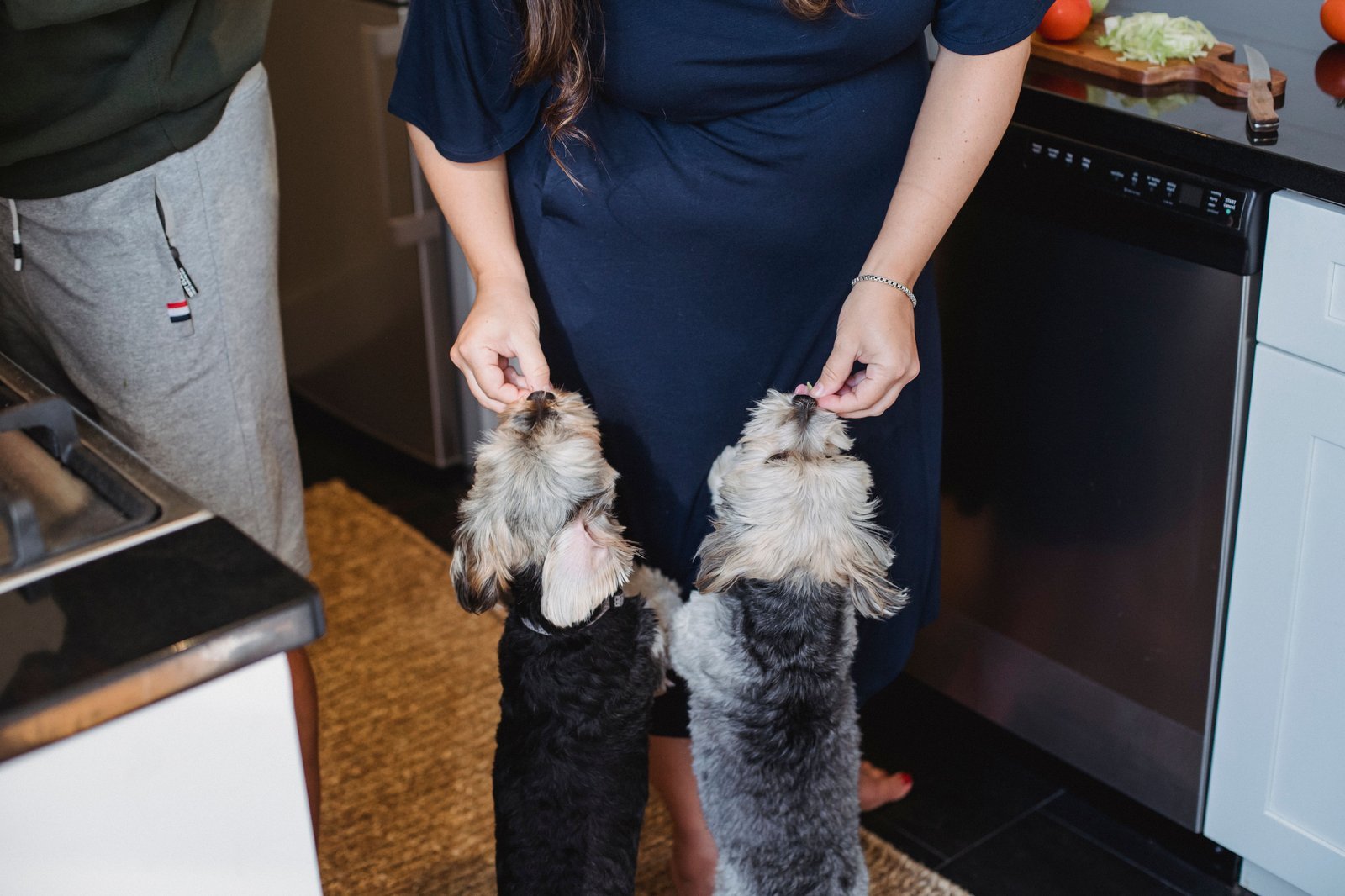
Start with the dog’s size and muzzle, then the floor you have. A feeder that is huge relative to a small dog can be awkward. A feeder that is tiny relative to a large dog can be finished in the same gulp, or can make the dog scrape at the plastic. Look at the gap width, and be ready to go back to a regular bowl if they struggle.
Material is a practical choice, not a status one:
- Stainless steel is durable and usually easy to wash. Many maze shapes are not steel; you may want an insert in a steel bowl instead.
- Ceramic or stoneware can be heavy and stable on a slick kitchen floor, but it can chip or break if knocked off narrow tiles. Check that the glaze is food-safe as labeled, and retire a cracked bowl.
- Plastic or composite is common for maze patterns. Choose a food-safe piece, watch for chew damage, and replace it if the surface becomes sharp or deeply scratched.
Stability matters as much as the maze. In a small apartment the bowl often lives on vinyl, tile, or a slim mat. A light bowl will skate. Look for a rubberized base, a wide footprint, or a design that sits inside a heavier bowl you already trust. A washable mat can also protect the floor and cut noise for downstairs neighbors.
This is not a guide to raised feeders, and it is not medical advice about neck or joint position. If your veterinarian has asked you to elevate meals, or to avoid certain postures, follow that guidance rather than improvising a stack of books under a maze bowl.
Small dogs in a tight kitchen sometimes do better with a compact feeder that does not block the walkway, or even with a regular bowl and a slightly slower routine — a measured scoop, a calm sit, then the meal. Hand-fed extras still belong in the portion plan; see best training treats for dogs when those bites start to replace dinner.
Cleanup in a small kitchen
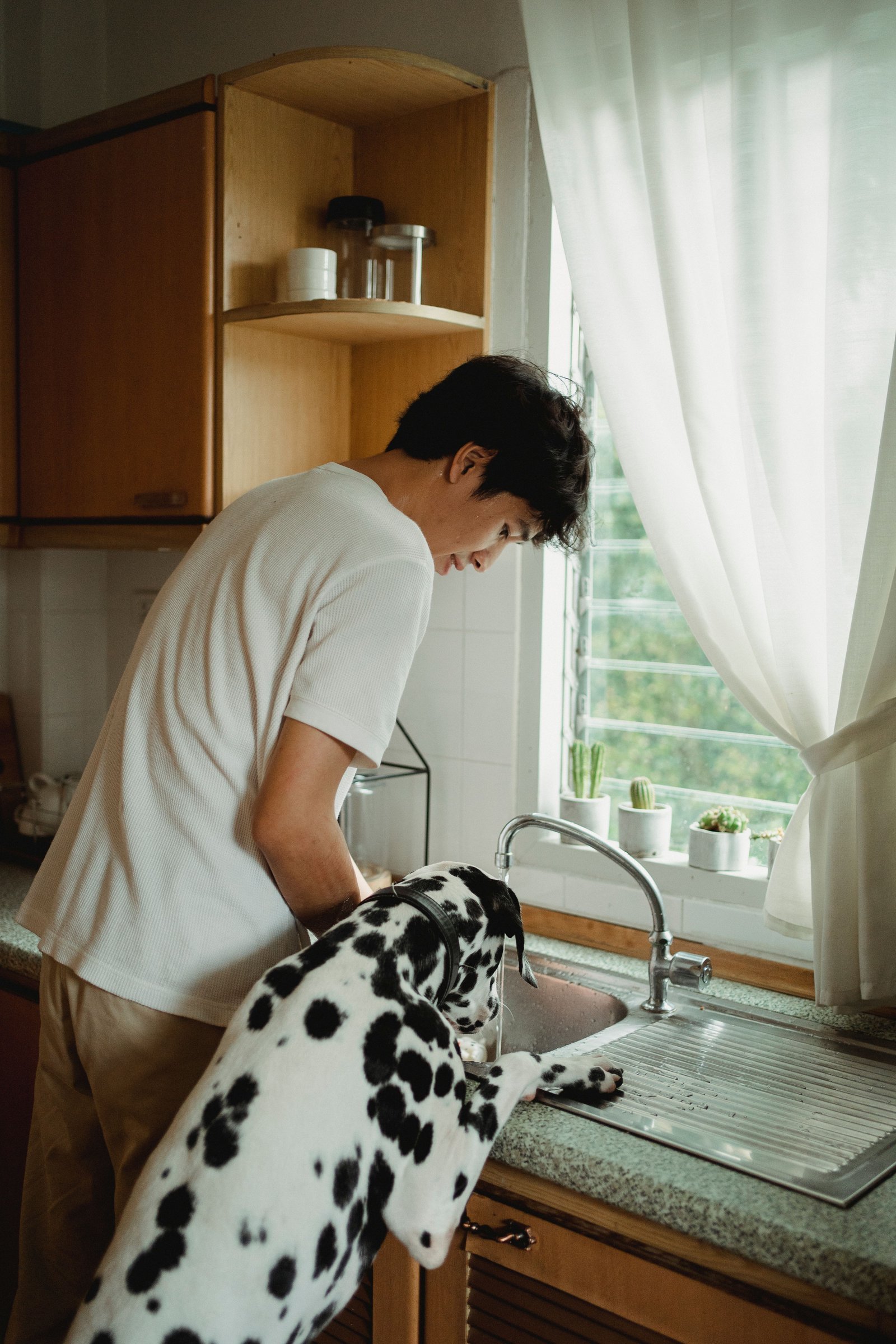
The pattern that slows the dog also traps food. In a studio, that leftover kibble or wet food sits a few feet from your own dishes. Wash the feeder after meals, including the grooves, the underside, and the rim. A bottle brush, a soft toothbrush kept only for this job, or a dishwasher cycle — if the product is labeled dishwasher-safe — will reach places a quick rinse will not.
Give yourself a drying plan. If sink space is tight, wash the feeder, shake it out, and stand it to dry on a mat or rack, rather than leaving it wet in a cupboard. Lick mats need the same honesty: if you cannot wash and dry them, they are a poor everyday tool.
Check the piece as you wash it. Cracks, peeling coatings, chewed rims, and loose inserts are reasons to stop using it.
Some dogs scrape, nudge, or walk the bowl toward a wall. A non-slip base or a washable mat helps. If the dog flips the feeder or flings food across a galley kitchen, the design may be too frustrating. Simplify the pattern or go back to a regular bowl rather than adding a larger, more elaborate one.
Automatic feeders with a built-in bowl are a different cleanup and safety job; that is best automatic dog feeders, not a slow-feeder shopping list.
When a puzzle toy or a regular bowl is the better choice
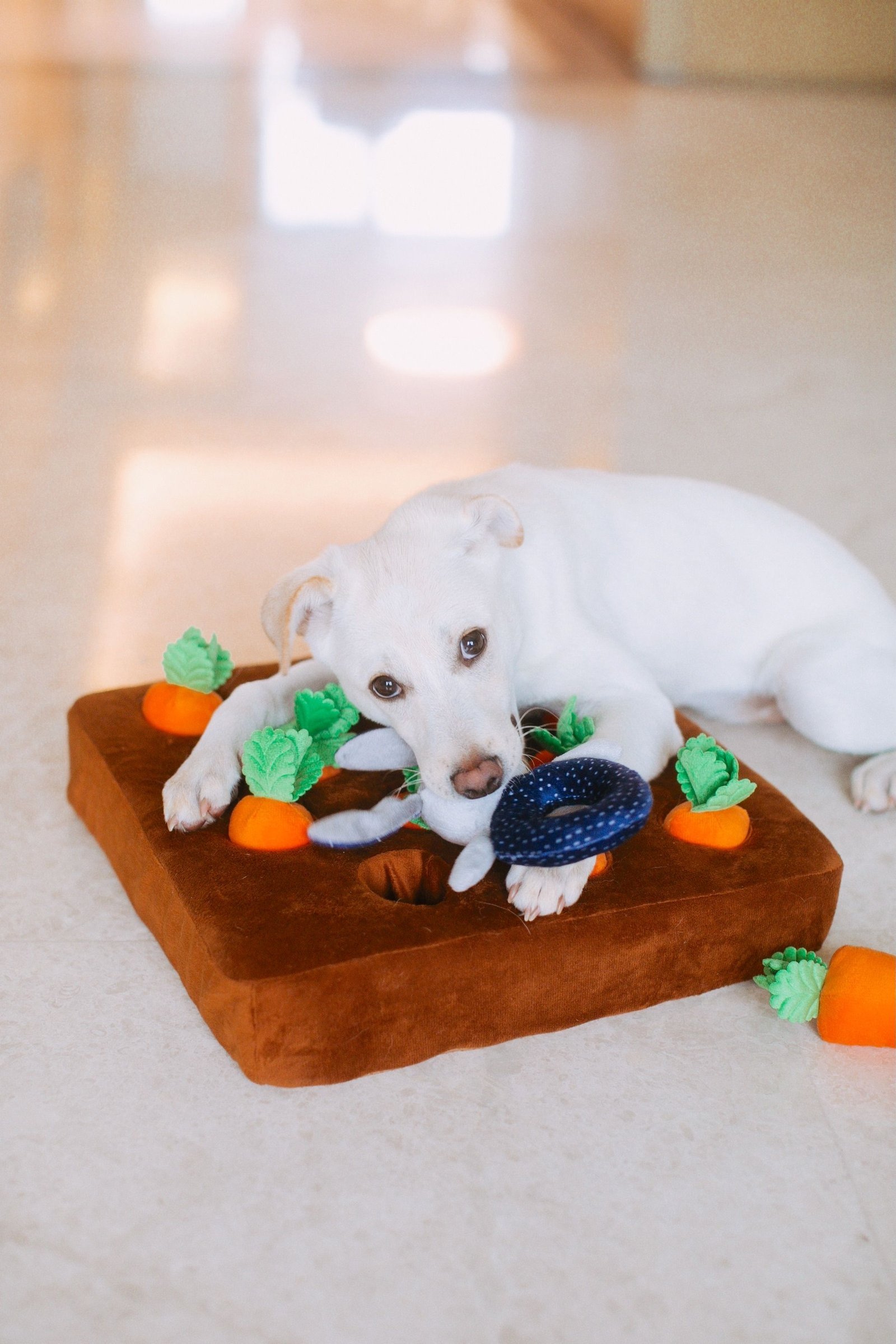
A slow feeder is a mealtime tool. It is not the only way to add a little work to the day, and it is not always the kindest one.
A regular bowl is the better choice when the dog already eats at a relaxed pace, when a maze makes them anxious or obsessive, when they try to chew the ridges, or when a veterinarian has asked for a simple, open dish. There is nothing second-best about a plain bowl that the dog can use comfortably.
A puzzle toy is the better choice when you want mental work that is not tied to the main meal, or when the dog needs a longer job than a ridged bowl can offer. Use best puzzle toys for dogs for that decision, and do not treat a dinner maze as a full enrichment plan. If you put part of the daily food in a puzzle, subtract it from the bowl so the day does not quietly double.
Watch the first sessions. If the dog coughs, chokes, paws hard at the feeder, guards it, or walks away hungry and upset, stop and go back to a regular bowl. Ask a veterinarian if eating has become a struggle, if the dog is losing weight, or if you were trying to fix a medical worry with a new dish.
A calm way to start
Use this as a first draft, then adjust to your dog and your kitchen:
- Decide whether the problem is meal speed, boredom, portions, or something that needs a veterinarian. A slow feeder only addresses the first of those, and only sometimes.
- Choose a simple pattern, a size that matches the dog’s muzzle, and a food-safe material you can wash.
- Put the same measured portion you already use into the feeder; do not add food to fill the maze.
- Stay with the dog for the first meals. If they cough, choke, or get badly frustrated, stop and ask a veterinarian if needed.
- Wash the grooves after meals and give the piece a place to dry.
- Keep a regular bowl available, and use a puzzle toy when you want a longer job that is not dinner.
Choosing among slow feeder bowls for dogs is a matching exercise, not a race for the most elaborate pattern and not a treatment plan. The aim is a calmer meal in a small kitchen, a bowl you can keep clean, and the judgment to go back to a regular dish or call a veterinarian when the tool is not the right one.
FAQ
Do slow feeder bowls prevent bloat or stop a dog from gulping?
No. A slower bowl may make some meals last a little longer, but it is not a treatment for bloat, gulping, or any medical condition, and it should not be sold to you as a guarantee. If your dog swallows air, retches, has a swollen abdomen, seems in pain, or has a history of stomach problems, contact a veterinarian. Do not use a new feeder as a substitute for that advice.
What is the difference between a slow feeder bowl and a puzzle toy?
A slow feeder is usually a bowl, insert, or lick-mat-style surface used at mealtimes to make the same portion take a little more time. A puzzle toy is a longer mental job, often used between meals or with part of the daily food. They can complement each other, but one does not replace the other. For puzzle choices, use a dedicated puzzle-toy guide rather than buying a more complicated dinner dish and hoping it does both jobs.
How should I choose a size and material?
Match the gap size and depth to your dog’s muzzle, and choose a footprint that fits your floor without blocking a walkway. Pick a food-safe material you can wash: steel, ceramic, or a sturdy plastic as labeled, with a base that does not skate. There is no honest single “best” material for every dog. Retire anything cracked, sharp, or heavily chewed.
Are slow feeder bowls hard to clean in a small kitchen?
They need more attention than a smooth bowl because food sits in the grooves. Wash them after meals, including the underside, and give them space to dry. If a design is too fiddly for your sink, it is a poor everyday choice, however well it slows the dog. A dishwasher is only a shortcut when the product is labeled as safe for it.
When should I stick with a regular bowl and call a veterinarian?
Stay with a regular bowl if the dog already eats calmly, if a maze frustrates or hurts them, or if a veterinarian has asked for a simple dish or a specific feeding method. Call a veterinarian if your dog coughs, chokes, struggles to eat, brings food back up, loses interest in meals, loses weight, or is already on a vet-directed diet. A new feeder should wait until those questions are answered.
[…] job here is the daily pattern when the dog inhales dinner. It is not a rewrite of best slow feeder bowls for dogs or best snuffle mats for dogs. Those guides help you choose a bowl or a mat. This article is what […]