

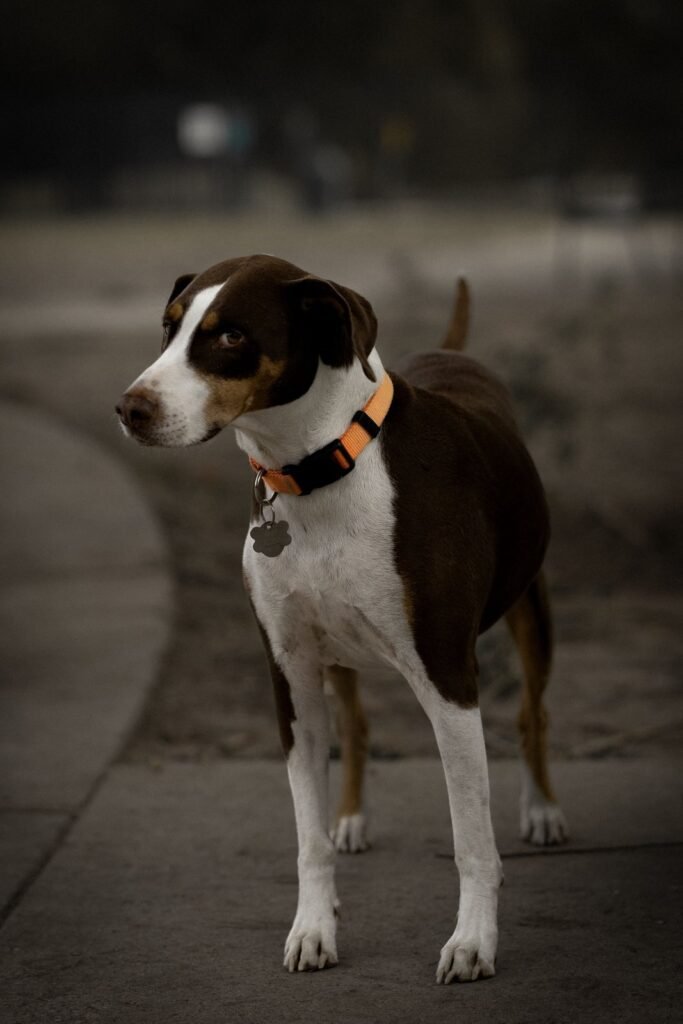
If you are looking for the best dog collar for city walks, start with what the collar is actually for. On a sidewalk it is everyday wear: a place for ID, a backup if a harness clip fails, and a ring for a tag or a small light. It is not the main tool for steering a dog that pulls toward traffic, food on the pavement, or another dog.
A useful plan is to fit a comfortable collar, decide whether a buckle or a martingale is the better everyday choice for your dog, and keep the walking control on a well-fitted harness when the dog is strong or still learning. Do not use a choke, prong, or shock collar for city walks, and do not treat a heavier collar as a shortcut for loose-leash practice.
This is general information for dog parents in the US and UK, not a ranked product list, and not a set of prices, model names, or test scores. A collar is not a substitute for a walking harness on a strong puller. Keep ID tags plus an up-to-date microchip as the baseline, not a gadget. Check fit often, especially on a growing or long-coated dog, and check the setup if a tight collar could snag on crate wire or furniture when the dog is left unsupervised.
A city collar is everyday ID, not a pulling tool
The job here is the collar you wear on city walks: identification, a backup to a harness, and a sensible place for a tag or a light. It is not a rewrite of dog harnesses for pullers, which is the walking-control tool, or of dog leashes for city walks. A leash still needs a safe attachment point. For a dog that pulls, that point should usually be a harness, not a collar that loads the neck.
It is also not a GPS tracker buying guide, a reflective gear and lights guide, or a car-harness guide. A tracker or a light can live on a collar. Those articles are about choosing the gadget; this one is about the collar underneath. Loose-leash walking is the sidewalk skill. A different collar will not teach it.
Think of four jobs, not one:
- Hold ID you can read. A tag with your current contact details belongs on the collar, and a microchip should already be up to date.
- Back up the walking harness. If a harness clip or buckle fails, a collar still gives you a second point of contact.
- Fit without leftover slack or a squeeze. You should be able to slip two fingers under the collar, and the collar should not slide off over the ears.
- Leave pulling control to a harness. A strong puller should not be walked on a collar alone.
When a collar actually helps on city walks
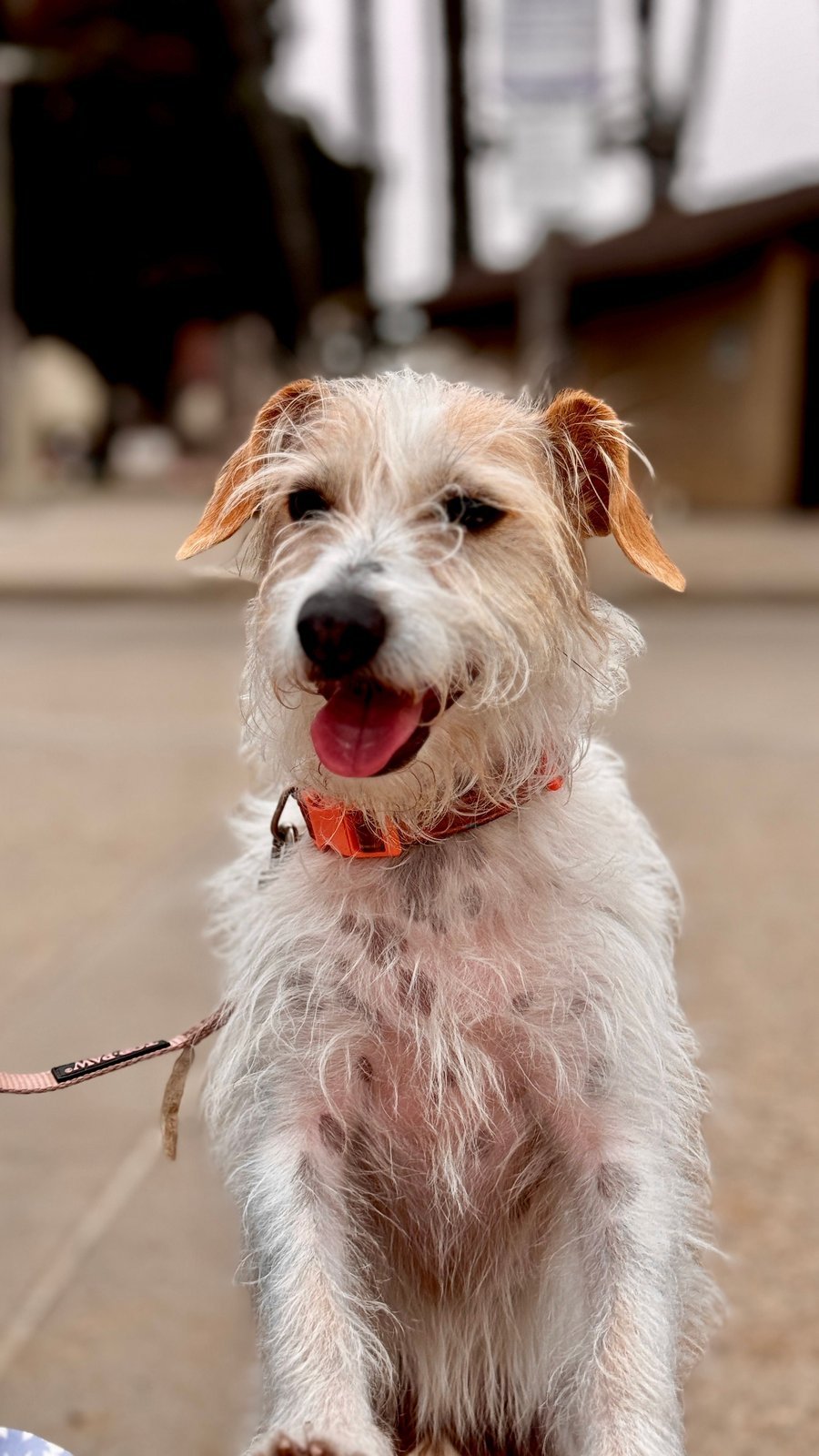
A collar earns its place on a city walk even when the leash is clipped to a harness. If the dog slips a harness, or a clip opens at a crossing, you still have a collar you can take hold of. If the dog gets loose, a readable tag is faster than hoping someone can scan a chip on the spot.
That is also why the collar matters at the door, not only on the pavement. A dog that shoots into a hallway is easier to hold if they are already wearing a collar you can reach, though the door-dashing plan is still about managing the opening, not about buying a heavier collar. In cold weather, a coat may go over or around the collar; check that tags still hang free and that the collar has not been pulled tight by the extra layer. After rain or a muddy path, run a finger under the collar and dry the neck so damp fur does not hide a tight spot.
What the collar should not do is replace the harness on a dog that lunges or pulls. Neck pressure on a busy sidewalk is a poor way to add control, and it can make a slip-prone dog worse if they back out. Use the harness for the walk, and keep the collar on for ID and backup.
How a collar should fit
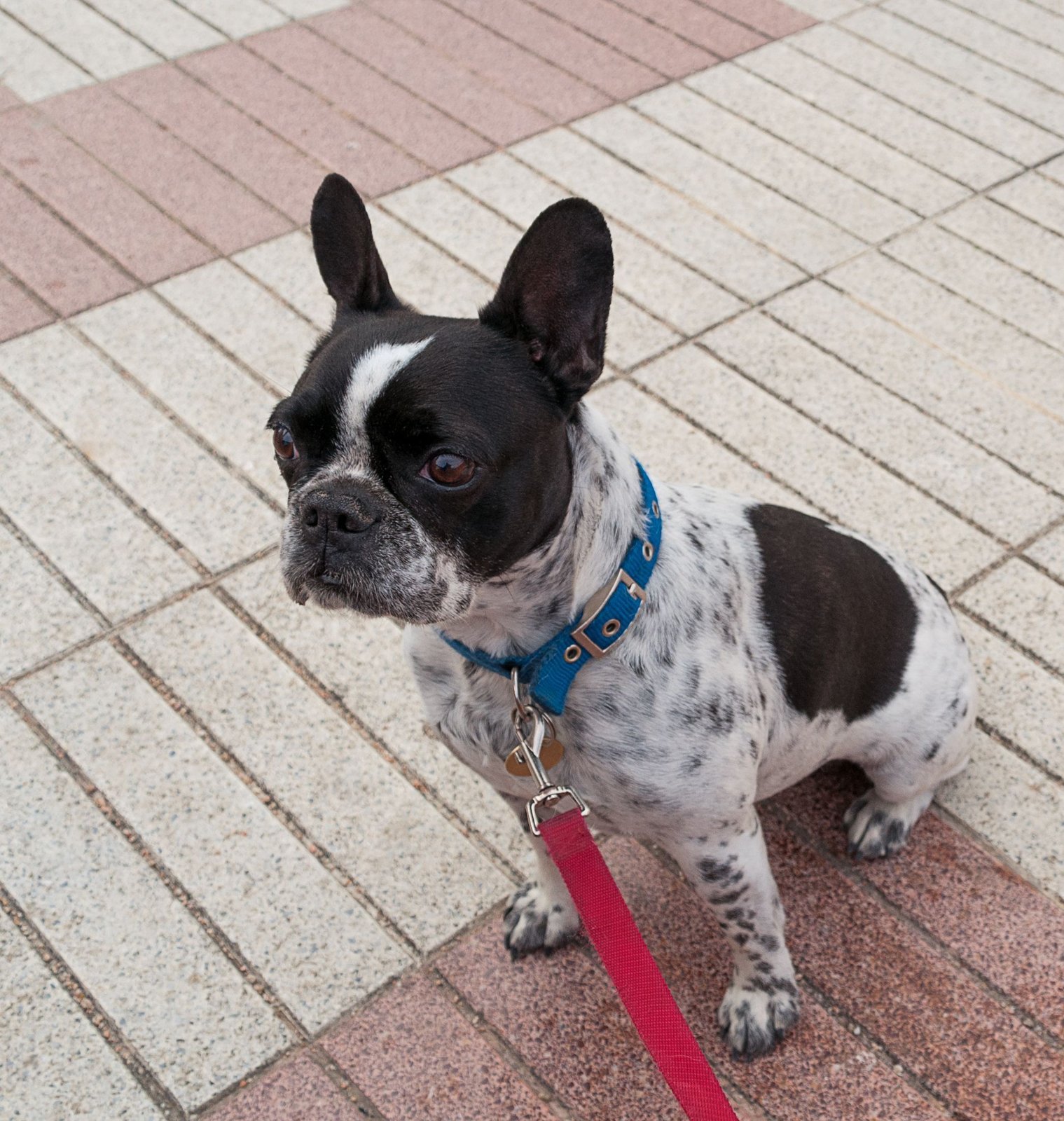
Fit is more important than the look of the collar. You should be able to slide two fingers between the collar and the neck, snugly but without a gap the dog can work a leg through. The collar should not slide off over the head if the dog ducks backward, and it should not sit so high that it rubs the ears or so low that it slips toward the shoulders. On a long-coated dog, part the fur before you judge the gap, or you may be measuring coat instead of neck.
Check fit often. Puppies and young dogs change size. A long-coated dog can look “fine” until the fur is wet or matted and the collar suddenly sits tighter. After a haircut, the same collar may become loose. Recheck after you add a coat, a light, or a heavier tag.
If you clip a leash to the collar for a short, calm moment, keep it brief and pay attention. Everyday city walking, especially with a puller, still belongs on a harness. A collar that looked comfortable in the hallway can cut in when the dog hits the end of the lead at a bicycle, a food wrapper, or another dog. If the dog coughs, squeaks, or suddenly backs up when the lead tightens, unclip from the collar and return the leash to the harness.
Buckle versus martingale for a slip-prone dog
A flat buckle collar is a straightforward everyday choice for many dogs. It is easy to put on, it holds a tag, and the fit stays put if it is sized well. It is a poor choice as the only walking attachment for a dog that can back out of a collar, or for a dog whose neck is broader than their head.
A martingale is often the better collar than a plain buckle for a slip-prone dog. It has a limited tightening loop that narrows when the dog pulls back, which can keep the collar from sliding off over the ears, then eases when the pressure stops. It is still a collar, not a training gadget, and it should not cinch down into a choke. Fitted correctly, you should still be able to get two fingers under it at rest, and the tightening part should have a stopping point. If the loop can close down against the neck with no remaining slack, the martingale is too tight or the wrong size, and you should refit it before the next walk.
A martingale is not a reason to walk a strong puller on the collar alone. It is a better everyday and ID collar for a dog that has slipped a buckle. It is not a choke, prong, or shock collar, and those tools are not part of this plan.
If you are unsure which style fits your dog’s head and neck, err on the side of a style that cannot slide off, and keep the walk itself on a harness.
What belongs on the collar, and what does not
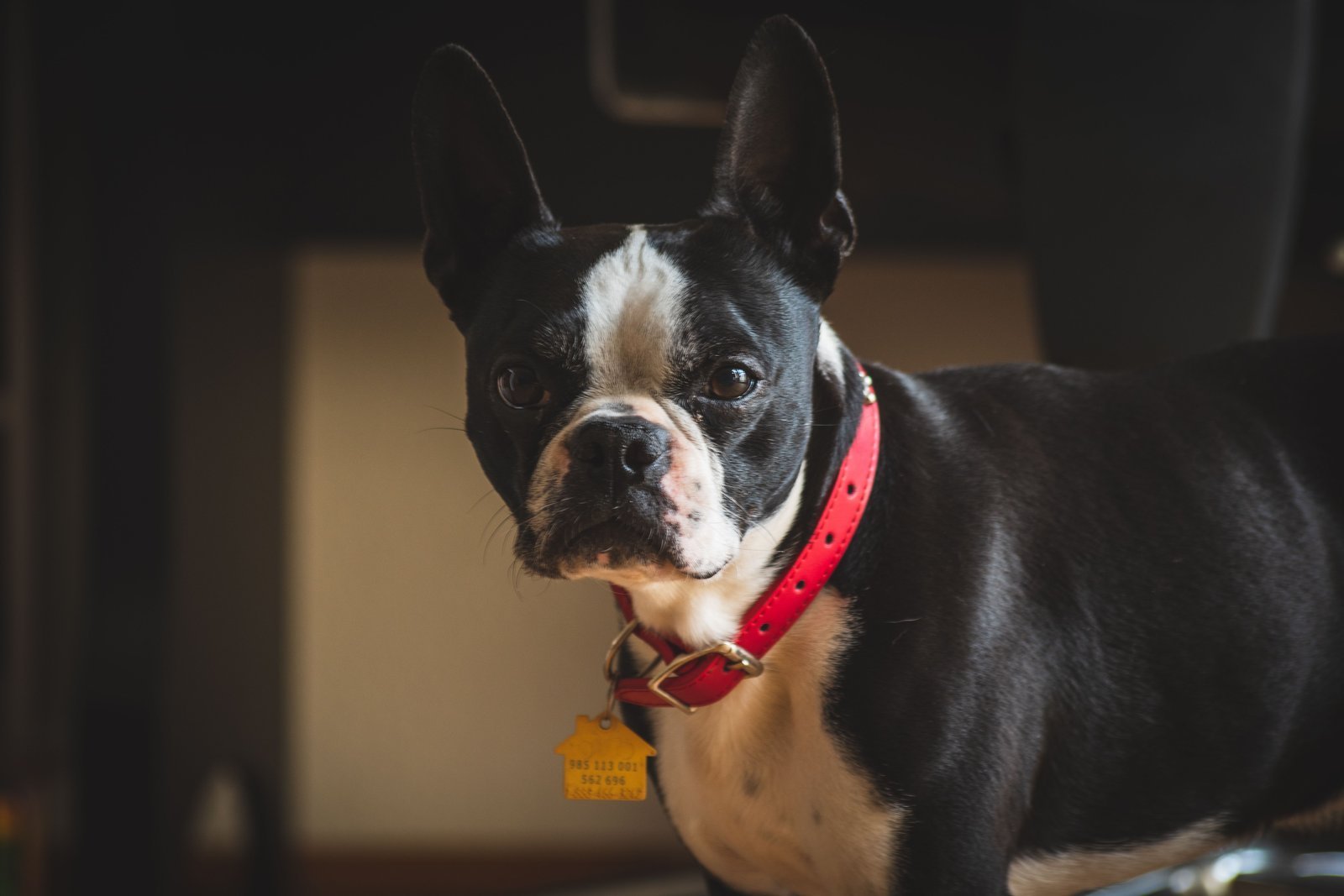
The baseline on a city collar is identification you can read without a phone app: your current phone number, and any other detail a finder actually needs. A novelty tag is not a substitute for contact information. If the engraving has worn smooth, replace the tag rather than hoping someone can still read it. A microchip is still the backup if the tag comes off; keep the registry details current.
A small light or a reflective tag can clip to the same ring, which is useful at dusk. That is a place for the gear, not a review of night-walking lights and reflective kit. A GPS tag can also hang from a collar, but the tracker guide is the place to compare those devices. Do not treat a gadget as a replacement for a readable tag and a chip.
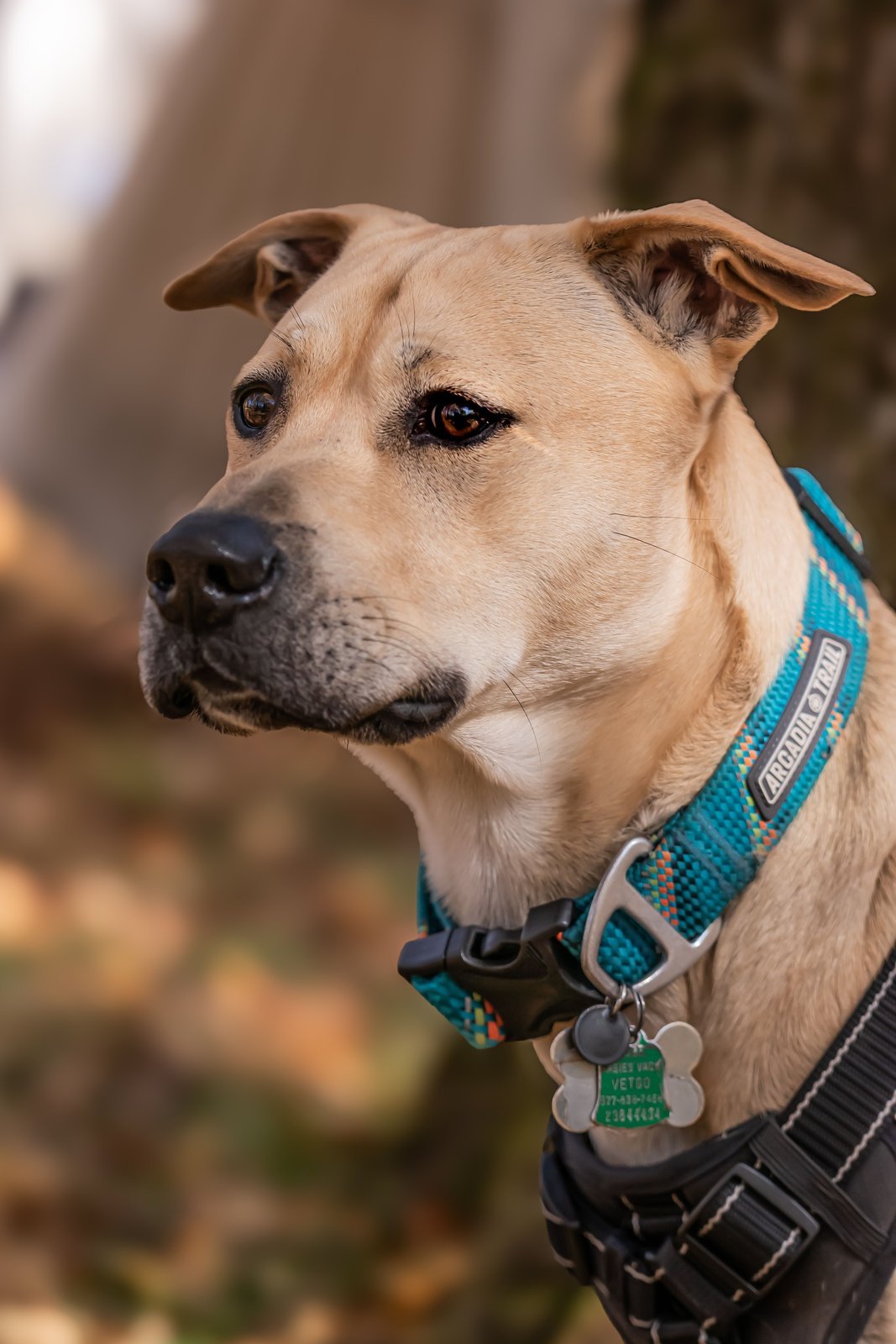
Keep the collar from becoming a heavy cluster of tags that bangs on the neck or catches on things. If the dog spends unsupervised time in a crate or near furniture where a tight collar could snag, check that setup and loosen, swap, or remove the collar if there is a known catch risk. A snug walking fit is not automatically a safe all-day unattended fit.
A car trip is a different job. Do not treat the everyday collar as a vehicle restraint; use a car harness or another proper travel setup for the ride, then put the city collar back in its usual role when you step onto the pavement.
A calm way to choose
Use this as a first pass, then adjust to your dog:
- Choose a collar for ID, backup, and everyday wear, not as the main tool for a puller.
- Fit it so two fingers slide under it, and recheck after growth, a haircut, or a coat.
- Use a martingale rather than a plain buckle if the dog can slip a flat collar, and still walk a strong puller on a harness.
- Put current ID tags on the collar, keep the microchip up to date, and treat lights or GPS as extras, not as the baseline.
- Skip choke, prong, and shock collars.
- Check crate and furniture setups if a tight collar could snag when the dog is unsupervised.
A city collar is a small, everyday piece of kit that has to be on the dog, readable, and comfortable. The aim is a collar that holds ID, stays on a slip-prone neck, and leaves the pulling work to a harness. If the neck looks sore, the coat is rubbing raw, or the dog coughs or panics when the collar tightens, stop and ask a veterinarian or a qualified trainer to help you sort fit from a health problem. A sudden change in coughing, fainting, or neck pain is a veterinary question, not a reason to tighten the collar and keep walking.
FAQ
Can I walk my dog on a collar instead of a harness in the city?
For a calm dog that does not pull, a well-fitted collar may be used for short, careful walking, but it is still not the best control tool on a busy sidewalk. A strong puller should be walked on a well-fitted harness, with the collar kept on for ID and backup. A collar is not a substitute for a walking harness on a dog that lunges or drags toward traffic.
Is a martingale better than a buckle collar?
It can be, if your dog has slipped a flat buckle or has a head shape that makes a buckle easy to back out of. A martingale tightens only to a limit and should not work like a choke. It is still a collar, not a pulling solution. Many households use a martingale for everyday wear and a harness for the walk itself.
What should I put on the collar?
Start with a readable ID tag and an up-to-date microchip. A small light or a reflective tag can clip to the same ring for darker streets. A GPS device is optional and belongs in the tracker guide, not as a replacement for a tag. Avoid a heavy cluster of charms that can catch or bang on the neck.
Should I leave a tight collar on in a crate or when I am out?
Check the setup. If the dog can snag a tight collar on crate wire, a bed, or furniture while unsupervised, that is a real risk. Use a fit that cannot catch, or remove or swap the collar during those times if that is the safer option in your home. Recheck after you add tags or a light.
Are choke, prong, or shock collars a good city option?
No. Those are not part of this plan. They do not belong on an everyday city collar, and they are not a substitute for a walking harness and loose-leash practice. Choose a buckle or a martingale for wear and ID, and put walking control on a harness.