

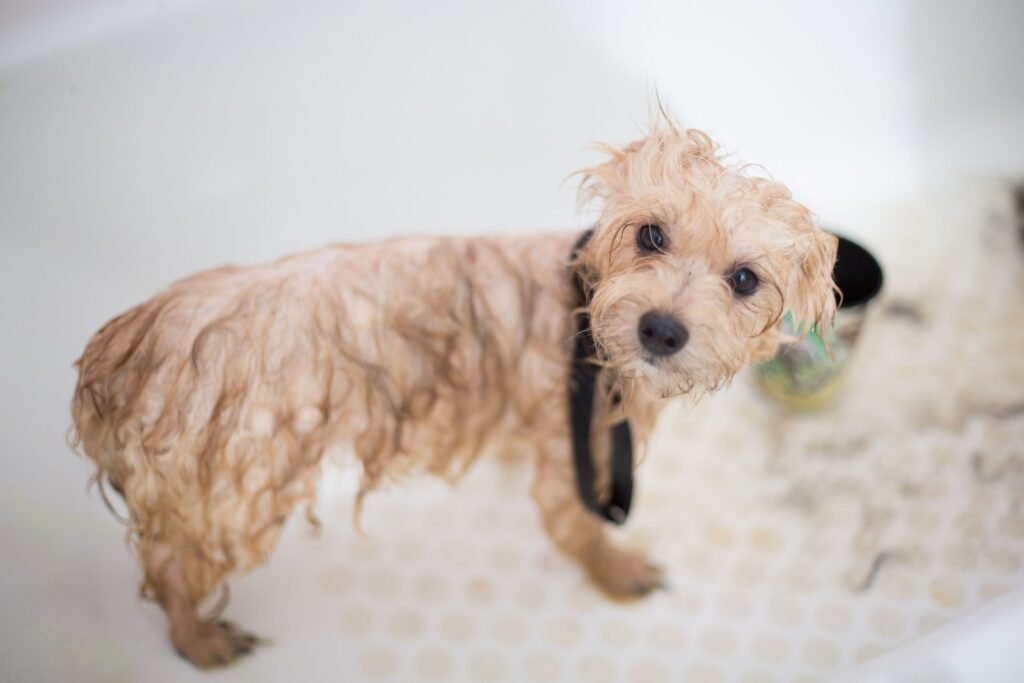
If you need to blow-dry a dog in a small apartment bathroom, treat the dryer as an optional last step after a thorough towel dry, not as the main event. A tight rental bathroom traps heat, steam, and noise. A human hair dryer can get too hot, and a wet dog standing in a tub or on a towel is easy to startle. The goal is modest: the coat is damp-to-dry, the dog is still willing to stay for the next bath, and nobody gets burned.
This is general home-care advice for pet parents in the US and UK, not a veterinary diagnosis and not a grooming-salon method. It does not claim that drying prevents illness, skin problems, or ear infections. If you see redness, a hot spot, a burn, or ear discomfort after drying, stop and check with your veterinarian. Never use high heat, and never lock a dog in a crate with a dryer running.
Why drying in a small bathroom is its own job
Bathing is a different skill. If you still need a plan for the wash itself, use how to bathe a dog in a small apartment bathroom. This article starts after the rinse, when the dog is wet and you are still in that same tight room. Drying a dog after a rainy or muddy walk is also a different job. That is an entry routine at the door, covered in how to dry a dog after a rainy or muddy walk. Freshening a smelly dog between baths belongs in how to freshen a smelly dog between baths. Those guides help you on dirty-walk days and between-wash days. This one is only about careful drying after a bath.
A small bathroom changes the drying plan. There may be barely room for you, the dog, and a towel. Steam lingers. A dryer echoes. Outlets may sit close to the tub or sink. The dog has fewer ways to step away if the air feels too hot or too loud. That is why the first decision is not which nozzle to use. It is whether you need the dryer at all, and how you will keep the room from becoming a steam box.
Towel first, and decide whether a dryer is even needed
Start with towels, not with the dryer. Have two dry towels ready before the bath ends so you are not hunting in a linen cupboard with a dripping dog. Lift the dog out, or help a larger dog step onto a non-slip mat, and wrap the coat. Press and hold. Do not rub hard in a way that knots the fur or scrapes the skin. Change to the second towel when the first is soaked. You can wring a towel and reuse it, but a second dry towel usually works faster.
Many small dogs and short-coated dogs can finish with towels alone, plus a few minutes in a warm, draft-free room. If the coat feels only slightly damp, the dog is not shivering, and the apartment is reasonably warm, you can skip the dryer. That is often the kinder plan, and it keeps noise and heat out of a tiny bathroom. A long, thick, or double coat may still be wet close to the skin after a good towel dry. That is when a dryer can help, as long as you use it carefully.
Brushing belongs in the drying plan only as a gentle detangle after the worst of the water is out, not as a way to yank a wet coat dry. For brushing technique, use how to brush your dog at home. Loose hair will come out as the coat dries. Have a bag or bin ready so wet fur does not go down the drain or onto a bath mat you still need. Shedding and coat cleanup after baths are covered more fully in how to manage dog shedding in an apartment.
Introduce the sound, then use low or warm heat at a safe distance
If you decide to use a dryer, set it up before the dog is soaking wet and anxious. A human hair dryer is what most apartment households have. It is not a salon pet dryer, and it can put out more heat than a dog’s skin will tolerate. Use the lowest speed and a low or warm setting, never high heat. If the dryer has a cool-shot button, learn where it is before you start.
Introduce the sound first, with the airflow pointed away from the dog, at the far side of the room or even just outside the doorway. Let the dog hear the motor while you offer a treat or a calm word. Then bring the dryer closer, still off the coat, so the dog can feel a little moving air without a blast in the face. If the dog tries to leave, freeze, or visibly panics, stop. A towel-only finish and a longer air-dry in the next room is better than forcing the tool.
Keep the dryer moving at all times and hold it a safe distance from the skin. A few inches is not enough if the air feels hot on your own hand. Test the airflow on the inside of your wrist first. If it is uncomfortably warm for you, it is too hot for the dog. Work in slow passes over the body, then the legs, and leave the head and ears for last, when the dog is more settled and you can use an even gentler distance.
Never point a hot stream at one spot and hold it there. Never put a dryer on a crate, in a box, or in any setup that traps the dog with heat they cannot walk away from. A crate-and-dryer combination is dangerous in a home bathroom, even if you have seen it used in a salon with different equipment and supervision.

Go easy around ears, face, and thin-skinned spots
The ears, face, armpits, groin, and any short or thin-coated area need extra care. Keep the dryer farther away there, or switch back to a towel. Do not aim air down into the ear canal. If the ears were wet from the bath, gently towel the flaps and stop. Ear discomfort, head shaking, or a smell after a bath is a veterinary question, not a reason to add more airflow.
Around the face, shield the eyes with your hand if you need to dry the muzzle or cheeks, or skip the dryer and use a small cloth. Watch for signs that the dog has had enough: turning away, licking lips, trying to climb out, or a sudden stillness. Those are reasons to pause, not to “finish the job” with one more pass.
If the coat is long, dry in sections and follow with a gentle brush so the undercoat is not left in damp mats. Mats held against the skin can stay wet long after the surface looks dry. You do not need a show-ring finish. You do need the skin to be able to dry.
Crack a door or run a fan so the room is not a steam box
A small bathroom after a bath is already humid. A dryer adds heat and can make the room stuffy for both of you. Crack the door, turn on the exhaust fan if you have one, or set a small room fan in the doorway pointing out, as long as the dog is not in the path of a cold draft. You want steam to leave, not a chill on a wet coat.
Keep electrical safety in mind in a wet room. Use a dryer with a dry hand, on a dry mat or a dry section of floor, and keep the cord out of standing water. If the only outlet is close to the tub, consider finishing the dryer work just outside the bathroom, on a towel in a hallway, once the dog is already towel-dried and can stand calmly. A slightly larger space can also make the sound less intense.
If the bathroom has no fan and the door must stay mostly shut so the dog does not bolt, take breaks. Turn the dryer off, let the room air, and offer water if the dog will drink. A long, unbroken drying session in a closed, steamy room is harder than two or three shorter passes.
What good enough looks like, and when to get help
Good enough is a coat that is dry or only slightly damp, a dog that can settle in another room, and a bathroom you can wipe down. You do not need every hair to stand in a salon fluff. If a short-coated dog is nearly dry after towels, stop there. If a longer coat is still wet at the skin, keep going in short, cool-to-warm passes, or let the dog rest on a dry towel in a warm room and check again in a little while.
Bath timing matters here only because a tired, over-bathed dog is harder to dry calmly. If baths have been frequent, use how often to bathe a dog to decide whether the wash itself should be less often. After you are done, hang wet towels and wash the used towels, mat, and any bath toys so they do not stay sour in a small apartment. How to wash dog beds, toys, and leashes at home covers that laundry job.
Put the dryer away when you finish so it is not left on the edge of a wet sink. A basket or a hook on a dry shelf is enough. Check the coat and skin once the dog is dry: look for redness, a sore patch, or a hot, painful area. If the dog paws at an ear, cries when you touch a spot, or you think the dryer got too close, call your veterinarian. That is a health question, not a grooming tweak.
A careful bathroom dry is a short, repeatable routine: towels first, low or warm air only if you need it, a moving dryer at a safe distance, and a room that can breathe. That is enough. The dog does not have to look show-ready. The dog has to be reasonably dry, unhurt, and willing to come back next time.

FAQ
Do I have to use a hair dryer after every apartment bath?
No. Towel first, and skip the dryer if the coat is only slightly damp, the dog is not shivering, and the room is reasonably warm. Many small or short-coated dogs can finish with towels alone. Use a dryer only when the coat is still wet close to the skin and the dog will accept the sound and the air.
What heat setting should I use on a human hair dryer?
Use the lowest speed and a low or warm setting, never high heat. Test the airflow on the inside of your wrist first. If it feels uncomfortably warm for you, it is too hot for the dog. Keep the dryer moving and a comfortable distance from the skin.
The dryer sound scares my dog. What should I do?
Introduce the motor with the airflow pointed away, then bring it closer only if the dog stays reasonably calm. If the dog panics, stop and finish with towels and a quiet air-dry in another room. Do not corner the dog or lock them in a crate with a dryer.
Should I blow-dry my dog’s ears and face?
Go very easy there, or use a towel instead. Do not aim air down into the ear canal, and keep the dryer farther away around the face, eyes, and other thin-skinned spots. Ear discomfort, head shaking, or redness after drying needs a veterinary check, not more airflow.
Is a damp coat after drying a problem?
A slightly damp coat can be fine if the dog can rest in a warm room and finish drying without getting chilled. The aim is damp-to-dry, not a salon finish. If the undercoat is still wet in mats, or you see redness, a burn, or a hot spot, stop and get veterinary advice.