

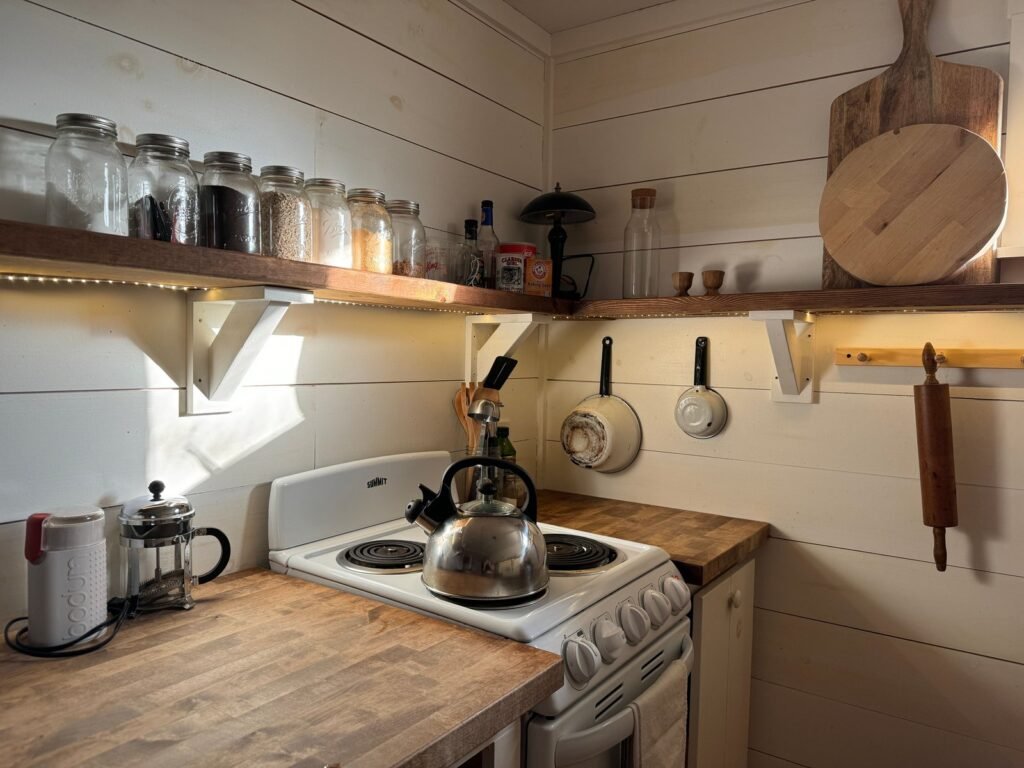
If you want to keep a cat off the stovetop, the useful work is less about a scolding after a jump and more about heat, height, and a small kitchen that offers almost no other high square. The cat who walks across a gas or electric cooktop, lands on a still-warm burner, or uses the stove as a shortcut to a window or the top of the fridge is solving a layout problem, not inventing a hobby.
This is general information for US and UK cat parents in flats and small homes, not a veterinary diagnosis and not a promise the habit will fade in three days. A burn, singed whiskers or paws, or a cat that jumped from a hot stove is a veterinary question; contact a veterinarian rather than waiting to see. This article is about the cooktop itself, including residual heat after you turn the burner off. Keeping a cat off kitchen counters is the broader food-and-worktop problem. The two habits can overlap in a tight galley, but they are not the same job.
Why a small kitchen makes the cooktop tempting
In a larger kitchen, a cat may have several legal routes to a window, a fridge top, or a shelf. In a small kitchen, the cooktop is often the only raised square in the middle of the room. A back burner sits in a straight line between a worktop and a window. A kettle, a cutting board, or a pan left to cool can become a stepping stone. There may be no spare counter you can leave clear, and no door you can close while a burner is still warm.
Cats like height, warmth, and a view. A recently used stove can offer all three, even after the knob is off. Electric coils and some ceramic or induction surfaces stay hot longer than they look. A gas grate can remain hot, and a still-warm iron pan is a poor landing pad. The cat is not reading the residual-heat light. They are taking the path that is already there.
If the cooktop is also the route to a windowsill or the top of the refrigerator, you will not solve this by asking the cat to become less interested in height. You have to make the dangerous square less useful and a legal perch more useful.
The pattern often shows up at predictable times. After dinner, the cooktop is still warm and the window above it may be the most interesting view in the room. In the morning, a cat may already be using a cold stove as a shortcut, which becomes a burn risk the first time you heat a pan and they take the same path. Overnight, a clear stove can also attract a cat who wants height while the house is quiet. If you only think about the problem while a burner is visibly on, you will miss the residual-heat window and the cold-stove highway that leads to it.
Management first: heat, knobs, and stepping stones
Management is what protects the cat this evening, before any new habit is in place.
Never leave a burner on unattended, even “just for a minute” while you step into another room. Do not leave a burner on as a deterrent; that turns a height problem into a burn risk. When you finish cooking, treat the cooktop as still unsafe until it has had time to cool. If your range has a residual-heat indicator, use it, but do not rely on a cat to understand it.
Give the surface time, then check with the caution you would use for your own hand: if you would not rest a wrist there, the cooktop is not a walkway yet. Induction can look cool sooner than a coil or a heavy grate, but a pan left in place can still hold heat. Do not use the stove as extra storage for mail, a drying rack, or a cutting board between meals. Those objects teach the cat that the square is a table.
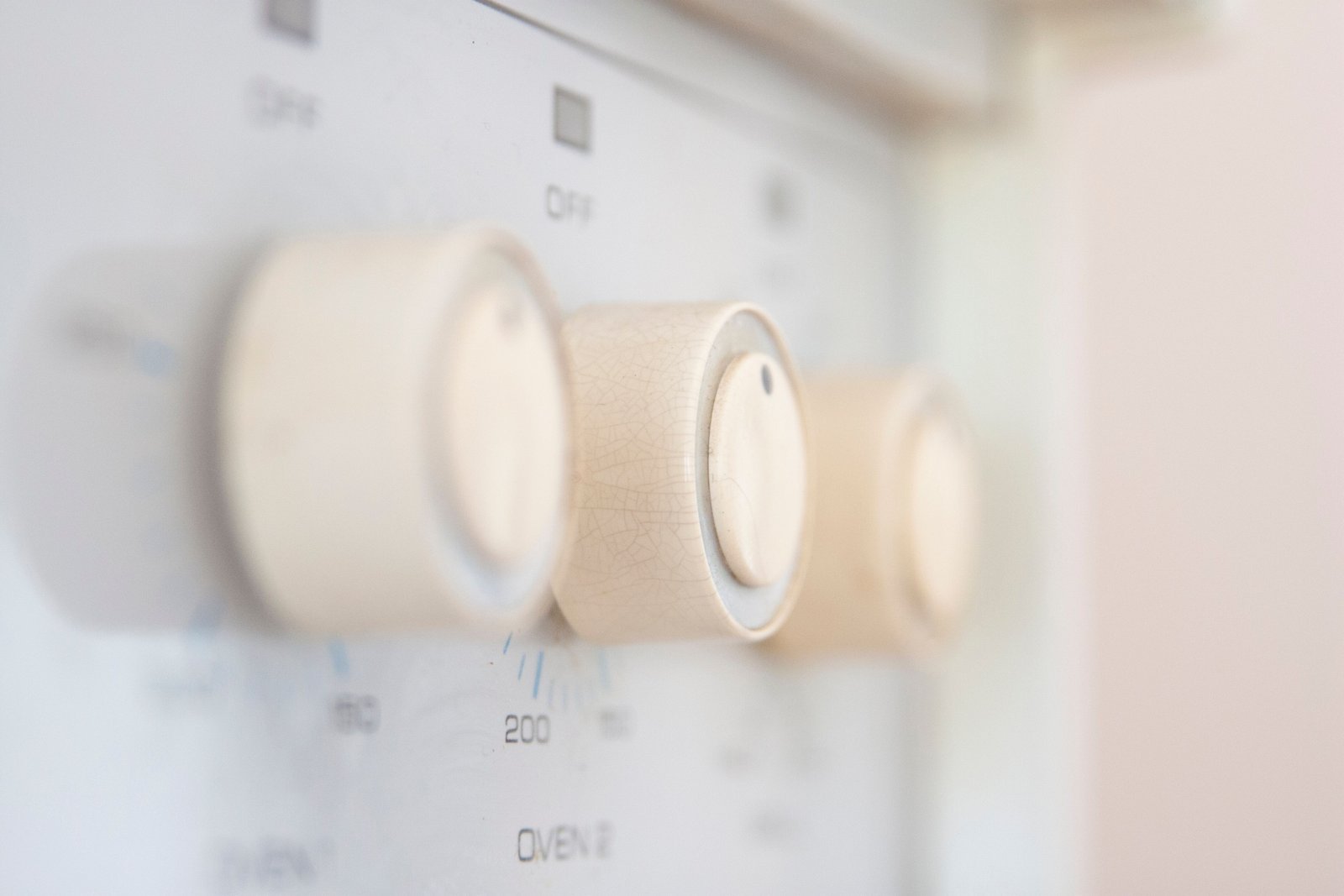
If your range allows, keep knobs where a cat cannot bump them. Some stoves have knobs that pull off, a lock on the controls, or a panel that can be set so a passing tail is less likely to turn a burner on. Use whatever your appliance already supports. Do not improvise a heavy object balanced on the controls. If a knob is easy to spin and your cat patrols the front of the range, that is a safety issue even when you are standing nearby.
Do not leave a loose board, a drying rack, or a slick pan as a stepping stone across the burners. A cutting board that spans from counter to stove is an invitation. Cool and move pans as soon as you can do so safely, and keep the cooktop clear when you are not actively using it. A stacked tray or a wide peel can be just as useful to a cat as a formal bridge.
This is also a good moment to look at the rest of the kitchen as a system, without turning this article into a full counter guide. If the cat is mainly after food on a worktop, handle that as a counter problem. If they open cabinets for a route up, stopping a cat from opening cabinets and drawers matters because an open door can become a step toward the range. Stopping a cat from knocking things off shelves is a different habit, but a crowded shelf above a stove can send objects down onto a still-warm grate. A wider cat-proofing plan for a small apartment can catch other hazards in the same room, including cords and chargers near the worktop.
Give the cat a legal high perch that is easier than the cooktop

A no on the stove is much harder if the stove is the only good lookout. Place a legal high perch as close as the layout allows, and make it easier to reach than the cooktop. A compact cat tree suited to a small apartment can sit just outside the cooking zone, with a top platform that faces the same window or doorway the cat was trying to reach. A window perch on a safe indoor window gives a view without using a back burner as a hallway. Wall-mounted shelves can create a route along a wall that never crosses the grate.
The perch should be steady, easy to jump to, and actually inviting: a soft top, a bit of height, and a view. If the only alternative is a wobbly stool on the far side of the room, the stove will keep winning. In a very tight galley, even a sturdy shelf on the opposite wall can change the math. A scratching post that also offers a platform can help if you do not have floor space for a full tree, though a dedicated high rest is usually clearer.

If the cat’s real destination is a window or a balcony door, sort the safety of that window as its own job. Indoor window and balcony safety matters when a high perch sits by glass. A legal lookout should not require the cat to walk across burners to get there.
Pay the cat for using the legal perch: a calm treat, a greeting, or a short play session there, especially at the times they usually hop onto the stove. You are not bribing them to be good. You are making the better square pay better than the dangerous one.
If you walk in and the cat is already on a warm stove
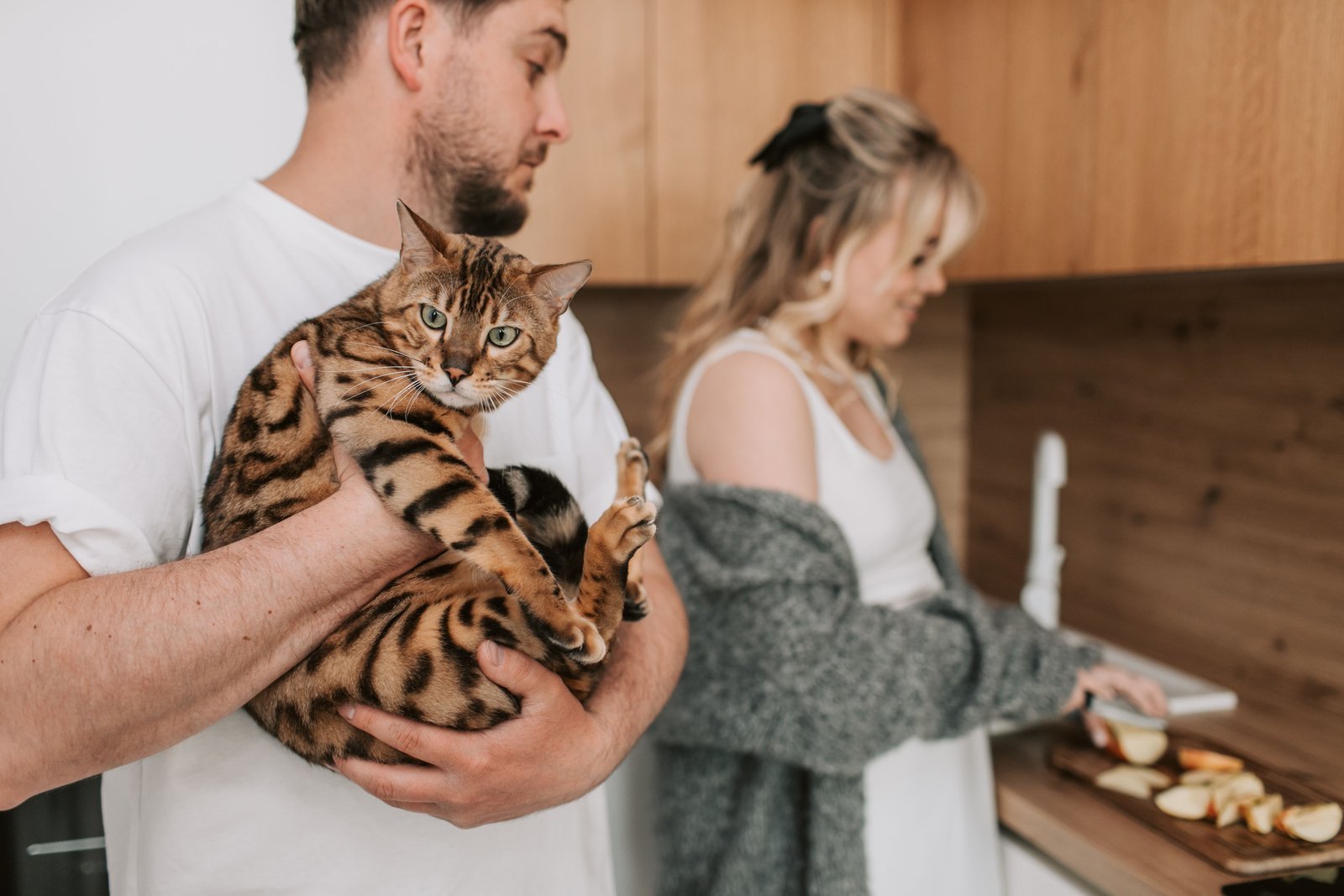
Stay calm. A shout, a clap, or a sudden lunge from you can startle the cat into a jump they cannot control, including onto a hot grate, a knife, or the floor from an awkward height. Do not swipe at them. Do not turn a burner on to teach a lesson.
If a burner is on, turn it off if you can do that without reaching across the cat or pushing them. If the surface is only warm and the cat is moving freely, lure them down with a treat, a toy, or a calm lift if they accept being picked up and you can do it without a scramble. Place them on the legal perch or the floor, then deal with the cooktop. If you think they have already burned a paw, singed a whisker, or landed badly, contact a veterinarian. Do not delay because the skin looks only a little pink, and do not use leftover medication, essential oils, or a home ointment unless a veterinarian has told you to.
Once the cat is down, remove any stepping stone, pan, kettle, or board still on the surface, and give the cooktop time to cool, but only if you can move those objects without a scramble. A second hot object is an easy second landing if the cat jumps back up. Once everyone is clear, look at the paws and whiskers in good light. Any blister, singe, limp, or a cat who hides and will not bear weight on a paw is a reason to call a veterinarian the same day. Then look at why that route was available.
What not to use as training
Skip essential oils, citrus sprays, sticky mats, and shock mats. Many strong scents that seem like a simple barrier are a poor match for a cat who will walk through the residue and then groom. Sticky traps and shock mats can injure paws, create panic, and still fail to teach a safer route. A spray bottle may interrupt one jump and teach the cat to wait until you leave.
There is no honest three-day timetable. A cat who loses the stove as a highway will use a better perch if one exists, and will keep using the cooktop if it remains the easiest high square. Management and a better perch do more than a startling gadget.
A calm starting plan you can repeat
- Never leave a burner on unattended, and never leave one on as a deterrent.
- Treat the cooktop as unsafe until it has cooled, including after the knob is off.
- Keep knobs out of bumping range if your range allows, and do not leave loose boards or slick pans as a bridge.
- Place a legal high perch nearby that is easier and more rewarding than the stove.
- If you find the cat already on a warm cooktop, stay calm, get them down without a startle, and call a veterinarian if you suspect a burn or a bad landing.
- Keep this plan about the cooktop. Food on worktops, cabinets, and shelves are related, but they are not the same problem.
A small kitchen will always have tight geometry. The aim is not a cat who never likes height. It is a cooktop that is not a walkway, a perch that pays better, and a plan that still works on a weeknight when a burner has only just been turned off.
FAQ
Why does my cat walk on the stove when I have counters they could use instead?
In a small kitchen the cooktop is often higher, warmer, and more directly in line with a window or the fridge than the worktop is. Counters are a food and prep problem; the stove is a heat and shortcut problem. Clearing the counters helps, but it will not automatically make a back burner less useful as a path.
Is it enough to turn the knobs off when I leave the room?
Turning burners off is necessary, and you should never leave one on unattended. It is not always enough. Residual heat can remain after the knob is off, and a cat can still bump a knob back on if the controls are easy to reach. Give the surface time to cool, and use any lock or removable-knob option your range already has.
What should I do if I find my cat already on a warm stove?
Do not startle them onto a hot grate. Stay calm, turn off any burner you can reach safely, and lure or lift them down if you can do that without a scramble. If you suspect a burn, singed whiskers or paws, or a bad jump, contact a veterinarian.
Will a citrus spray or a sticky mat teach my cat to stay off the cooktop?
Do not use essential oils, citrus sprays, sticky traps, or shock mats as training. They can be harsh on paws and on a cat who grooms, and they do not give the cat a better high place. A legal perch and a clear cooktop are the safer plan.
How quickly will my cat stop using the stove as a shortcut?
There is no honest three-day promise. If the cooktop remains the easiest route to a window or the fridge, many cats will keep using it. Make the stove a poor path, offer a better perch nearby, and keep management in place rather than waiting for a deadline.