

If you want to wash cat beds and blankets, start with the fabric the cat actually lives on: the bed, a favorite blanket, and any stuffed or fabric toy that has become part of the sleeping pile. In a studio or a one-bed apartment, that pile shares the room where you sit and sleep. A wash habit keeps it from staying damp or sour. It does not replace brushing, and it is not a bath.
This is general information for US and UK cat parents, not a veterinary diagnosis, and not a promise that a certain cycle will make every item smell new. Follow the care label when you have one, and follow the laundry room’s rules if you share a machine. Do not use heavy fragrance, essential oils, or fabric softener as a “cat-safe freshener.” If a bed is moldy, crumbling, or has been peed on repeatedly, it may need replacing rather than another wash. A sudden change in where the cat sleeps can be a health question. Contact a veterinarian rather than treating a new hiding place as a laundry problem only.
This article is the cat’s fabric bedding and soft toys. How to wash dog beds, toys, and leashes at home is the dog version. How to manage cat shedding in an apartment is the hair around the home. How to bathe a cat at home and how to brush a cat at home are the cat, not the bedding.
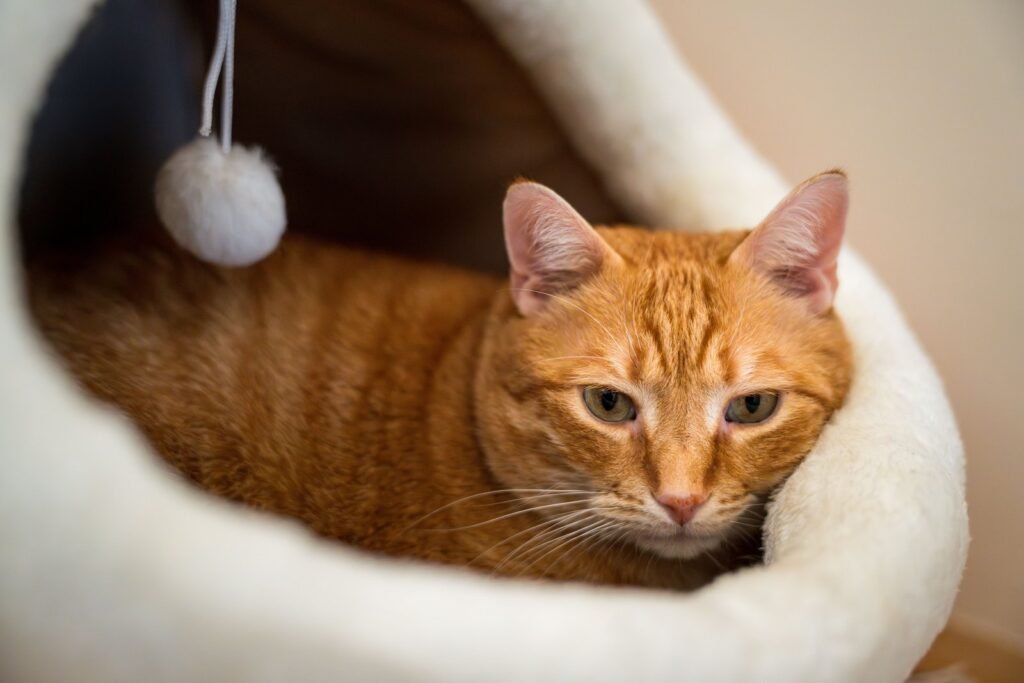
The featured photo is a ginger cat in a soft, cave-style fabric bed indoors, not a wash in progress. The useful part is the kind of item this guide is about: a fabric bed the cat actually uses.
How often is enough, and when a scent is worth keeping
You do not need a rigid calendar. You need a reason to wash and a reason to stop. A bed that looks dusty, feels slightly sticky, or smells sour when you put your face close to it is a candidate. A blanket that has picked up litter crumbs from a nearby box is a candidate. A stuffed toy that the cat still carries around but that smells stale is a candidate.
A bed that simply smells like the cat, and that the cat still uses every night, may not need another cycle yet. Cats often prefer a familiar scent. Overwashing can send a cat to hide or to sleep on a chair instead, especially in a small home where there is no spare bed waiting. If you are washing because you dislike the smell, and the cat is still settled, a milder, less frequent routine is usually kinder than a weekly deep clean.
If the cat has fleas, a wound, or a skin problem, ask the veterinarian what can be washed and what should be bagged or replaced. This guide is not a flea protocol and not a treatment plan.
When you do wash, try not to strip every sleeping place on the same day. Leave one familiar blanket or a second bed out while the first load dries. That small overlap is often the difference between a cat who waits and a cat who disappears under the sofa.
Strip the cover, and get the hair off first
If the bed has a zipper, read the label, then unzip the cover and see what is inside. A removable cover is often the part that actually needs the machine. The inner cushion may only need a wipe, a gentle airing, or a much rarer wash, depending on what the maker says. Washing a whole cushion “to be thorough” can wreck a filling, leave a damp core, and take days to dry in a small apartment.
Hair should come off before the machine, not inside it. A rubber brush, a lint roller, or a damp rubber glove over the surface will pull a surprising amount of fur. Shake the cover outdoors or over a bin if you can do that without sending hair back into the room. If you skip this step, hair can mat in the drum, cling to other laundry, and leave a film on a shared apartment machine.
Check pockets, seams, and the inside of a cave bed for toys, treats, or a stray hair tie. Take out anything that should not go in water. If the cover has a tough stain, pretreat only with a product the label allows, and rinse it well. You do not need a heavily scented stain spray to get cat bedding clean.
If hair is heavy, do a second pass before you add detergent. A shared apartment machine is easier to leave clean if you wipe the drum rim after the cycle and check the filter or lint trap when the room has one. That is ordinary courtesy, and it also keeps the next load from wearing your cat’s fur.
Best cat beds for small apartments can help you choose a bed that is actually easy to strip the next time. A washable cover is often more useful in a tight home than a bulky bed you cannot take apart.

Wash in a machine, or by hand when the label says so
Use the cycle the label recommends, or a gentle, cool or warm cycle if the label is missing and the fabric looks sturdy. Unscented detergent is the safer default. Skip fabric softener. Skip essential oils, scented beads, and “pet-safe” fragrance claims you cannot verify from the label. A small measured amount of ordinary unscented detergent is enough for a cover and a blanket. More soap does not mean a cleaner bed; it often means more residue.
If you share a building laundry room, follow the posted rules. Some rooms bar pet items, bulky beds, or items that shed hair. If the rules say no, wash at a friend’s machine, use a laundry service that will take pet bedding, or wash by hand in a tub. Hand washing is slower, but it is often the right move for a delicate cover, a small stuffed toy, or a day when the laundry room is not an option.
For a stuffed or fabric toy, check for a battery compartment, a crinkle liner, glued-on eyes, or a seam that is already splitting. If water would ruin the lining or expose stuffing, do not put it in the machine. A surface wipe and an airing may be all that toy can take. If you do wash a simple fabric toy, use a mesh bag so it does not disappear into a drum or catch on a zipper.
Wash like items together: covers with covers, blankets with blankets, when you can. A heavy cushion with a thin blanket can leave the blanket twisted and still damp in the middle. Do not overfill a compact machine. Bedding needs room to move if it is going to rinse clean.

Dry them in a small home without a damp smell
Damp cat bedding in a small room becomes a smell problem faster than people expect. Do not leave a wet cover in the machine overnight, and do not pile a half-dry cushion on the sofa “for later.” If the label allows a low dryer cycle and you have access to a dryer, that can be the fastest way to finish a cover or a blanket. Do not put a heated pad, a metal-framed bed, or anything with a hard insert in the dryer.
If you are drying at home without a dryer, spread the item out. A drying rack, a shower rail, or the back of a chair can work if air can move around the fabric. Flip the cover. Squeeze a cushion in a towel first if you had to wash the filling. A fan in the room helps more than a closed wardrobe. The goal is dry fabric, not a warm, closed pocket of air.
Return the bed only when it is fully dry. A slightly damp cushion will smell by morning, and the cat may refuse it. If the cat avoids the bed after a wash, offer the familiar spare blanket first, then the freshly washed bed once both are in the same room. You are trying to keep a sleeping place, not to surprise the cat with a totally new scent all at once.
Best cat tunnels and hideaways for small apartments are a separate kind of fabric den. Some can be wiped or spot-cleaned; some have parts that should not go in a machine. Treat them by the label, not as if they were a simple blanket.

What not to wash, and when to replace the bed
Do not wash looped sisal, a cardboard scratcher, or any scratcher surface that is meant to shred. Water will not “refresh” those; it will ruin them. Do not wash a heater insert, a wired pad, or a self-warming panel as if it were a cushion. Best self-warming pet beds for apartments are a different product, and the warm insert stays out of the washer and the dryer. If the fabric cover is removable, wash the cover only.
Skip a toy with a battery, a speaker, or a crinkle liner that is not made to get wet. Skip anything with a metal frame. Skip a bed that is already moldy or crumbling; replacement is safer than trying to rescue it with a hotter cycle.
A bed that has been peed on once may still be washable if the filling can actually be cleaned and dried. A bed that has been peed on repeatedly, or that still smells after a proper wash and a full dry, is often done. Best washable pee pads for apartments are for a different job than a cat bed; they are not a way to keep a soaked cushion in service. If the cat is suddenly peeing on the bed, or suddenly refusing every sleeping place, that is a health question, not only a laundry question.
If you are washing a blanket the cat loves, it can help to wash one item and keep the other in use, then swap them later. That rotation keeps a familiar scent in the room without leaving dirty fabric in the pile all month.
A calm starting plan is enough: pick one cover or one blanket, get the hair off, use unscented detergent, dry it fully, and leave the cat a familiar spare while it dries. Repeat when the fabric actually needs it, not because the calendar says so. If the first wash goes well and the cat returns to the bed, you have a routine you can reuse. If the cat avoids the bed, slow down, offer the spare, and do not stack more fragrance on top of the problem.
FAQ
How often should I wash a cat bed in a small apartment?
Wash when the bed is dusty, sticky, or sour, not on a fixed weekly rule. A familiar scent is often useful to the cat, and overwashing can send the cat to hide. If you share a tight room with the bed, a practical middle is to wash a cover when it looks or smells dirty, and to leave a spare blanket out while it dries.
Can I put the whole cushion in the washing machine?
Only if the care label says the whole cushion can be washed, and only if you can dry it fully. Many beds are designed so you unzip the cover and wash that part. A damp filling in a small home is a smell problem, and a filling that cannot dry may need to be replaced rather than washed again.
What detergent should I use on cat bedding?
Use a small amount of unscented detergent, and skip fabric softener, essential oils, and heavy fragrance. You are cleaning hair and everyday dirt, not adding a “cat-safe” scent. If the cat has a skin problem, ask the veterinarian before you introduce a new product.
Can I wash a stuffed cat toy with the blankets?
Sometimes, if it is a simple fabric toy with no battery, no crinkle liner that cannot get wet, and no loose parts that could come off. Use a mesh bag, and check the seams first. If you are not sure, wipe the surface and air it instead of guessing.
When should I replace a cat bed instead of washing it?
Replace a bed that is moldy, crumbling, or still smells after a proper wash and a full dry, or that has been peed on repeatedly. A sudden change in where the cat sleeps, or new peeing on the bed, can be a health question. Contact a veterinarian rather than running another cycle and hoping the cat will come back.
[…] wash is not the same job as washing cat beds, blankets, and toys at home. Keep the box, the scoop, and the bedding in separate wash loads and separate […]
[…] You do not need a special machine. A hand vacuum, a broom and dustpan, or the vacuum you already use on the living-room rug is enough if you use it near the box each day. Pay attention to corners, the underside of a bathroom rug, and the first few feet of hallway flooring, where granules hide and then stick to socks. A thirty-second pass at the same time you scoop is easier to keep than a long clean you keep postponing. If litter is already in a throw or a bed, shaking it into the hall only spreads the problem. That is when washing the fabric becomes the next job, which is covered in a guide to washing cat beds, blankets, and toys at home. […]