


If you are choosing the best pet-proof trash cans for small apartment kitchens, judge the can by whether a dog, and some cats, can open it, tip it, or reach in, not by how many extra buttons are on the lid. The useful goal is a closed can that fits a tight kitchen and stays closed between uses, not a model shootout and not a yearly list.
This is a buying guide for apartment pet parents in the US and UK, not a brand ranking, not a price list, and not a promise that any can will stop a determined dog on its own. A can is only half the job. The behavior plan lives in how to stop a dog from getting into the trash in a small apartment. Buy a lid that stays shut, and still keep tempting leftovers out of an open bag.
The featured still is a compact wood-and-metal cabinet bin with a tilt-out front and an inner bucket. It is a product-style image and may be a computer-generated render, not a lived-in kitchen, and it is not a recommendation of a brand or a model. What matters in the picture is the idea: the waste sits behind a front that closes, so a nose cannot go straight into an open pail.
What “pet-proof” has to mean in a small kitchen
In a small apartment, the can often sits in the walkway, beside a cabinet, or at the end of a short run of counters. A dog can reach it in one turn. A cat may hop to the rim if the lid is left up. “Pet-proof” here means the opening is covered, the lid or front stays closed unless you open it, and the base is stable enough that a shoulder bump does not spill the bag. It does not mean the can is impossible to defeat, and it does not mean you can leave chicken bones in an unlocked bin overnight and hope for the best.
An open can fails that test even if it looks tidy. Mesh office wastebaskets, lidless plastic pails, and swing lids that stay stuck open all leave food smell and a rim a pet can investigate. If your current can is open and the dog has already won once, changing the can is reasonable. Changing the can does not replace the training plan in the behavior guide above.

This is the type of open can a dog can tip or reach into, not a kitchen pet-proof can. The paper on the floor is the honest part of the still: once waste is outside the rim, a pet does not need to open anything. If your kitchen can looks like this, start with a lid that closes fully, then pick a size that still fits the gap beside your cabinet.
Lids, latches, pedals, and tilt-out fronts
A tight-fitting lid is the first filter. You want a lid or a cabinet front that sits fully down after you drop something in, and a latch or lock you will actually use if the dog has already learned to nose a loose lid up. A lock is only useful if you close it every time. If you will not bother with a slide latch, a heavy lid or a pedal that drops shut on its own may be a better fit than a lock you leave open.
Pedal cans and step cans let you open the lid with a foot so you are not leaving a dirty hand on a handle the dog then licks. In a tight kitchen, check that you can press the pedal without the can sliding, and that the lid does not slam in a way that spooks a nearby dog or cat. Some lids bounce and stay slightly open; that gap is enough for a determined nose. Watch the lid fall closed a few times in the store or after delivery, if you can, before you decide.
A tilt-out or drop-front cabinet, like the idea in the featured still, hides the inner bucket behind a front panel. That can work well when you have a narrow slot at the end of a run of cabinets and you want the can to look like furniture. Confirm that the front latches or sits heavy enough that a dog cannot hook it open, and that you can lift the inner bucket out in a small kitchen without walking the bag across the whole floor.
A slim indoor bin with a lid is often enough if your trash volume is low. It should still close between uses.

This is a compact indoor bin in a studio setup, shown open while a jar is dropped in, not a kitchen pedal can and not a brand to buy. The useful detail is the size and the fact that it has a lid. Between uses, that lid should sit closed so a dog or cat cannot reach in. An open demonstration shot is not how the can should live in the corner of a small kitchen.
Size, placement, and a walkway that still works
Measure the gap you actually have: beside the cabinet, in a pull-out, or at the end of a short counter. A can that is too tall can become a step toward the counter, which matters if you are also working on how to stop a dog from counter-surfing in a small kitchen or how to keep a cat off kitchen counters. A can that is too wide blocks the path to the fridge. In a small kitchen, a slightly smaller can you empty more often is usually better than a large can that owns the walkway.
Place the can so a tail or a passing crate does not knock it over, and so a cat cannot use the lid as a perch next to food prep. If you feed a dog and a cat in the same small apartment, keep the can away from the feeding spot so spilled kibble and trash are not one investigation. Our guide to feeding a dog and a cat in the same apartment covers the feeding layout; the can should sit outside that zone.
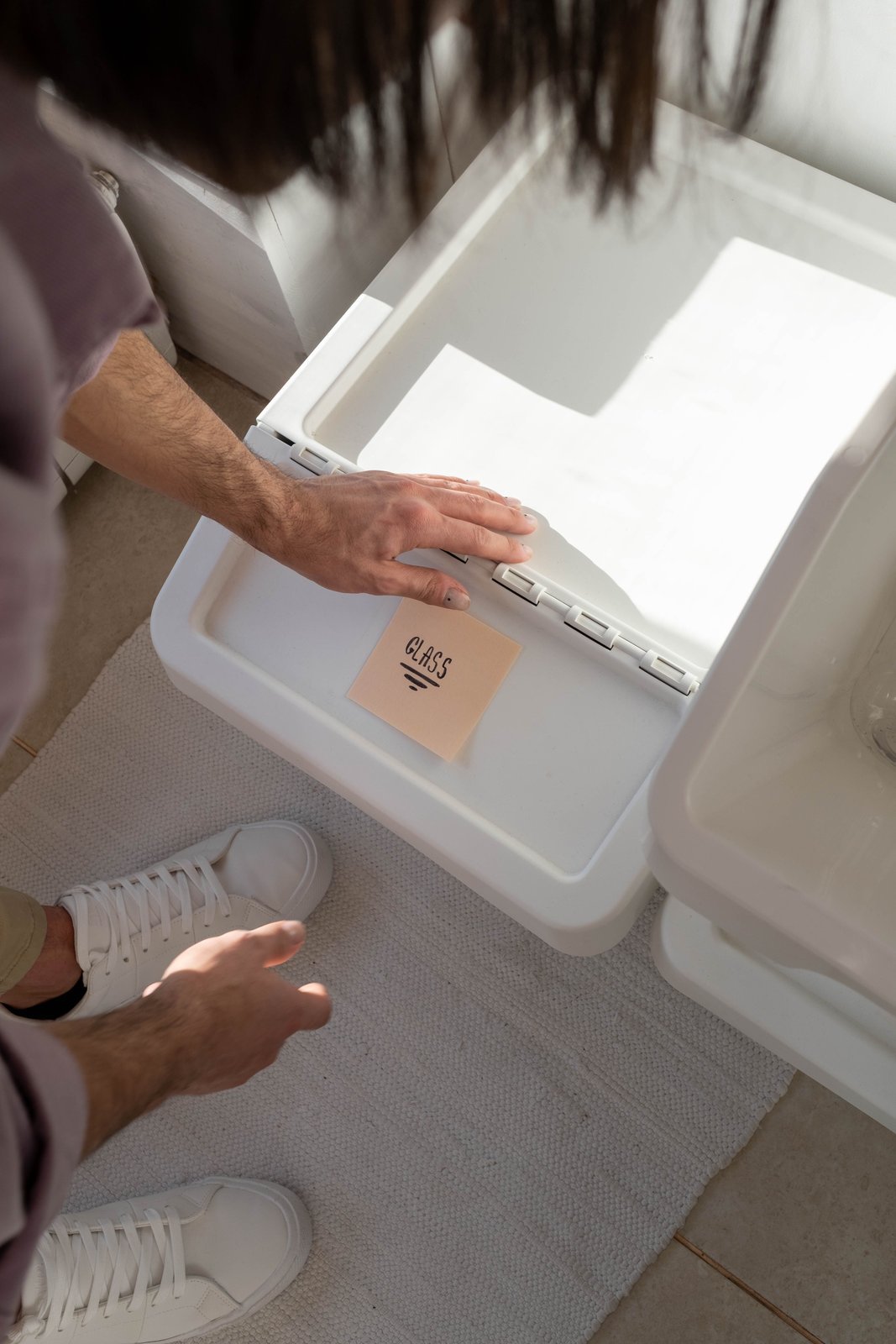
These are indoor recycling totes with hinged lids, not a kitchen pedal can. The honest use of the still is the lids in a tight indoor space: a covered opening on a compact footprint. If you sort trash and recycling in a small kitchen, you may need two small lidded cans rather than one large open one. Label the lids if that helps you close the right one, and keep both closed.
A hooded or swing lid can also cover the opening in a tight corner, but only if the lid actually sits down. A bag left draped over the rim creates a gap a pet can work at.
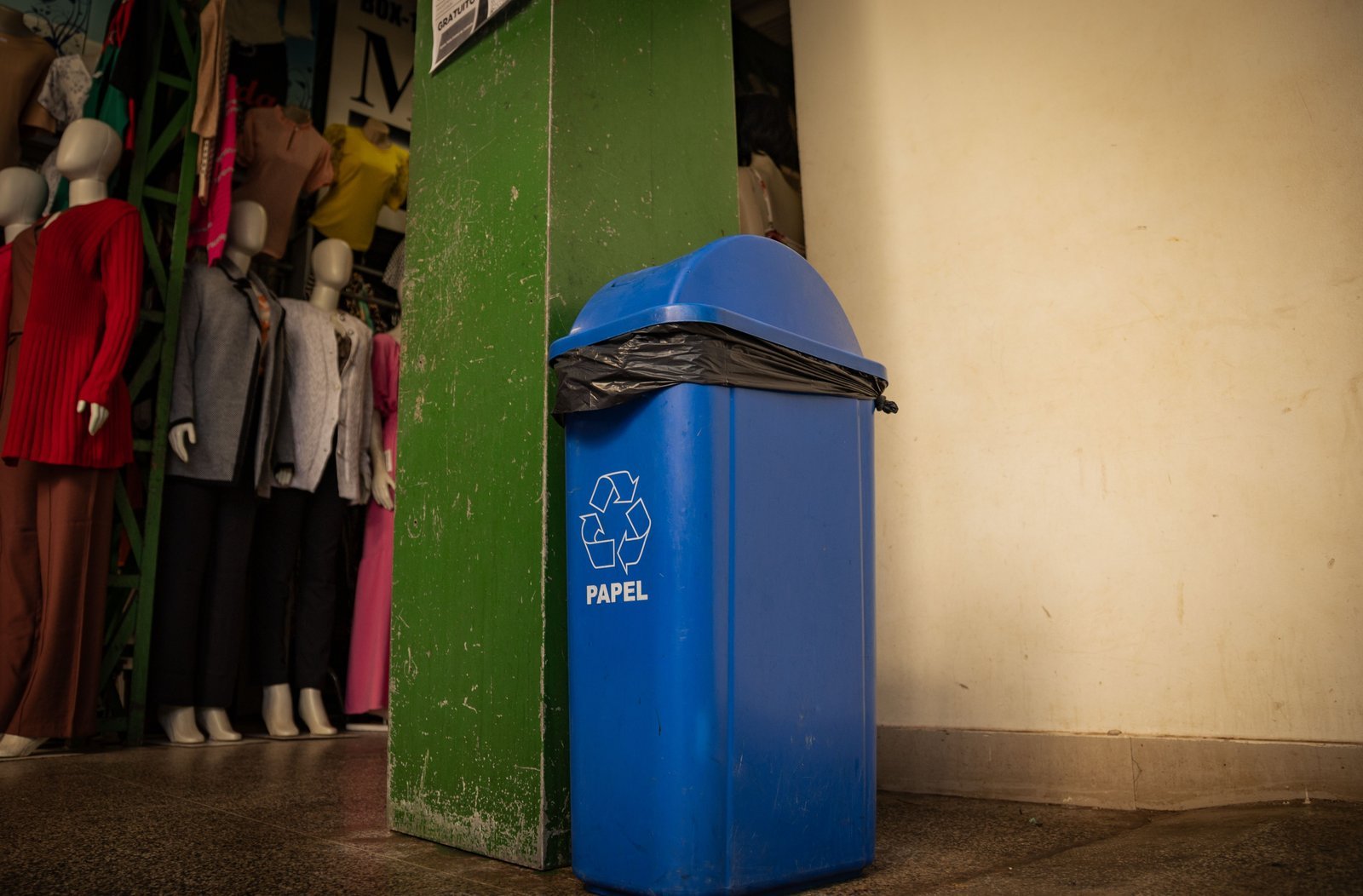
This is a shop can, not a home kitchen model, and the bag hanging over the rim is the caution in the frame. A hooded lid only helps when it sits fully down and the bag is inside, not hooked over the edge. If you come home and the lid is propped on a full bag, empty the can rather than leaving a gap overnight.
Odor, bags, and what still belongs in the can
Odor is harder to ignore in a small apartment. A lid that closes helps, and so does a bag that fits the inner bucket without hanging over the side. Empty food-heavy trash more often than you would in a large house, especially in warm weather. A tight-fitting lid is not a reason to leave fish or greasy leftovers in the can for days.
This kitchen can is not a litter disposal bin for apartments. Litter has its own smell and its own bin; mixing the two usually makes the kitchen can harder to live with. Food that is still in the bag or box belongs in pet food storage containers for small kitchens, not in an open trash pail “for later.” If a pet already got into the can and left a mess, clean with an enzyme cleaner made for pet accidents rather than a perfume spray that only covers the smell, and see how to reduce everyday pet odors in a small apartment for the wider odor plan.
Scrape plates into a small, lidded caddy or a bag you tie before it goes in the main can if your dog is a trash specialist. The buying choice still matters, but the contents matter too. No can on this page is being ranked, priced, or named as a winner, and nothing here is a “best of” list for a year. Choose by latch, size, and odor, then use the lid every time.
A step can and a pedal can are close cousins: both let you open the lid without a hand on the handle. The difference is often the size of the foot plate and how completely the lid drops. In a narrow galley, try the motion with the side of your foot while you are holding a plate. If you have to kick the can away from the wall to reach the pedal, the can is too deep for that gap, even if the lid design is otherwise sound.
Weight and material matter more than a shiny finish. A very light plastic can slides on tile and is easier for a dog to shove. A heavier can, or one with a wider base, stays put when someone bumps it in a tight kitchen. You do not need a specific metal, and you do not need a brand name on the lid. You need a can that does not skate, plus a lid that still closes after the bump.
If your kitchen has a cabinet with a spare slot, a pull-out, or a pantry door that can close after dinner, that placement can add a second barrier without buying a larger can. The inner can should still have its own lid, because a cabinet left ajar is not a barrier. After the evening meal, closing that door is often easier than arguing with a dog who has already learned the route to the bag.
A second small lidded can by the entry is useful only if you also close it. An open bin for mail or dog-walk bags can become a second trash target. Keep food waste in the kitchen can, and do not use an open pail in the hall as overflow.
If you already have a sturdy lidded can and the dog is still winning, go back to the behavior guide and change what goes in the bag, when you empty it, and whether the can can move behind a closet door after dinner. The can you buy should make that plan easier, not try to replace it.
FAQ
Is a pedal can enough to keep a dog out of the trash?
It can be, if the lid drops fully shut and the base does not slide when the dog bumps it. A pedal is not enough if the lid bounces open or if you leave the bag hanging over the rim. Some dogs also need a latch, plus the behavior plan linked in the body.
What size can works in a small apartment kitchen?
Measure the gap beside the cabinet or in the walkway, and pick a can that leaves a clear path and is not tall enough to become a step toward the counter. A slightly smaller can you empty more often is usually easier to live with than a large can that blocks the fridge.
Are locking lids worth it if I also have a cat?
A latch or lock helps if a dog has already learned to nose a loose lid up, and it can also discourage a cat that hops to the rim. It is only worth it if you will close it every time. If you will not, a lid that falls shut on its own may be the better fit.
How do I control odor without a huge can?
Use a lid that closes, a bag that fits inside the bucket, and more frequent emptying when the trash is food-heavy. Keep litter in its own bin, and do not store open pet food in the trash “for later.” A perfume spray will not fix a lid that stays open.
Should I still change how I throw food away if I buy a better can?
Yes. A closed can helps, but leftover bones, wrappers with food on them, and an overflowing bag are still a draw. Tie messy scraps, empty the can when it is full, and use the behavior guide if the dog is still getting into the trash.