


If you are looking for the best soft-sided travel crates for weekend trips, you are shopping for a foldable den that can sit in a car, a hotel room, or a temporary corner, then pack down when you go home. That is a different product from the crate that lives in your apartment, and it is different again from a tote, a backpack, or a hard airline kennel. The useful question is not which brand won a test. It is whether this crate will fold, fit the space you actually have, and still feel like a place to rest.
This is a buying guide for pet parents in the US and UK, not a ranked list, and not a set of invented prices or test scores. A good result is a crate the pet can stand, turn, and lie down in, with a frame that does not collapse, zippers the pet cannot easily open, a pad you can wash, and a weight you can carry up a flight of stairs. A soft crate is a poor fit for a determined escape artist, for a pet left alone to chew the fabric, or for cargo-hold travel. If you will fly, check the airline’s current carrier rules. Do not rely on a tag that says the crate is approved.
A weekend travel crate is not your home crate
A guide to dog crates for apartments is about the crate that stays in the living room or the bedroom most of the year. Crate training a dog in an apartment is the work of teaching that crate as a rest place at home. A travel crate can support that habit on the road, but it does not replace the home crate, and this article will not rewrite a training plan. If the pet already rests in a crate at home, take a familiar pad or bed into the travel crate so the new frame still smells like a known place. If the pet has never used a crate, start that work at home, well before the weekend, rather than at the hotel door.
Soft-sided models earn their place because they fold. In a small car, a hotel corridor, or a studio you are borrowing for two nights, a rigid wire crate can be awkward to carry up stairs and awkward to store once you arrive. A fabric crate with a frame can sit in a corner, then flatten for the drive home. That is the job. It is not a promise that every pet will nap in it on the first night.
A bedroom or a temporary room often becomes the place the crate lives for the weekend. The still of a dog already comfortable on a bed is a room scene, not a crate demonstration. If the pet already likes a corner of the room, set the travel crate near that spot, not in the middle of the traffic path to the bathroom.
Do not confuse it with a carrier, a backpack, or a stroller
The crate you want for a weekend den is not the same as the bag you use to get a cat to the vet. Guides to cat carriers, dog carriers and backpacks for city travel, and cat backpacks cover those products. A sling or a backpack on a trail can be a useful way to move a small dog, but it is not a soft-sided travel crate, and it is not a place to leave the pet while you go to dinner.
A pet stroller is another separate tool. So is a travel litter box if you are traveling with a cat. You can pack those items alongside a crate. You should not expect one bag to do every job.
If the pet still needs help getting used to being in a smaller space, work on that at home before the trip. For cats, getting a cat comfortable in a carrier and helping a cat ride in the car are the right skills, and they are not the same as choosing a weekend crate. For dogs, a taxi or a bus raises its own issues, covered in helping a dog ride in a taxi or rideshare and taking a dog on public transit. A travel crate can make a car ride calmer. It does not replace a plan for those other ways of getting around.

Size, frame, zippers, and a pad you can wash
Measure the pet, then measure the crate. The pet should be able to stand without a hunched back, turn around, and lie down on its side. A crate that is tight in the apartment will feel worse in a new room. A crate that is huge may not fit on the back seat or in a hotel corner, and it will be heavier on the stairs.
Look at the frame. Some soft crates have a stable, stitched or pole frame that keeps the roof up when the pet leans on a wall. Others are floppy pop-ups that sag, fold in on themselves, or tip when the pet turns. A floppy crate is lighter, but it is a poor den if the pet feels the walls collapse. Set the crate up at home and watch it with the pet inside before you trust it on a trip.
Check the zippers and the door. You want closures the pet cannot easily open with a nose or a paw, and a door that stays shut when the crate is bumped in a car. You also want to be able to open it quickly if you need to get the pet out. Look at the seams around the mesh windows. Loose mesh and weak stitching are common failure points.
The pad should come out and go in a washer, or at least wipe clean. Weekend trips include wet paws, shed hair, and the occasional accident. A pad that is sewn in and hard to clean will not get used after the first messy night. Pack a spare towel or a second pad if you have one, so the crate can still be used while the first pad dries. Wipe the floor of the crate if it gets wet, and let the mesh dry before you fold it, so you are not packing a damp crate into a closed car.
Weight matters more than it does at home. Lift the empty crate, then imagine it with the pad and a travel bowl inside, and think about a walk-up, a train platform, or a long walk from a parking garage. A crate that is fine in a house with a garage can be a poor choice for a fourth-floor walk-up.
Fit in the car, and when a soft crate is the wrong tool
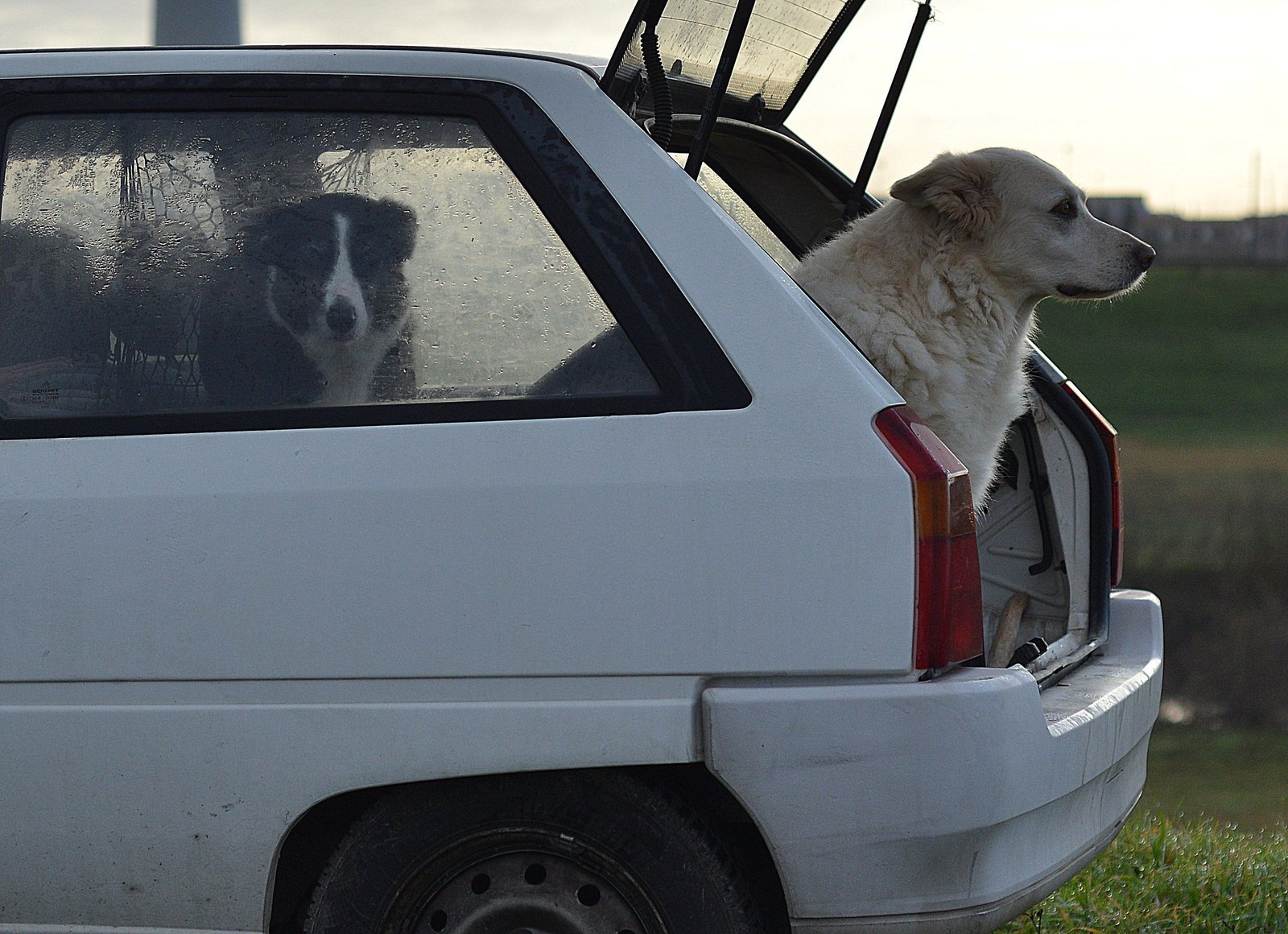
In a small car, the crate has to share space with people and luggage. Measure the back seat or the cargo area, including the height under the parcel shelf. The crate should sit level and stay in place when you brake, using the car’s existing belts or a stable position against the seat, according to the crate maker’s instructions and the car’s manual. This article will not invent a tying method. If the crate slides or tips in a short test drive around the block, it is not ready for a weekend on the highway.
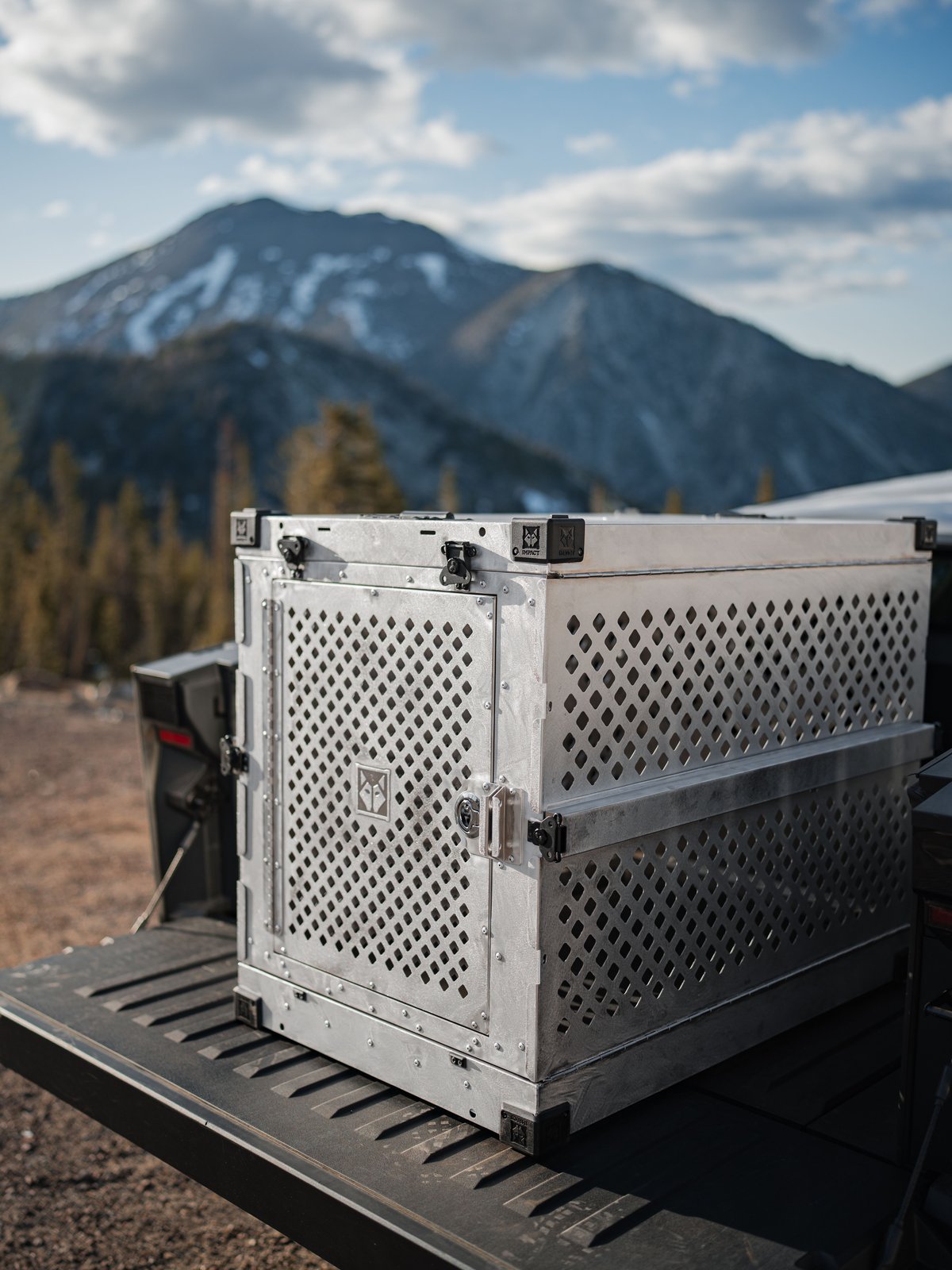
A hard metal crate on a truck bed is a different product. It can be the right tool for a pet that escapes fabric, chews zippers, or rides in an open cargo area, but it is not a soft-sided travel crate, and it is usually heavier and less convenient on hotel stairs. The photo of a silver metal crate on a tailgate is useful as a contrast, not as a recommendation in this guide.
Skip a soft crate, or use it only when you are in the room, if the pet is a determined escape artist or a chewer. Unsupervised time in a fabric crate can end with a hole in the mesh or a zipper pulled open. In those cases, a hard crate, or staying in the room with the pet, is the safer plan. Soft crates are also the wrong tool for cargo-hold travel. If the pet must travel in cargo, you need to check the airline’s current crate rules and use the type of crate those rules describe. Do not treat a fabric weekend crate as a cargo kennel, and do not trust a product page that claims approval without reading the airline’s current text.
What a good weekend setup looks like
Set the crate up as soon as you arrive, with the familiar pad and a shirt or a small blanket that already smells like home if the pet likes that. Leave the door open at first if the pet is unsure. Offer water nearby, and keep the crate out of a draft, a heater vent, and a busy doorway. You are not trying to make a show den. You are trying to give the pet one predictable corner in a room that is not theirs.
If you will be in and out of a hotel or a borrowed flat, do not leave a chewer or an escape artist in a soft crate unsupervised. Take the pet with you, use a sitter, or choose a different containment plan. When you pack to leave, let the crate dry if it is damp, brush out the pad, and fold it the way it was designed to fold so the frame is not bent. Check the zippers and the mesh for new holes before the next trip, and stop using a crate that the pet can already open or tear.
A suitcase on a trip is a reminder that everything, including the crate, has to earn its space. If the crate is too heavy, too tall for the car, or too flimsy to stay up, it is not the right weekend tool, no matter how compact it looks on a shelf.

FAQ
How big should a soft-sided travel crate be?
The pet should be able to stand without a hunched back, turn around, and lie down on its side. Measure the pet and the space in the car or the hotel corner, and do not buy a crate that only looks compact on a shelf.
Is a floppy pop-up crate good enough for a weekend trip?
It can be, if it stays up when the pet leans on a wall and if it fits your car. If the roof sags or the crate tips when the pet turns, choose a model with a more stable frame.
Can I use a soft crate for airline cargo travel?
Do not assume so. Check the airline’s current crate rules and use the type of crate those rules describe. A fabric weekend crate is the wrong tool for a cargo hold.
When is a soft-sided crate a poor choice?
It is a poor fit for a determined escape artist, for a pet that chews fabric or zippers, and for any time the pet would be left in it unsupervised to chew. A hard crate, or staying in the room, is safer in those cases.
Should this crate replace my home crate or my vet carrier?
No. Keep the everyday home crate and the carrier you already use for vet visits. The weekend crate is for a foldable den in a car, a hotel room, or a temporary corner.