

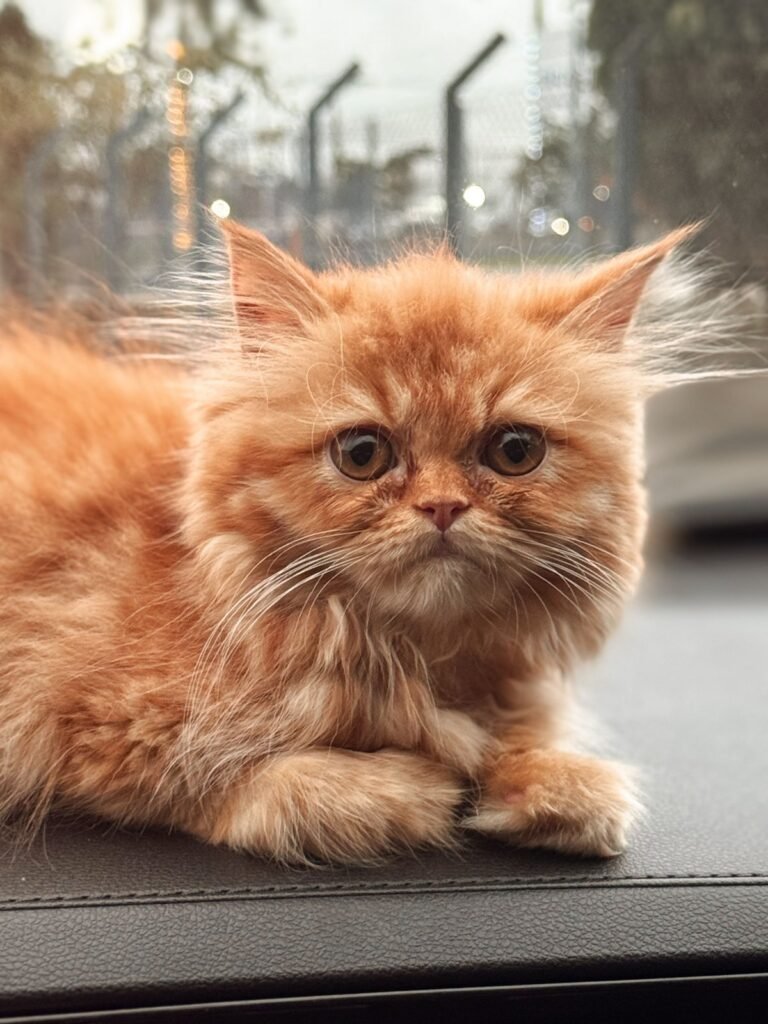
If you want to help a cat ride comfortably in the car, treat the ride as its own skill: a short trip from an apartment to the vet, or an occasional weekend drive, with the cat in a carrier that stays shut. This is not a carrier-introduction article and not a clinic-visit article. The useful goal is a carrier that cannot slide, a short ride, and no loose cat in the cabin, not a silent, “happy” traveler.
This is general information for apartment cat parents in the US and UK, not a veterinary diagnosis. Do not invent a sedative, a pheromone ranking, or a required calming supplement. If the cat vomits repeatedly, panics hard enough to risk injury, or has a known heart or breathing condition, that is a conversation for your veterinarian. Do not prescribe a product from this page.
Why the car ride is its own job
A cat that only rides a few times a year often has no practice between vet visits. The carrier may come out of a closet once or twice a year. The cat may vocalize the whole way, toilet in the carrier, or bolt when a door opens in a garage or at the curb. In an apartment, you also have to stage the carrier in a small hallway, get down a tight elevator or stair, and sometimes wait for a rideshare downstairs. Those steps happen before the engine even starts.
The most important rule is also the easiest to break when you are rushed: never leave the cat in a hot or cold parked car while you go back upstairs for keys, a wallet, or a litter bag. A parked car can become dangerous faster than a quick trip upstairs feels. Finish your packing, then bring the cat down last.
This plan sits next to, but is not a rewrite of, getting a cat comfortable in a carrier or getting a cat comfortable at the vet. Use those guides for the longer work of accepting a carrier or a clinic. This article is the ride between the apartment and the destination. It is also different from helping a dog ride in a taxi or rideshare, which is a dog skill with a different restraint setup.
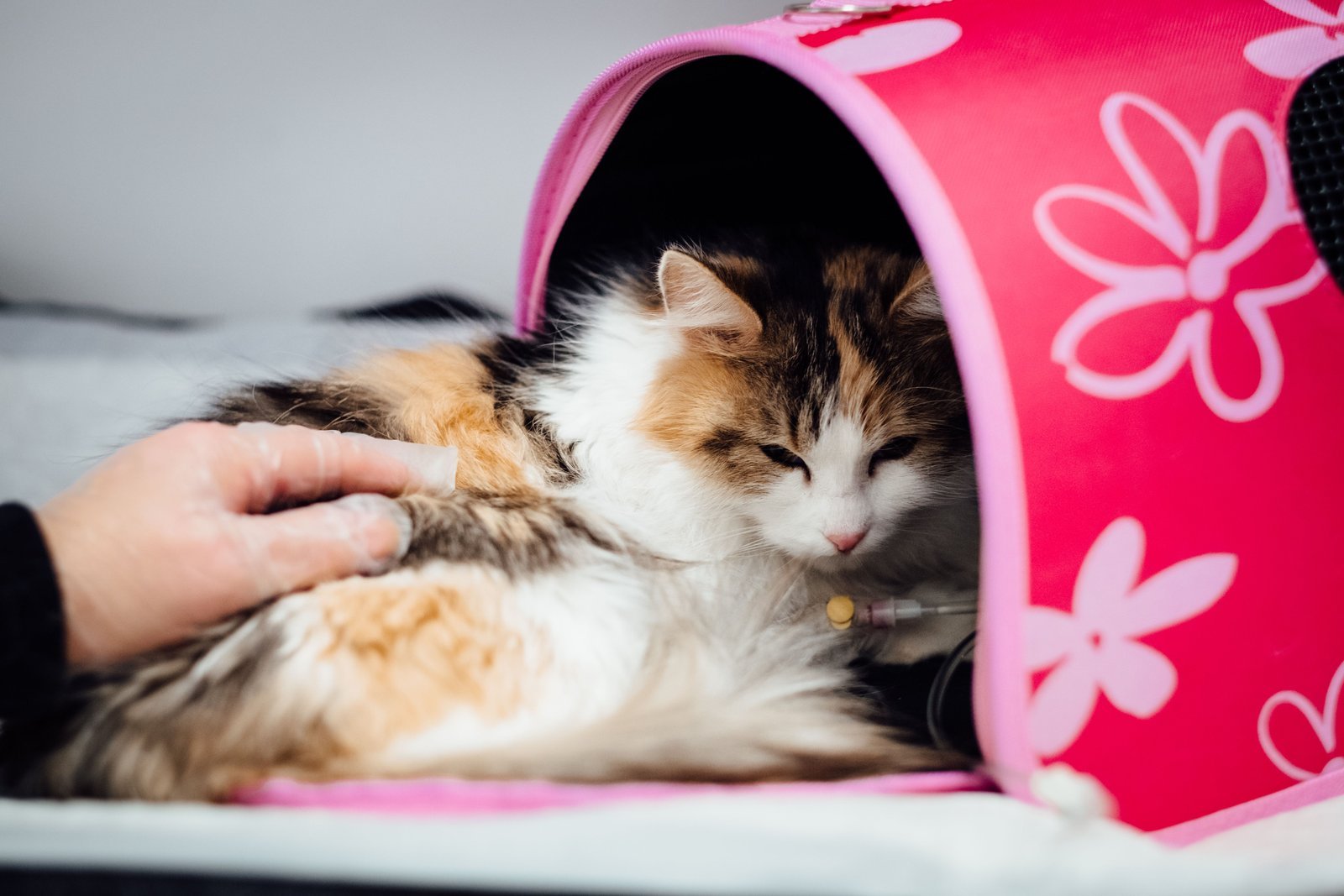
A soft-sided carrier on a clinic table is an honest picture of why many short rides exist: a vet visit. The official title mentions a person holding a cat; what you can see is the cat at the opening of a pink floral carrier, with a hand on its back and an IV line at its chest. The medical care is the clinic’s job. Your job on the way there is a carrier that stays shut and does not slide around the cabin.
Start with a carrier the cat already accepts
Do not make the first hard car ride the first time the cat meets the box. If the cat does not already go in willingly, pause the “practice drive” and spend time on the carrier at home first. A hard-sided or soft-sided cat carrier that opens from the top as well as the front is often easier to load in a small hallway than a single-door model you have to push the cat through. A cat backpack made for apartment travel can work for some cats, but only if the cat already accepts it and you can keep the pack closed and stable in a seat. A backpack is not a reason to skip a seatbelt or a wedge.
Stage the carrier in the hallway or just inside the door before you pick the cat up. In a tight entry, set it on a stable surface, open the door, and have a towel ready. Close the carrier fully, check the latches, and do not leave a zipper or door half done because you are late. Carry the closed carrier with two hands on stairs. In an elevator, keep the carrier off the floor if people and dogs are crowding in, and wait for the next car if you need space.
If you are moving to a new apartment with a cat, the same ride rules apply, just for a longer day. If you are instead leaving a cat home alone for a weekend, you do not need a car plan at all. Do not mix those jobs.
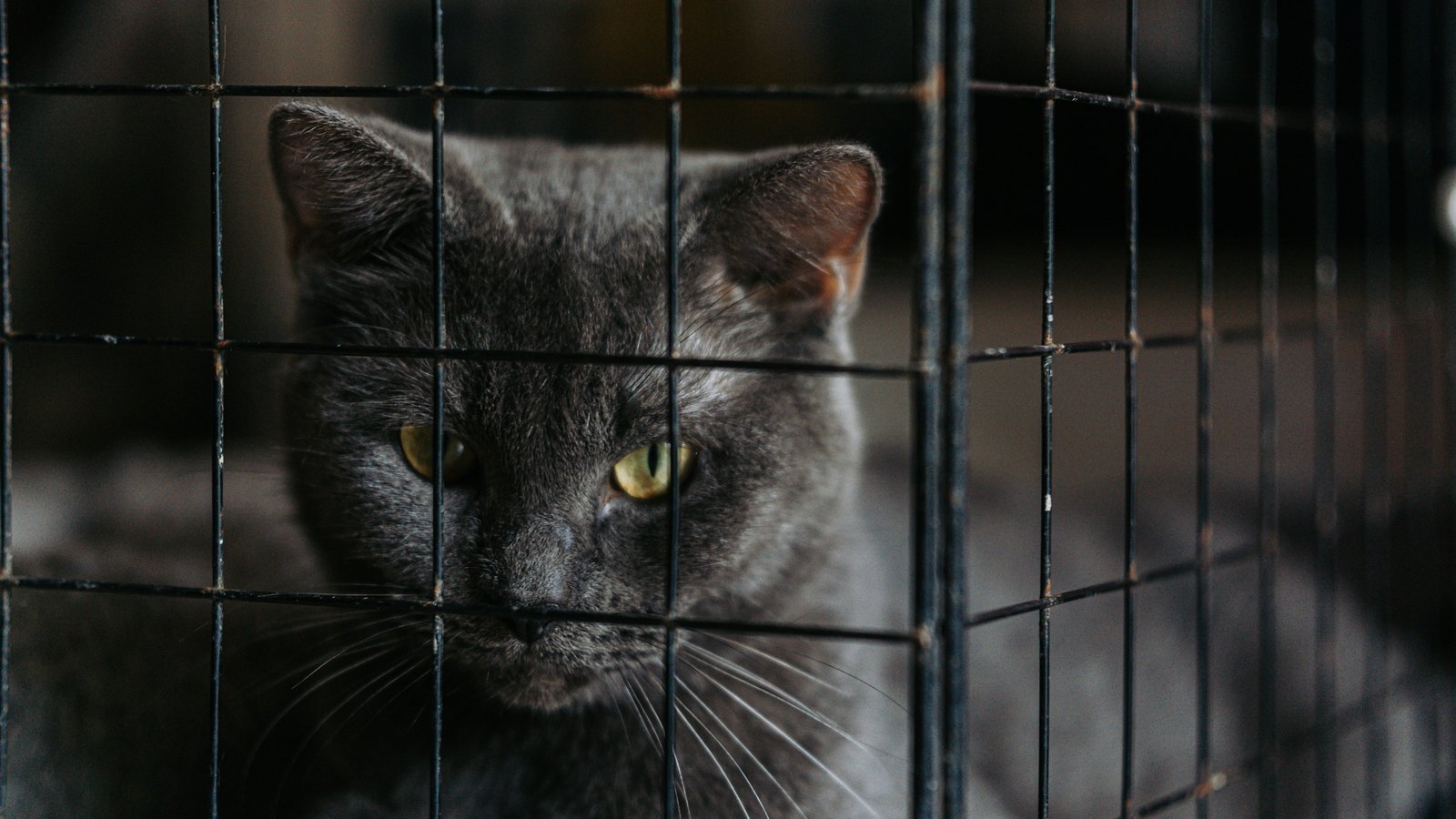
A wire crate is not the same as a plastic airline-style box, and the caption should stay honest: this is a gray cat behind crate bars, not a belted hard-sided carrier on a back seat. The point still holds. The cat should ride inside a closed carrier or crate that it already accepts, not loose on a seat or a dashboard.
Belt or wedge the carrier, then start the climate
Put the carrier in the car before the cat is in it when you can, so you are not standing at an open door with a loaded box while you fight a seatbelt. Place the carrier on the floor behind a seat or on a seat, facing a direction that keeps the carrier from tipping, and belt it or wedge it so it cannot slide or flip if you brake. A loose carrier on an empty seat can become a projectile in a sudden stop.
Turn the climate control on before the cat gets in. A closed car that has been sitting in the sun or in winter air is a poor first impression. Aim for a mild cabin, not a blast of ice-cold air directly on the carrier. Once the cat is loaded, close the car doors promptly. Do not leave a door open “for a minute” while you go back to the lobby.
If you are using a rideshare, say in advance that you have a cat in a closed carrier. Wait in a safe spot, not in a traffic lane. Do not take the cat out of the carrier in the back seat because the cab feels small or because a driver asks to “just hold” the cat. The same no-loose-cat rule applies in a taxi as in your own car.
Take a short practice drive first
If the next real trip is a vet visit, do not make that the first time the cat feels motion. On a quiet day, load the cat as you will on the real day, drive around the block, and come home. Keep it short. A five- or ten-minute loop is enough for a first practice. If the cat toilets, drools, or howls, that is useful information, not a reason to drive farther “until they settle.”
Covering part of the carrier with a towel can reduce visual motion for some cats. Leave ventilation open. Do not seal the carrier, and do not drape a towel in a way that blocks airflow. Bring a spare towel or absorbent pad in case of urine or vomit, and pack a spare sheet if you may need to use a travel litter box on a longer day. A litter box is for a longer trip, not for a ten-minute vet ride.
After the practice loop, take the cat back inside and let the day become normal again. If you have a shy cat that needs help feeling safe in an apartment, keep the practice even shorter and end it in a quiet room the cat already uses.

A person carrying a loose cat toward a parked car is a fair picture of what this plan is meant to avoid, even for a short walk from a lobby to a rideshare. The official title mentions a woman carrying her cat; what you can see is a black cat held in someone’s arms outdoors, with a car behind them. Use a closed carrier for that walk, not your hands, so a startle or a sudden door does not put the cat in the street.
Use a harness only as a backup, not as the ride
A harness is not a substitute for a carrier in a moving car. If you must open a door with the cat still in your care, or if you need a second layer when you move the carrier in a busy garage, a cat harness can help you keep contact. The cat should already accept the harness from getting used to a harness and leash. Putting a new harness on a stressed cat in a parking garage is a poor first lesson.
Do not clip a harness to a seatbelt and ride with the cat loose on a seat. A cat can slip a harness, climb under a pedal, or bolt through a briefly opened window. The carrier is the restraint. The harness is a backup for the moments when a door has to open.
What good enough looks like
Good enough is a closed carrier that stays in place, a short ride, and a cat that is still in the carrier when you arrive. It is not a quiet, relaxed passenger, and it is not a promise that the cat will enjoy the car. Many cats vocalize and still arrive safely. Watch for signs your cat is stressed that go beyond ordinary protest: frantic thrashing that risks injury, repeated vomiting, open-mouth breathing, or collapse. Those are reasons to stop and get veterinary help, not reasons to “push through” a longer drive.
If motion sickness shows up on the practice loop, use a towel, keep the ride short, and ask your veterinarian before the next real trip. Do not give a human motion-sickness tablet or a leftover pet dose from another animal.
When the ride is not a home project
If the cat has a known heart or breathing problem, if previous rides have included injury or frantic panic, or if you cannot load the cat without a struggle that risks a bite or an escape, talk with your veterinarian before you invent a harder plan at home. Some cats need a clinic-directed plan for travel. This article cannot provide that plan.
For ordinary short trips, keep the routine boring: carrier first, climate on, belt or wedge, short drive, cat out only after the car is parked and a door is under your control. That is enough.
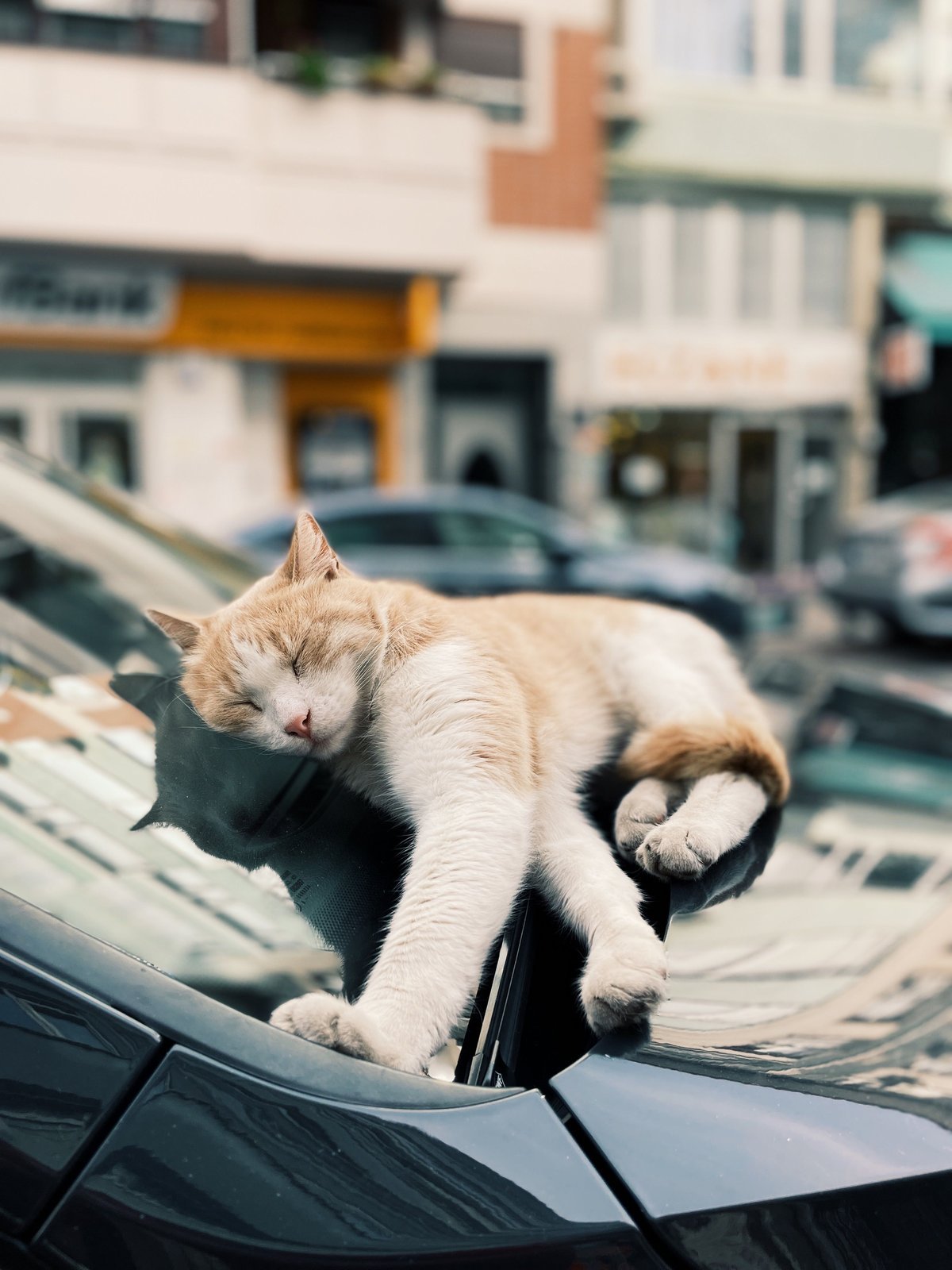
A cat loose on a parked car is the opposite of a planned ride. The official title mentions a cat sleeping on a car; what you can see is a cream-and-white cat on a windshield on a city street. Keep your own cat in a closed carrier, and never leave the carrier in a parked car while you run back upstairs.
FAQ
Can my cat ride loose on a car seat if I am only going to the vet?
No. A short trip is still a car ride. A loose cat can slip under a pedal, go out an open door, or become a hazard if you brake. Use a closed carrier that is belted or wedged so it cannot slide.
What if my cat cries the whole way?
Many cats vocalize and still arrive safely. Keep the ride short, keep the carrier closed and stable, and avoid adding extra stops. If the crying comes with frantic thrashing, open-mouth breathing, repeated vomiting, or collapse, stop and contact your veterinarian.
Should I leave the carrier uncovered so my cat can see out?
It depends on the cat. Some cats settle when part of the carrier is draped with a towel; others do better with a clear view. Leave ventilation open either way, and do not seal the carrier. A short practice drive is the way to see which your cat handles better.
Is a harness enough instead of a carrier?
No. A harness can be a backup if you must open a door, but it is not the restraint for a moving car. Cats can slip a harness or bolt. The cat should ride in a closed carrier, and the harness should already be familiar from home practice.
What should I do if my cat toilets or vomits in the carrier?
Stay calm, keep the carrier closed until you can stop safely, and clean up at home or at your destination with a spare towel. For a longer travel day, a travel litter box can help. If vomiting is repeated or the cat seems weak or in distress, contact your veterinarian rather than continuing a long drive.
[…] space, work on that at home before the trip. For cats, getting a cat comfortable in a carrier and helping a cat ride in the car are the right skills, and they are not the same as choosing a weekend crate. For dogs, a taxi or a […]