

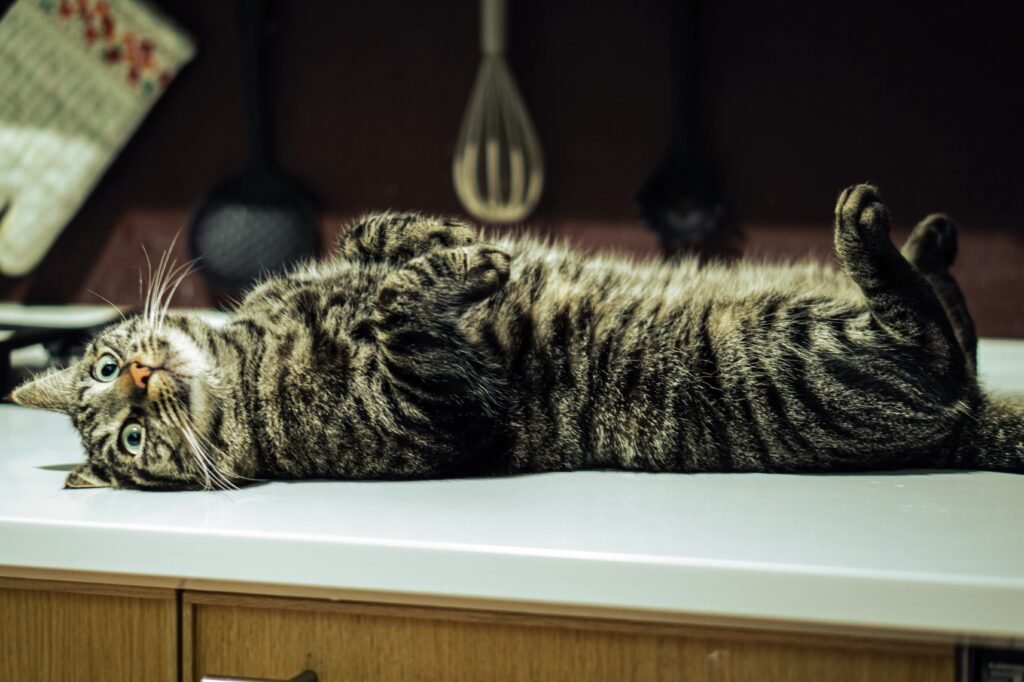
If you are trying to keep a cat off kitchen counters, you are not dealing with a tiny roommate who plotted to ruin dinner. You are dealing with an animal who likes height, warmth, a view of the room, and the smell of food—and in a small apartment the worktop is often the best of all four. Shouting, spraying water, or covering every surface in foil can startle a cat. It rarely teaches a lasting “this place is not for me,” and it can make the kitchen feel tense.
A calmer approach is environmental management plus a better alternative. You make the counter less interesting, you offer a legal high spot that is actually nicer to use, and you meet hunting and attention needs somewhere other than the chopping board. This is not a promise that a determined cat will never hop up again. It is a plan most households can keep on a Tuesday night.
This is general information for cat parents in the US and UK, not a veterinary diagnosis and not a guarantee. Cats vary. If your cat suddenly starts living on the counters, seems hungry all the time, loses weight, or looks unwell, contact your veterinarian. A change in habits can be about the kitchen, or it can be about how the cat is feeling.
Why the kitchen counter is so appealing
From a cat’s point of view, a counter is excellent furniture. It is high, so it feels safer than the floor. It is often warm from the dishwasher or a patch of sun. It looks over the room, so no one sneaks up. And it is where interesting smells, dripping taps, and your hands all gather.
In a studio or a compact kitchen, the problem is sharper. There may be no spare-room shelf, no tall bookcase, and only one window. If the sofa back and the worktop are the only high edges, the worktop will win whenever you open a tin or leave a butter dish out. Jumping up is also a reliable way to get you to turn around. Even a “no” is attention, and attention is a reward if the rest of the afternoon has been quiet.
This habit is different from scratching the sofa, even if both show up in the same week. Scratching is about claws, scent, and stretch. Counter-surfing is about height, food, and a view. If claws on furniture are the bigger issue, use how to stop a cat from scratching furniture as its own plan.
Make the counter less rewarding—without a scare campaign
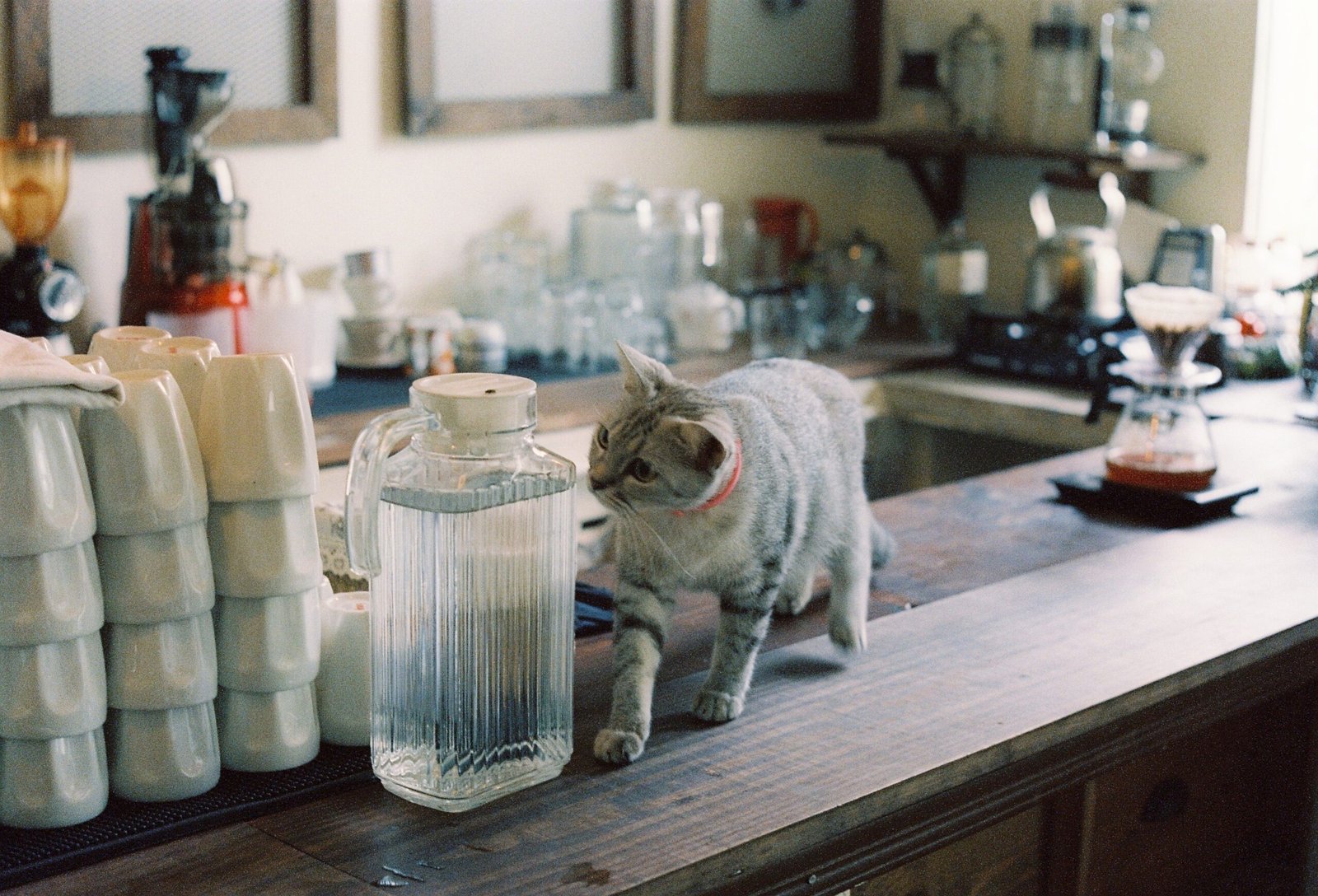
You do not have to make the kitchen unpleasant. You have to make the worktop boring and the legal surface better.
Start with the obvious rewards. Do not leave food out to “just finish later.” Cool leftovers, cover them, and put them away. Wipe crumbs and meat juice as you go, not at the end of the evening. If you use a fruit bowl, move it off the main landing strip or use a lidded container. A dripping tap is a fountain; tighten it or offer water in a place you actually want used.
When you catch your cat mid-jump, avoid the drama. A calm interruption—standing up, a gentle clap if they are not startle-prone, or simply blocking the landing with your body—then a redirect to the legal perch is enough. If you only ever notice them once they are already sitting in the mixing bowl, you are late to the moment. Prevention (closed doors when you cannot watch, food put away, a perch already in the room) does more than a speech after the fact.
Physical deterrents are a mixed tool. A double-sided tape runner or a plastic carpet runner, nubby side up, can make a short stretch of counter less comfortable while you build the new habit. Some cats simply hop over the mat. Foil and motion-activated hissing devices often startle more than they teach, and in a small home the hiss can feel like the whole room is unsafe. If you try a temporary texture, use it as a bridge for a week or two, not as the whole plan, and never use anything that could cause a fall onto a hob, a knife, or a hot pan.
Do not punish after the fact. The cat who jumped up at noon cannot connect a scolding at 6 p.m. with the act. Punishment also tends to make cats wait until you leave, which is the opposite of what you want in a studio where the kitchen is always in view.
Give your cat a better high place
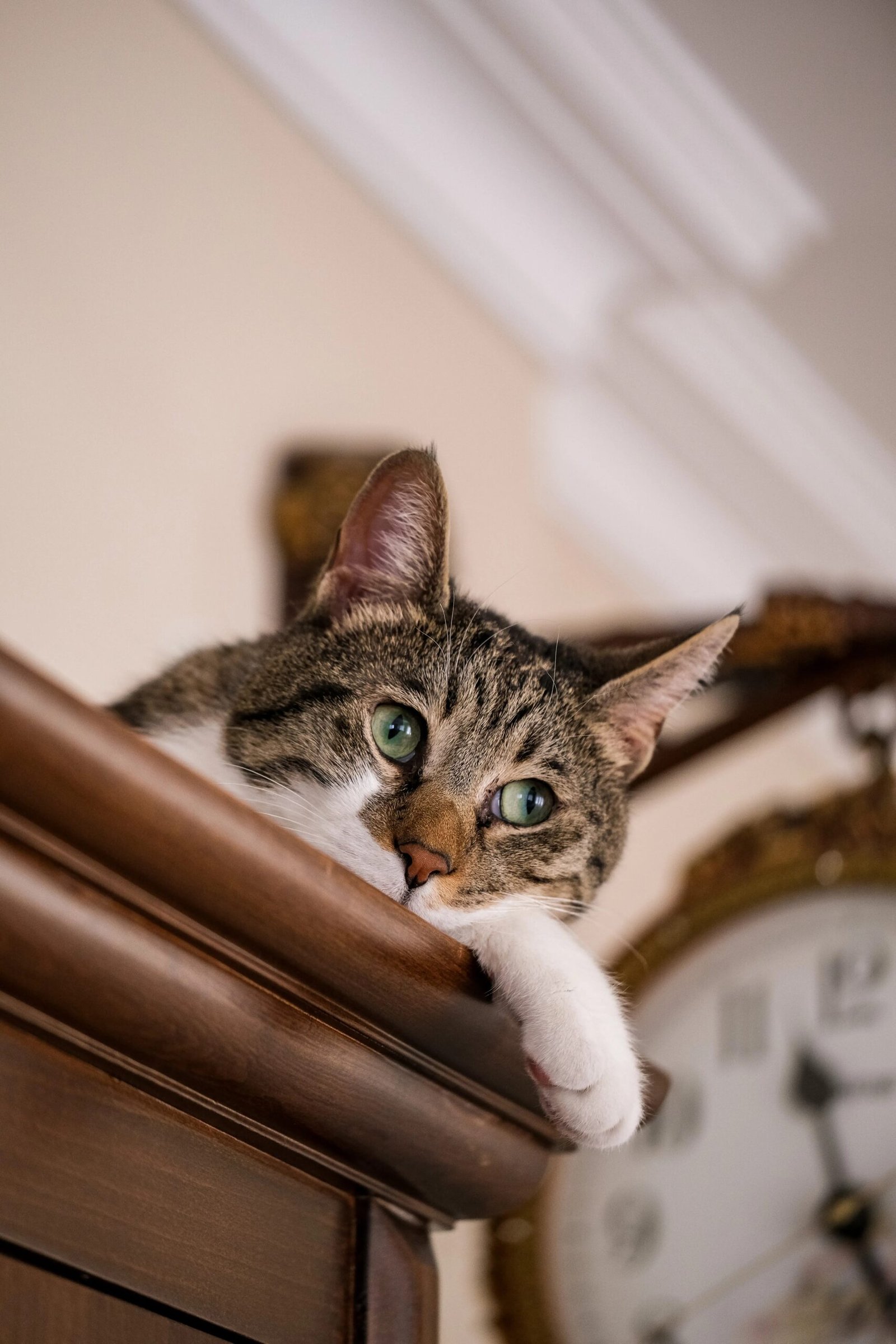
If the only good vantage point is the counter, the counter will keep winning. The replacement has to be high enough, stable enough, and close enough to the action that it feels like a fair trade—not a exile to the far side of the bedroom.
A cat tree beside the kitchen doorway, a sturdy shelf with a non-slip mat, or a window perch with a view of the street can all work. In a small apartment, look for a slim tree, a wall-mounted shelf if your lease and wall type allow it, or a window seat that does not block an exit. For fitting a tree into a tight floor plan, best cat trees for small apartments is the practical companion to this guide. Window time is part of a fuller indoor day; indoor cat enrichment ideas covers safe views without turning this article into a window-perch buying guide.
Place the alternative where the job actually happens. A tree in the spare corner they never visit will not compete with the warm worktop you stand at every evening. Many cats want to be near you while you cook, not necessarily on the food. A perch at your shoulder height, a little to the side of the chopping area, often beats a taller tree in another room.
Make the legal spot obviously better for a week: a soft mat, a familiar blanket, and a few meals or treats served there. Reward four paws on the perch when you are in the kitchen. You are not bribing forever; you are showing that this is the viewing platform. If claws start on the cabinet corners, a post or pad beside the new station can help, but that is placement, not a substitute for a full scratching plan.

Safety belongs with height. Do not invite a jump onto a greasy hob, a knife block, or a window with a screen that cannot hold a cat’s weight. If you close the kitchen when you cannot watch, do it as management, not as a lock-in. Your cat still needs a litter box, water, and a comfortable place to rest on the other side of that door.
Feed, play, and daily rhythm so the kitchen is less of a hunt
A bored, under-played cat is a more inventive kitchen visitor. A short play session before you start cooking—a wand toy that lets them chase, pounce, and “catch”—can take the edge off the hunting mood that otherwise lands on the counter. Follow play with a meal or a small snack on the floor or on the legal perch, which mirrors a hunt-then-eat pattern many cats find settling.
If your cat only appears on the worktop when food is out, look at meal timing as well as willpower. A consistent feeding rhythm, with food picked up when the meal is done, gives less reason to patrol the chopping board. Puzzle feeders can slow a fast eater and give the brain a job; they do not replace a better perch, but they help the afternoon feel less empty. For toys that actually get used, best interactive cat toys is a useful next read.
In a small home, enrichment does not require a second bedroom. A window view, a short play burst when you get in, and a high rest spot near the kitchen already change the math. If you share the flat with another cat, make sure the legal perch is not a resource only the bolder one can hold. A second shelf, even a modest one, can stop the less confident cat from choosing the counter as their only safe height.
What not to do
Skip the spray bottle as a teaching tool. It may interrupt one jump and still teach the cat to watch for your hand, not to avoid the surface. Air horns, shouting, and startling rattles have the same problem, and they can damage trust in a home where you cannot send the cat to another floor to recover.
Do not use essential oils, citrus sprays, or home-mixed deterrents on surfaces where a cat will walk and then groom their paws. Many products that smell “fresh” to us are a poor match for cats. If you want a scent-based barrier, ask your veterinarian what is reasonable rather than improvising from a social post.
Never use glue, sticky traps meant for pests, or anything that could catch a paw. Never lift a cat off a hot surface in a way that risks a scratch-and-drop onto a hob. If they are already in a dangerous spot, stay calm, move the hazard if you can, and lure or lift them down safely.
Declawing is not a solution for counters, and it is the wrong tool for a height-and-food problem.
A calm plan you can start this week
Use this as a first draft, then adjust to your kitchen and your cat:
- Put food away, wipe the worktop as you cook, and fix drips that turn the sink into a fountain.
- Add one stable, appealing high place within sight of the kitchen, and feed or treat there when you are at the counter.
- Play for a few minutes before cooking, then offer a meal or a snack off the worktop.
- If you need a temporary texture on a landing strip, use it briefly and never on a surface where a slip would be dangerous.
- Interrupt calmly if you catch the jump early, then redirect. Skip the lecture after the fact.
- Close the kitchen only as short-term management when you cannot watch, and only if the cat still has litter, water, and rest space.
- Watch for sudden changes in appetite, weight, or thirst, and call your veterinarian if those appear.
Keeping a cat off kitchen counters in a small home is mostly about design, not dominance. The aim is a worktop you can cook on, a high place your cat actually chooses, and a daily rhythm that does not turn every meal into a negotiation. If the habit appears suddenly, or your cat seems unwell, ask a veterinarian before you add another deterrent.
When counter-surfing is a flag for something else
Most counter visits are ordinary cat behavior. A few patterns deserve a second look. A cat who suddenly becomes food-obsessed, drinks much more than usual, loses or gains weight quickly, or seems restless and unable to settle may be telling you something about health, not about your chopping board. A cat who only hides on the fridge or the cabinets, and looks tense elsewhere, may be avoiding a person, another animal, or a noisy appliance. Signs your cat is stressed can help you sort ordinary curiosity from a wider welfare issue, and a veterinarian can help you sort behavior from illness.
FAQ
Is it unhealthy for my cat to be on the kitchen counters?
The main concerns are practical: fur and paws on food-prep surfaces, and the risk of a jump onto a hot hob, a knife, or a precarious pile of dishes. Plenty of indoor cats will hop up if the surface is interesting. Wiping the counter before you cook, keeping food covered, and offering a safer high place are the usual household response. If your cat is suddenly on the counters all day, or seems unwell, contact your veterinarian rather than treating it only as a manners issue.
Will tin foil or a spray bottle stop my cat?
Sometimes, briefly. Foil and water sprays often startle rather than teach, and many cats simply wait until you are not holding the bottle. In a small apartment, a startle can also make the whole kitchen feel unsafe. If you use a temporary texture, treat it as a short bridge while you build a better perch and a tidier food habit, not as the entire method.
Can I train a cat to stay off counters with treats?
You can train the behavior you want: four paws on a legal perch when you are in the kitchen. Reward that often at the beginning. You cannot easily train a reliable “never jump when I leave the room” with treats alone if the counter still smells of dinner and there is no better view. Management (food put away, a good alternative, play before cooking) does the heavy lifting; treats help show where you would like them to sit.
What if I live in a studio and have almost no floor space for a cat tree?
You still need a high place, but it does not have to be a wide tree in the middle of the room. A slim tree, a sturdy wall shelf if your walls and lease allow it, a window perch, or even a stable bookcase top with a non-slip mat can work. Place whatever you choose within sight of the kitchen so it competes with the worktop. A far-off perch in the only closet will not.
My cat only jumps up when I cook. What should I do?
They probably want the smells, the warmth, and your company, not a private buffet every time. Set a viewing perch at your side before you start, play for a few minutes first, and keep food covered as you go. Reward the perch when they use it. If they land on the counter, calmly guide them to the legal spot rather than turning cooking into a chase. Consistency for a week or two usually tells you whether the new station is good enough.
[…] a kitchen-counter plan. Counters have their own food smells, landing spots, and rules, covered in how to keep a cat off kitchen counters. Scratching furniture is a different job again; see how to stop a cat from scratching furniture. […]