

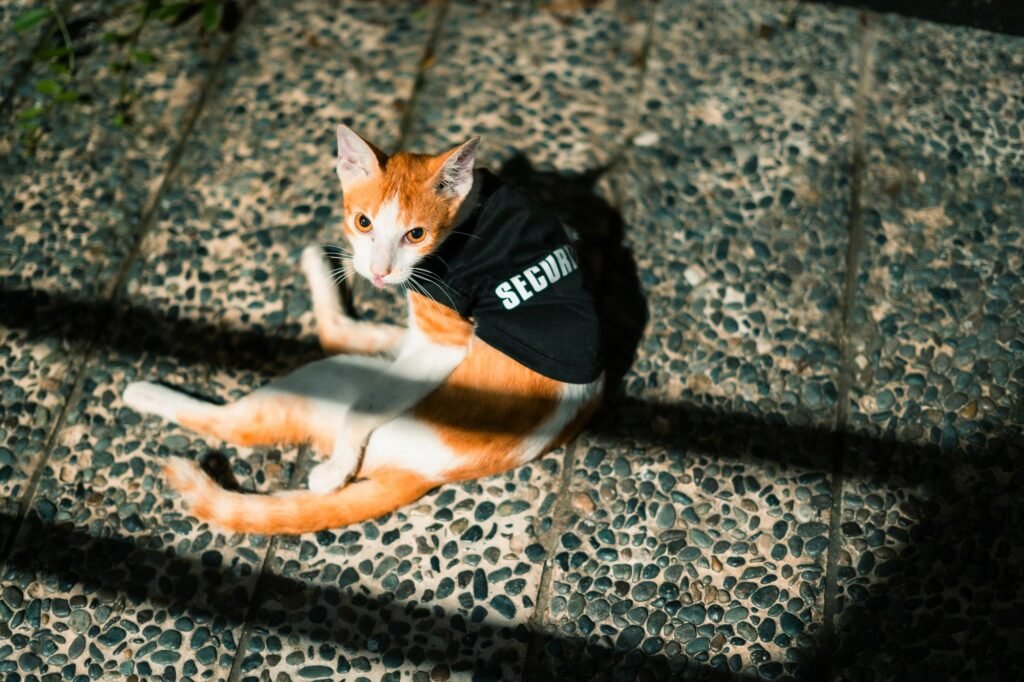
If you are looking for the best cat harnesses for indoor cats, you probably want a way to take a curious cat onto a balcony, down a hallway, or into a quiet courtyard without a sudden wriggle backward and a dash toward the stairwell.
A useful mindset is this: you are choosing an escape-resistant fit, practicing with it indoors first, and staying close enough to help. The “best” harness is the one that stays on your cat, does not rub raw, and is used only while you are watching. It is not a ranked score, and it is not a substitute for a carrier when you need a secure box.
This is general information for cat parents in the US and UK, not a product test and not a promise that every indoor cat will enjoy a harness. Cats vary. Never leave a cat unsupervised in a harness. If your cat panics, has trouble breathing, wriggles until the gear shifts onto the neck, or may be injured, stop and get help rather than pushing through a session.
What a cat harness has to do that a collar or a dog harness does not
Cats are flexible in ways that surprise people who have only fitted dogs. Many can reverse out of a loose loop, shrug a strap over a shoulder, or go still until you look away. A collar attached to a leash is a poor plan for walks or hallway practice: it can slip, or it can put pressure on the throat if the cat bolts.
A harness has three jobs: stay on when the cat backs up, spread pressure across the body rather than the neck, and give you a predictable place to attach a leash. In an apartment, there is a fourth job: the gear has to come on in a small room, without a last-minute wrestle at the building door.
This is not a dog-harness article and not a travel-with-dogs guide. It is also not a replacement for indoor life. A harness outing should sit on top of a decent day at home, not stand in for one. For ordinary indoor days, indoor cat enrichment ideas will do more for most cats than a new piece of webbing.
Vest vs H-style: choose a type, not a ranking

You will see two broad types, plus a few hybrids. None of them wins a universal “best” title. They trade coverage, adjustability, and how easily a determined cat can wriggle free.
Vest-style harnesses use a wider fabric or mesh panel over the chest and back, with straps or buckles that close around the body. The extra surface area can make it harder for some cats to slip out backward, and the pressure of a sudden stop is spread over more of the torso. A vest still has to be the right size. A roomy vest with a gap at the neck or behind the front legs is not “softer”; it is an exit. Check that seams and edges do not rub the armpits once the cat walks and sits.
H-style harnesses (sometimes called strap or figure-style) use narrower straps that form a loop around the neck and another around the ribcage, connected along the back or chest. They are often lighter and easier to put on a cat who dislikes a wrap of fabric. They can also leave more room to wriggle if the chest loop is loose, or if the two loops can slide toward each other. Fit and snugness matter more than how simple the silhouette looks in a product photo.
Some designs add a third strap or a jacket-like closure marketed as “escape-proof.” No honest guide can promise that a cat will never get out. Treat “escape-resistant” as a fitting goal: if your cat can step backward out of it in the living room, it is not ready for a hallway.
Choose the type that you can actually fasten on your cat without a fight, that stays put when they crouch and roll, and that you can check with your fingers in a well-lit room. For many indoor cats, a well-fitted vest is a practical starting point because it is harder to slip. For a cat who panics when fabric wraps the body, a carefully fitted H-style may be the one they will tolerate long enough to practice. This is not a ranking of brands or a score sheet.
Escape-resistant fit: snug, checked, and attached correctly
Fit is the buying decision that matters more than colour. With the harness on, standing or sitting as the cat prefers:
- You should be able to slip about two fingers under a strap, not a whole flattened hand.
- The chest or girth loop should sit behind the front legs, not slide forward onto the throat when the cat backs up.
- Leg openings should not gape, and the cat should be able to walk, sit, and lie down without the fabric twisting.
- Buckles and sliders should stay closed when you give a firm, fair tug at the leash ring.
- The leash attaches to the harness ring, never to a collar on its own.
If the size chart and your cat disagree, believe the cat in the room. A “medium” that leaves a gap at the shoulders is the wrong size, even if the bag says otherwise. Hair and a thick winter coat can hide a loose fit; check with the coat lying naturally, then check again after the cat has walked around.
Do not add padding, tape, or extra knots to “make it safer.” If the harness does not fit, change the size or the type. Breakaway features that are useful on a collar are not what you want on a walking harness; it needs to stay on while you are holding the leash.
Fit it at home, then practice indoors

The first sessions belong in a closed room, not in a corridor or on a balcony. Let the cat investigate the unfastened harness. Reward calm sniffing, then rest the gear on the back, then fasten it for a few seconds, then take it off while the session still looks mostly easy.
A practical indoor progression looks like this:
- Closed door, familiar room, no other pets crowding the cat.
- Harness on for a short stretch of ordinary behaviour—eating a few treats, walking to a window, sitting on a bed.
- A lightweight leash attached, with the end in your hand or trailing only if you can prevent tangles and you are watching the whole time.
- A few steps of gentle guidance, then the harness off.
Never leave a cat unsupervised in a harness, even “just while I make tea,” and never leave a trailing leash on an unattended cat. A loop can catch on a chair, a crate door, or a balcony slat.
Keep sessions short. Some cats accept the gear in a few days; others need weeks of wearing it only in the lounge. If the cat freezes, tries frantically to wriggle out, or becomes aggressive when you approach, stop, take the harness off, and go back a step. For a cat who already hides or overgrooms when something new appears, read signs your cat is stressed and do not treat a tense freeze as “they will get used to it on the pavement.”
Handling practice on another day, such as brushing at home, can make fastening less novel, as long as you do not stack every kind of handling into one evening.
When you do go beyond the front door

A hallway, lift, or quiet courtyard is a bigger jump than it looks. Go only when the harness has stayed on through indoor movement, and keep the first trips brief and close to home.
Hold the leash. A “hands-free” walk around a busy lobby is a poor first test. Watch for slipping, chafing, and overheating under a vest on a warm day. If the cat flattens, tries to reverse out, or bolts, pick them up if you can do so safely, or step back into a quiet room, rather than tightening the leash and hoping.
A harness is for supervised exploration. It is not a seat belt, and it is not a way to park a cat on a balcony “for some air.” For clinic visits, taxis, and any trip where you need the cat fully contained, a carrier is the safer standard tool. See best cat carriers for size, security, and how to acclimate at home; do not use a harness as a shortcut past a carrier on appointment morning.
If you use public transport, read the current rules yourself; this guide cannot certify them.
When a harness is the wrong tool

A harness is the wrong tool when you need containment you cannot watch. An open balcony, a fire escape, or a tilted window is a fall risk; putting a harness on and stepping inside is not a safety plan. If you want outdoor air and visual interest, a secure window perch or an enclosed, supervised space is a different decision; best window perches for indoor cats is the indoor option, not a harness workaround.
A harness is also a poor fit when:
- The cat cannot be fastened without a struggle that risks bites or a loose strap.
- You need to move the cat through a busy lobby, a car, or a clinic waiting room—use a carrier.
- The cat has a neck, chest, or skin condition, or is recovering from surgery; ask a veterinarian before you add gear.
- Your goal is simply a fuller indoor day. Toys and play will usually help more than a stressed walk; best interactive cat toys can carry that job in a small flat.
Kittens outgrow a size quickly, so check fit often. A very young, very old, or unwell cat should not be a test subject for a new hobby; ask your veterinarian if harness training is appropriate.
A calm starting plan you can repeat
Use this as a first draft, then adjust to your cat and your flat:
- Choose a type—vest or H-style—based on escape-resistant fit and what your cat will tolerate, not a ranked “best” list.
- Fit it in a well-lit room: snug enough that a backward step does not empty the harness, with the leash on the harness ring.
- Practice indoors, in short easy sessions, with the door closed.
- Stay with the cat the entire time the harness is on. Never leave a cat unsupervised in a harness, and never leave a trailing leash on an unattended cat.
- Use a carrier for vet visits and any trip that needs a secure box.
- Stop and get help if the cat panics, has trouble breathing, or may be injured.
The best cat harness for an indoor cat is the one you can fasten kindly, check often, and use only while you are paying attention. The aim is a brief, supervised outing you can repeat, built on a decent indoor life. If the cat is frightened or the gear will not stay on, a carrier, a window perch, or more play at home is a better answer than a tighter strap and a hope.
FAQ
What type of cat harness is most escape-resistant?
There is no type that is escape-proof. Vest-style harnesses often give more coverage and can be harder for some cats to reverse out of, which is why they are a practical starting point for many indoor cats. A loose vest is still easy to leave. An H-style harness can work if the girth strap sits behind the front legs and stays snug when the cat crouches or backs up. Test any design in a closed room before you trust it in a hallway. This is not a ranking of brands.
How should a cat harness fit?
Snug, with about two fingers’ space under a strap, and stable when the cat sits, walks, and steps backward. The chest or girth loop should not slide up onto the throat, leg openings should not gape, and buckles should hold when you tug the leash ring. Attach the leash to the harness, not to a collar alone. If the size chart and the cat in front of you disagree, refit or choose another size rather than knotting extra fabric.
How do I get an indoor cat used to a harness?
Practice in a closed, familiar room. Let the cat inspect the gear, then fasten it for a few seconds, then take it off while the session still looks mostly easy. Build up to ordinary movement and, later, a lightweight leash that you hold. Some cats need days; others need weeks. Never leave the cat alone in the harness. If they freeze, fight the straps, or seem distressed, stop and step back. A last-minute fitting at the building door usually teaches the opposite of what you want.
Can I leave my cat in a harness on the balcony or in another room?
No. Never leave a cat unsupervised in a harness, on a balcony or anywhere else. A harness is not a fall-prevention device, and a leash or strap can catch on furniture or railings. If you want outdoor air, stay with the cat, or use a secure indoor perch and a closed, safe window setup instead. A balcony is a poor place to “test” whether the harness stays on.
Should I use a harness instead of a carrier for a vet visit?
Usually no. A carrier keeps the cat contained in a lift, a taxi, and a clinic waiting room, where a startled wriggle can become a chase. A harness can be a supervised complement for short, planned outdoor time once the cat is used to it, but it is the wrong primary tool for most appointments. Acclimate a carrier at home and keep it shut until you are in a safe room.