

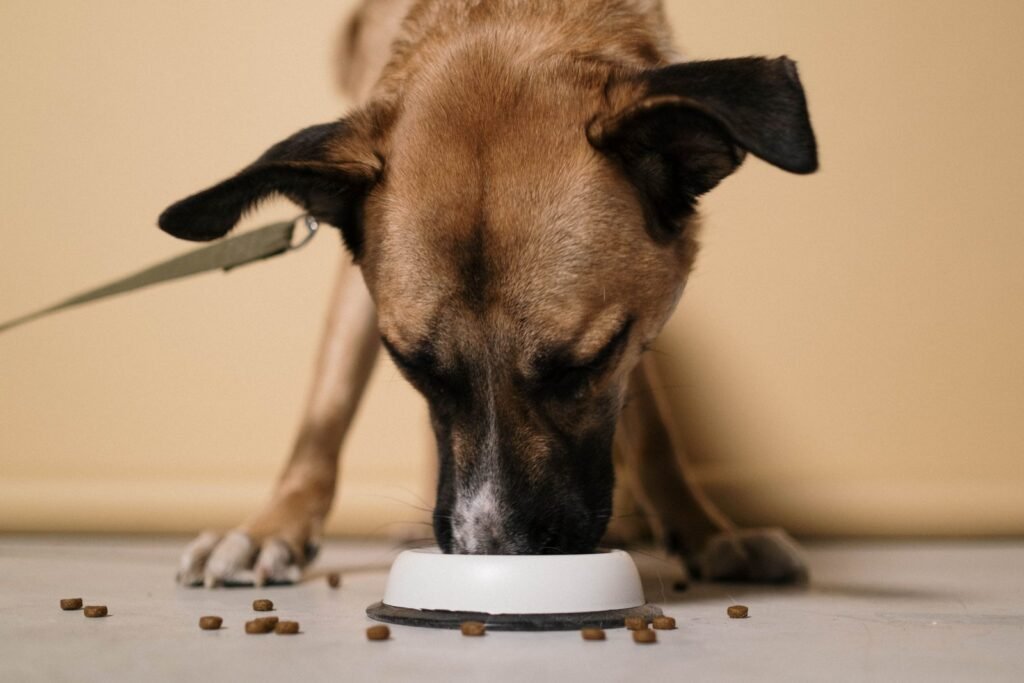
If a dog eats too fast, the hard part in a small home is rarely the idea of “slow down.” It is a bowl that is empty in a few seconds, a dog that looks up already swallowing, and a kitchen corner where the next footstep, the bin, or a second pet makes the meal feel like a race.
A useful mindset is this: you are changing the daily habit, not hunting for a single product that will fix dinner. Split the meal, use a slower delivery, add a short pause, and keep the feeding spot quiet enough that the dog is not gulping in a rush. A new bowl can help some dogs, but the bowl is a tool. The habit is the plan.
This is general information for dog parents in the US and UK, not a veterinary diagnosis, and not a treatment for digestive disease. A slower bowl is not a substitute for a veterinarian if meals regularly come back up. Fast eating that comes with vomiting, gagging, or a swollen, uncomfortable belly is a veterinary emergency, not a bowl problem. Contact a veterinarian promptly in those cases.
This is a mealtime habit, not a bowl-buying guide
The job here is the daily pattern when the dog inhales dinner. It is not a rewrite of best slow feeder bowls for dogs or best snuffle mats for dogs. Those guides help you choose a bowl or a mat. This article is what you do at the next meal, with the tools you already have.
It is also not how much you should feed your dog, how to get a picky dog to eat, or a tour of puzzle toys for dogs. A picky eater leaves food. A fast eater finishes it almost as soon as it lands.
Keep treat decisions in how to choose dog treats, storage in how to store dog food in a small apartment, and timed machines in best automatic dog feeders. An automatic feeder can release food on a schedule. It does not automatically slow a gulp if a full portion still lands in an open bowl.
Think of four jobs, not one:
- Split the meal. Offer the same daily amount in two or more smaller servings.
- Slow the delivery. Spread or portion the food so the dog has to work through it.
- Add a short pause. Interrupt the gulp with a calm break, then let the dog return to the bowl.
- Quiet the spot. Feed where the dog is not competing with foot traffic, another pet, or a kitchen rush.
Split the meal so the bowl is not a race
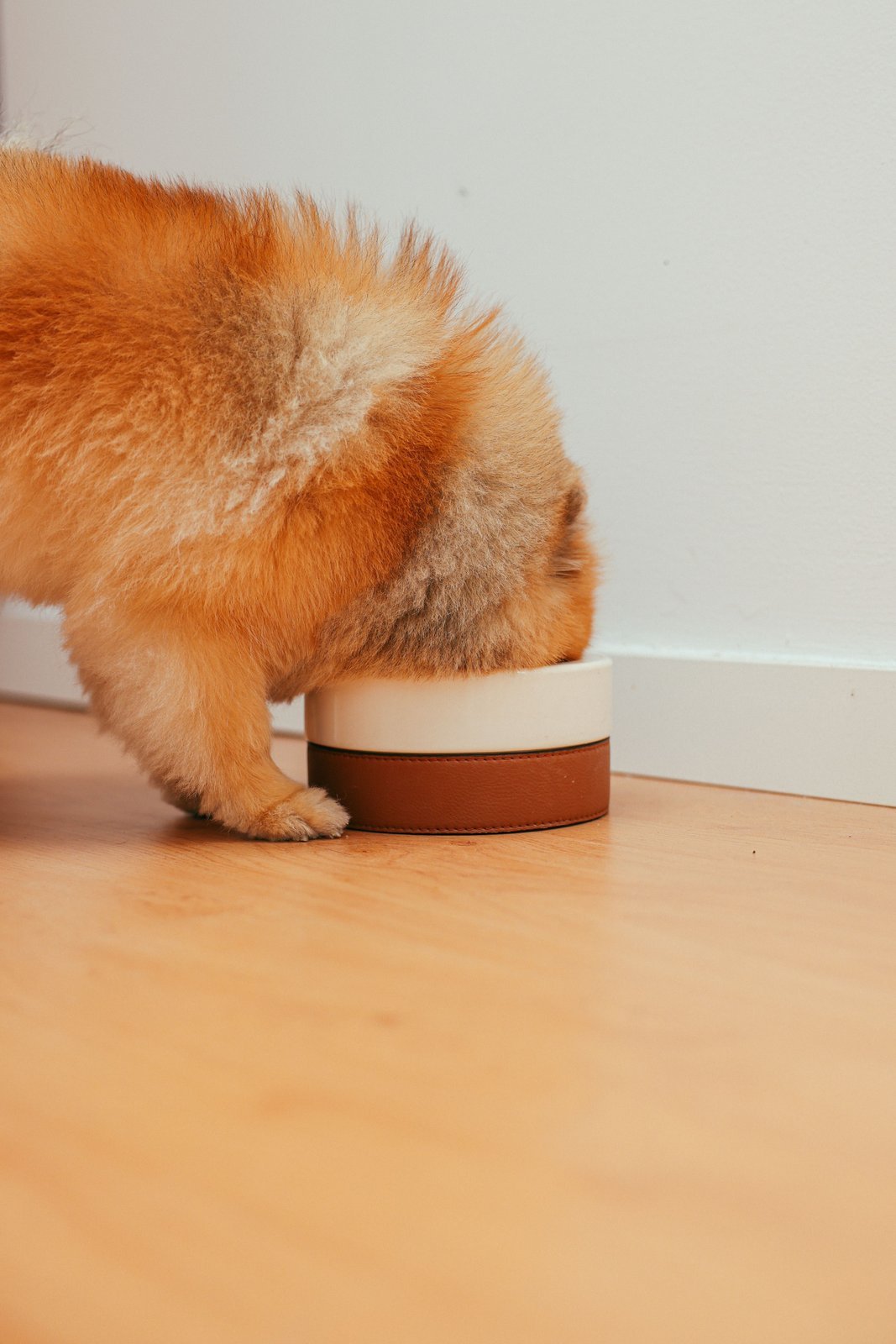
The photo above is a dog with its head well down in an ordinary bowl. It is not a slow-feeder, and it is not a product list. If this is what dinner looks like in your kitchen, start with the amount and the timing, not a shopping list.
Splitting the meal means the daily total stays the same, and the dog gets it in more than one sitting. If you currently put the whole breakfast down at once, try two smaller servings with a gap in between. The point is to shrink the pile, not to add extra food.
Measure first, then divide. Use the portion you already settled on with your veterinarian or with a simple feeding guide, then divide that portion. If you are still deciding how much belongs in the day at all, that question lives in the feeding-amount guide, not here.
A short gap is enough to start: finish one small bowl, give the dog a few minutes of rest or a drink of water, then offer the next part. The first serving should be small enough that the dog cannot gulp the whole ration in one burst. If you use an automatic feeder, check what actually lands at each drop. Several small releases can support this habit; one large drop is still a sprint with a timer attached. Keep the remaining food closed and out of the way, measured from a container rather than scooped twice from an open bag.
Use a slower delivery, not a more exciting one
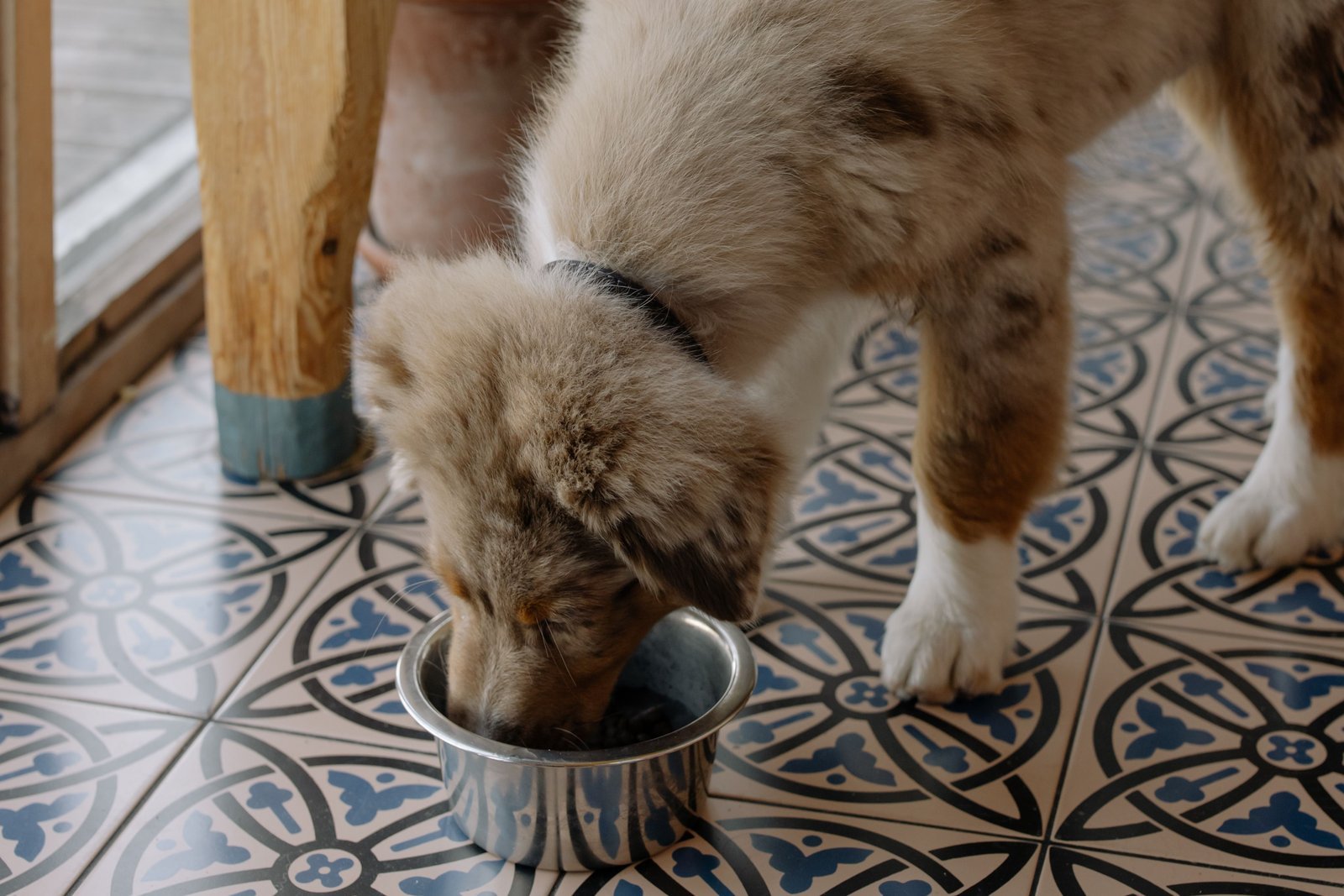
The photo above is a puppy eating from a plain metal bowl on a tiled floor. A slower delivery does not have to wait for a special purchase. It means the food arrives in a way that takes more time than a mound in an open bowl.
Start with what is already in the house. Spread dry food on a clean, washable mat or a wide, shallow tray so the dog has to collect it. Place a portion in a snuffle mat if you already own one, or use a slow-feeder bowl if you already have one the dog can use comfortably. If you are still choosing that bowl or mat, use the buying guides rather than turning this article into a list.
A puzzle toy can hold part of a meal for a dog that already uses one calmly. That is a delivery method, not a reason to rewrite a toy guide, and it is not a good first step if the dog becomes frantic or tries to break the toy. If the dog cannot work the puzzle without stress, go back to a spread or a slower bowl.
Do not add extra treats, broth, or table scraps just to make the meal last. That changes the ration and can turn a timing problem into an overfeeding problem. Count any training treats in the daily total, using the treat guide for that choice. Wet food can be spread in a thin layer on a flat plate or lick mat, and dry food can be split between two bowls a short step apart. Use the version the dog can do without frustration, and wipe up loose kibble so it is not left for a later gulp.
Add a short pause
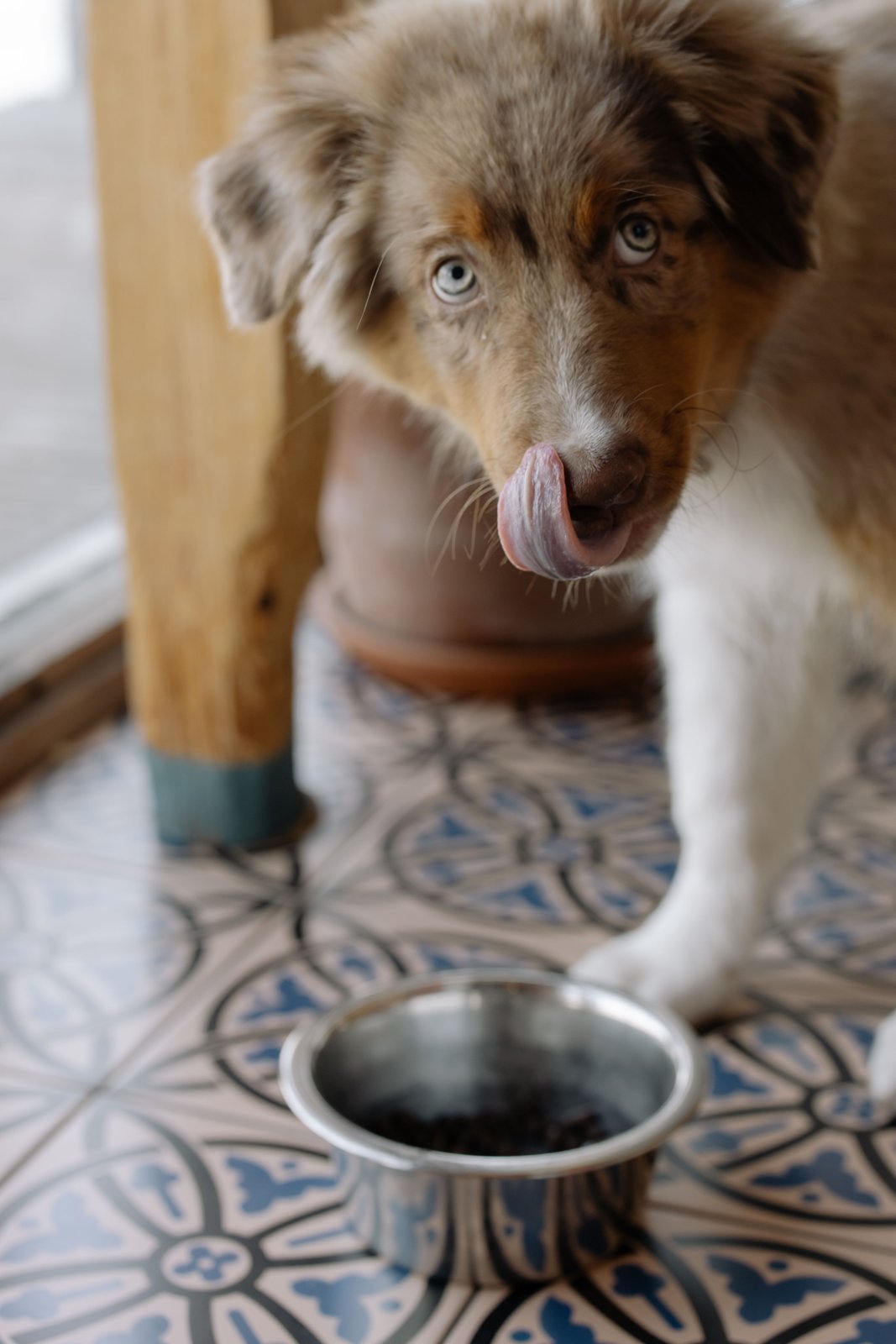
The photo above is a puppy looking up from a bowl that still has food in it. A short pause is a calm interruption, then a return to the bowl. You can pick up the bowl for a few seconds, ask the dog to sit if that is already an easy cue, or simply wait for a breath before the bowl goes down again. The dog learns that the meal continues after a break, and that rushing does not make the food last longer.
Keep the first pauses very short. If you hold the bowl away until the dog becomes frustrated, you have added conflict, not a rest. This is not a dominance exercise, and it is not a reason to take the food away as a punishment. If the dog guards the bowl, stiffens, growls, or snaps when you approach, stop the pause work and get qualified, in-person help. Food guarding is a safety issue, not a slow-feeding trick.
A split meal and a slower delivery make the pause possible. A pause alone, on a huge piled bowl, is harder because the dog is already in a gulp. Combine the pieces rather than asking the pause to do all of the work.
Keep the feeding spot quiet in a small kitchen
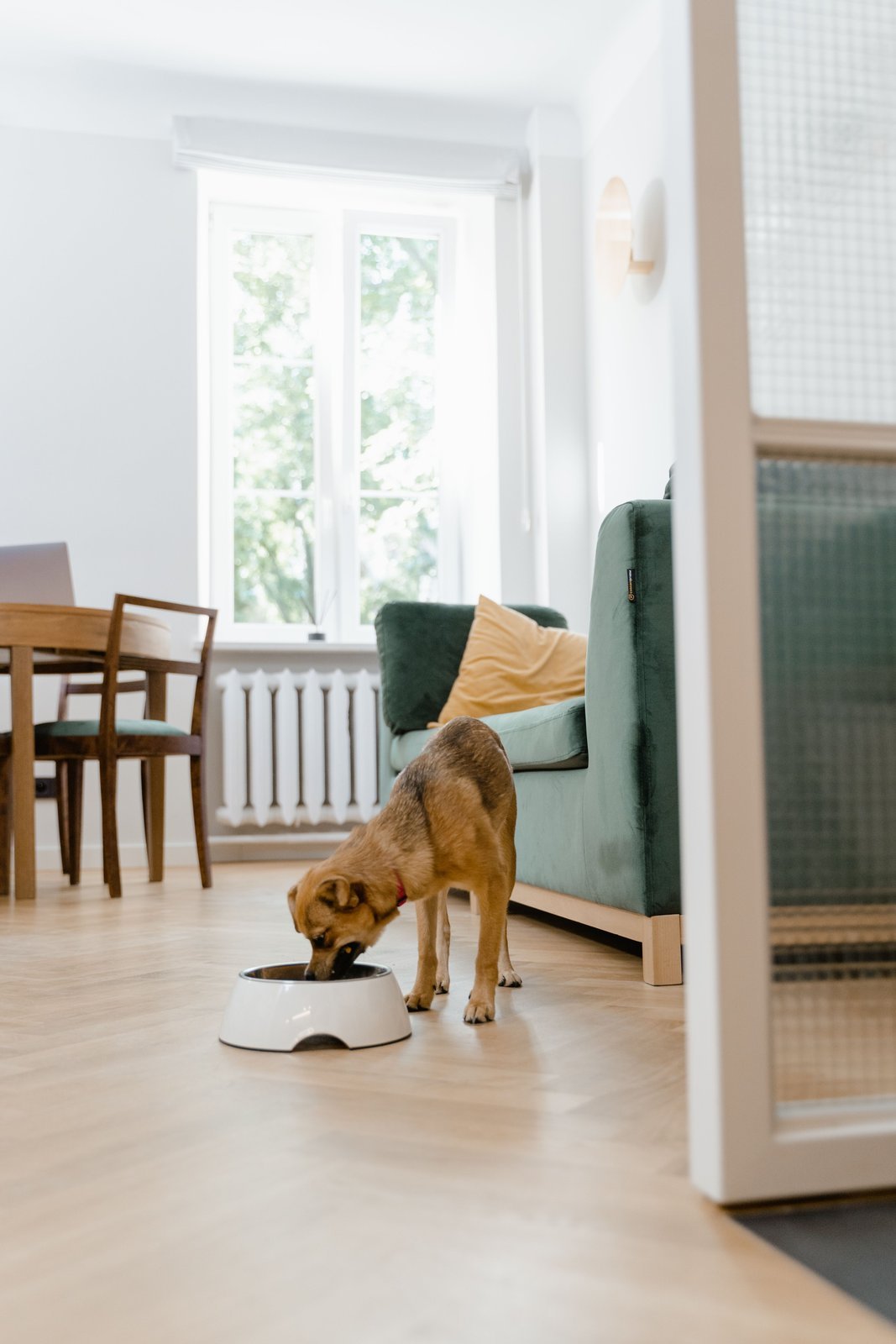
The photo above is a dog eating from a plain bowl in a bright open-plan living and dining room, not a tight kitchen galley. In many apartments the bowl lives where people already walk: beside the bin, in the only galley kitchen, or in a doorway that everyone uses.
A quiet spot does not have to be a separate room. It has to be a place where the dog can finish a small serving without feeling that the food will be taken, stepped over, or competed for. If you cook in the same kitchen, feed before the busy part of food prep, or move the bowl a few feet out of the main path. If another dog or a cat is nearby, feed them out of sight of each other, or use a door or gate so one animal is not gulping to beat the other.
Put the bowl down and then leave the dog alone for that short serving. Hovering or reaching toward the bowl “to make sure they slow down” can add pressure. The goal is a boring, predictable meal, not a performance. Keep the floor clear of shoes, bags, and an open food bag, and store the remaining food in a closed container, as the apartment storage guide describes. Wipe up spilled kibble after, so the dog does not hoover the floor as a second course. If your only option is a small kitchen, close a door if you have one, wait until roommates have moved, and keep the serving short.
When fast eating is a veterinary problem
Most fast meals are a habit-and-setup problem. Some are not. If the dog vomits during or after eating, gags, retches, or has a swollen, uncomfortable, or tight-looking belly, treat that as a veterinary emergency, not a reason to try a different bowl. Contact a veterinarian promptly. Do not wait to see whether a slower feeder “fixes it.”
This article cannot diagnose why a dog eats quickly, and it will not invent a medical cause or a breed rule as if it were a diagnosis. It will not claim that a slower meal prevents a specific disease. A slow bowl is not a treatment for digestive disease, and it is not a stand-in for veterinary care if meals regularly come back up, if the dog is in pain, or if eating habits change suddenly.
If a dog that used to eat at a normal pace suddenly starts gulping, or if a fast eater also seems lethargic, restless, drooling, or unable to get comfortable, call a veterinarian rather than adjusting the mat.
A calm starting plan you can repeat
Use this as a first draft, then adjust to the kitchen in front of you:
- Measure the usual daily amount, then split it into two or more smaller servings with a short gap between them. Do not add extra food to make the meal last.
- Deliver each serving more slowly: spread it, use a slower bowl or mat you already have, or split it between two dishes.
- Add one brief, calm pause during the meal, then let the dog finish. Do not use the bowl as punishment, and stop if the dog guards the food.
- Feed in the quietest spot you can manage in a small kitchen or open-plan flat, away from foot traffic and other pets, and store the remaining food out of the way.
- If the dog vomits, gags, or has a swollen, uncomfortable belly, or if meals regularly come back up, contact a veterinarian. A slower bowl is not the next step in an emergency.
A meal where the portion is smaller, the delivery is slower, the dog can pause, and the room is quiet is more useful than hoping the next bowl will solve it on its own.
FAQ
Will a slower bowl stop a dog from eating too fast on its own?
Not always. A slower bowl or a snuffle mat can help, but the useful plan is still to split the meal, slow the delivery, add a short pause, and quiet the feeding spot. This is not a buying guide, and a new bowl is not a guarantee. If meals regularly come back up, contact a veterinarian rather than swapping bowls.
Does splitting the meal mean I should feed more?
No. Keep the same daily amount and divide it into smaller servings. Measuring first, then splitting, prevents the “two dinners” problem. If you are unsure how much the dog should eat in a day, use a portion guide and your veterinarian, not an extra scoop to make dinner last longer.
What if my dog guards the bowl when I try to add a pause?
Stop the pause work. Growling, stiffening, or snapping around food is a safety issue, not a slow-feeding cue. Do not take the food away as a punishment, and do not push through it. Get qualified, in-person help, and keep other people and pets away from the bowl in the meantime.
Can an automatic feeder replace this plan?
No. A timed feeder can release food on a schedule, which may support smaller servings, but a large drop into an open bowl is still a sprint. Check what actually lands at each release, and keep using a slower delivery and a quiet spot. The machine is a timer, not a slow-feeding method by itself.
When is fast eating a veterinary emergency?
If the dog vomits, gags, or has a swollen, uncomfortable belly, contact a veterinarian promptly. That is not a bowl problem. A slower meal is also not a treatment for digestive disease, and this guide will not invent a medical cause or claim to prevent a specific illness. Sudden changes in eating, pain, or food that regularly comes back up belong with a veterinarian.