

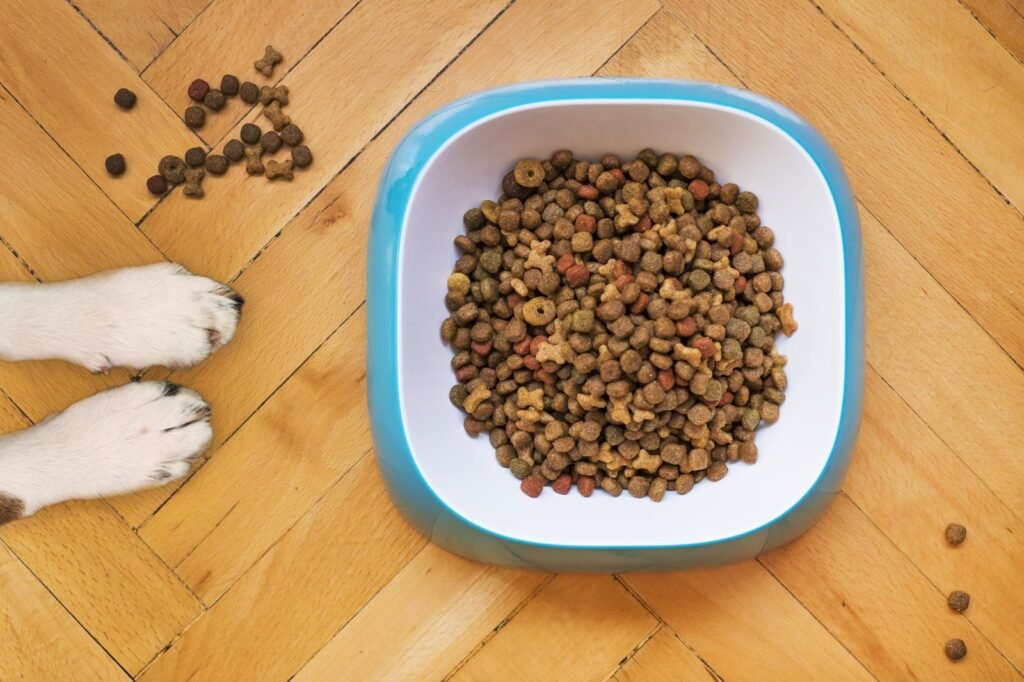
If you are looking for how to get a picky dog to eat, the hard part is not the idea of “put the bowl down.” It is the sniff, the step back, and the food still sitting there while you wonder whether to add something more appealing. In a flat, that moment happens a few steps from the sofa, and a skipped meal can turn into a ritual of extras.
A useful mindset is this: you are giving a normal meal a clear start and a clear end, and you are watching for a sudden change before you invent a complicated menu. A consistent meal window, leftovers picked up after a short period, and honest portions will do more than a growing stack of toppers.
This is general information for dog parents in the US and UK, not a veterinary diagnosis and not a diet plan. It is not a promise that appetite will return on a timetable. If the refusal is sudden, or you see vomiting, diarrhea, weight loss, lethargy, or a dog that cannot swallow, contact a veterinarian.
This is a mealtime plan, not a diet rewrite
A dog that sniffs a familiar meal and walks away needs a calmer pattern at the bowl, not a rewrite of the diet itself. How large a serving should be is covered in how much you should feed your dog. Choosing a wet or dry format belongs in wet vs dry dog food. If you do need to change the food, do that in how to switch dog food, and use how to read a dog food label when you are comparing bags, not while standing over a full bowl.
Human snacks and leftovers from your plate are a separate safety question. See which human foods are safe for dogs. Where the bag lives in a small kitchen is covered in how to store dog food in a small apartment. A slow-feeder bowl can help a dog that gulps, not a dog that will not start; that buying question lives in best slow feeder bowls for dogs. If it is your cat walking away from the dish, use how to get a picky cat to eat instead.
Think of three jobs, not one:
- Check for a change. A sudden stop is information, not a personality trait.
- Give the meal a window. Food arrives, sits for a short, calm period, then leaves if it is uneaten.
- Keep the menu simple. Honest portions and fewer extras make the bowl easier to understand.
Rule out a sudden change first
Before you treat a skipped meal as fussiness, look at what changed. A dog that has always eaten steadily and then, over a day or two, only sniffs the bowl is a different situation from a long-time choosy eater. New food, a rushed switch, a different bowl, a move, or a noisy feeding spot can all make a familiar meal look less appealing.
Taste and smell also change when food is stale, stored badly, or left out too long. If the bag is older than you think, or the bowl still smells of yesterday’s meal, start there.
A recent diet change deserves its own slow plan, not a pile of toppers on food the dog has not had time to accept. If you just switched bags, or you are thinking about a grain-free formula, use the switch guide and, if needed, what to know about grain-free dog food. This is not a place to invent a new supplement, an “appetite booster,” or a ranked list of brands.
Watch the rest of the dog, not only the bowl. Vomiting, diarrhea, weight loss, unusual tiredness, drooling, or any sign that swallowing looks hard are reasons to contact a veterinarian. If nothing obvious has changed and the dog otherwise seems well, tighten the meal itself: same food, same place, same window, and less negotiation.
Keep a consistent meal window

Picky eating often gets worse when meals drift around the day. The bowl appears whenever you remember, stays down “just in case,” and then comes out again with something tastier on top. Walking away becomes how a better offer arrives.
Pick a meal window you can actually repeat in your home. For many adult dogs that is two meals, morning and evening, in the same quiet spot. The exact number matters less than the food showing up at roughly the same times, in the same place, and then going away. Puppies, very small dogs, and dogs with a feeding plan from a veterinarian may need a different rhythm; follow that plan if you have one.
Choose a feeding spot you can keep consistent in a small home, away from the main walkway and from another pet’s bowl if you have one. Put the bowl down, then step back. Hovering or coaxing at the bowl can turn a normal meal into a performance. If you are out at the usual time, ask someone else to keep the same window, or shift both ends of the day by a modest amount.
Pick up uneaten food after a short, calm period

Once the bowl is down, give the dog a short, quiet chance to eat, then pick up what is left. Ten to twenty minutes is a common home window, not a medical rule. Stay nearby if you like, but do not keep tapping the bowl or adding a topping.
If the dog sniffs, walks away, and lies down, that is the end of this sitting, not a cue to invent a second course. Pick the bowl up calmly. Offer fresh food again at the next scheduled meal, not twenty minutes later with something richer added. Wet food should not sit out for long in a warm room; pick it up sooner, and wash the bowl.
Leaving the food down can feel safer, but a bowl that stays available all day often becomes background noise, or simply tastes worse the longer it sits. A clear end to the meal is not a punishment; it is how the next window stays meaningful. If another pet will raid the leftover bowl, pick the food up.
The point is not to rush a dog that is calmly finishing. It is to stop turning leftovers into an all-day snack, and to notice if most of the food is still there, meal after meal. That pattern, or a drop in weight, is worth a veterinarian’s view even if the dog seems otherwise fine.
Avoid an endless stack of toppers

A spoon of wet food, a handful of treats, then another topping when that is ignored, can turn one ordinary meal into a buffet the dog now expects.
If you already use a small, consistent topper that your veterinarian is happy with, you do not have to rip it out overnight. The problem is the stack that grows every time the dog walks away. Hold the extra steady, or taper it, rather than adding a new layer at each meal. Do not invent an “appetite supplement” or rotate through rich human foods to see what works. Safe human foods, if you use any, belong in the human-foods guide, and should stay occasional, not a second dinner.
Treats are easier to keep honest when they are separate from the meal. A few training treats later in the day are different from pouring the treat jar into the bowl because kibble was left. Best training treats for dogs can help you keep those extras small and counted. Hand-feeding every breakfast can also become a trap. It is reasonable to sit nearby while a worried dog starts, but less helpful to follow them around delivering pieces after they leave the bowl.
If you change from dry to wet food, or to a mix, do it on purpose. If the base food is new, use a gradual switch rather than changing the menu daily.
Keep portions honest

A “picky” dog is sometimes already getting more food than it seems, once treats, toppers, and extra helpings are counted. If the bowl is consistently left unfinished, the serving may be larger than that dog needs, or the extras may be doing too much of the day’s work.
Use the portion guide to sanity-check the amount against the dog’s size, age, and body condition, and against what is on the bag. Then include the treats. If the dog leaves a third of the bowl but takes snacks through the afternoon, the meal plan and the snack plan are fighting each other.
Measure for a few days instead of pouring by eye. A consistent scoop, or a kitchen scale if you already use one, is enough. If you cut the meal back, do it modestly and watch the dog’s body and stools, rather than skipping meals as a test.
Leaving a large bowl down all day, or running an automatic feeder as a way around a skipped meal, is a different question. A feeder can still offer a set portion in a set window, not a continuous supply. If the dog is losing weight, contact a veterinarian rather than guessing with smaller or richer meals.
When a skipped meal is a reason to get help
A practical meal window is for a dog that generally feels well and has a habit of sniffing and leaving a normal bowl, not for a dog that cannot or should not wait.
Contact a veterinarian if the refusal is sudden; if you see vomiting, diarrhea, weight loss, or lethargy; or if swallowing looks painful or difficult. A puppy, a senior, or a dog with a known medical condition that misses more than a meal or two also needs a professional view. This guide cannot sort a dental problem or a stomach upset from choosiness. If your veterinarian has already given you a feeding plan, follow it.
A calm starting plan you can repeat
Use this as a first draft, then adjust to your dog:
- If the refusal is sudden, or you see vomiting, diarrhea, weight loss, lethargy, or trouble swallowing, contact a veterinarian first.
- Keep the current food if the dog has been well on it, unless you have a reason to switch.
- Offer meals at consistent times, in the same quiet spot, without a long negotiation.
- Give a short, calm window, then pick up uneaten food. Offer the next meal at the next window, not as an immediate retry with extra toppings.
- Count treats and toppers, keep them small and steady, and avoid a new stack each time the dog walks away.
- Check that the portion matches the dog in front of you, not only the amount that looks generous in the bowl.
- Watch body weight and energy over days, not only whether one meal was finished.
A calmer meal pattern matters more than a more exciting bowl. The aim is a familiar food, a window the dog can learn, and leftovers that do not stay down all day, not a claim that picky eating will disappear on a timetable.
FAQ
Why does my dog sniff the bowl and walk away?
Often the meal has become easy to postpone: food stays down too long, a better topping appears after a refusal, or treats are doing too much of the day’s eating. Some dogs are also naturally slower or choosier than others. A sudden change in habit is different, and it is worth ruling out stale food, a recent diet switch, stress in the feeding spot, or illness. Change the mealtime pattern first if the dog otherwise seems well. If the refusal is new, severe, or paired with other signs, ask a veterinarian to help you sort habit from a medical problem.
Should I leave the food down all day so my dog can eat later?
Usually no, not as a way to solve picky eating. A bowl that stays out can go stale, attract another pet, and teach the dog that the meal has no end. Give a short, calm window, pick up what is left, and offer fresh food at the next scheduled meal. Wet food should be picked up sooner. If your veterinarian has told you to free-feed for a specific reason, follow that advice instead of this general plan.
Is it all right to add toppers or human food to get them to eat?
A small, consistent topper is different from an ever-growing stack you add after each refusal. If you use extras, keep them modest, count them as part of the day’s food, and stop escalating when the dog walks away. Do not turn the meal into a tasting menu of leftovers. Check the human-foods guide before you add anything from your plate, and skip invented supplements sold as appetite fixes. If you need richer food for a medical reason, that should come from a veterinarian, not from a home experiment.
How long should I leave the bowl down at each meal?
There is no honest single number that fits every dog and every type of food. Many households use about ten to twenty minutes for a dry meal in a cool room, and a shorter time for wet food. Watch this dog and this room. The useful test is a window short enough that the food is still fresh, and long enough that a calm eater can finish, then a clear pickup if most of the food is still there.
When should I contact a veterinarian about a picky eater?
Contact a veterinarian if the refusal is sudden, if it comes with vomiting, diarrhea, weight loss, lethargy, or trouble swallowing, or if a puppy, a senior, or a dog with a medical condition is missing meals. Also get help if the picky pattern lasts and you can see or feel weight coming off, even if the dog still seems bright. This article cannot diagnose the cause, and it is not a reason to delay care.