

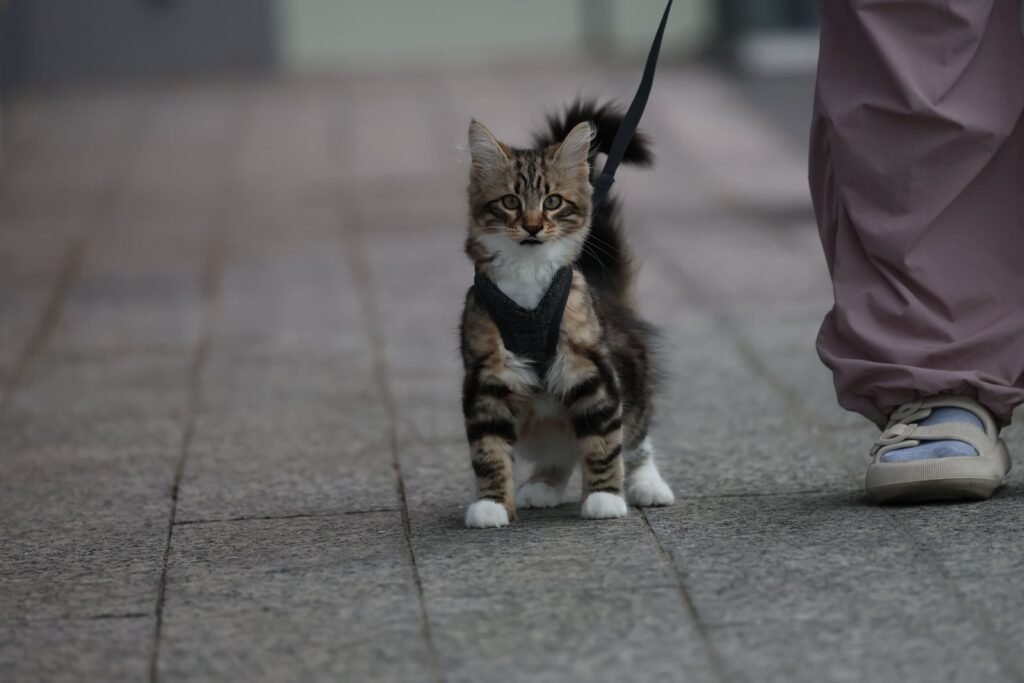
If you want to get a cat used to a harness and leash, start indoors and stay there longer than you think you need to. A first outing on a busy sidewalk is a hard test, not a gentle introduction. Many indoor cats will freeze, wriggle, or try to slip the gear if the world arrives all at once.
A practical plan is slow and repeatable. Choose a well-fitted harness, let the cat wear it for short sessions inside, attach the leash only when the cat can move calmly, and treat a quiet hallway or courtyard as the first “walk” before any busy pavement.
This is general information for cat parents in the US and UK, not a veterinary diagnosis, and not a promise that every cat will enjoy walking after a set number of days. Not every indoor cat needs outdoor time. Never force a struggling or panting cat into a harness or out the door. If a cat panics, slips the harness, or shows breathing trouble or injury, stop and treat escape or injury as a safety and veterinary question.
This is acclimation, not a harness buying guide
The job here is teaching an indoor cat to accept a harness, then a leash, then a quiet first outing. It is not a rewrite of the best cat harnesses buying guide, which is about which style to buy and how a fit should feel. You will need a well-fitted harness. This article is how to introduce it.
It is also not a review of cat backpacks for travel or cat carriers, and it is not how to get a cat comfortable in a carrier. Those tools can help you travel or move a cat, but they are not a walk. It is not how to stop a cat from door dashing, though a loose cat at an open door is a reason to keep early practice inside with the door closed.
A balcony or an open window is not a walk. Use the indoor window and balcony safety guide if you need to make those edges safer; do not treat a high railing as supervised outdoor time.
Think of four jobs, not one:
- Fit the harness well, then stop. The first session can be looking at the gear, not wearing it around the flat.
- Wear it indoors in short, calm bursts. The cat should be able to sit, walk, and rest before any door opens.
- Add the leash later. Clip it on only when the harness itself is already ordinary.
- Start with a quiet hallway or courtyard. A busy sidewalk comes last, if it comes at all.
Choose a well-fitted harness
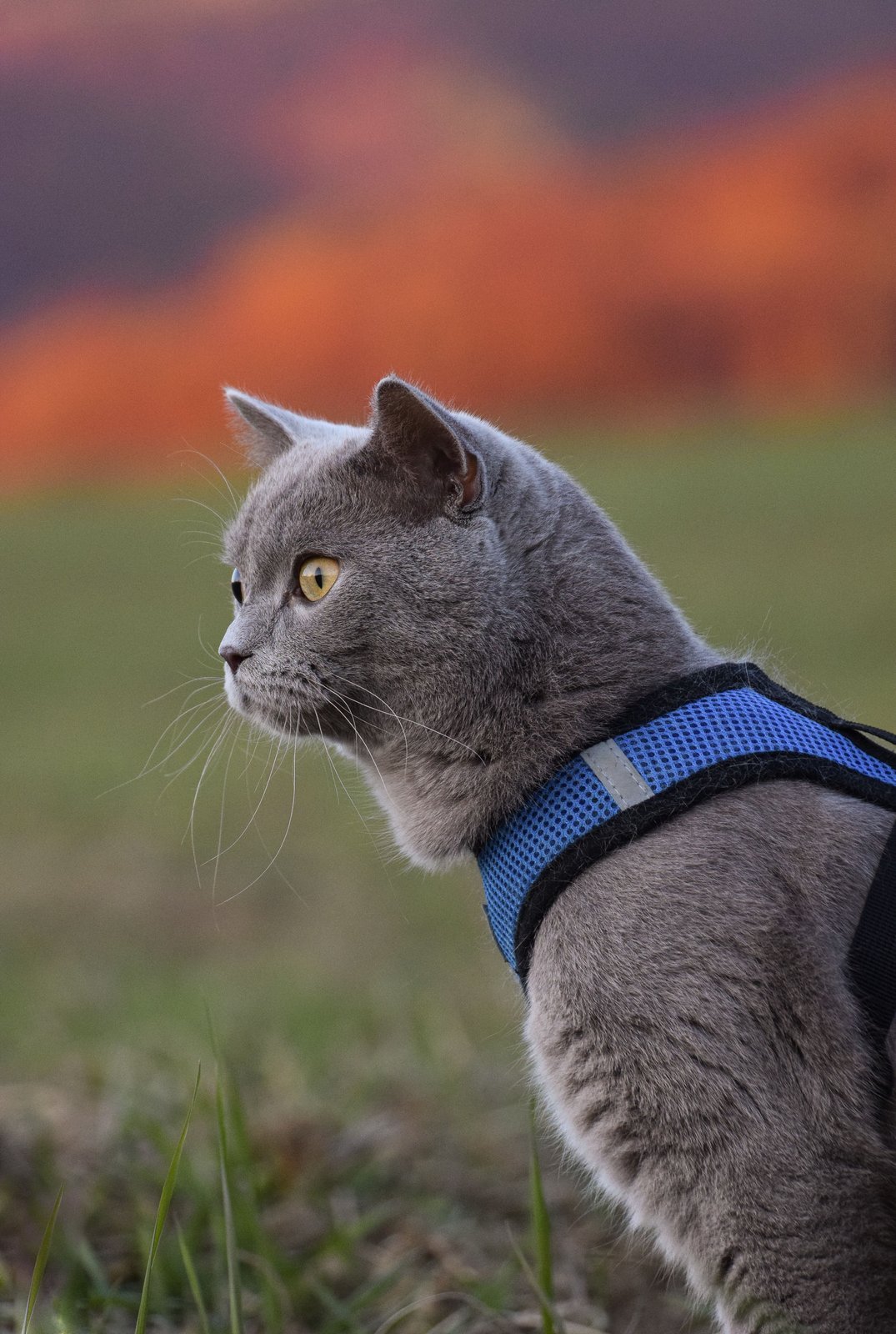
A collar is a poor substitute for a walking harness. Many cats can wriggle out of a collar if they pull back, and a lead on a collar can put pressure on the neck. For the actual choice of style and fit details, use the harness buying guide rather than a ranked list here.
When you try a harness on, the cat should be able to breathe easily, swallow, and walk without the gear rotating around the chest. You should be able to slip two fingers under a strap, but not pull the harness off over the head or back with a light tug. If the cat immediately hunches, paws at the straps, or tries to shoot backward, stop, take it off, and try a shorter, calmer session later. A harness that leaves red marks, rubs the armpits, or makes breathing look hard is not a fit to practice in.
Let the cat sniff the harness first. Offer a small treat near it, then rest a strap on the shoulders for a second, then take it away. Do not pin a struggling cat to “get it over with.” A first wearing that ends in panic can make the next one harder.
Check your building rules and local leash laws before you plan outdoor time. Some courtyards, parks, and buildings have their own requirements. Do not invent a rule that “cats can go anywhere on a lead.”
Let the cat wear it for short sessions inside

Indoor practice is the main work. The aim is a cat who can move, sit, and rest in the harness in a familiar room, with the door closed, before you add a hallway or a courtyard.
Start with minutes, not an afternoon. Put the harness on, feed a few treats, let the cat walk to a favored spot, then take it off while things are still calm. If the cat flops, freezes, or refuses to move, stay with them, keep the session short, and try again later rather than dragging them along. Some cats need several quiet days of this before the gear feels ordinary.
Keep early sessions in one room you can close off. Do not practice near an open front door, a balcony, or a window that is not safely secured. For a cat who already startles easily, the guide to helping a shy cat feel safe in an apartment is useful background, and the signs your cat is stressed guide can help you notice when a session should end. Flattened ears, a hunched body, panting, or a frantic attempt to back out of the harness are reasons to stop, not to push on.
If you also use a carrier or a backpack for vet visits or trips, keep those as separate skills. A cat who is comfortable in a carrier is not automatically ready for a leash, and a leash session is not a substitute for carrier practice.
Attach the leash only when the cat can move calmly

The leash is a second step, not a default from day one. Clip it on only after the cat will walk around the room in the harness without constant wriggling or hiding.
Let the leash drag on the floor in a closed room first, where it cannot catch on furniture and the cat cannot reach an open door. Stay close enough to unclip it if it snags. When that looks ordinary, pick up the other end and follow the cat rather than steering them like a dog on a city walk. A short, fixed-length lead is easier to manage than a retractable one, especially later near traffic, stairwells, or a crowded path.
If the cat stops, sit with them. If they try to bolt or spin, do not yank. End the session, take the gear off, and go back to harness-only practice. The point of the indoor leash is to make the clip boring, not to cover a route around the flat.
Do not use the leash to pull a reluctant cat through a doorway. If they do not want to move, the outing is over for now.
A quiet hallway or courtyard comes before a busy sidewalk
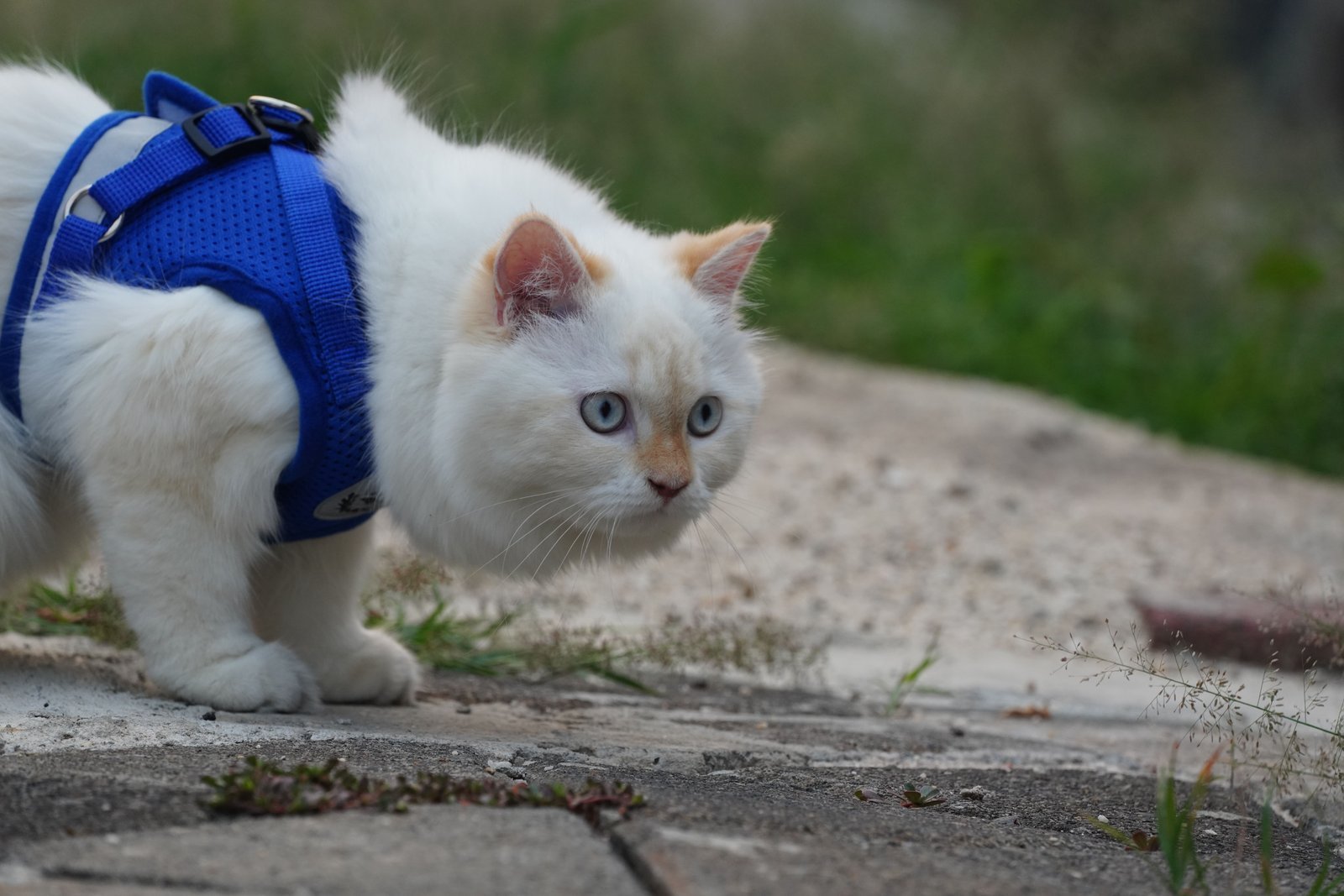
When indoor movement looks calm, the first “walk” should be a quiet, contained place: a closed stair landing if your building allows it, a deserted courtyard, a private garden, or a short stretch of hallway at an off-peak hour. Check building rules first. A busy sidewalk, a dog park, or a street with bikes and delivery bikes is a later question, and some cats will never need it.
Keep the first outings short, and go back inside while the cat is still coping. Hold the leash so there is no slack long enough for the cat to reach a road, a stairwell drop, or another animal. A retractable lead is a poor fit near traffic or stairs because it is hard to stop a sudden dart.
If you are moving home, or you need to carry the cat through a public space, a carrier or a backpack is often the safer tool. The guide to moving to a new apartment with a cat is about that change, not about a first harness walk. For longer trips, a travel litter box may matter more than a sidewalk outing.
Watch for slip risk. If the harness loosens, the cat backs out, or you cannot keep them close, go back inside and refit. An escaped cat in a hallway or courtyard is an emergency, not a training rep. Close doors, block exits if you can, and do not chase in a way that drives the cat farther out.
When to stop, and when this is a veterinary question
Not every indoor cat needs or wants outdoor time. A full life can stay indoors with play, rest, and safe windows. A harness is optional, not a requirement for a good home.
Stop a session if the cat pants, struggles hard, cries in a way that is new for them, or tries to claw out of the harness. Stop if you see breathing trouble, a limp, a wound, or a cat who seems dazed or suddenly unwell. Those are veterinary questions, not a sign that you should “push through.” If the cat slips the harness, treat it as a safety problem first, then as a fit and training problem once everyone is back inside and unhurt.
This guide will not diagnose pain, respiratory trouble, or a panic response. Contact a veterinarian if something looks medical, if an injury happened during a session, or if the cat’s behavior changes suddenly after you start the gear.
A calm starting plan you can repeat
Use this as a first draft, then adjust to your cat and your building:
- Choose a well-fitted harness and let the cat sniff it before any outing. Use the buying guide for style and fit, not a ranked list here.
- Wear the harness indoors for short, calm sessions with the door closed. Take it off while things are still going well.
- Attach the leash only when the cat can move calmly in the harness. Let it drag in a closed room, then follow the cat on a short fixed lead.
- Treat a quiet hallway or courtyard as the first walk. Leave busy sidewalks for later, if you use them at all.
- Never force a struggling or panting cat into the gear or out the door. A balcony or open window is not a walk, and a retractable lead is a poor fit near traffic or stairwells.
- Check building and local leash rules instead of inventing them.
- If the cat panics, slips the harness, or shows breathing trouble or injury, stop and contact a veterinarian.
Harness and leash work for an indoor cat is a long, indoor-first skill, not a weekend makeover. The aim is a cat who can move calmly in a well-fitted harness, a leash that was added later, and a first outing that is quiet enough to end on a good note. If something about the session looks painful, panicked, or unsafe, ask your veterinarian to help you sort a training setback from a health problem.
FAQ
Does every indoor cat need to walk on a leash?
No. Not every indoor cat needs outdoor time. Many cats are content with indoor play, rest, and a safe window view. A harness can be useful if you want supervised outdoor time and the cat accepts it, but it is optional. If your cat clearly dislikes the gear after calm, short practice, it is fair to stop.
How long will it take to get my cat used to a harness?
There is no honest date that fits every cat. Some accept a harness after a stretch of short indoor sessions. Others need much longer, and some never enjoy walking outside. Aim for a calmer routine you can repeat, not a promise that they will love it in a week.
Can I put the harness on and go straight out the door?
That is a poor first step. Let the cat wear the harness indoors until they can sit, walk, and rest without constant struggle, then add the leash inside, then try a quiet hallway or courtyard. A busy sidewalk is later, if it happens at all. Never force a struggling or panting cat out the door.
Is a retractable lead or a collar-and-leash setup all right?
A collar is a poor walking setup because many cats can slip it, and a lead on a collar can pressure the neck. Use a well-fitted harness, and prefer a short, fixed-length lead. A retractable lead is a poor fit near traffic or stairwells because it is hard to stop a sudden dart.
When should I contact a veterinarian?
Stop and contact a veterinarian if the cat shows breathing trouble, is injured, seems panicked in a way you cannot safely unwind, or if the cat’s behavior changes suddenly. If the cat slipped the harness and may be hurt, treat that as a safety and veterinary question too. This article is general information for an acclimation plan, not a diagnosis.