


If you are looking for the best lick mats for dogs, the useful question is not which model won a test. It is whether a smeared, textured mat is the right tool for this moment in a small apartment. A lick mat can slow a snack, give a dog something quiet to do after a walk, or occupy them while you cook two feet away. It is a poor match when you actually need a mealtime slow-feeder, a snuffle mat for dry kibble, or a puzzle toy, and it is not treatment for anxiety, boredom, or digestive disease.
A useful mindset is this: you are choosing a licking job, spreading something safe, and cleaning the mat afterwards so it does not sit greasy on a cramped dish rack. You are not buying a cure, and a frozen mat is not a substitute for a walk.
This is general information for dog parents in the US and UK, not a veterinary diagnosis, and not a ranked list with scores, prices, or invented model winners. If a dog gulps or chews the mat, stop using it that way. If a spread includes xylitol, onion, or other unsafe foods, do not use it. A dog that seems painful, cannot settle, or has vomiting or diarrhea needs a veterinarian, not a thicker smear of yogurt.
When a lick mat actually helps
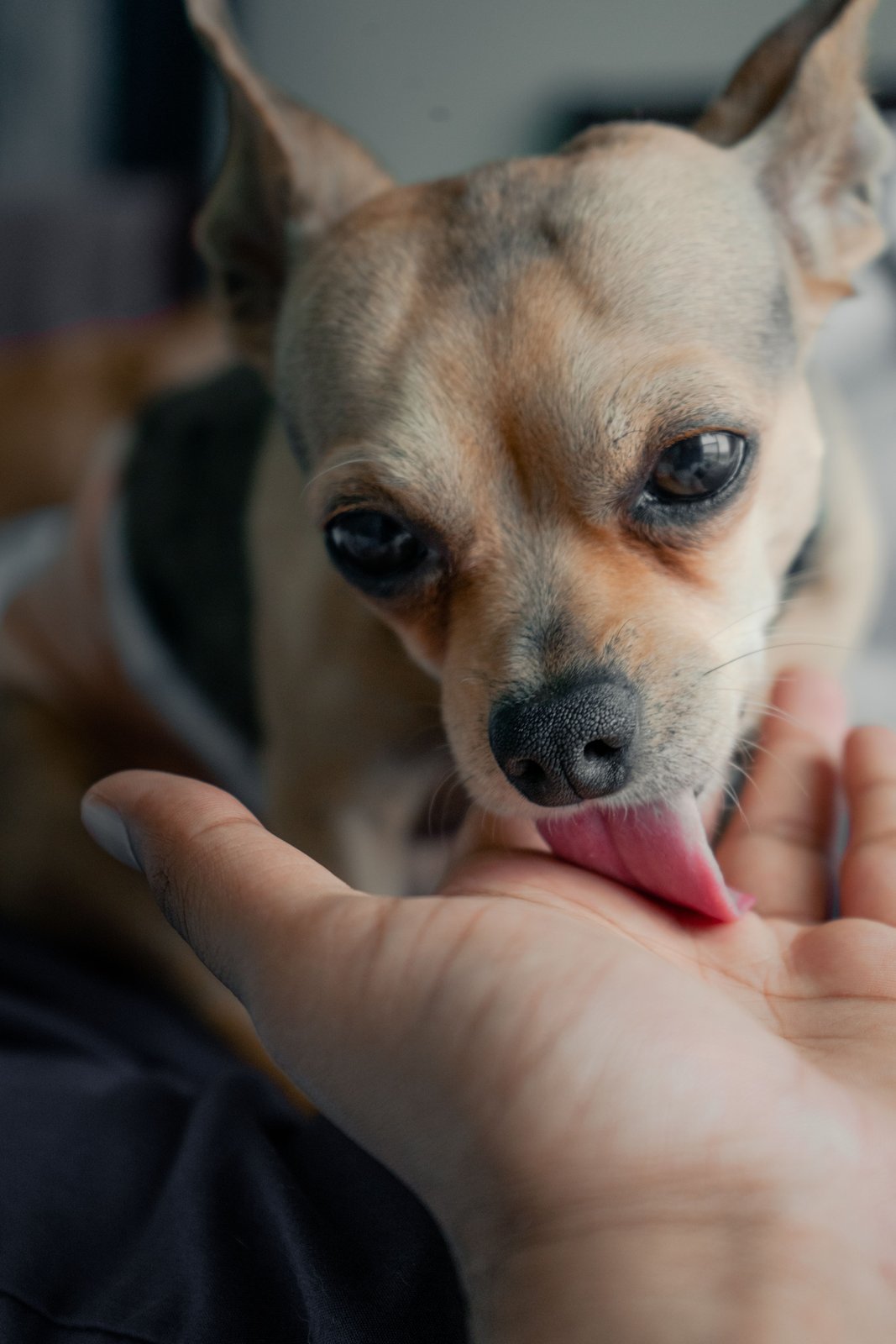
The photo above is a dog licking a person’s hand. It is a licking picture, not a lick mat.
A lick mat is a textured surface you smear with a soft, dog-safe food so the dog has to lick rather than gulp. That job is useful in a few everyday moments, especially in a small home where the kitchen, the door, and the dog’s bed share one room.
It helps as a slower snack, not as the dog’s whole dinner. A thin layer of a familiar spread can stretch a small amount of food into a few minutes of licking. It can also be a calm pause after a walk, once the leash is off and you want the dog occupied while you hang the lead and wash your hands. And it can occupy a dog while you cook, if the mat is secured, the spread is safe, and you can still see the dog. The featured photo is a dog in a compact kitchen, not a mat on the worktop, which is the situation many flats are actually in: the dog is already in the room while the pan is on.
It does not help as treatment. A lick mat will not fix anxiety, cure boredom, or treat a digestive problem. A frozen mat is not a stand-in for a walk, a play session, or time outdoors. If the dog is distressed, sore, or unwell, the mat is not the plan. Contact a veterinarian when something seems medical, and use other tools when the job is really a meal, a search, or a puzzle.
When a snuffle mat, slow-feeder, or puzzle toy is the better tool
Stay in this lane. This article is about choosing and using a lick mat, not a rewrite of those other guides.
A snuffle mat is the better tool when the food is dry and the job is searching with the nose. Kibble hidden in fabric flaps is a different skill from licking a smear off silicone. If you want that foraging job, use the snuffle-mat guide rather than forcing kibble onto a lick mat.
A slow-feeder bowl is the better tool for the daily meal, especially if the dog inhales dinner. A lick mat can slow a snack, but it is a poor substitute for a mealtime bowl when you need the dog to eat a full ration every day. The habit of gulping the daily bowl is covered in how to slow down a dog that eats too fast, not here.
A puzzle toy is the better tool when you want the dog to paw, nudge, or work for kibble or treats with their mouth and paws, not lick a flat surface. If the dog needs something quiet in a flat, a lick mat can be low-noise, but so can some quiet toys chosen for apartments. Pick the tool that matches the job, not the tool you happen to have on the dish rack.
Suction versus a mat that stays on a tray
Lick mats need to stay put. A dog that can skate the mat around a small kitchen will lick less and chew the corner more.
Suction cups can work on a smooth, clean surface: a tile floor, a tub, or a sink the dog is already used to. They work poorly on textured vinyl, wood, grout-heavy floors, or a mat that was not pressed down on a clean, dry surface. If the suction fails, the mat becomes a toy to shake, which is not the job.
A mat that sits on a tray is often easier in a rental kitchen. The tray keeps drips off the floor, gives you a way to move the mat, and can be the “place” you set down after a walk or while you cook. You do not need a special product name. A firm, washable tray the dog cannot easily flip is enough, as long as you stay with the dog and pick the mat up when the licking stops.
Do not leave a smeared mat out all day in a warm kitchen, on a tray or not. Soft food sitting out is a freshness problem and a supervision problem. If the dog starts to gulp large pieces, chew the mat, or peel at the edges, take it away. A mat that is being eaten is no longer a lick mat. Switch to a different tool, and contact a veterinarian if you think the dog swallowed a piece of the mat.
Room-temperature spreads versus the freezer

The photo above is an open jar of homemade peanut butter with a spoon and peanuts. It is a spread picture, not a lick mat, and it is not a claim that every peanut butter is safe for dogs.
Room-temperature spreads are the everyday option. A thin layer of a food the dog already eats is enough: a little wet food, plain yogurt, mashed banana, or a small amount of peanut butter that does not contain xylitol. Less is usually better in a small kitchen, because a thick layer takes longer to wash and is easier to leave sitting out. For a broader look at what is usually safer and what is not, see human foods that are safe for dogs.
Safety matters more than novelty. Xylitol (sometimes labeled as birch sugar or another sweetener) can be in peanut butters, baked spreads, and “sugar-free” foods. Onion, garlic, chocolate, grapes, and similar unsafe foods have no place on a lick mat. If you are not sure about an ingredient, do not smear it. Training treats and everyday treats are a separate choice, covered in best training treats for dogs and how to choose dog treats. A lick mat is not a reason to invent a new recipe from the snack cupboard.

The photo above is a home freezer stacked with ice-cube trays. It is a freezer picture, not a frozen lick mat.
A short time in the freezer can make a smear last longer and feel more like a pause than a gulp. That can be useful after a warm walk, or when you want the dog occupied while you cook. It is still a snack, not a walk and not a treatment. Skip very hard frozen mats for dogs that bite at ice. A dog that tries to crack the mat with their teeth can damage a tooth or chew the mat itself. For those dogs, a cool or just-chilled smear is enough, or you skip the freezer altogether.
Whether the spread is cool or room temperature, do not leave the mat out once the dog has finished, and do not store a half-licked mat in a warm kitchen “for later.”
How to wash a lick mat so it does not stay greasy

The photo above is a person washing a yellow bowl at a kitchen sink. It is a washing picture, not a lick mat, and it is not a claim that a rinse kills every germ.
Lick mats have grooves. A quick rinse often leaves fat behind, and that fat sits on a small dish rack and smells like yesterday’s peanut butter. Wash the mat soon after use, the way you would wash a greasy bowl. Warm water, ordinary dish soap, and a brush or sponge that can get into the texture are enough for everyday cleaning. This guide will not claim that any method sterilizes a mat or kills all bacteria. For the broader habit of washing feeding gear at home, see how to clean dog bowls and fountains.
Rinse until the water runs clear and the surface no longer feels slick. Shake off the water and stand the mat so air can reach both sides. In a small apartment, that may be a dish rack, a drying mat, or the side of the sink. Do not stack a damp, greasy mat under plates. If the mat still smells after a normal wash, wash it again, or retire it if the texture stays sticky or damaged. A dishwasher is only a good idea if the maker says the mat can go in one; this article will not invent a setting or a temperature that makes every mat safe in a machine.
A simple way to use one in a small apartment
Pick one job at a time. After a walk, smear a thin, safe layer, set the mat on a tray or a surface where suction actually holds, and stay in the room. While you cook, do the same, and keep the mat away from the hot hob, the knife, and the food you are preparing. As a snack, use it in place of a handful of treats, not in place of the dog’s meal and not in addition to a second dinner.
Supervise. A lick mat is not a babysitter for a workday, and it is not something to leave smeared on the floor until you get home. If the dog chews, gulps, or tries to lift the mat, end the session. If the spread was a mistake — xylitol, onion, or another unsafe food — contact a veterinarian or a pet poison resource rather than waiting to see what happens.
There is no ranking here, and no promise that a lick mat will make a restless dog calm. Used for a short, specific job, washed afterwards, and put away, it can be a practical tool in a small kitchen. Used as a treatment, a frozen walk replacement, or an all-day buffet, it is the wrong tool.
FAQ
Is a lick mat a treatment for anxiety or boredom?
No. A lick mat can occupy a dog for a short, specific job, such as a snack or a pause after a walk. It is not treatment for anxiety, boredom, or digestive disease, and this guide will not promise that a mat will make a restless dog calm. If the dog seems distressed, sore, or unwell, contact a veterinarian rather than adding a thicker smear.
Can I leave a smeared lick mat out while I cook, or while I am at work?
You can use one while you cook if you stay in the room, the mat is secured, and the spread is safe. Do not leave a smeared mat out all day in a warm kitchen, and do not leave one down as a babysitter while you are at work. Soft food sitting out is a freshness problem and a supervision problem. Pick the mat up when the licking stops.
What spreads are safe to use on a lick mat?
Use a small amount of a food you already know is safe for that dog, such as a little of their wet food, plain yogurt, or peanut butter that does not contain xylitol. Skip onion, garlic, chocolate, grapes, xylitol, and any ingredient you cannot identify. Check the safe-foods guide if you are unsure, and do not invent a recipe from the snack cupboard. If the dog already ate an unsafe spread, contact a veterinarian or a pet poison resource.
My dog chews the lick mat or tries to gulp it. What should I do?
Take the mat away. A mat that is being chewed is no longer being used as a lick mat. Try a thinner smear, a tray or better suction, or a different tool, such as a slow-feeder or a puzzle toy, depending on the job. If you think the dog swallowed a piece of the mat, contact a veterinarian. Skip very hard frozen mats if the dog bites at ice.
Is a frozen lick mat better than a walk or a slow-feeder bowl?
No. A short time in the freezer can make a smear last longer, but a frozen mat is not a substitute for a walk, and a lick mat is not a substitute for a slow-feeder at the daily meal. Use the freezer only if the dog licks rather than bites at ice. For the daily gulp habit, use the slow-feeder and fast-eating guides.