

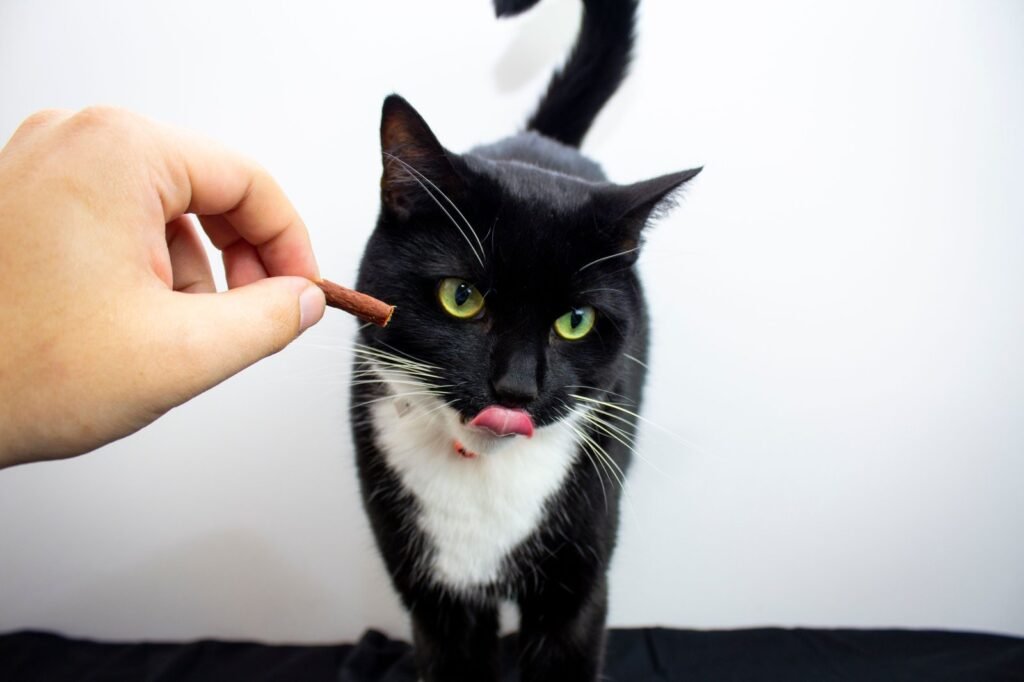
If you want to know how to choose cat treats, the hard part is rarely finding something your cat will eat. It is the open pouch on the counter, the “just one more” habit after work, and the fact that a small apartment makes every extra bite easy to repeat. Treats can be useful, but they can also quietly replace part of dinner if you never count them. A useful mindset is this: treats are extras, not a meal. Choose a treat for a clear job, keep the portion small enough that regular food still matters, and read the back of the pack more carefully than the promises on the front.
This is general information for cat parents in the US and UK, not a veterinary diet plan and not a product test. Treats are not a treatment for dental disease, urinary issues, hairballs, or weight loss. Those belong with a veterinarian. If your cat gains weight, stops eating meals, or has vomiting or diarrhea after treats, contact a veterinarian.
Treats are extras, and they count as food
A treat still adds to the day’s intake. The kindest habit is to count treats against the day’s food rather than stacking them on top of a full ration. If you know you will use treats for a short training session or a pill, serve a little less of the regular meal. Do not invent a precise number in your head. Use the feeding guidance on your cat’s food, the serving information on the treat packet, and your veterinarian’s advice for the cat in front of you.
Body condition is a better guide than a generous hand. If the waist is disappearing, or you can no longer feel the ribs easily under a light touch, extras are probably doing more work than you meant them to. For portions and body condition in general, use how much you should feed your cat. This article stays on the treat itself: what to pick and how to portion it.
This is a treat guide, not a rewrite of meals or dog training

The photo above is a cat eating a meal from a bowl. That is the day’s main food, not a treat. The two jobs should stay distinct.
How much to feed is covered in the guide above. Wet versus dry, and a slow food change, have their own plans in wet vs dry cat food and how to switch cat food. If your cat is sniffing dinner and walking away, that is a picky-eating problem, not a reason to fill the gap with treats; see how to get a picky cat to eat.
Dog treats are a different product and a different mouth. Small, frequent rewards for a city dog are covered in best training treats for dogs. Do not assume a dog treat, or a human snack, is automatically fine for a cat.
If you share a small home with more than one cat, treats can create the same crowding and guarding problems as meals. Keep the treat moment as clearly separated as the food stations in how to feed two cats in a small apartment. Think of three jobs, not one:
- Choose. Pick a treat that fits the cat and the short job you have in mind.
- Count. Treats come out of the day’s food, not on top of it.
- Stop. When the job is done, put the pack away so the evening does not become a drip of extras.
Soft, crunchy, and lickable: pick for the job
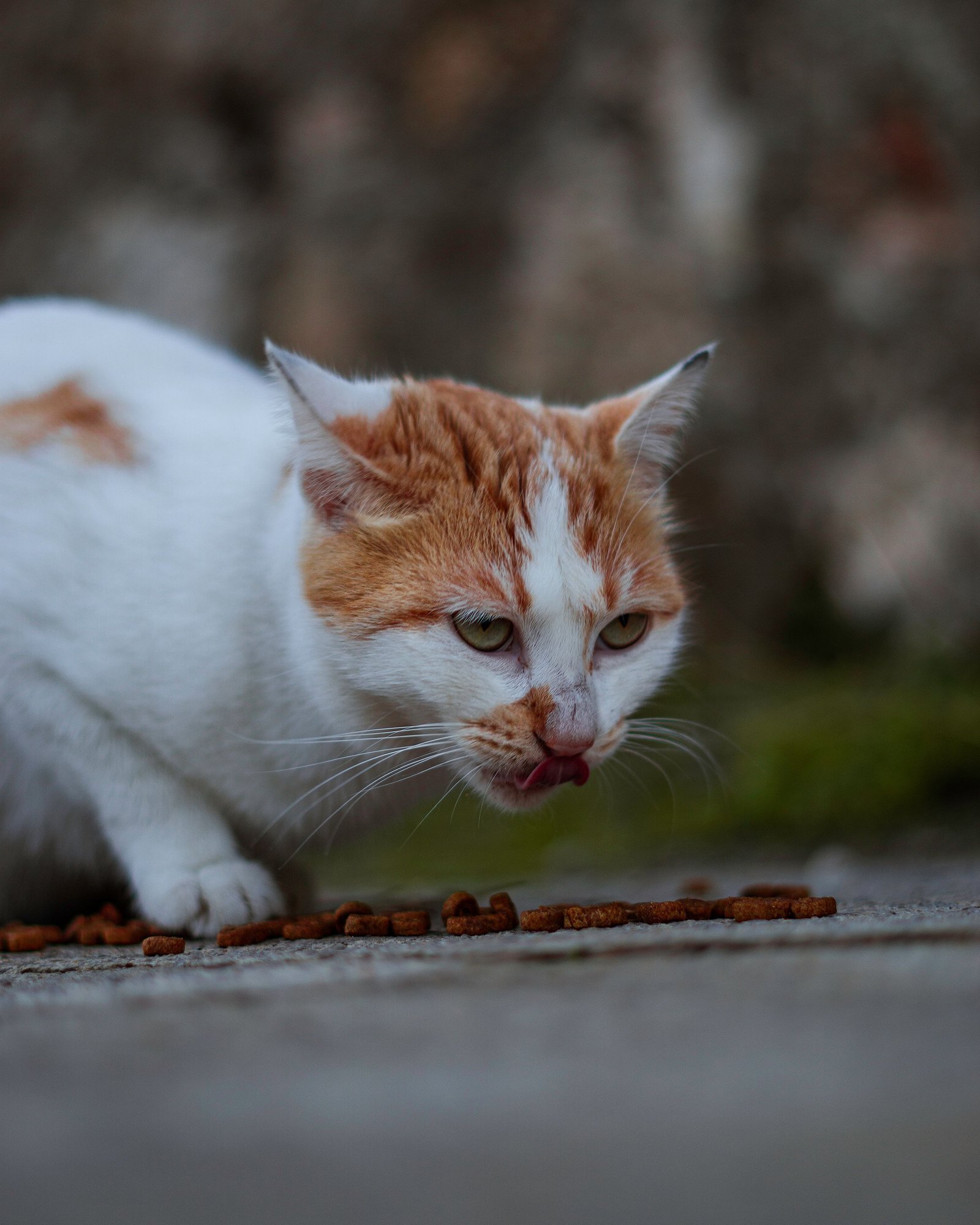
The photo above is dry food on an outdoor surface, not a measured indoor treat portion. It is a reminder that small pieces add up quickly when they are easy to keep offering.
Soft treats are handy when you need a cat to take something quickly: a short training moment, a cue at the carrier, or a small piece that can hide or follow a pill. They are easy to tear into smaller bits, which helps you keep the reward tiny, but they also disappear fast, and it is easy to offer more than you meant to.
Crunchy treats or small dry biscuits can suit a cat who prefers a harder texture, or a reward you can drop into a puzzle. Crunch is not a treatment for dental disease. A hard biscuit does not replace dental care, and questions about your cat’s mouth belong with a veterinarian.
Lickable treats, pastes, and squeeze tubes are often very interesting to cats. They can help with a brief, calm reward, and some cats will take a lick when they will not take a dry piece. They are also easy to overdo. A tube invites a longer squeeze than a single small piece. If you use a lickable treat, decide the amount first, put the cap back on, and do not keep topping up “just to finish the tube.”
The format should match the job. A tiny soft piece is usually a better training or pill helper than a large crunchy biscuit the cat has to sit and chew. A lickable treat can be a short, high-value moment, but it is a poor all-evening drip. None of these formats is a treatment for urinary issues, hairballs, or weight loss, even when the front of the pack sounds helpful.
What the ingredient list tells you, and what the front of the pack does not
Front-of-pack language is designed to catch your eye. Words about freshness, “natural” tones, or a single attractive protein do not tell you how the treat fits into the day. Turn the pack around.
The ingredient list, in order, tells you more than a large photo of a fish or a bird. So does the serving information, and any statement about whether the product is a complete food or only a complementary treat. Many treats are not meant to replace a meal. That is useful to know before you start using them as if they were dinner. For the slower work of reading a complete food label, use how to read a cat food label. The same habit helps here: look past the banner, and do not invent percentages or nutrient numbers that the pack does not give you in a form you can actually use.
Be cautious with extras that are not made for cats. A piece of your sandwich, a lick of milk, or a leftover from the takeaway is not a treat plan. Some human foods are unsafe. If you are tempted to share from your plate, check human foods that can be safe for cats and still keep the amount tiny. When in doubt, skip the human food and use a treat you chose on purpose.
Allergies, prescription diets, and medical conditions change the picture. If your cat is on a special diet, ask the prescribing veterinarian before you add a new treat, including ones that sound mild or “simple.” A treat that fights the diet is not a kindness.
Once the pack is open, treat it like food. Seal it, keep it dry, and do not leave it sitting in a warm window. Storage details for small homes are in how to store cat food in a small apartment.
Use a treat for a short job, not as an all-day drip

The cat in the photo is looking up. No treat is in the frame, which is a useful picture of the moment before you decide whether a reward is actually needed.
A treat works best when it pays for a short, clear job: coming when called from under the bed, sitting before the carrier zip, or taking a pill. For medication, first confirm with the prescribing veterinarian or pharmacist that the pill may be given with food. Then keep the food tiny. A small soft treat or a little lickable paste can help, but a second dinner built around one tablet teaches the cat that meals are optional. The step-by-step of offering a tablet is in how to give a cat a pill at home. Use only a small amount, count it, and go back to the regular meal.
Keep training sessions brief in a small home. A handful of tiny pieces, used one at a time, is usually plenty. If you are repeating the same cue again and again, pause. More treats will not fix a confusing setup.
Do not use treats to paper over a skipped meal. If your cat is leaving the bowl, you need the picky-eating plan, or a veterinarian, not a richer snack. Reward the short job you asked for, then put the pack away.
When treats need a second look

A cat who is resting, using the litter box as usual, and still finishing meals is in a different place from a cat who is gaining weight, leaving dinner, or seeming unwell after extras.
Contact a veterinarian if your cat gains weight, stops eating meals, or has vomiting or diarrhea after treats. Also call if you see sudden thirst, straining in the litter box, a painful mouth, or a cat who seems lethargic after a new snack. Those are not problems you should solve by switching flavors. Treats do not treat dental disease, urinary issues, hairballs, or weight loss.
If one treat consistently causes itching, vomiting, or loose stools, stop offering it and ask your veterinarian before you keep experimenting.
A calm choosing and portioning plan
Use this as a starting draft, then adjust to your cat and the food you already use:
- Decide the job first: a short training moment, a pill helper, or an occasional extra, not an all-evening snack.
- Choose a format that fits that job, whether soft, crunchy, or lickable, and ignore front-of-pack health claims that belong with a veterinarian.
- Read the ingredient list and the serving information, and check whether the product is only a complementary treat.
- Count every treat against the day’s food, and reduce the meal slightly when you know extras are coming.
- Keep human food off the default list, and ask your veterinarian before adding treats to a special diet.
- Put the pack away when the job is done, and store it as carefully as the rest of the food.
- Watch meals, weight, and stools. If something changes in a way that worries you, contact a veterinarian.
Learning how to choose cat treats is less about finding a perfect flavor and more about keeping extras in their place. The aim is a treat you can use on a tired Tuesday, a dinner the cat still wants, and a portion you can repeat without guessing. If weight, appetite, or digestion takes a turn after treats, ask a veterinarian to help you sort a small habit from a problem that needs more support.
FAQ
How many treats can I give my cat in a day?
There is no honest single number that fits every cat. Treats are extras, not a meal, and they should be counted against the day’s food. Use the serving information on the packet, the feeding guidance for your cat’s regular food, and your veterinarian’s advice if you are unsure. If you already know you will use treats for training or a pill, serve a little less at mealtime. If the cat is gaining weight or leaving dinner, cut the extras back and ask your veterinarian.
Are crunchy treats good for my cat’s teeth?
Crunch may be a texture your cat enjoys, but it is not a treatment for dental disease. A hard treat does not replace dental care, and it should not be used as a home remedy for a sore mouth or bad breath. If you have concerns about your cat’s teeth, contact a veterinarian. Choose a crunchy treat only if it fits the job and the portion you can actually count.
Can I use treats if my cat is a picky eater?
A treat can be a short, high-value reward, but it should not become the reason dinner is left in the bowl. If your cat is regularly walking away from meals, follow how to get a picky cat to eat and speak with a veterinarian if appetite stays low. Filling the gap with treats can make the meal even less interesting, and it makes portions harder to track.
Is it all right to hide a pill in a treat?
Sometimes, but only if the prescribing veterinarian or pharmacist has said the pill may be given with food. Some medicines must not be crushed or mixed into food. If you are allowed to use a small soft treat or a little paste, keep the amount tiny and count it as part of the day’s extras. The fuller method is in how to give a cat a pill at home. If the cat spits the pill out, vomits, or you cannot get the dose in, contact the prescribing veterinarian.
When should I contact a veterinarian about treats?
Contact a veterinarian if your cat gains weight, stops eating meals, or has vomiting or diarrhea after treats. Also call if a new treat seems to cause itching, if the cat seems painful around the mouth, or if urinary signs or sudden lethargy appear. Treats are not a treatment for dental disease, urinary issues, hairballs, or weight loss. Those problems need veterinary advice, not a different packet.