

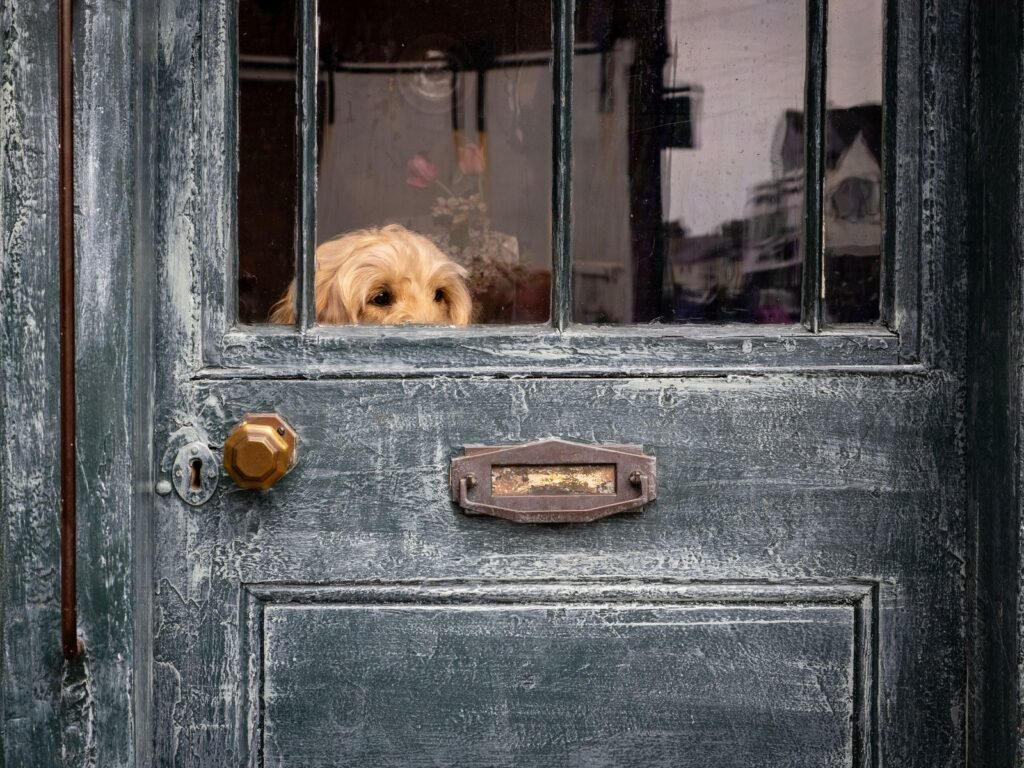
If you want to keep a dog calm when the doorbell rings, the work starts before anyone is standing in the hallway. In a flat, that sound often means a delivery, a roommate, a neighbor, or a guest. The dog may bark, rush the door, or wind up before you touch the latch.
A practical plan is management and training together: a settle spot away from the door, a pause before you open it, and payment for quiet. Do not turn the hallway greeting into a game.
This is general information for dog parents in the US and UK, not a veterinary diagnosis, and not a promise that every dog will stay quiet after a few practices. A sudden change in aggression, a dog that has bitten or tried to bite at the door, or a dog that seems panicked or unwell is a veterinary or qualified-behavior question, not a wait-and-see.
This is the doorbell moment, not all-day barking
The job here is the trigger at the door: a doorbell, a knock, or an intercom in a hallway building. The dog hears it, then barks, dashes to the entry, or gets so aroused that the next minute is already lost. It is not a rewrite of how to stop a dog from barking in an apartment, which is the all-day noise problem of hallways, elevators, and neighbors. You may use a quieter baseline later. First you need a plan for this one sound.
It is also not how to stop a dog from jumping on guests, which is the greeting once the door is already open. It is not how to stop a dog from door dashing in an apartment, and it is not how to teach a dog to wait at the door. Those last two are about the threshold itself: the bolt through the gap, or a wait cue for hallways and elevators. This article is the moment before the door moves, when the bell or knock is the cue.
A settle plan for a small apartment helps you build the away-from-the-door spot. It does not, by itself, teach the dog what to do when the intercom buzzes.
Think of four jobs, not one:
- Give the dog a place that is not the door. A mat, bed, or other settle spot should sit far enough back that the dog is not coiled at the gap.
- Pause before you open. The latch turns only after the dog is already in that place, or is otherwise held.
- Pay quiet. Food or a calm release happens for the quiet, not for the rush.
- Keep the hallway boring. A noisy greeting just outside the door can pay the bark you are trying to fade.
Set up a settle spot away from the door
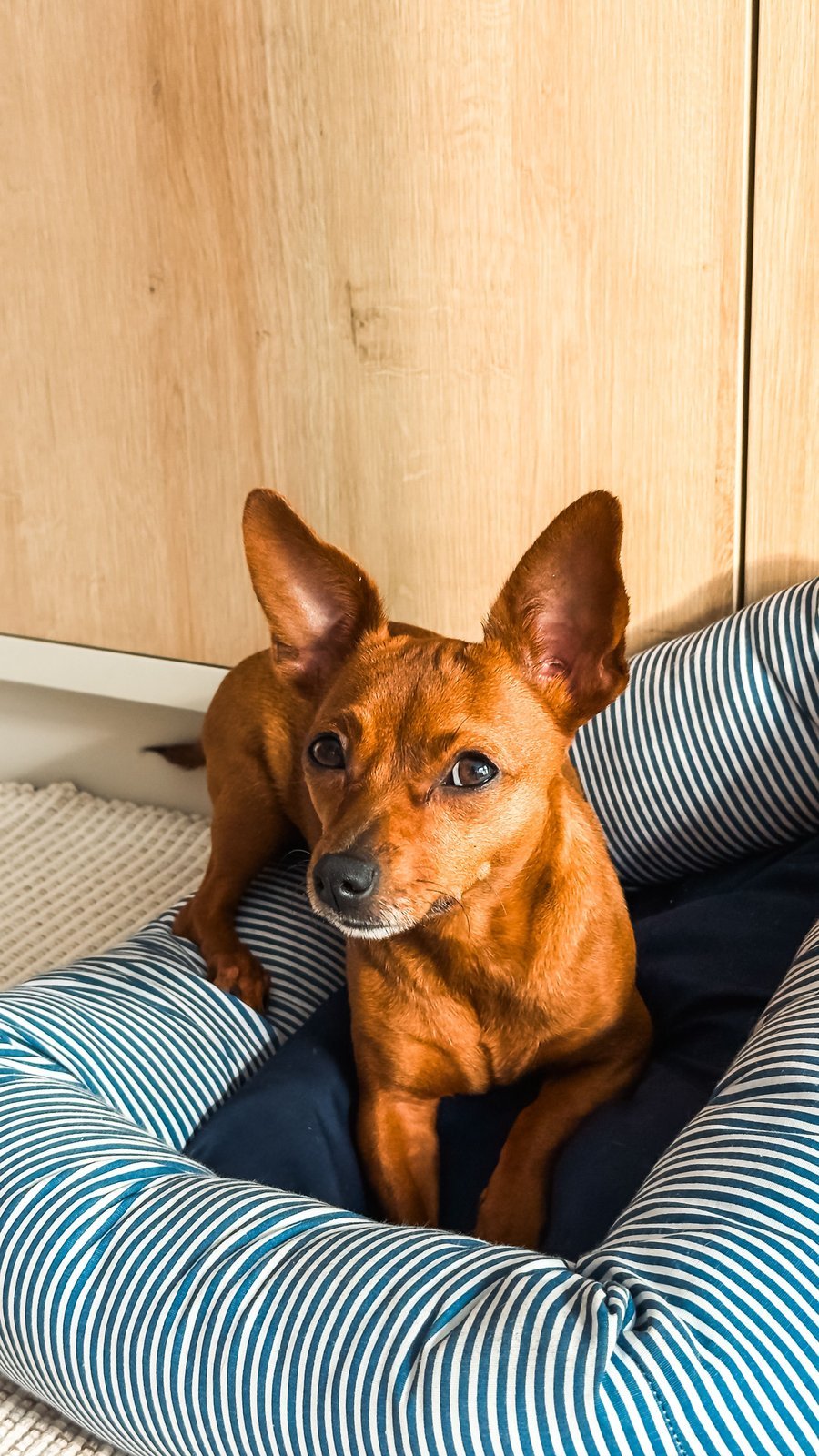
Most doorbell chaos is won or lost by where the dog is standing when the sound happens. If practice always starts with the dog already at the door, you are rehearsing the rush.
Pick a spot the dog can see you from, but that is not in the swing of the door or in the first step of the hallway. A bed, a mat, or a corner of the living room is enough. Teach the dog to go there when the entry is quiet, using the same settle work you would use on a calm evening. Feed on the spot, and release the dog from it on purpose.
In a small flat you may not have a spare room. Distance still helps. Even a few meters back from the latch is better than a body pressed against the door. If you sometimes need a more enclosed rest space for a delivery you cannot manage in the moment, a crate can be one optional tool; crate training in an apartment should stay gradual and kind, and it does not replace the doorbell plan.
Practice sending the dog to the spot, then walking toward the door without opening it. If they leave the spot, stop, guide them back, and try a smaller step. The door is not a prize for leaving the bed.
Reward quiet, and practice the sound
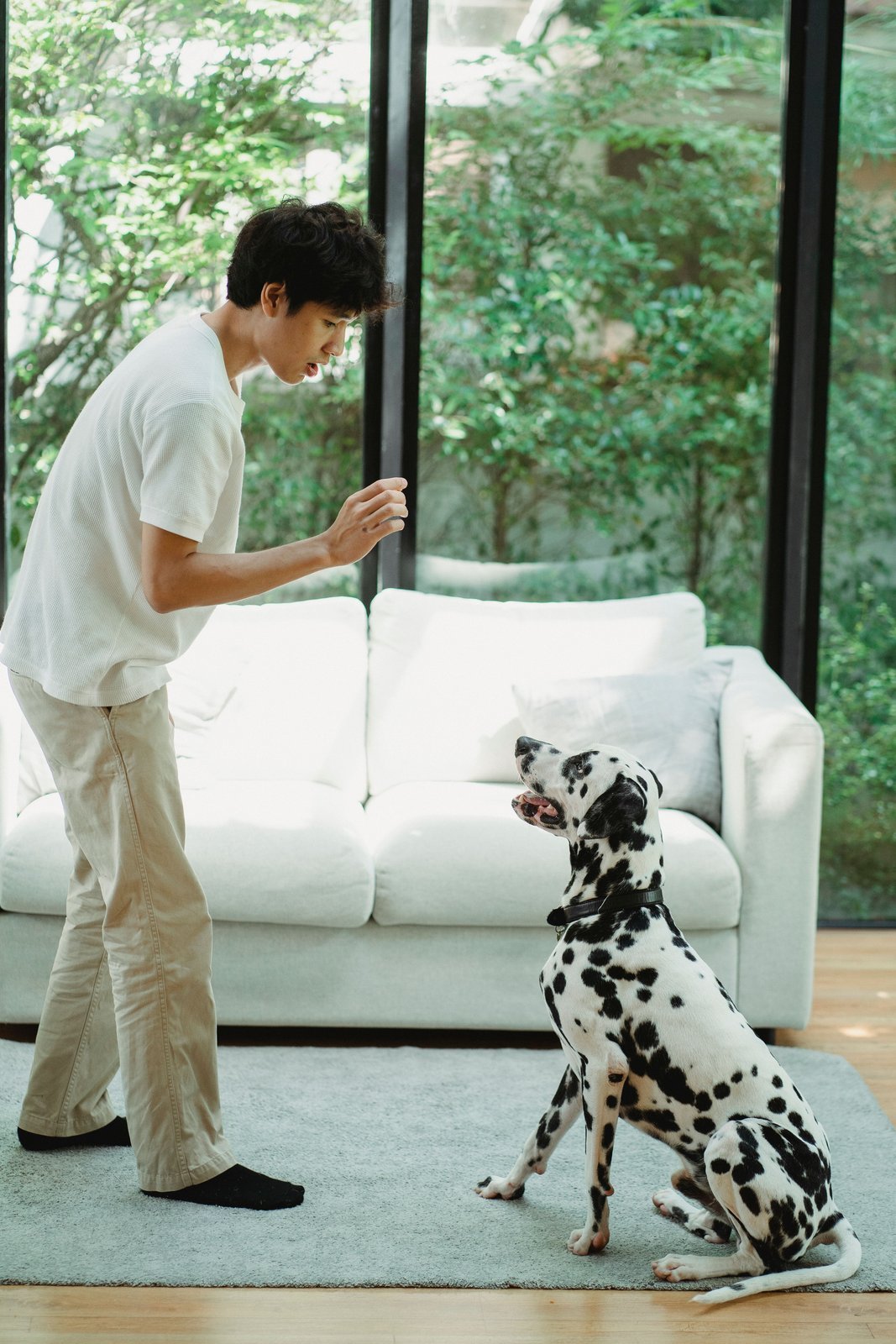
Once the dog will go to the settle spot, pair that place with quiet. You are not asking for a frozen statue. You are paying the dog for staying put, and for the moments when the noise does not turn into a lunge.
Start below the real doorbell. Knock softly on a wall, play a short recording at a low volume, or have a roommate press the intercom once while you stand near the settle spot with high-value training treats. Mark and feed for looking at you, for staying on the bed, or for a pause in the bark. If the dog explodes, the rehearsal was too hard. Make the sound quieter, stand closer to the dog, or skip opening the door in that session.
Keep sessions short. A few well-timed reps beat a long argument at the threshold. Do not yell at the door, and do not use a shock collar or a citronella spray as training. Those tools can make the entry feel unpredictable, and they do not teach the dog where to go when the bell rings.
When the dog can stay on the spot through a mild practice sound, add the pause you will need in real life: you walk to the door, wait, then return to feed on the bed. Only later do you open the door a little, then close it if the dog leaves the spot.
Pause before you open it
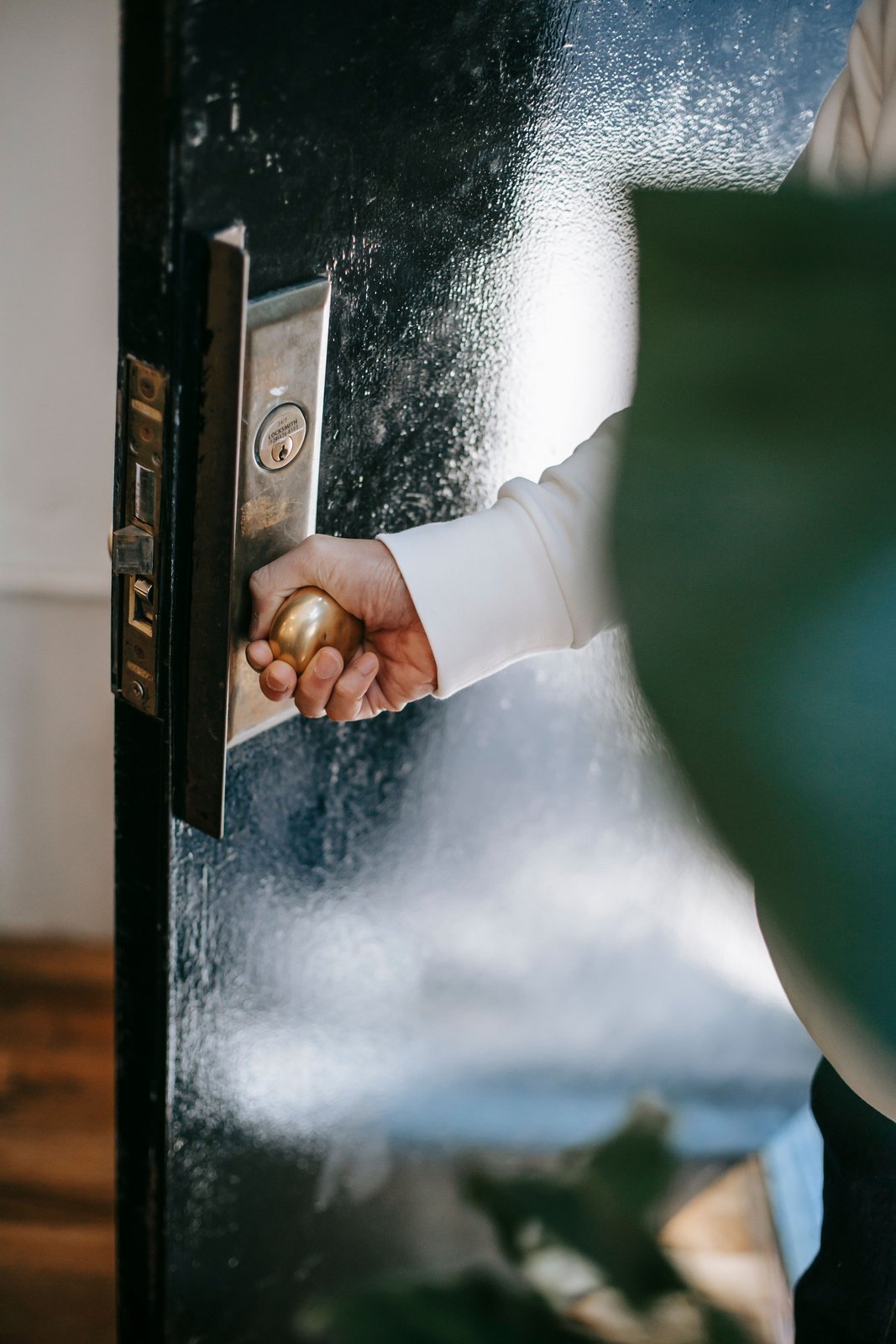
The settle spot is only useful if you do not undo it at the latch. In a hallway building, opening the door too soon puts a wired dog one step from a neighbor, a stairwell, or a courier.
Build a simple sequence and use it even when you are in a hurry: dog on the spot or on a leash, a beat of quiet, then the door. If the dog leaves the spot or starts barking at the gap, take your hand off the latch and reset. Opening the door is the reward for the pause, not for pushing forward.
A wait cue at the threshold can sit on top of this later, which is why the wait-at-the-door guide is a useful next skill for elevators and shared corridors. It is not the first job. If the dog is likely to shoot through the opening once it exists, handle that as door-dashing management: leash or body-block before the door moves. If the problem starts only after the guest is inside, switch to the jumping-on-guests plan.
You can clip a leash on before you open, even if you are not going out. That is management, not a walk. Stand so you can close the door if the dog surges.
Deliveries, roommates, and neighbors in a tight hallway
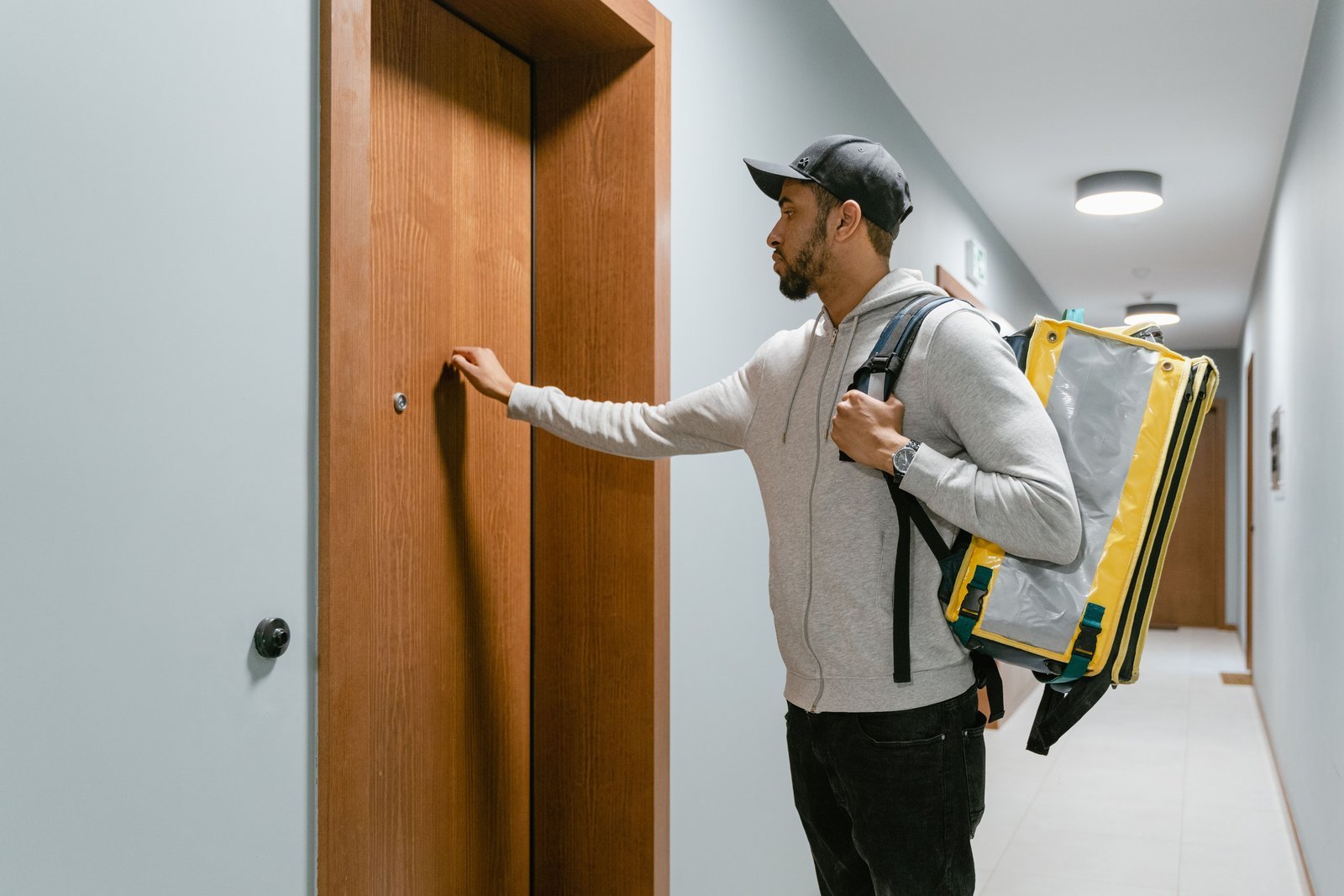
Apartment doorbells rarely happen in a tidy training window. Couriers knock twice. Roommates fumble keys. A neighbor may tap to borrow sugar. The plan has to survive those ordinary interruptions.
Deliveries. If you can, send the dog to the settle spot, or clip a leash on, before you open. You can also step into the hallway, close the door behind you, and take the parcel there when that is safe. A note asking the courier to leave the package may cut some knocks, but it will not remove every intercom buzz.
Roommates and family. Agree on the sequence: dog to the spot or onto a leash first, then the door. One person who always opens first “just this once” will keep the rush alive. Leave the leash where everyone can reach it.
Guests. Brief them before they knock if you can. Ask them to wait in the hallway until you say the door is ready, then come in calmly. The greeting can happen after the dog is already settled or held. A loud hello in the doorway pays the wind-up.
If you want a record of what happens when you are not at the door, a camera can be one optional management tool; the apartment pet-camera guide is about choosing and placing one, not a requirement for this plan. Arrivals and departures during a workday sit beside leaving a dog home alone in an apartment rather than replacing the doorbell routine.
Do not turn the hallway into a play space. If you chase, shout, or wrestle the dog in the corridor, you may have made the delivery the most exciting part of the day.
When this is a veterinary or behavior question
Many dogs bark at the door because the sound has been practiced and paid. This guide will not diagnose fear, pain, or a sudden change in mood.
Contact a veterinarian if the reaction appears suddenly in a dog who did not do this before, if the dog seems painful, unwell, or panicked, or if the arousal looks unlike ordinary door barking. A dog that has bitten or tried to bite at the door, or that is lunging in a way you cannot safely manage, needs qualified behavior help as well. The signs your dog is stressed guide can help you notice patterns, but it is not a diagnosis.
Do not wait to “see if they grow out of it” when the behavior is new, intense, or paired with other changes. The training plan is for the everyday doorbell or knock, once the dog is otherwise well.
A calm starting plan you can repeat
Use this as a first draft, then adjust to your building:
- Set up a settle spot away from the door and pay the dog for going there when the entry is quiet.
- Practice a mild doorbell, knock, or intercom sound, and reward quiet on the spot. Make it easier if the dog explodes.
- Pause before you open. Hand off the latch if the dog leaves the spot or surges.
- Brief roommates, guests, and, when you can, deliveries so the door is not opened as a surprise.
- Keep hallway greetings boring. Do not chase or shout as a game.
- Skip shock collars, citronella sprays, and yelling at the door. Keep sessions short and repeatable.
- Contact a veterinarian or a qualified behavior professional if aggression changes suddenly, if the dog has bitten or tried to bite at the door, or if the dog seems panicked or unwell.
The doorbell in a hallway building is a tight, repeatable trigger, not a personality verdict. The aim is a dog who already has a place to go, a door you open on purpose after a pause, and a greeting that does not pay the rush. If the reaction looks painful, fearful, or suddenly worse, ask your veterinarian to help you sort an everyday door habit from a health or behavior problem.
FAQ
Will my dog stop barking at the doorbell after a few sessions?
There is no honest timeline that fits every dog. Some improve once the settle spot and the pause at the latch are consistent. Others need longer management, especially in a busy building with frequent deliveries and visitors. Focus on a calmer routine you can repeat, not on a promise that the habit will be gone in a week or after a handful of practices.
Should I use a shock collar, a citronella spray, or yelling at the door?
No. Those are not part of this plan. They can make the entry feel unpredictable and do not teach the dog where to go when the bell, knock, or intercom sounds. Use a settle spot away from the door, reward quiet, and pause before you open.
How do I handle deliveries, roommates, and neighbors?
Treat those arrivals as part of the plan, not as exceptions. Send the dog to the settle spot or clip a leash on before the door moves. Ask guests to wait in the hallway until you are ready. Step out and close the door behind you for a parcel when that is safe, and agree with roommates that no one opens the door as a surprise.
What if my dog already rushed the door?
Do not turn the hallway into a chase or a loud correction. Get the dog back inside as calmly as you can, then reset: back to the settle spot or onto a leash, and a slower opening next time. If the dog slipped into the corridor, treat the threshold as a safety problem as well, using the door-dashing plan rather than testing whether they will return on their own.
When is this a veterinary or qualified-behavior issue?
Contact a veterinarian if the reaction appears suddenly, if the dog seems panicked, painful, or unwell, or if you are unsure whether health is involved. A dog that has bitten or tried to bite at the door, or that you cannot safely manage, also needs qualified behavior help. This article is general information for an everyday doorbell habit, not a diagnosis and not a treatment plan.