


If you want a weekly at-home wellness check on your dog, keep it short, calm, and in the same order each week so you notice change. The useful goal is a five-to-ten-minute once-over the dog will tolerate, not a clinic-style exam on the kitchen floor.
This is general information for dog parents in the US and UK, not a veterinary diagnosis and not a treatment plan. It is not a substitute for veterinary care, and it will not fix an illness on its own. If the dog seems painful, collapses, has trouble breathing, or suddenly stops eating, contact your veterinarian rather than repeating the at-home look.
A similar once-a-week routine for cats is covered in our weekly at-home wellness check on a cat. This article stays with dogs. Longer flea, tick, dental, and grooming skills have their own guides later in this article; use those when you need the deeper how-to, and use this page as the short weekly pass that tells you when to open them.
Set up a short, predictable once-over
Pick a time the dog is already fairly settled, such as after a walk or before an evening rest, not right after a noisy delivery or a rough play session. Sit on the floor or a familiar couch so you are not looming. Keep a treat pouch nearby if food helps the dog stay with you, and stop if the dog freezes, growls, or tries to leave. A check the dog will allow next week is more useful than a long struggle this week.
Use the same order every time: eyes, ears, a brief look at the mouth, a hand along the coat and skin you can see, a feel over the ribs and waist, then a look at the paws. When the steps stay in one line, a new redness, a thinner waist, or a sore paw stands out faster than if you improvise a different path each Sunday.
What “good enough” looks like is a short, predictable routine, not a full exam. You are collecting a baseline and watching for change, not trying to name a condition. If a step is new and the dog is unsure, do only the parts the dog already accepts and add the rest over a few weeks.
The featured photo is a casual at-home hold on a kitchen floor, with a hand on a black dog and a second dog at the edge of the frame. A small photographer watermark is visible in the corner. That everyday, on-the-floor picture is closer to this job than a clinic table. It is not a medical exam, and the official title’s “happy” line is not something you can verify from a still.
Eyes, ears, and a look in the mouth
Look at both eyes in ordinary indoor light. You want to know your dog’s usual baseline: clear or a little sleep in the corners, pupils that look similar, no new cloudiness, squinting, or heavy redness that was not there last week. Do not pry the eyelids open if the dog resists. A new discharge, a sudden squint, or an eye that stays closed is a reason to call the vet rather than wait for next Sunday.
For ears, lift the flap if the dog has one and look, do not start a full cleaning. You are checking for a new smell, redness, discharge, or a sudden shake and scratch that was not part of last week’s picture. If you need the longer skill, use our guide to dog ear cleaning at home and do not turn this weekly look into a deep clean. Stop if the ear is painful or the dog will not let you lift the flap, and contact your veterinarian if that is new.

This still is a playful outdoor lift of a spaniel’s ears, not a careful at-home ear look and not a cleaning. The official title is a close-up of a cocker spaniel. Use it as a reminder to look, then put the flap down; do not tug, and do not copy a playful hold if your dog finds ear handling uncomfortable.
For the mouth, a look is enough. This is not a dental procedure. When the dog yawns, pants, or takes a treat, notice the gums you can see, any new swelling, broken teeth, or a smell that is suddenly much stronger than usual. Do not pry the jaws apart if the dog resists. The longer routine lives in dog dental care at home. If there is bleeding, a loose tooth, or the dog will not eat because the mouth seems sore, call the vet rather than waiting for a better angle at home.
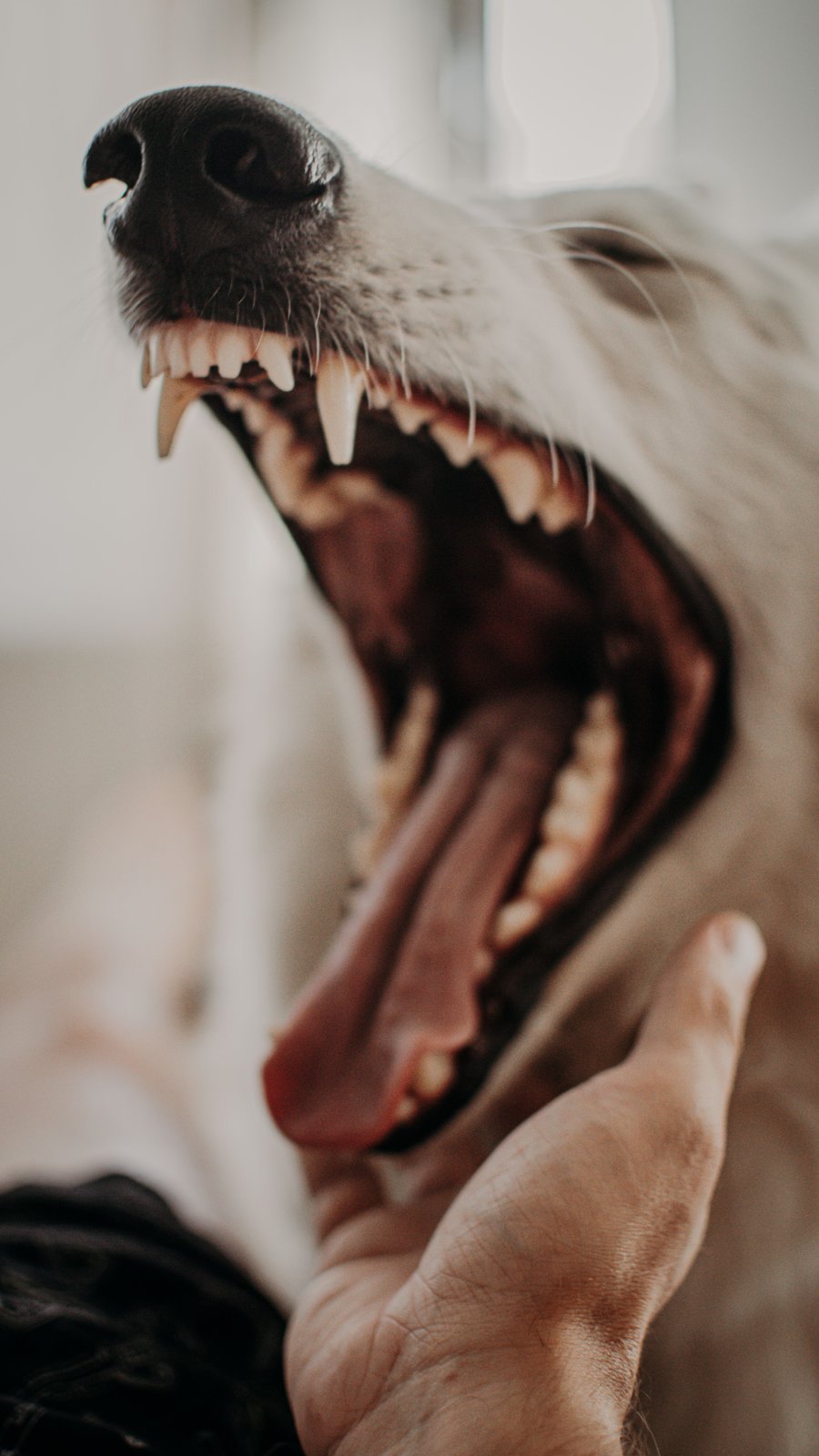
This is a yawn, not someone forcing the mouth open. A yawn or a panting pause is often the only window you get, and it is enough for a weekly look. If you never see the teeth, do not wrestle for a view; ask your veterinarian how to build that comfort, or use a treat to let the lips lift for a second.
Coat, skin, and a hands-on body feel
Run a hand along the neck, shoulders, ribcage, belly, and tail base. You are feeling for new lumps, scabs, thin patches, heat, or a coat that is suddenly dull or greasy compared with last week. Part the fur in a few places you can see. You do not need to bathe the dog as part of this once-over. If you need a wash, see how often to bathe a dog and how to freshen a smelly dog between baths in an apartment. If you need a proper brush-out, use how to brush your dog at home. This weekly pass is the hand and the look, not a grooming session.
A once-over is also a reasonable time to notice fleas or, after city walks, ticks, without turning the whole check into those longer jobs. If you see specks, scabs, or a tick, follow how to check a dog for fleas at home or how to check a dog for ticks after city walks. Do not invent a cat tick-check page, and do not treat a tick or a heavy flea load as something this article can walk you through.
Feel the ribs and waist with a flat hand. You should be able to feel ribs under a light cover of flesh on many dogs, and you should notice if the waist has thickened or dropped since last month. This is a feel, not a diet plan and not a body-score diagnosis. If weight change is sudden, or the belly is tight and the dog seems uncomfortable, contact your veterinarian.
Paws, nails, and what you already notice on walks
Lift each paw if the dog will allow it, or watch the dog walk across the room and look when they stand. Check pads for cuts, redness, or packed debris, and glance at the nails. You are not trimming here. The longer skills are how to care for a dog’s paws after city walks and how to trim a dog’s nails at home. If a paw is licked constantly, if the dog is suddenly lame, or if a nail is broken and bleeding, stop the once-over and get veterinary advice.

This puppy is at rest, not mid-exam. The official title says the dog is sitting; what you can see is a pup lying down with the paws in view. A quiet stand or a lie-down is often enough to look at nails and pads. Do not force a lift if the dog pulls the foot away; try again another week or look while the dog is standing on a pale floor.
Energy, appetite, and bathroom habits belong in the same weekly note even though they are not a “hands-on” step. You already see whether the dog wanted breakfast, whether the walk was slower, and whether stool or urine looked unusual or there was an accident in the apartment. A one-line note is enough: “appetite normal, slightly slower on the stairs, stool formed.” A sudden collapse, repeated vomiting, or a dog that cannot get comfortable is not a note for next week; it is a reason to call the vet the same day.
Watch also for signs your dog is stressed that are new for this dog: hiding, pacing, a tucked tail that was not typical, or a sudden change in sleep. Stress is not a diagnosis you should name at home, but a change in comfort is part of the weekly picture.
When this belongs at the vet instead
The weekly once-over is a baseline, not a stand-in for veterinary care. Call or visit your veterinarian if you find a new lump that is growing, an eye that is suddenly painful or closed, an ear that smells strongly or is very red, bleeding from the mouth, a tight or painful belly, unexplained weight loss, sudden lameness, or a change in drinking, urination, or stool that lasts more than a day and worries you. If you are unsure, it is reasonable to call and describe what you saw rather than guess.
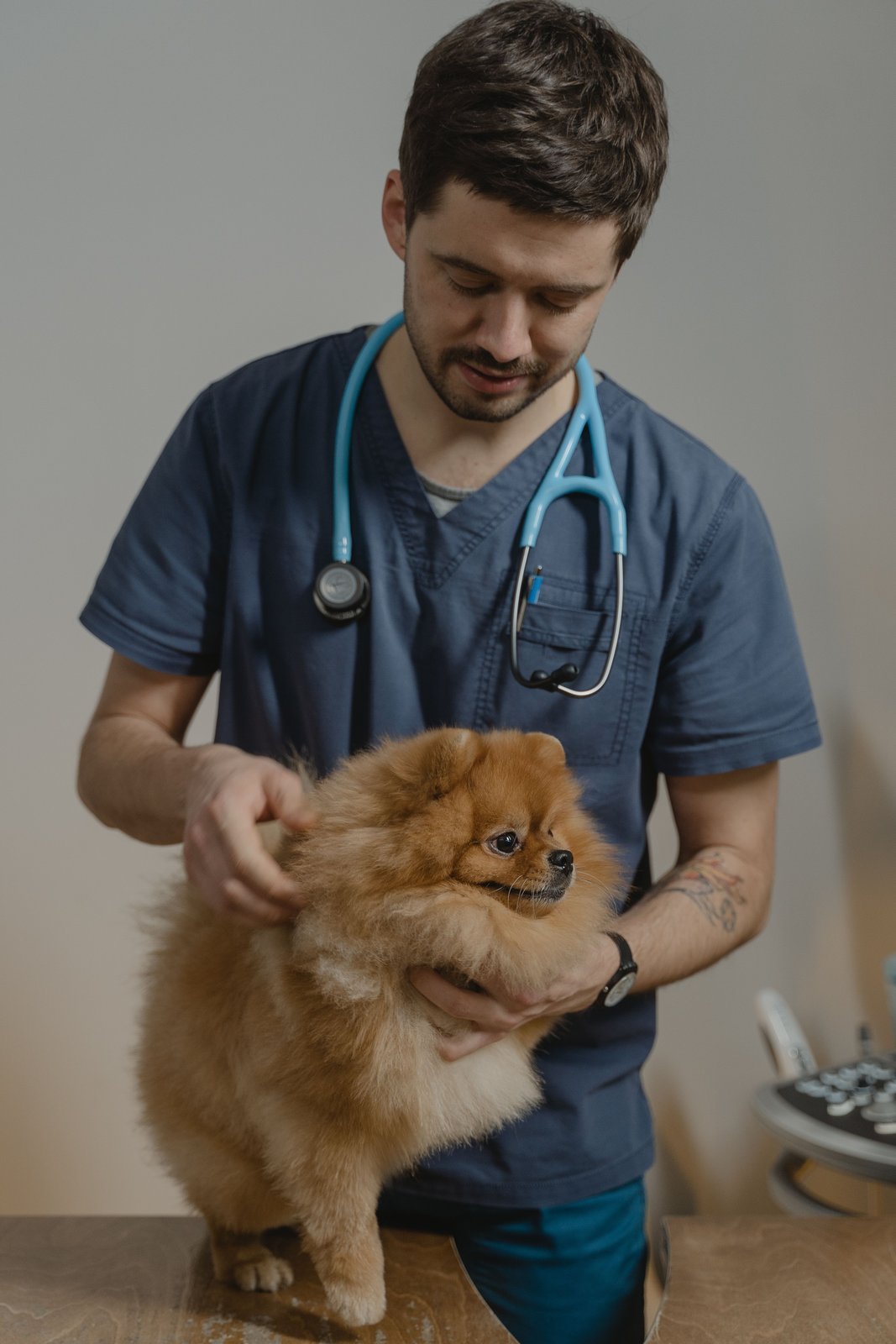
This is a clinic visit, not the weekly at-home once-over. A stethoscope, an exam table, and clinic equipment are the point of the still: some questions belong there. If clinic handling is hard, getting a dog comfortable at the vet is a separate training job you can work on between visits. Do not wait for the dog to “get used to” a painful new symptom at home.
A simple weekly note is enough
Write three or four lines in a notes app or on a card on the fridge: date, anything new in eyes or ears, mouth or coat, weight feel, and energy or stool. You do not need a spreadsheet. The value is comparison. A slightly thinner waist or a new scratch is easier to describe to a veterinarian when you know it was not there last week.
Keep the routine kind. Stop early if the dog is done. Next week, start with the steps that already go well. Over a month, most dogs will accept a short, familiar once-over, especially if it ends with rest or a small treat. That is enough. You are not trying to replace a physical exam, and you are not trying to catch every possible problem at home. You are giving yourself a clear, repeatable look so changes are harder to miss and easier to report.
FAQ
How long should this weekly once-over take?
Five to ten minutes is enough for most dogs once the order is familiar. If a step is new, stop at what the dog will allow and add the rest over a few weeks rather than stretching the session.
What if my dog will not let me look in the ears or mouth?
Skip that step and try a shorter look another day, or catch a yawn or a flap that lifts on its own. Do not pry. If the dog seems painful or the resistance is new, contact your veterinarian instead of forcing a view.
Does a weekly at-home once-over replace a veterinary checkup?
No. It is a short baseline you can repeat at home, not a diagnosis, not a treatment plan, and not a substitute for veterinary care. Use it to notice change and to describe that change clearly if you need to call the clinic.
What should I write down each week?
A few lines are enough: the date, anything new in the eyes, ears, mouth, or coat, a note on weight feel, and energy, appetite, or stool. The point is to compare with last week, not to keep a long medical file.
Should I check for fleas and ticks during the same once-over?
A quick look while your hand is already on the coat is reasonable, especially after city walks. If you need the longer method, use the flea and tick guides linked in the body rather than turning this weekly pass into a full parasite exam.