


If you need to weigh a dog or cat at home, the useful product is a repeatable number, not a diagnosis. Many “is this pet gaining or losing?” questions start with not having a figure you can compare from one month to the next. In a small apartment, that work usually happens on a bathroom scale. You step on, then you step on again while holding the pet, or you weigh a carrier empty and then with the cat inside, and you subtract. You write the result down. That is the whole method.
This is general household information for pet parents in the US and UK, not a veterinary diagnosis, and not a weight-loss plan. A good result is a number you can compare month to month, or take to a veterinarian. It is not a home diagnosis of obesity or illness, and it is not an “ideal weight” chart invented by breed. Do not chase day-to-day fluctuations, and do not force a painful or frightened animal onto the scale. If you see sudden weight loss or gain, if the pet cries when lifted, or if you cannot safely pick up a senior, call a veterinarian. Do not start a home diet.
Why a home number is its own skill
How much to feed is a different question, already covered in guides to how much you should feed a dog and how much you should feed a cat. Those articles are about portions. This article is about getting a number you can trust enough to compare. A weekly at-home wellness check for a dog or a weekly at-home wellness check for a cat may include a glance at body shape, but a glance is not a weight, and this is not a rewrite of those checks.
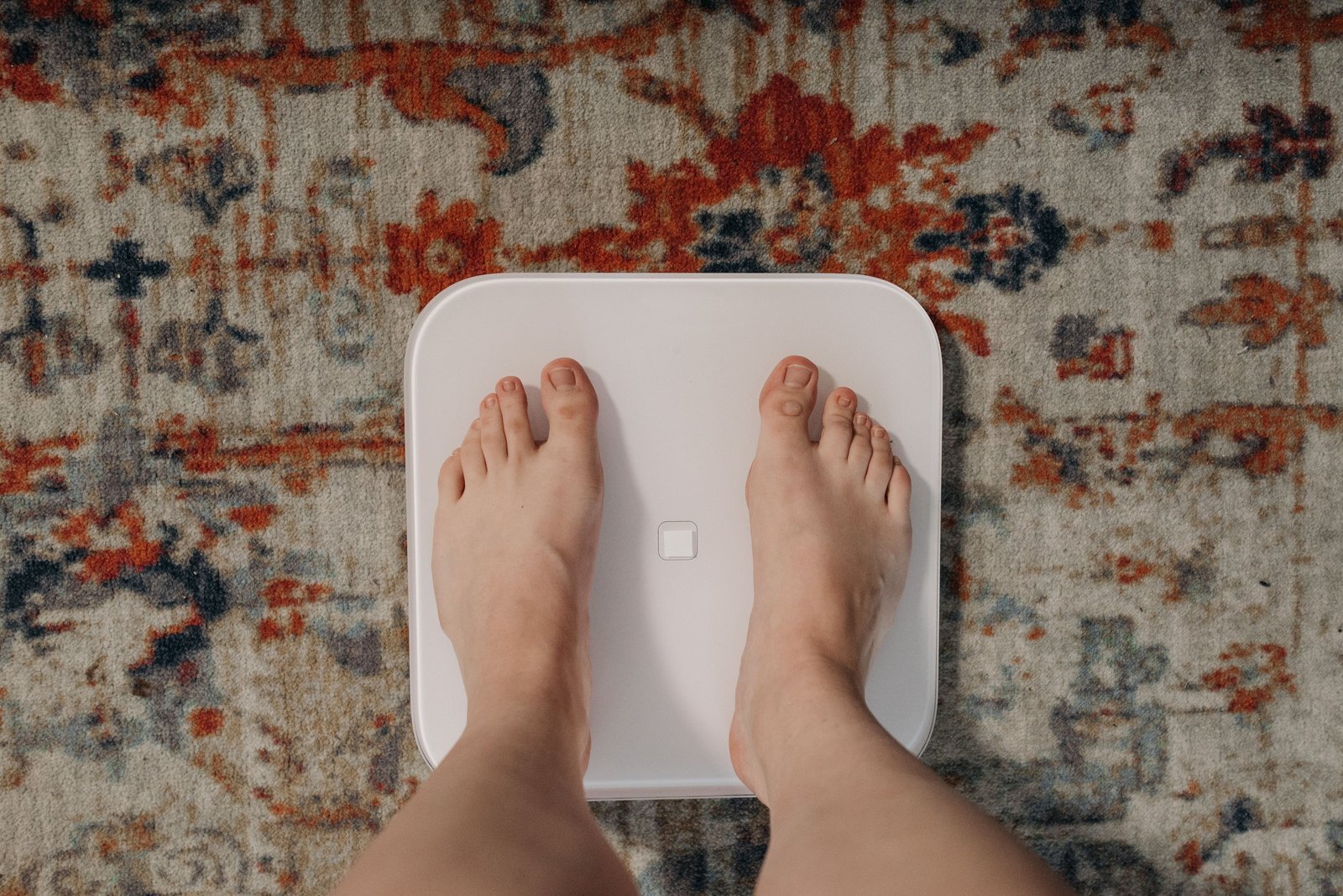
A bathroom scale is an ordinary household tool. The featured still shows a person on a scale in a bathroom, not a pet being weighed, and not a product test. The same idea applies at home: use the scale you already have, in the same place, on a hard floor if the scale needs one, and do not switch devices from month to month if you can avoid it.
Use the same scale, then subtract
For a dog or a cat you can safely lift, the holder-and-subtract method is enough. Weigh yourself first, in ordinary indoor clothes, and write that number down. Then pick up the pet, stand on the same scale, and write the second number. Subtract. The difference is the pet’s weight, including a light collar if you left it on. If a heavy collar, a harness, or a food-filled bowl would change the number, take those off or leave the bowl out of the picture.
Do this at a similar time of day, before a meal if you can, so you are not comparing a morning weight with an evening weight after dinner. Pets, like people, can look a little different after a large meal or a long drink. That is not a reason to weigh three times a day. A monthly number, or a number before a vet visit, is usually more useful than a daily spreadsheet.
If you already own a baby scale, and the pet is small enough to stand or lie on it calmly, you can use that instead. This is not a reason to buy a new device, and it is not a medical-grade claim. It is only a way to use a scale you already have, if the pet will settle on it without a struggle. Get the scale to zero, set the pet on it, and write the number down. If the pet will not stay still, go back to the holder method.
Keep the scale in the same spot. A scale on a thick rug may read differently from the same scale on tile. If your only scale lives on a rug, use that rug every time, and do not treat the absolute number as more precise than it is. Consistency matters more than a claimed tenth of a unit.
If more than one person lives in the home, try to have the same person do the holding each time, in similar clothes, so you are not mixing a heavy sweater one month with a T-shirt the next. The subtraction method only works if the first number and the second number are taken the same way. If you forget the first number, step off, weigh yourself again, and start over rather than guessing.
A carrier can help with a cat
Some cats are easier to weigh in a carrier than in your arms. Weigh the empty carrier first, then weigh it with the cat inside, and subtract. Use the carrier the cat already knows, and do not slam the door or chase the cat around the flat first. If the cat is already upset, stop and try another day, or ask your veterinarian for a plan.
You still need to be able to get the cat in safely. This article will not turn into a carrier-training guide. If lifting the cat or the carrier is hard, or if the cat cries, skip the home weigh-in and talk to a veterinarian rather than forcing the job.
The same caution applies to a dog. A small dog you can hold against your chest is one thing. A large dog, a wriggling adolescent, or a senior with sore joints is another. If you cannot safely pick the pet up, do not invent a home workaround that involves a chair, a jump, or two people guessing. Call a veterinarian and ask how they prefer to get a weight.
A towel on a slippery scale can help a small dog keep its footing, but only if the towel is there every time, because it adds a little weight. If you use a towel or a mat, weigh that first or include it in both readings so it cancels out. Never leave a pet unattended on a scale, and never hold a struggling pet over a hard bathroom floor just to finish the reading.

Write it down, and do not over-read the number
Memory is a poor log. Write the date, the time of day, and the number in a note on your phone or a paper list. If you use pounds at home and your veterinarian uses kilograms, write the unit you actually read, and let the clinic convert it. Do not average three slightly different readings from the same morning and treat the average as more scientific than it is. If the scale jumps, step off, let it settle, and try once more.
Bring the log to ordinary visits, not only when you are already worried. A short list of monthly numbers is easier for a veterinarian to read than a memory of “he felt heavier.” If you miss a month, just start again at the next calm opportunity. Do not weigh a wet, muddy, or just-fed pet and compare that number with a dry morning weight from last time.
Do not invent an ideal weight by breed, and do not treat a body-condition lecture you read online as a diagnosis. A change of a small amount from one day to the next is often just food, water, or a slightly different stance on the scale. A change you see over weeks, or a sudden swing, is information to take to a veterinarian, not a reason to start a homemade diet or a new food on your own.
If the pet is a senior, food questions belong in ordinary senior-feeding guides, such as dog food for seniors and choosing food for a senior cat. If the pet is eating poorly, that is also a different problem, covered in getting a picky dog to eat and getting a picky cat to eat. Weight can be part of those conversations, but this article will not turn into a feeding plan or a promise about appetite.

When to stop, and what to take to the veterinarian
Stop if the pet struggles, cries, or seems sore when you lift. A frightened cat who is already hiding does not need a wrestling match on a scale. A dog who flinches when you pick up the chest or the hips needs a professional look, not a second attempt. You can try again on a calmer day if the pet is only fidgety. You should not push through pain.
A number is most useful when you can hand it to a veterinarian with the dates. Work on getting a dog comfortable at the vet and getting a cat comfortable at the vet is a separate skill, but a written home weight can make that visit more informative. It is not a substitute for the clinic’s own scale, and it is not a diagnosis. If the clinic number and your home number differ, ask which one they want you to follow. Different scales often differ a little, which is another reason to stick with one scale at home.
If you notice sudden weight loss or gain, if the pet is drinking or urinating more, if the belly looks suddenly tight, or if a senior you used to lift is now too painful to pick up, call a veterinarian rather than adjusting food at home. Do not invent miracle diet foods or supplements. The home scale is for a repeatable number, not for running your own clinic.
A calm lift on a sofa is not a weighing demonstration, but it is a reminder of the real limit: if you cannot hold the pet safely, you cannot do this method, and that is a reason to ask for help rather than improvise.

FAQ
How do I weigh a dog or a cat on a bathroom scale?
Weigh yourself first, then weigh yourself while holding the pet, and subtract. Use the same scale, in the same place, and write both numbers down. Take off a heavy collar or skip a food-filled bowl if it would change the result.
Can I use a baby scale I already own?
Yes, if the pet is small enough and will settle on it without a struggle. Get the scale to zero, set the pet on it, and write the number down. This is not a reason to buy a new device, and it is not a medical-grade claim.
How often should I weigh my pet at home?
A monthly number, or a number before a vet visit, is usually enough. Do not chase small day-to-day changes, which can come from a meal, a drink, or a slightly different stance on the scale.
Should I compare the number with an ideal weight chart?
No. Do not invent an ideal weight by breed, and do not treat a chart or a photo as a diagnosis. Take a written log to a veterinarian if you are worried about a change.
When should I call a veterinarian instead of weighing at home?
Call if you see sudden weight loss or gain, if the pet cries when lifted, or if you cannot safely pick up a senior or a large dog. Do not start a home diet, and do not force a painful or frightened animal onto the scale.