


If you need to teach a dog to wait at curbs and crosswalks in the city, start with the pause before the dog’s front feet leave the curb, not with a yanked stop in the middle of the street. The dog that steps off early, forges into the crosswalk, or treats a green light like a race is making a street-entry decision, and that decision needs a calm, repeatable habit.
This is general information for dog parents in the US and UK, not a veterinary diagnosis and not a training guarantee. Dogs vary, and a sudden fear of traffic or a new habit of bolting toward the road can be a safety and health question. If your dog panics at cars, lunges into the street, or cannot settle at a corner even on a quiet block, contact a qualified trainer or your veterinarian before you add more drills.
Why city corners make the pause important
A residential driveway and a city corner are not the same problem. At a city curb, a turning car can cut close, a bike lane can sit between you and the far sidewalk, and a short light can change while you are still negotiating the first step down. Crowded sidewalks push people, strollers, and other dogs toward the same small patch of concrete where you want the dog to wait. If the dog treats that edge like the start of a race, you spend the crossing managing a pull instead of watching the light and the turning lane.
The habit you want is simple, and easy to skip when you are late. The dog reaches the curb, the feet stay on the sidewalk, and the dog waits for a clear cue before stepping down. A sit is fine if your dog offers it and can hold it in a crowd. A stand-stay with four feet on the curb is also fine. Pick one picture and use it at every corner, including the quiet ones, so the dog does not have to guess which version applies when a bus passes.
This article stays on that pause. Pulling along the block is a different habit, covered in how to teach loose-leash walking on city sidewalks. Waiting at the apartment door, in a hallway, or before an elevator is covered in how to teach a dog to wait at the door and, for indoor common spaces, how to help a dog stay calm in elevators and hallways. Those skills help a city walk, but they are not the same as waiting at the street.
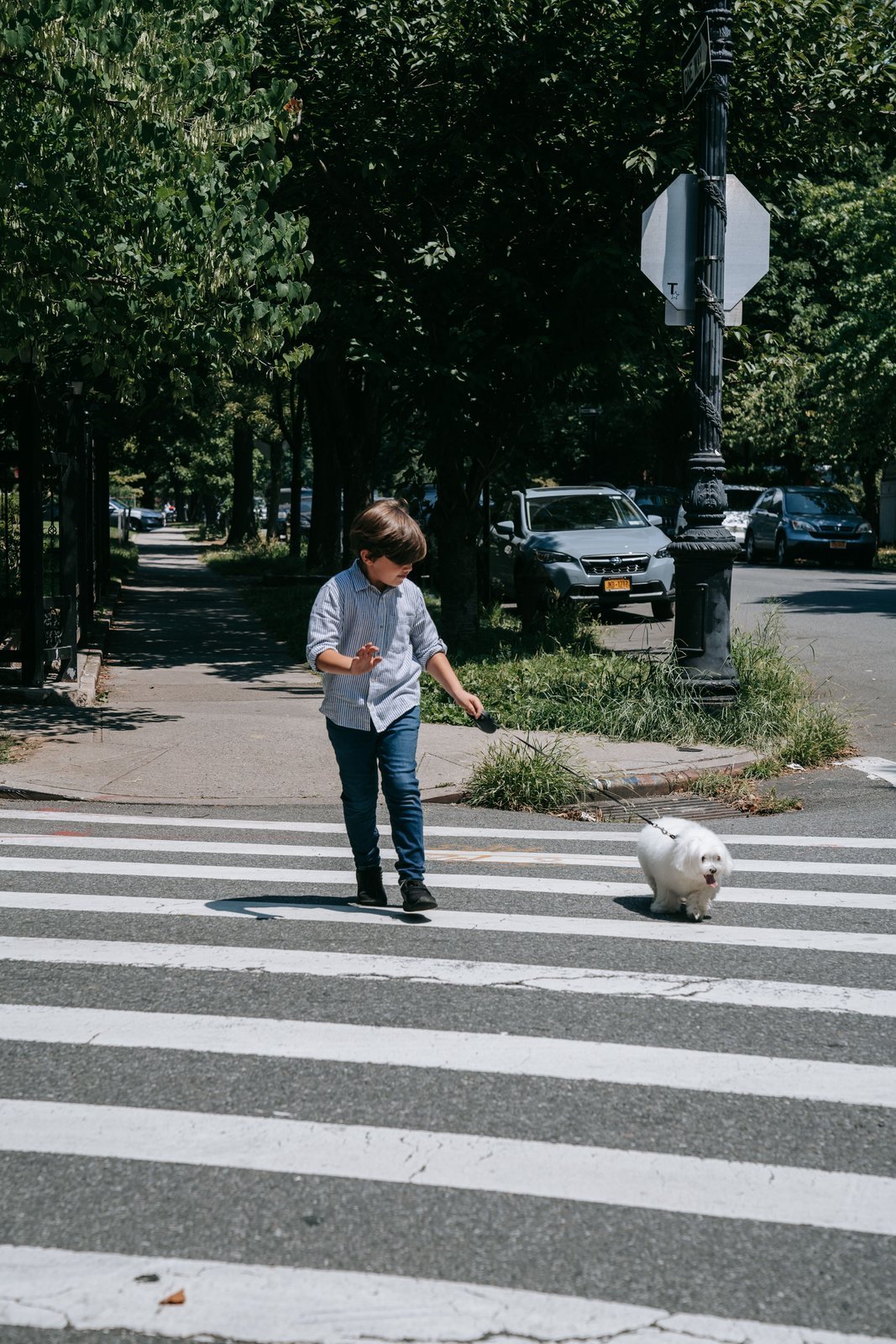
The dog in this frame is already in the crosswalk, not holding a wait at the curb. That is still a useful picture of the setting: a marked crossing, a street edge, and a leashed dog in a real city. The work you will practice happens in the last two or three steps before that pavement, when the feet should still be on the sidewalk.
Teach one consistent curb habit, and pay calm feet
Choose a cue you can say clearly in street noise, such as “wait” or “curb,” and pair it with the same body position every time. As you approach the corner, slow down a few steps early so the dog is not already launching off the curb when you start to talk. Stop with the dog on the sidewalk, mark the moment the front feet stay put, and feed at the chest or slightly behind the front legs so the treat does not lure the dog into the street. Then give a second cue, such as “let’s go” or “cross,” only when you have checked the light, the turning cars, and the bike lane.
Reward the wait, not the first step down. If you pay the dog for launching into the crosswalk, you have paid the race. If the dog steps off early, guide the dog back onto the curb, wait for four feet to settle, and pay that reset. A short reset is better than a scolding in the street. Keep the leash short enough that the dog cannot reach the lane, but do not use the leash as the only signal. A yanked stop teaches the dog that the corner is a place where the collar suddenly tightens. A paid pause teaches the dog that standing on the curb is the job.
Practice the same routine at every corner on the walk, not only at the busy intersection you worry about. If you only ask for a wait when a light is present, the dog may blow through unmarked crossings, alley mouths, and driveway ramps. If you only ask when you are already late, the cue becomes a sign of tension. The everyday, slightly boring corner is where the habit gets strong.
A steady city leash helps you keep a consistent hand position, but the leash is equipment, not the training plan. Choose a length you can manage at a crowded curb without a long slack loop swinging into a bike lane, and keep the same setup from practice streets to busier ones.
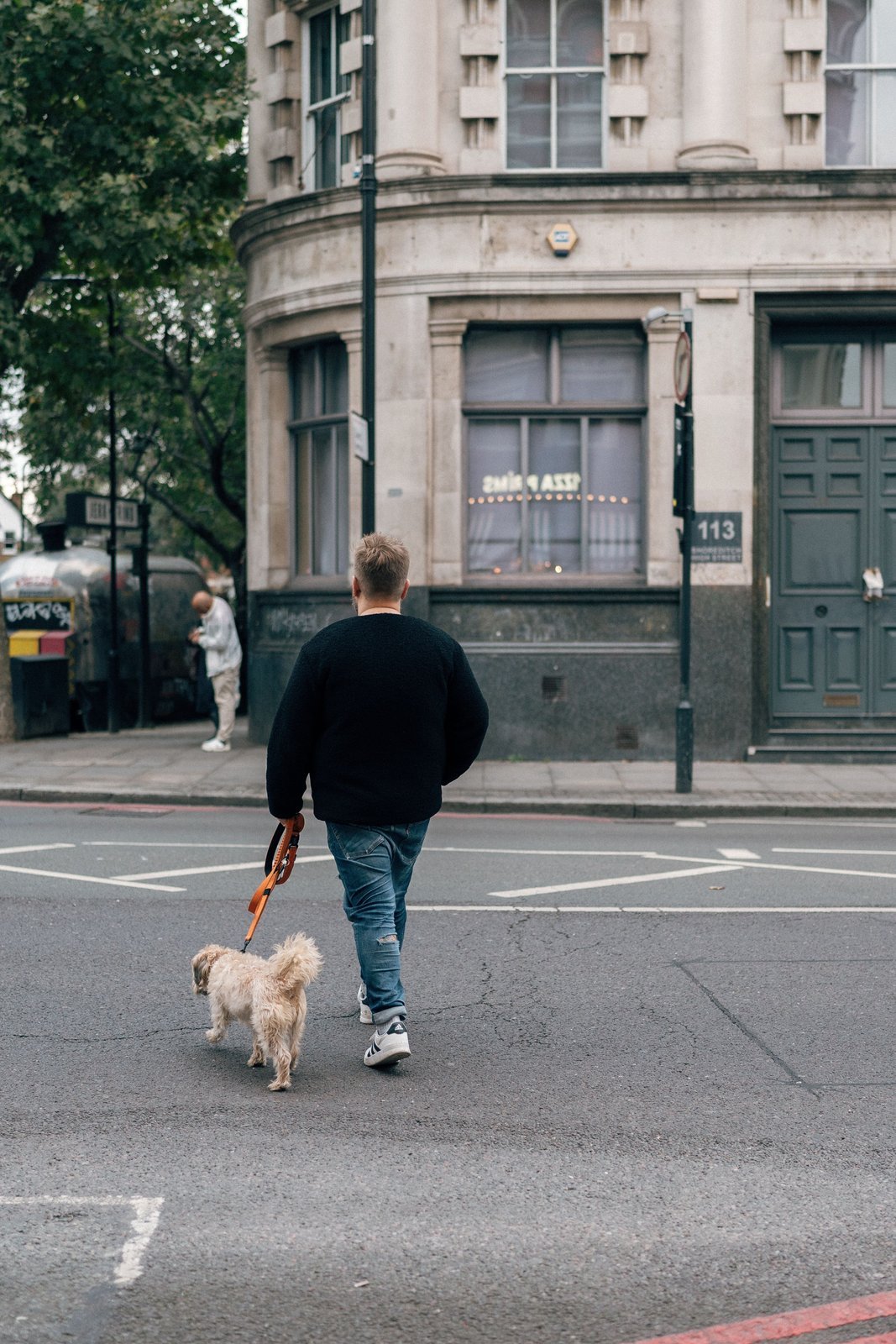
This is a stand-in for the approach, not a curb wait. The man and the dog are already in the street, crossing toward a corner building. Use the last few steps before that kind of crossing to slow down, name the wait, and get the feet still on the sidewalk before anyone looks at the light.
Start on quieter streets, then move the same routine to busier corners
Do not start this project at the loudest, shortest light on your commute. Find a quieter residential corner or a side street with less turning traffic, and run the same wait-and-release pattern until the dog offers still feet without a fight. Keep sessions short. A handful of clean corners is more useful than a long walk full of late, messy stops.
When the quiet-street wait is reliable, add one harder element at a time: a slightly busier block, a marked crosswalk, a light, then a corner with a bike lane or a turning lane. If the dog falls apart, go back to the easier corner rather than repeating a failed wait in the same chaotic spot.
Weather and light can make the same corner harder: a wet curb, a dark street, or heat that makes a dog rush for shade. Those walks have their own plans in how to walk a dog at night in the city, how to walk a dog in the rain in the city, how to walk a dog in hot weather in the city, and how to walk a dog in cold weather in the city. Use those guides for gear and timing, and still keep the same curb pause.
Keep the routine when the sidewalk gets complicated
City corners rarely give you a private training lane. Another dog may be waiting at the same light. A scooter may pass along the curb. A dropped snack may sit in the gutter. Plan for those distractions so you do not abandon the wait the first time they appear.
If your dog gets tight around other dogs, use space first: step a few feet back from the curb, wait until the other team has moved, then reset the pause. A fuller plan for that social pressure lives in how to help a dog stay calm around other dogs on city walks. If the dog lunges at bikes or scooters in the lane beside the curb, that is a separate safety issue, covered in how to stop a dog from lunging at bikes and scooters in the city. Do not try to fix a lunge by yanking the dog through the crosswalk. Get more distance, then return to the wait when the bike is gone.
Food and trash at the curb are another common reset. A dropped bag or a bone in the gutter can wreck a carefully built pause. Teach the dog that the wait still stands, then deal with the object, using the plan in how to teach a dog to ignore food and trash on city sidewalks. The curb job is to stay on the sidewalk until you release. The food job is to leave the object alone. Practice them separately before you expect both at a busy light.
If you walk two dogs, the curb wait has to work for both bodies at once. A dog that forges will drag a calmer teammate off the curb. For handling two leashes on a narrow sidewalk, see how to walk two dogs on city sidewalks. Until both dogs can hold a pause on a quiet street, practice the curb wait one dog at a time, then put the team back together.
A park recall is not a substitute for this habit. Off-leash or long-line practice, as in how to teach a dog recall in a city park, helps when a cue is already late. At a city curb, keep the dog close enough that a recall is not your main tool, pay the wait, and cross together.
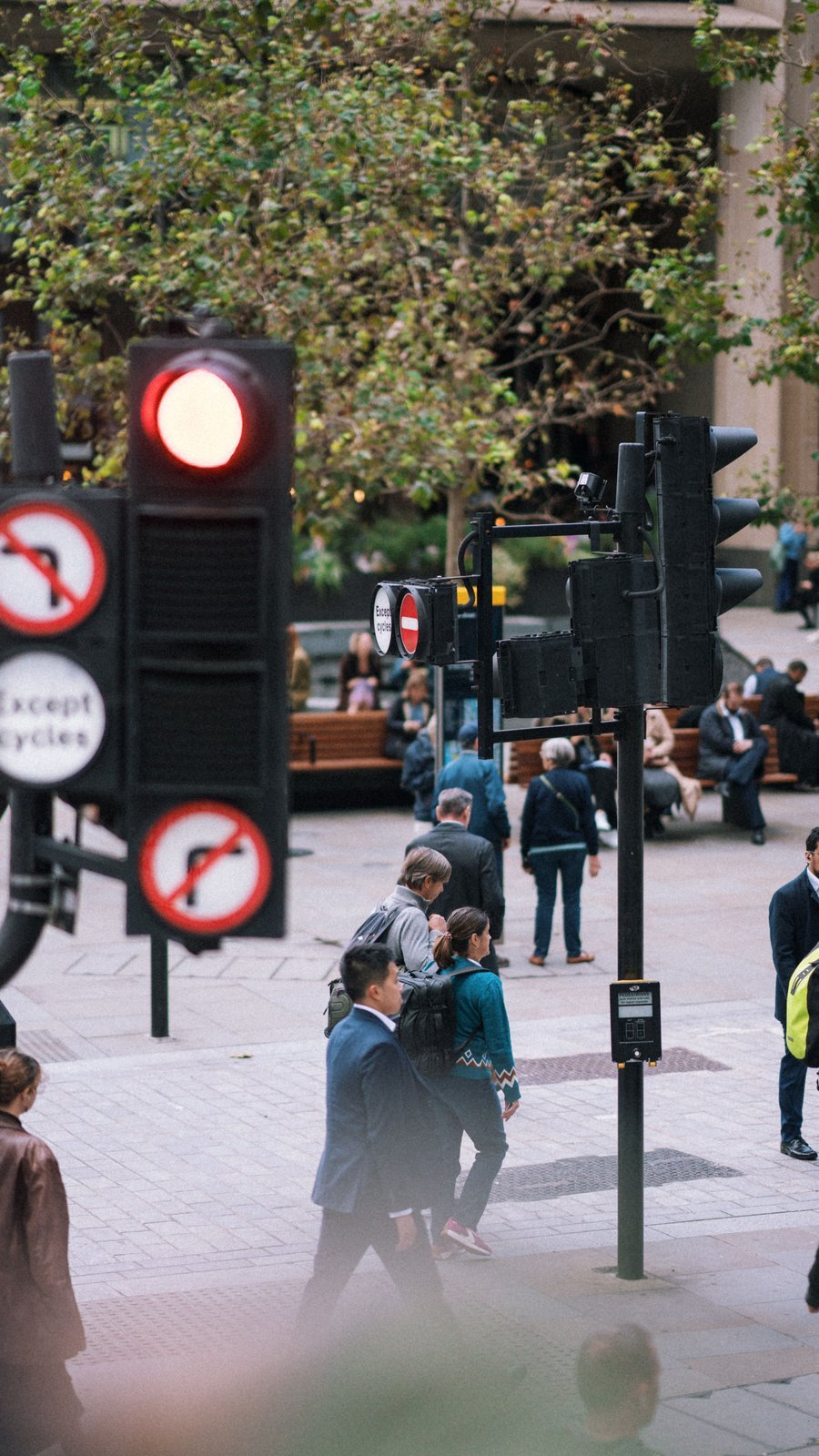
A crowded city sidewalk with traffic lights and no dog in the frame is still a reminder of why the habit has to work in real conditions. When you move practice to a louder corner, keep the same cue, the same foot position, and the same release. Do not invent a new, rushed version just because the light is short.
What not to try, and when to get help
Skip shock, prong, and citronella collars. They do not teach a calm pause, and a startling correction at a noisy corner can make a worried dog less predictable around traffic. Do not expect a three-day change. A dog that has been racing lights for months will need many clean, paid waits on easy streets before a busy commute looks different.
Do not use the leash as a sudden wall at the last inch of the curb. A late jerk can put the dog off balance where you need the dog to be steady. Slow down earlier. If the dog is already in the lane, get back to the sidewalk as calmly as you can, then restart the wait. If you feel yourself getting frustrated, end the session at the next quiet block and try again later.
Contact a qualified trainer or your veterinarian if the dog panics at traffic, tries to bolt into the road, freezes and then explodes at the curb, or cannot take food or think at even a quiet corner. A new, sudden fear of streets can also be a health question. This guide is general information, not a diagnosis, and not a promise that every dog will wait reliably at every light.
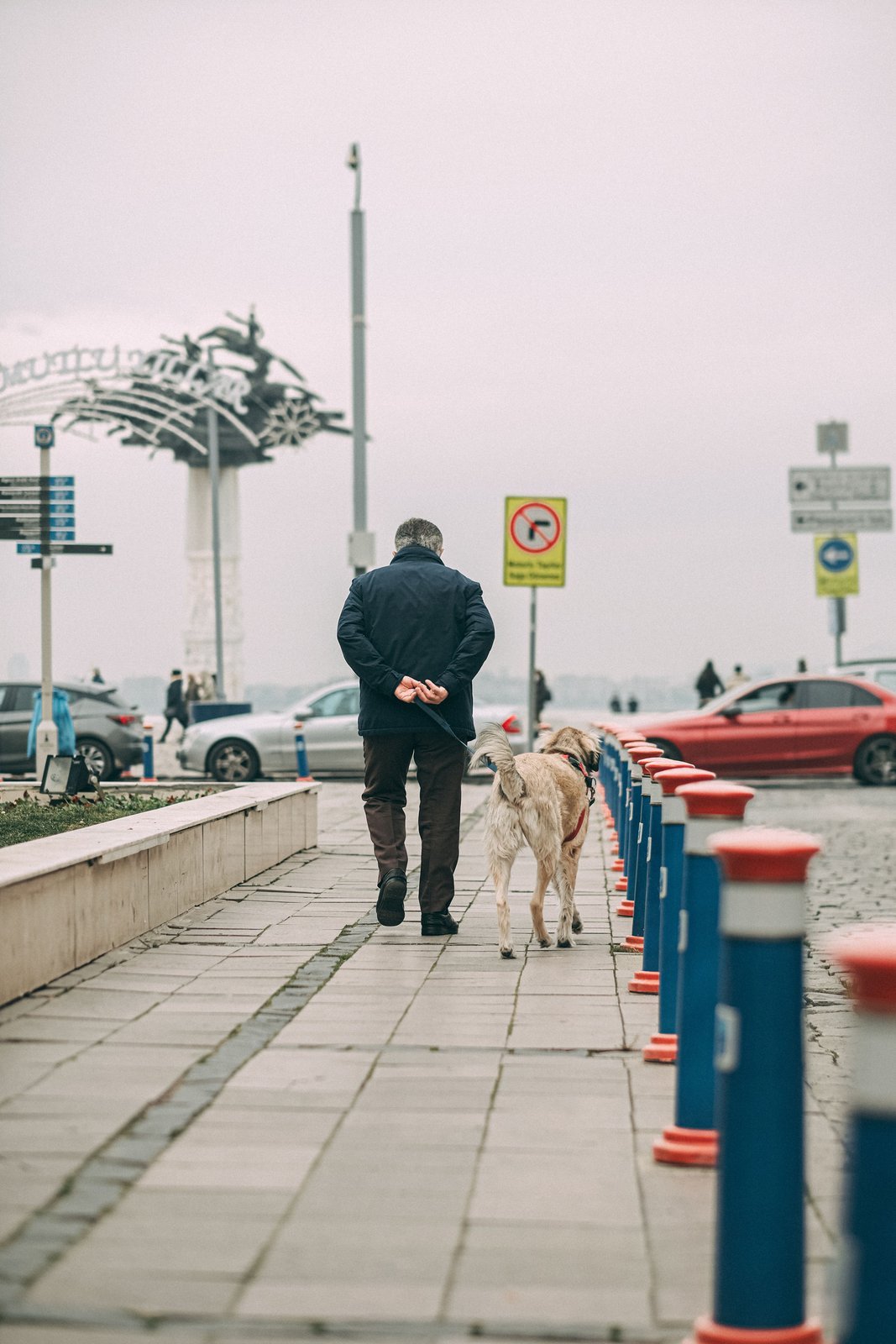
A calm leashed walk on a paved city path is the everyday picture you are aiming for, even though this photograph is a promenade beside bollards and traffic rather than a formal curb wait. The dog stays with the handler as they move along the edge of the road. Build a pause on quieter corners first, then take the same routine to the short lights and turning lanes that made you want a better plan.
FAQ
Should I ask my dog to sit at every curb, or is a standing wait enough?
Either can work if you use the same picture at every corner. A sit is clear for many dogs, but a crowded sidewalk or a wet curb can make a sit awkward. A standing wait with four feet on the sidewalk is enough if the dog does not creep forward. Pick one version, pay still feet, and give a separate release cue only when you are ready to step down.
Can I start this training on my busiest commute?
Start on quieter streets first. A short light, a turning lane, and a bike lane make it hard to pay a clean wait, and a messy rehearsal teaches the dog to keep forging. Get a reliable pause on a calmer block, then add busier corners one at a time. If the dog falls apart at a hard intersection, go back to an easier curb rather than repeating a failed wait in the same spot.
What if my dog only forges when the light turns green?
The green light has become a race cue. Arrive at the curb early enough to ask for the wait before the light changes, and pay the dog for staying put when it does change. Release the dog only after you have checked turning cars and the bike lane, even if pedestrians around you have already started. If you always go the instant the light turns, you are paying the forge.
Will a tighter leash or a special collar make the dog wait?
A manageable leash length helps you keep the dog on the sidewalk, but the leash should not be a late yank, and shock, prong, or citronella collars do not belong in this plan. Teach a clear wait, reward calm feet on the curb, and practice on quieter streets until the habit is easy. Equipment can support the work. It cannot replace it.
When is a curb problem more than a training gap?
Contact a qualified trainer or your veterinarian if the dog panics at traffic, lunges or bolts into the road, or cannot settle at a corner even on a quiet street. A sudden change in street behavior can also be a health question. This guide is general information, not a diagnosis and not a promise that every dog will wait at every light on a set timetable.