

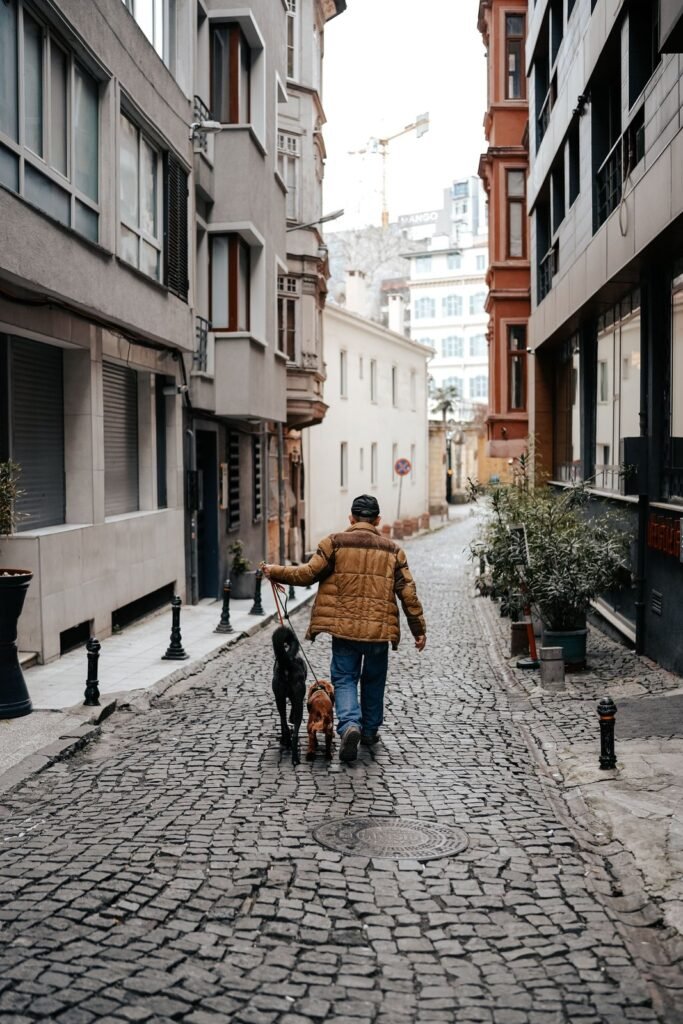
If you want to walk two dogs at once on city sidewalks, the hard part is rarely whether each dog can stroll on a quiet street alone. It is the narrow pavement, the corner, the lobby, and the building door, where two different paces, two leashes, and one tight path have to work at the same time.
This is general information for US and UK dog parents in flats and small homes, not a veterinary diagnosis and not a behaviorist plan. There is no honest promise that both dogs will heel as a pair in a week. If one dog has already bitten, or panics and gets worse when you add the second dog, a qualified professional is the next step. Do not use a shock, prong, or citronella collar. This article is about managing two of your own dogs at the same time. Loose-leash walking on city sidewalks is the everyday slack-leash skill for one dog. Helping a dog stay calm around other dogs on city walks is the reaction to an unfamiliar passing dog, not the work of holding your own pair.
Why a city sidewalk makes two dogs harder
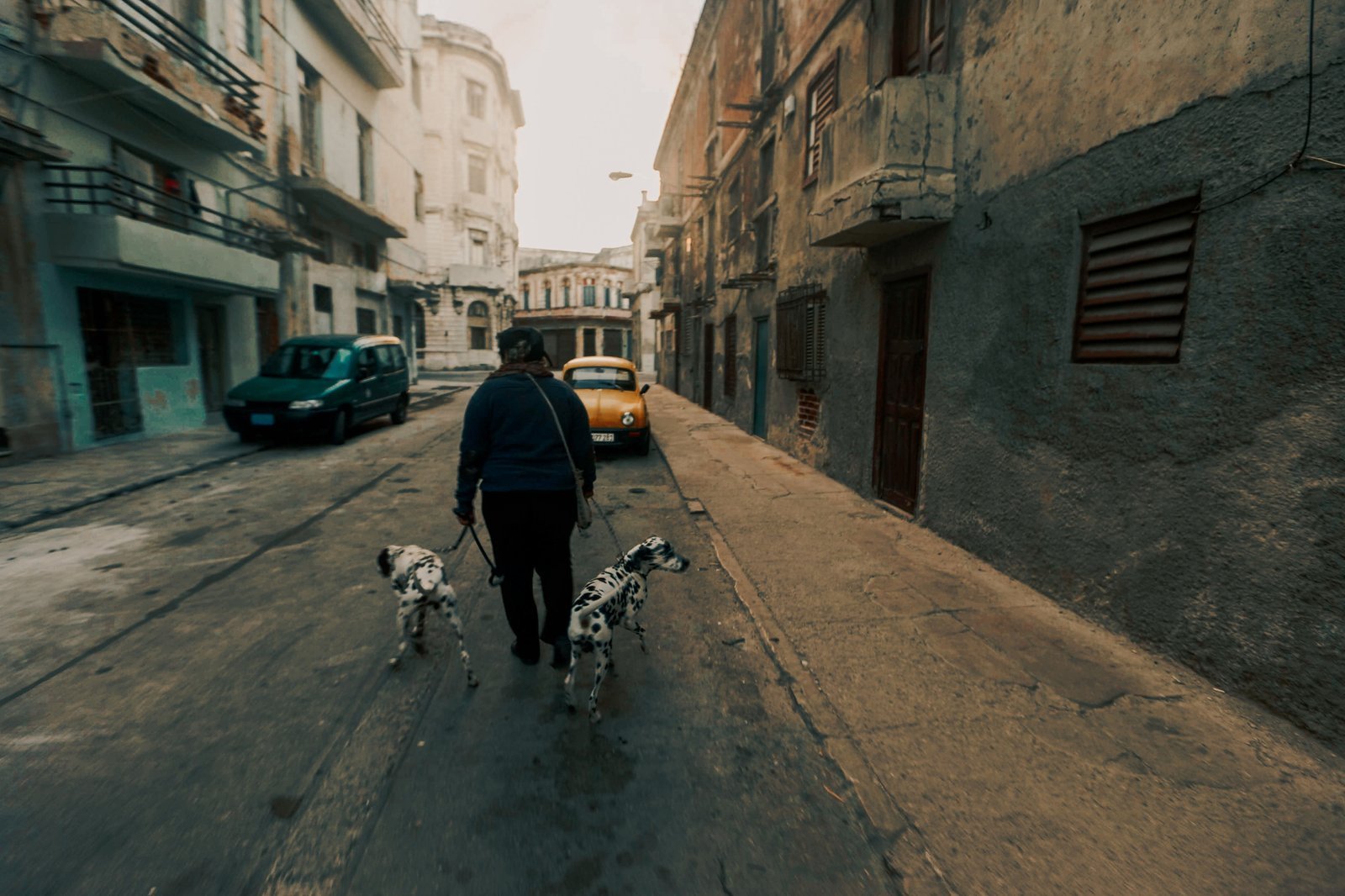
A country lane often gives you a verge. A city pavement often does not. When you are holding two dogs, that missing room shows up quickly. One dog wants to sniff a tree. The other is still moving. A leash wraps around a signpost, a bike rack, or someone’s shopping bag. A corner hides a person with a stroller until you are already on top of them. In a lobby or at a building door, both dogs may surge at once, and you have only one body and two leads.
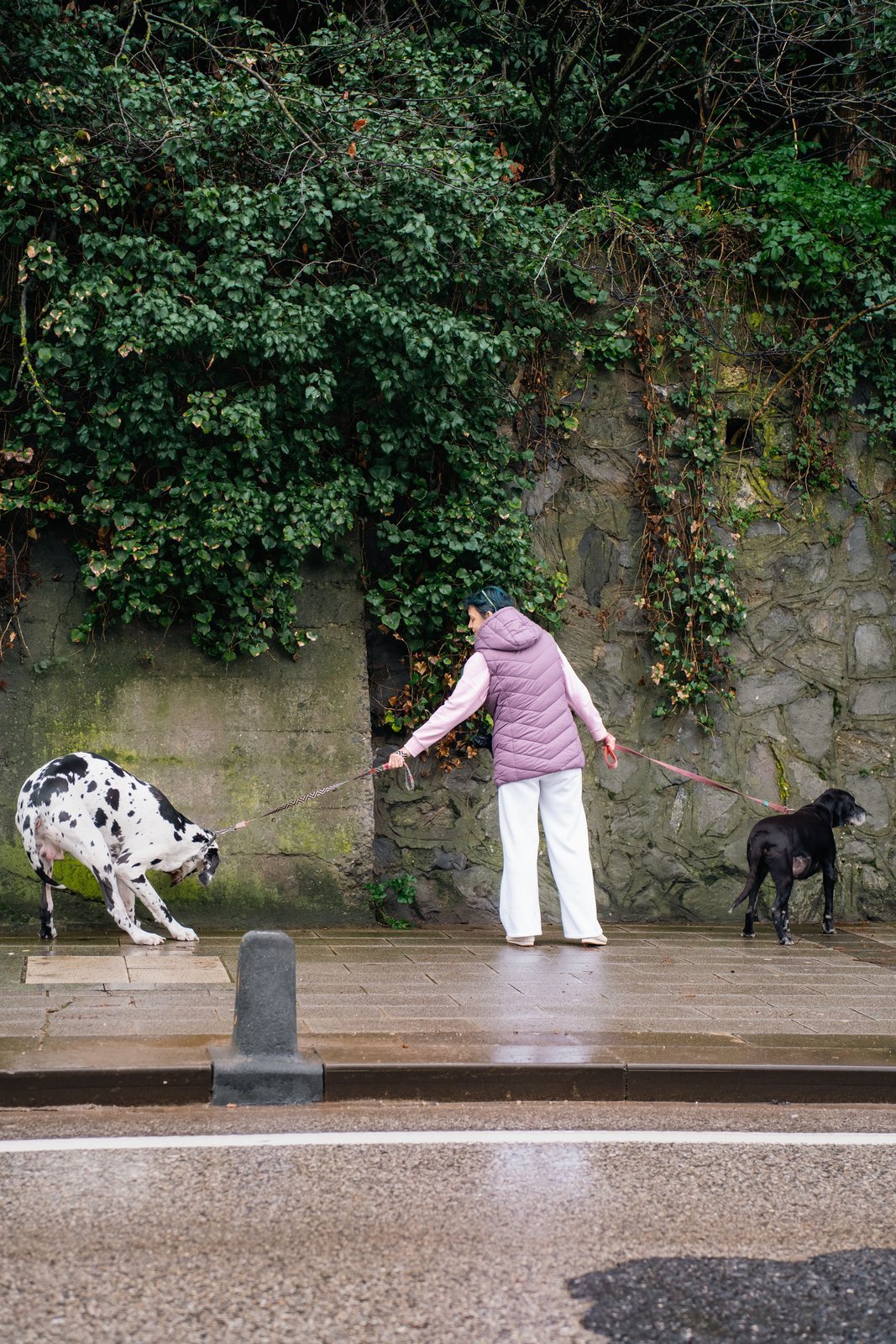
The trigger is not always “the other dog on the street.” It can be the pair itself: one dog pulling while the other plants, or both dogs swinging wide in opposite directions. Lunging at bikes and scooters is a different problem, aimed at moving wheels. If one of your dogs already does that, do not use a scooter-heavy block as the place to practice walking them as a pair.
Watch early signs in either dog, not only the one you already worry about. Stiffening, a closed mouth, a hard stare, a sudden plant, or a frantic zigzag around your legs can all mean the walk has gotten too tight. Signs your dog is stressed can help you read those changes without guessing. A pair walk that looks “fine” from a few yards away can still be too much for one of the dogs.
Management first: two short leashes, an inside dog, and quiet blocks
Training is easier when the walk is already set up to be manageable.
Use two short, fixed-length leashes, or a coupler, and be honest about the tradeoff. Two short leashes let you shorten or drop one dog’s lead without automatically yanking the other. A coupler, which joins two dogs to one leash, can keep the pair in a narrower slot and leave a hand free, but it also lets one dog pull the other, and a tangle can lock both dogs together. If you use a coupler, keep it short and switch back to two leashes if one dog is towing or panicking the other. Best dog leashes for city walks covers everyday fixed-length options that are easier to gather in a hurry.
Do not practice this on a long retractable leash on a crowded sidewalk. A long line gives one dog room to dart around a sign, a person, or the other dog, and you may not be able to undo the wrap in time. A hands-free waist leash can help with one dog on an open path, but it is a poor way to pin two dogs to your body in a tight queue; best hands-free leashes for city walks is a separate gear guide, and it does not replace the ability to shorten or drop a lead. Do not tie two leashes into one hand, or knot them together, so you cannot drop or shorten them when one dog suddenly moves.
Decide who walks on the inside before you leave the building, and keep that arrangement consistent on the first outings. A useful default is to put the dog who is more likely to dart toward the street on the building side, so the steadier dog is closer to the curb. If one dog is worried about people stepping out of shops, you may reverse that so the worried dog has a clearer path. What matters is that you choose, rather than letting the pair rearrange itself at every corner.
Start with short, quiet blocks, not a long loop through the busiest street at rush hour. A shorter, well-managed double walk can be kinder than one overloaded circuit. How often you should walk your dog is a useful companion if you are deciding between several calm loops and one long outing. Walking a dog at night in the city is a separate guide, but a less busy pavement can give you more time to untangle a leash, as long as you can still see clearly and stay visible.
If one dog already pulls hard, a well-fitted harness can make the walk more comfortable, which we discuss in best dog harnesses for pullers. Gear helps you steer. It does not make two unprepared dogs walk as a tidy pair. Carry food where you can reach it without dropping a leash; best treat pouches for city dog walks is a practical gear companion, not a training shortcut.
Train the pair only after each dog can walk with some slack

Do not add the second dog to a walk until each dog already has some slack-leash walking of their own, even if that skill is still messy. The double walk is not the place to teach a dog what a loose lead is for the first time. Practice each dog alone on a quiet block first. When the solo walk can include a little slack for at least part of the route, then add the partner for a short, boring stretch.
Once you are walking both, keep the lesson simple. You are teaching the pair to move together without a constant tangle, not a polished heel in a week. When the leashes wrap, stop. Do not keep walking and hope the knot will undo itself around a pole or a passerby. Pause, ask both dogs to stand or sit if they already know that, untangle the leads, reset who is on the inside, and then go on. A calm reset is the training. Dragging a twisted pair through a crowd is not.
Pay the moments that are actually useful: a few steps with slack on both leads, a pause at a corner without a surge, or one dog waiting while you untangle the other. If one dog cannot take food, the walk may already be too busy. Turn around or shorten the route rather than pushing on.
Do not force a greeting with a third dog while you are already holding two. You do not owe a stranger a face-to-face meeting on a narrow pavement, and you have fewer free hands and less room to leave if one of your dogs stiffens. Say “not today” and keep moving, or step aside until the other dog has gone past. This walk is about your own pair getting down the block.
Teaching recall in a city park is also a different skill. A double walk on a city sidewalk should stay on short, fixed leashes. Do not use a crowded pavement as a place to practice calling two dogs in off a long line.
Corners, the lobby, and the building door
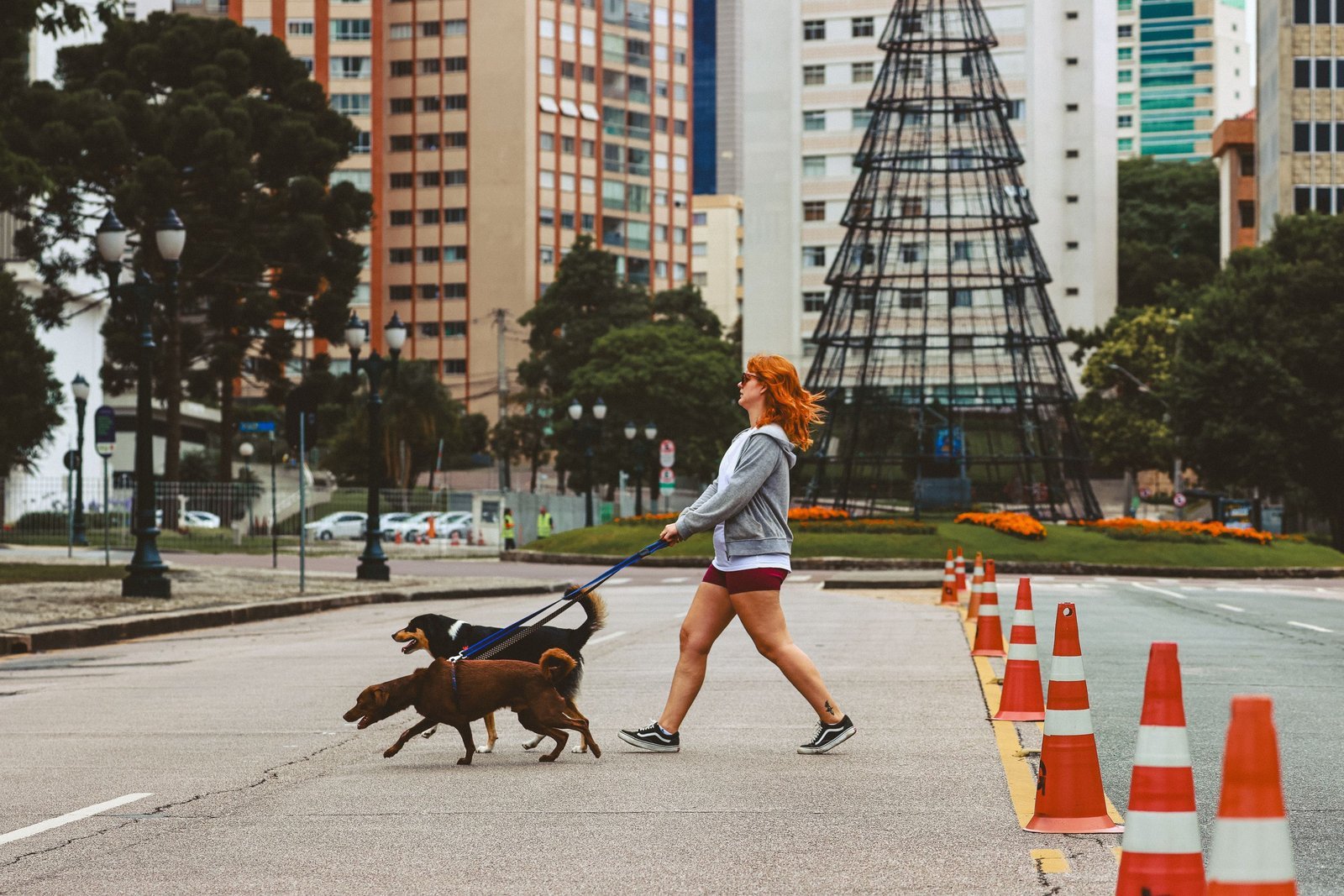
Corners deserve a pause. You cannot see who is coming, and two dogs take up more width than one. Slow down before the turn, shorten both leashes, keep the inside dog close, and go around wide enough that a leash cannot hook a sign or a person on the other side. If the corner is blind and busy, wait a beat rather than swinging both dogs into the path.
The lobby and the building door are often tighter than the street. Both dogs may get excited at the same familiar exit, and there may be neighbors or a second door. This article is not an elevator or hallway training plan; helping a dog stay calm in elevators and hallways covers that indoor piece. Here the job is still pair management: short leashes, a consistent position for each dog, and a pause before the door opens so neither dog bolts through the gap.
If the problem is a dog surging out of the flat when the door opens, that is stopping a dog from door dashing in an apartment, and it is worth sorting on its own before you take two aroused dogs through the same doorway. If one of the dogs is new to the home, do not make the first shared sidewalk trip do the work of a household introduction. Introducing a new dog to your apartment is a separate, slower plan, and the double walk should wait until both dogs can already share space indoors without a scramble at the door.
At the door, clip both leashes on before you open it, confirm you can shorten or drop each lead, and step out in a controlled order rather than letting both dogs pile into the corridor. The same logic applies on the way back in: pause, tidy the leashes, and do not drag a tangled pair through a closing door.
A calm starting plan, and when to get help
A plan you can repeat beats a heroic first outing.
- Walk each dog alone on a quiet block until there is at least some slack-leash walking.
- Choose two short fixed leashes, or a short coupler you have already tried, and decide who walks on the inside.
- Start with a short, quiet route: out the door, down an easy block, and back, at a calmer hour if you can.
- Pause and reset whenever the leashes tangle, rather than walking on through the knot.
- Skip greetings with a third dog on these first walks.
- End while both dogs can still walk with you, even if the loop was brief.
If one dog has already bitten, or panics and gets worse when the second dog is added, stop practicing this on public sidewalks and speak with a qualified professional. Contact a veterinarian if anyone was injured. Do not use a shock, prong, or citronella collar, or leftover medication, in place of that help. Some pairs need more management, a different walking order, or separate walks for a while, and that is a reasonable outcome, not a failure of a one-week plan.
A two-dog walk on a city sidewalk can become an ordinary part of the day when you treat it as management of a pair, not a test of perfect manners in a crowd.
FAQ
Should I use one coupler or two separate leashes?
Either can work, but two short fixed leashes give you more independent control on a narrow sidewalk, because you can shorten or drop one lead without automatically yanking the other dog. A coupler keeps the pair in a narrower slot and can free a hand, but one dog can pull the other, and a tangle can lock them together. If you try a coupler, keep it short and switch back to two leashes if one dog is towing or upsetting the other.
Is a retractable leash all right for walking two dogs in the city?
Not on a crowded sidewalk. A long retractable lead lets one dog dart around a person, a sign, or the other dog, and you may not be able to undo the wrap in time. Use short, fixed-length leashes you can gather quickly. Practice the pair on a quieter block first, not at two feet of slack in a rush-hour queue.
Do both dogs need to heel before I walk them together?
No, and there is no honest promise that they will heel as a pair in a week. Each dog should already have some slack-leash walking of their own before you add the second dog. The first double walks should be short and quiet, with pauses to untangle, not a long test of a formal heel.
What should I do when a stranger wants their dog to say hello?
Do not force a greeting with a third dog while you are already holding two. You have less room to leave if one of your dogs stiffens, and fewer free hands. A brief “not today” is enough. Let the other dog pass, or step aside, and save any greeting, if you want one at all, for a moment when you have enough space and are not managing a pair on a tight pavement.
What if one dog panics, or has already bitten, when I add the second dog?
That is beyond a general sidewalk plan. Stop practicing the double walk in public, and speak with a qualified professional who can see the dogs in person. Contact a veterinarian if anyone was injured. Do not use a shock, prong, or citronella collar in place of that help. Separate walks can be the kinder choice for a while.
[…] handling skills live in a different article. How to walk two dogs on city sidewalks is the choreography: who stands where, how you pass a tight spot, and how you keep two bodies from […]