

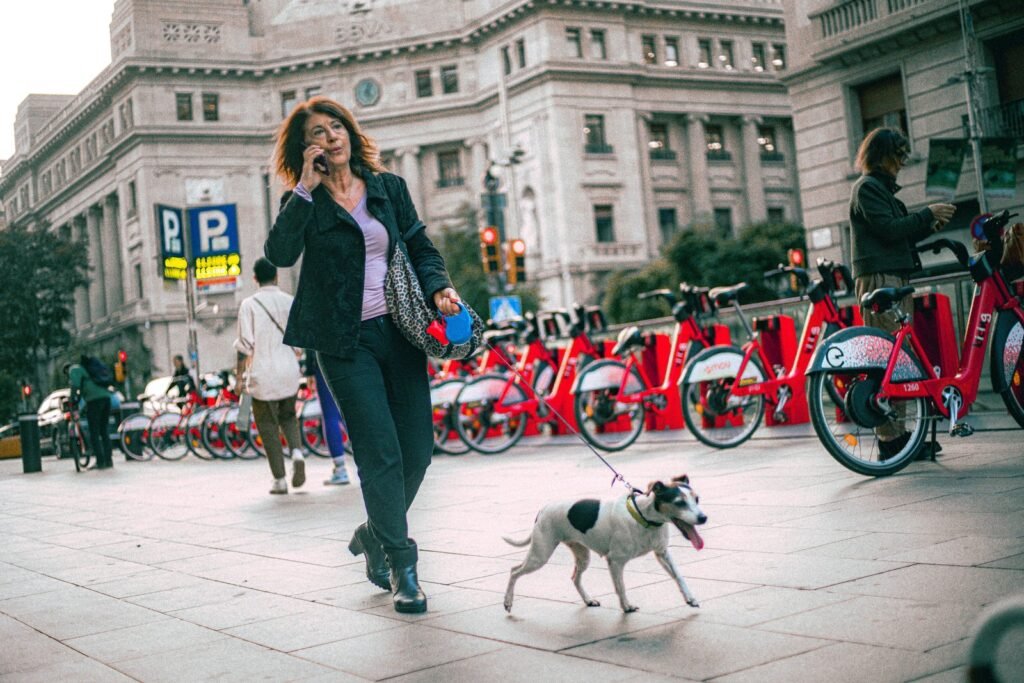
The best hands-free leash for city walks is not automatically the more modern choice. It is a waist-, shoulder-, or cross-body setup that can free a hand for a coffee, a door, a phone, or a second bag. On a quiet path that can be a genuine help. On a crowded sidewalk, beside a curb, or at a subway door, a regular leash you hold in your hand is often the more honest tool.
A practical way to choose is to start with the walk you actually take, then look at fit, length, and stretch. This is not a ranked list, and it is not a set of model names, prices, or test scores.
This is general information for dog parents in the US and UK, not a training guarantee. A hands-free leash is not a substitute for a well-fitted walking harness on a strong puller, and it is a poor choice for a dog that lunges at bikes, scooters, or other dogs on a busy sidewalk. Do not treat a retractable lead as a hands-free option near traffic or stairwells. Keep a short handheld backup for elevators, crowds, and street crossings.
This is the waist or shoulder leash, not the everyday handheld leash
The job here is the hands-free or waist-leash style, and when it is a poor fit. It is not a rewrite of the best dog leashes for city walks, which is the everyday leash you hold in your hand. If you mainly need a sensible lead for pavement, start there. This article is about clipping that lead, or a similar one, to a belt or a shoulder strap.
It is also not dog harnesses for pullers, and it is not loose-leash walking in the city. A waist leash will not teach a dog to walk politely, and it will not replace a walking harness if the dog pulls hard. It is not a collar guide; city collars are still for ID and a backup clip, not for attaching a belt line to a strong dog’s neck.
Night walks, rain, and cold weather have their own jobs. Use the night-walking guide and reflective gear when light is the issue, the rain-walking guide when the pavement is wet, and dog coats for cold walks when warmth is the issue. A waist leash does not solve those problems.
How often you should walk your dog is a schedule question. This article assumes you are already going out, and you want to know whether a free hand is worth the trade-offs.
Think of four questions, not a ranking:
- Do you actually need a free hand? A coffee, a door, a phone, or a bag can be a real reason. A preference for “feeling modern” is not.
- Can the dog walk without sudden lunges? If the answer is no, keep the lead in your hand.
- Will the belt or strap stay put? A belt that slides onto the abdomen, or a strap that twists around a wrist, is a poor fit.
- Can you switch to a short handheld leash quickly? You will still need that for elevators, crowds, and crossings.
When a waist or shoulder leash actually helps
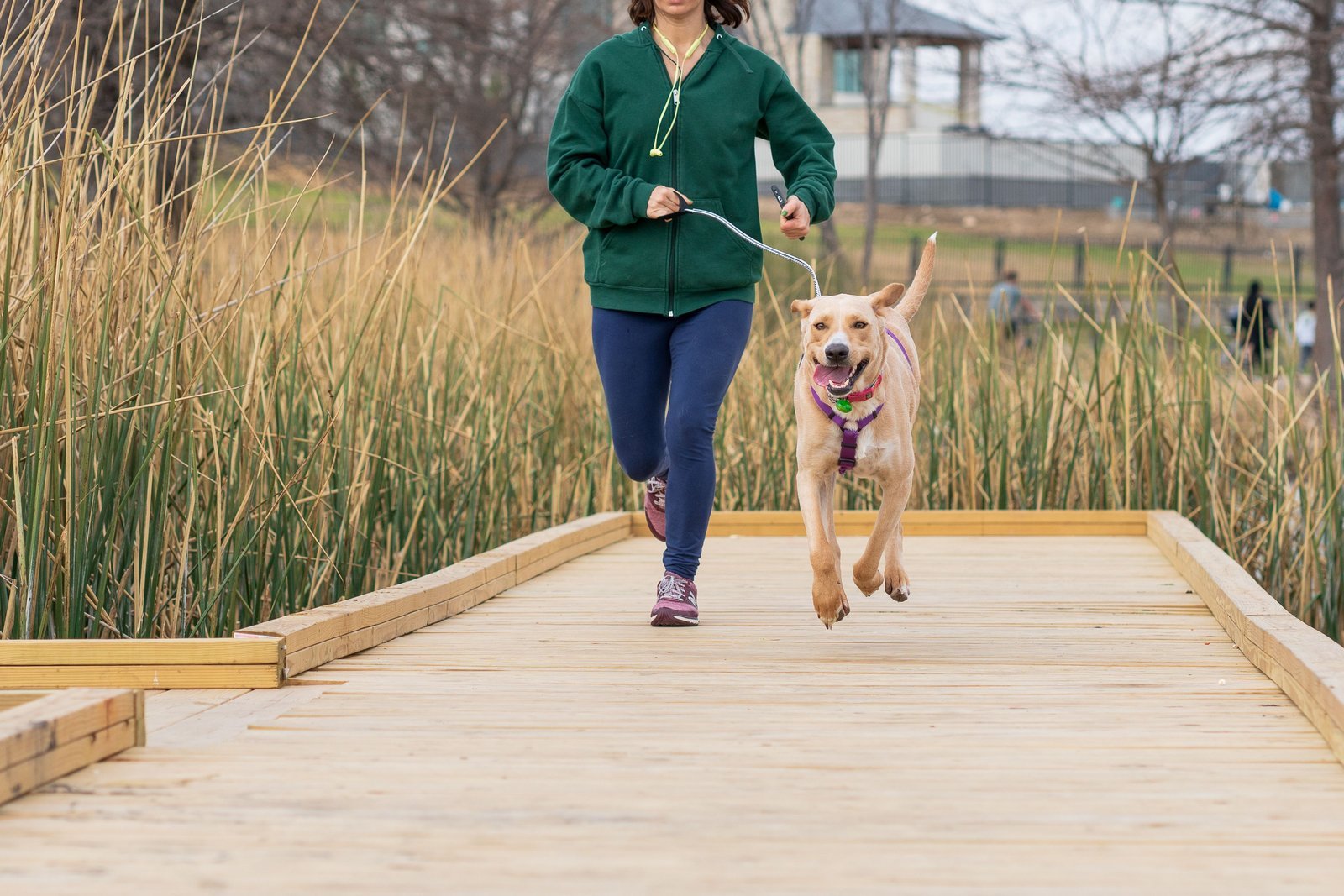
A waist or shoulder leash is most useful when the walk is predictable and you have a second task that truly needs a hand: unlocking a building door, holding a coffee, answering a short call, or carrying shopping. It can also help on a steady jog if the dog already runs close and does not dart sideways. The point is the free hand, not a faster walk or a more impressive setup.
It is less useful at the start of loose-leash training, in a street full of scooters, or anywhere you may need to shorten the lead in a second. In those moments, a handheld leash lets you raise the handle, change sides, or step between the dog and a bike. A belt keeps the line anchored to your torso, which can be exactly what you do not want if the dog suddenly hits the end.
If you already walk well with a handheld leash, a hands-free setup is an occasional convenience, not an upgrade you are required to make. Some people use the belt on a morning coffee loop, then switch back to a handheld leash for the evening walk along a busier road. That split is honest. If the dog still pulls, spend the effort on the walking harness and the loose-leash plan rather than on a new belt.
How the belt or strap should fit
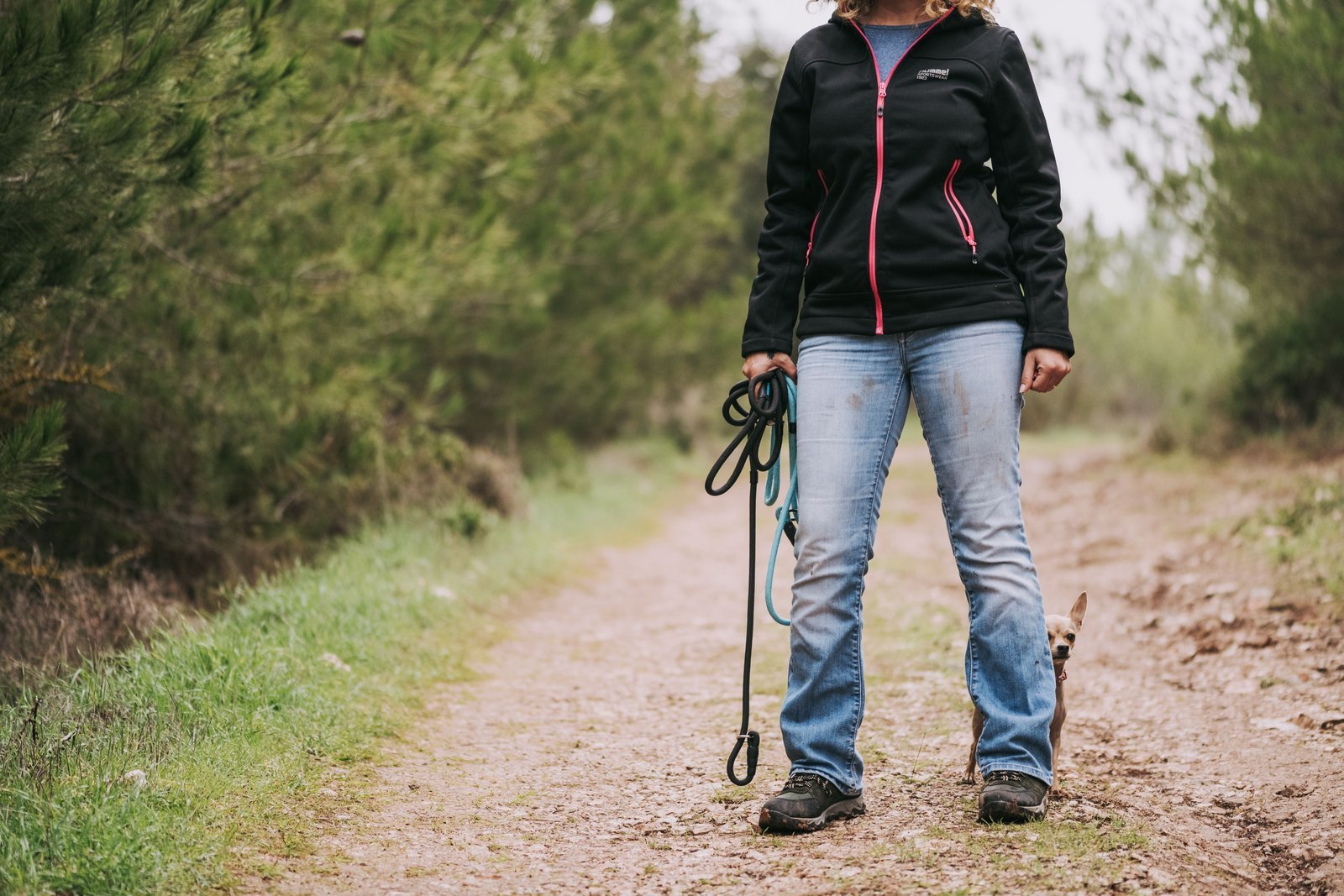
Fit is the first safety check, not a style choice. A waist belt should sit on the hips, not slide down onto the abdomen, and it should not ride up into the ribs when the dog moves. You should be able to walk, climb a short flight of stairs, and stop without the belt spinning or pinching. A shoulder or cross-body strap should rest on padded clothing, not rub bare skin, and it should not be able to slip off the shoulder when the dog cuts behind you.
The leash itself should clip to a walking harness, not to a flat collar, if the dog can pull. Check the clip the way you would on any city leash: it should close fully and should not be so large that it bangs the dog’s chest. This is still not a harness review. If the dog is a strong puller, start with the harness guide and keep the lead in your hand until the walking is steady.
A waist belt also has to work with a coat or a backpack. Try the fit with the clothes you actually wear on the walk, not only in a hallway in a T-shirt. A thick winter coat can change where the belt sits, and a shoulder bag can fight a cross-body strap. If you cannot keep the belt on the hips once the coat is on, keep the handheld leash for that day.
Watch for a strap that can wrap a wrist, a thumb, or a belt loop when you reach for a door. If the line can twist around your hand, it is not really hands-free; it is a snare. Keep a short handheld leash in a pocket or bag so you can unclip from the belt and take the handle before an elevator, a crowded crossing, or a narrow stair.
Length, stretch, and city obstacles
City length is shorter than trail length. Around curbs, outdoor stairs, cafe tables, and subway doors, a long line lets the dog step off a platform or wrap a post before you can collect them. A hands-free leash that sits at about the same working length as your usual city lead is easier to manage than a long jogging line meant for an empty path.
Stretch is a separate problem. A little give can soften a small bump. A long bungee can turn a startle into a longer lunge, and it can make the dog feel farther away than they are when a scooter passes. If the lead lengthens under load, practice in a quiet place first, and do not use that stretch next to traffic or at the top of stairs.
Subway doors, elevator doors, and revolving doors are poor places to stay clipped to a belt. Shorten the lead or switch to the handheld backup before you step in. The same is true in a tight lobby or on a narrow stair. You want the dog at your side, not at the end of a line that is still attached to your waist while the doors move. If you regularly use transit, practice that switch at home so you are not learning it on a platform.
Curb cuts and cafe tables create the same length problem at a smaller scale. A dog who can reach a pastry plate or step off a high curb is too far out, whether the other end of the lead is in your hand or on a belt. Err short in the city, then add a little length only where the path is open and the dog already stays close.
When a bungee, a dual-clip, or a retractable lead is a poor fit
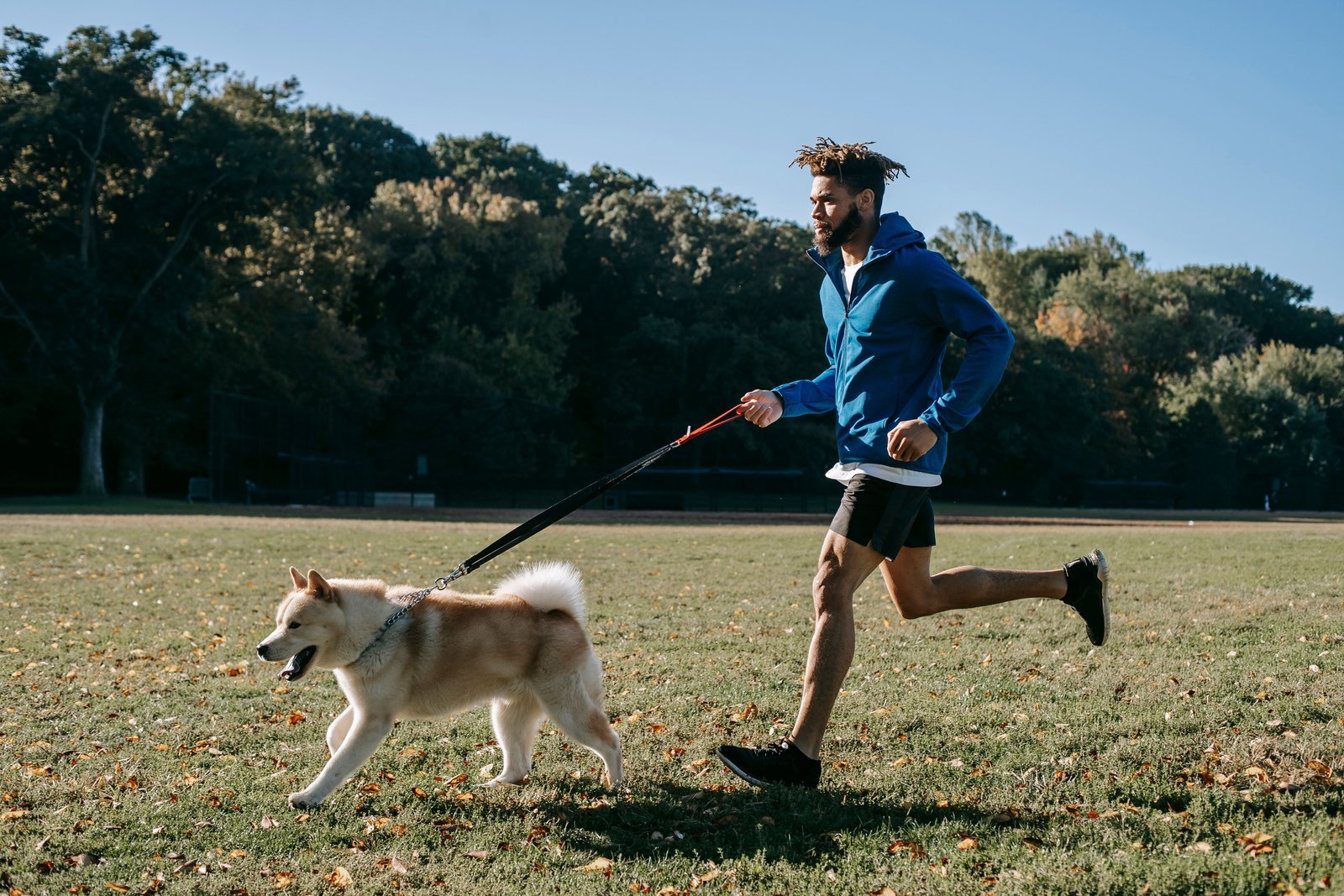
A bungee or elastic section is a poor fit when the dog already hits the end of the lead, or when you are walking next to bikes, scooters, and traffic. The stretch can surprise both of you and can pull your torso off balance if the line is on a belt.
A dual-clip or two-dog design creates its own tangle in a narrow sidewalk. If you walk two dogs, or you want a second clip “just in case,” make sure you can still shorten each line and still switch to a handheld handle. A setup that ties two moving animals to one belt is a poor choice in a crowd.
A retractable lead is not a hands-free option near traffic or stairwells, even if it leaves one hand a little freer than a bulky handle. The thin cord is hard to grab, the length is easy to misjudge at a curb, and the handle still occupies a hand. If you want a free hand, a fixed-length belt or shoulder leash on a quiet walk is the more honest tool. A retractable lead on a busy pavement is a different, and usually worse, problem.
If the dog lunges at bikes, scooters, other dogs, or people, do not solve that with a hands-free setup. Keep a short lead in your hand, use a well-fitted walking harness, and treat the walking plan as the main work. A belt will put the jolt through your hips or shoulder, which is harder to manage than a handle you can raise.
A calm way to choose
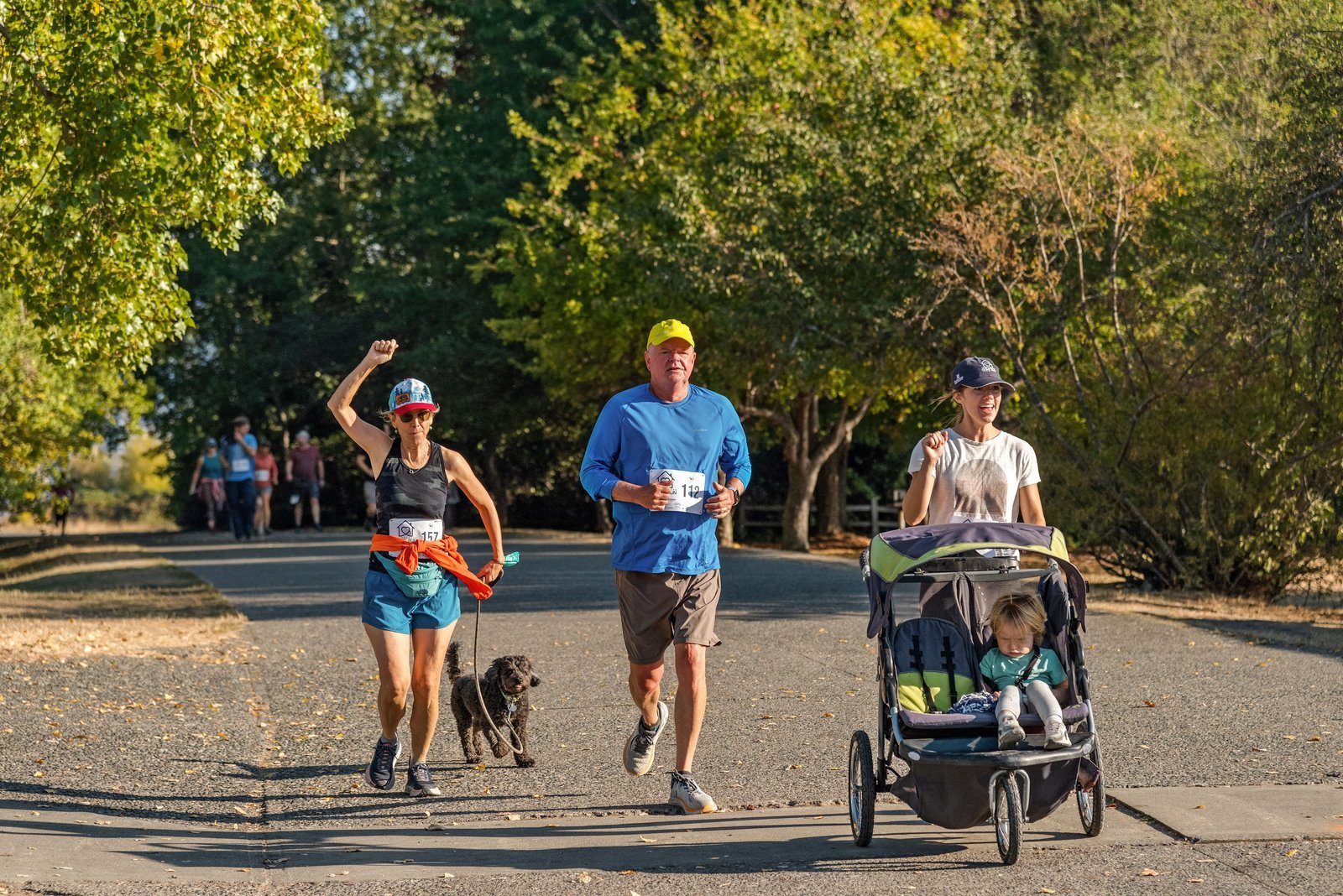
You do not need a ranked shortlist. You need an honest match to the walk.
- If the dog pulls, lunges, or is still learning loose-leash walking, keep a handheld leash and a walking harness. A waist leash can wait.
- If the walk is usually quiet and you truly need a free hand, try a waist or shoulder setup with a short, mostly fixed length, fitted so the belt cannot slide onto the abdomen.
- Skip long bungees, two-dog belts, and retractable leads for busy pavements, curbs, stairs, and subway doors.
- Carry a short handheld backup and use it for elevators, crowds, and crossings.
- Add light, rain, or coat gear from the specialist guides when the weather or the hour requires it, rather than asking the belt to do those jobs.
The goal is a more convenient walk when a free hand actually helps, not a promise that a belt will make every city sidewalk easier, and not a claim that one style is right for every dog.
FAQ
Is a hands-free leash better than a regular handheld leash in the city?
Not always. It can help when you need a free hand on a predictable walk. On a busy sidewalk, at a curb, or with a dog who lunges, a handheld leash is often the more honest tool. Choose the setup that lets you shorten the lead quickly, not the one that looks more technical.
Can I use a hands-free leash instead of a walking harness if my dog pulls?
No. A hands-free leash is not a substitute for a well-fitted walking harness on a strong puller. Attach the lead to a harness, keep the walking work in your training plan, and keep the handle in your hand until the dog can walk without sudden lunges.
Is a retractable lead a good hands-free option?
No. Do not treat a retractable lead as a hands-free option near traffic or stairwells. The thin cord is hard to grab, the length is easy to misjudge, and the handle still occupies a hand. Use a fixed-length setup if you want a free hand on a quiet walk.
How should the belt or shoulder strap fit?
The belt should sit on the hips and should not slide onto the abdomen or ride up into the ribs. A shoulder strap should stay on the shoulder and should not twist around a wrist or a thumb. If the line can wrap your hand when you reach for a door, it is not a safe hands-free fit.
Do I still need a handheld leash if I use a waist leash?
Yes. Keep a short handheld backup for elevators, crowds, and street crossings. Unclip from the belt and take the handle before you step into a tight space or across a road.