

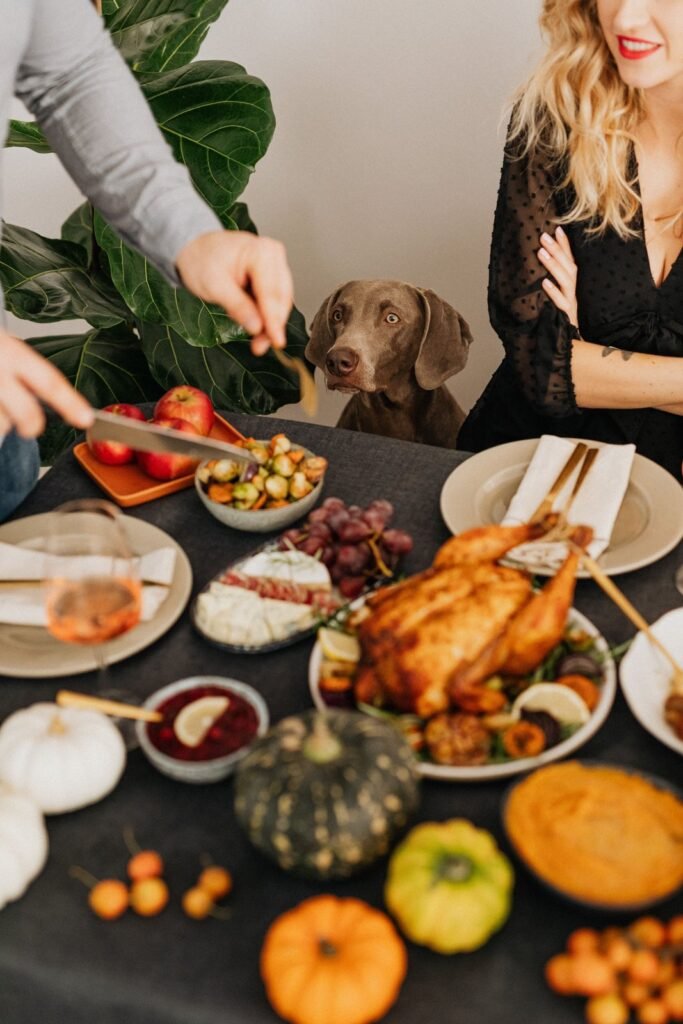
If you need to keep pets safe around holiday food and leftovers, plan the meal as a closed kitchen job, not as a manners test. In a small apartment, Thanksgiving-to-New-Year cooking puts rich, bony, and sometimes toxic people food on low tables, counters, and a trash can that fills faster than usual. Guests often want to share “just a bite,” and a plate left “for a minute” is still at nose height. Holiday decorations are a separate living-room job; this guide stays with the food.
This is general household advice for dog and cat parents in the US and UK, not a veterinary diagnosis, and not a promise of a perfectly mannered holiday. A good result is that the meal can happen in a tight kitchen without a pet self-serving from the counter or the bin. If a pet eats a known toxic food, a cooked bone, or a large fatty meal and seems unwell, contact a veterinarian or a pet poison hotline. Do not make the pet vomit unless a veterinarian instructs you to, and do not invent an antidote or a “safe amount.”
Why a holiday meal is a different job from everyday manners
Everyday skills still help, but they are not this article. Stopping a dog from begging at the table is about mealtime manners on ordinary nights. Stopping a dog from stealing food off counters is a year-round kitchen habit. Holiday cooking stacks more food, in more places, with more people who do not live in your rules. A gravy boat on a coffee table, a tray of skin and bones on a low counter, and a trash bag that will not be taken out until morning are a different kind of risk.
In a small kitchen, there is often no “other room” to park the bird while you toss a salad. The same counter holds the cutting board, the guest bags, and the pet’s water bowl. That is why the plan has to be about where plates go, how fast leftovers are covered and chilled, and what guests are told before they sit down, not about rewriting everyday training in one dinner.

Keep a closed plan for plates and serving dishes
Decide before the first guest arrives where hot dishes will sit, and where empty plates will go. In a tight room, that usually means the center of the table, a back burner that is off and cool, or a high shelf the dog or cat cannot jump to, not the coffee table or the sofa arm. If you use a buffet setup, keep the line on the table rather than on a low bench, and do not leave a snack bowl out “for a minute” in the living room.
When a serving dish is empty, it goes to the sink or into the fridge, not onto the floor beside a chair. Bones, skin, and fat should not sit on a side plate at the edge of the table. If you need a landing spot while you carve, use a deep dish you can cover, and move it as soon as the slice is on the platter. Cats can land on a table as easily as dogs can stand on a hind leg, so height alone is not a plan if a chair is already pulled out.
Assign one person, even if it is you, to do a two-minute sweep after the main course: lids on, plates stacked, food that will be eaten later into containers, and anything that will not be eaten into the bin. That sweep matters more than a speech about manners once the food is already within reach.
Leftovers go into the fridge promptly
Holiday leftovers are often the bigger risk, because they sit longer and smell stronger. As soon as people are done, get the bird, the sides, and the gravy into covered containers and into the fridge. Do not leave a roasting pan on the stove “to cool” in a kitchen a dog or cat can enter. If the food is still very hot, move it off the floor-level path first, then cool it in a way the pet cannot reach.
This is not a storage-container buying guide, and it is not a rewrite of how to keep opened wet pet food fresh in a small fridge. People leftovers and pet food can share a small fridge if they are covered and placed so a curious pet cannot pull a loose foil tray off a low shelf when the door is open. If you keep the fridge door open while you talk, a cat can step in, and a dog can grab what is on the lowest shelf. Load, close, then chat.
If leftover people food is going into the pet’s own meal later, that is a separate decision you should make with your usual feeding plan, not with a guest’s leftover skin. Do not use this article to invent a new diet. If something sat out too long, throw it away rather than guessing. Guides to telling if dog food has gone bad and telling if cat food has gone bad are about the pet’s own food; they are not a license to taste-test gravy that has been on the counter all afternoon.
Use a bin a pet cannot open, and brief guests before they sit down
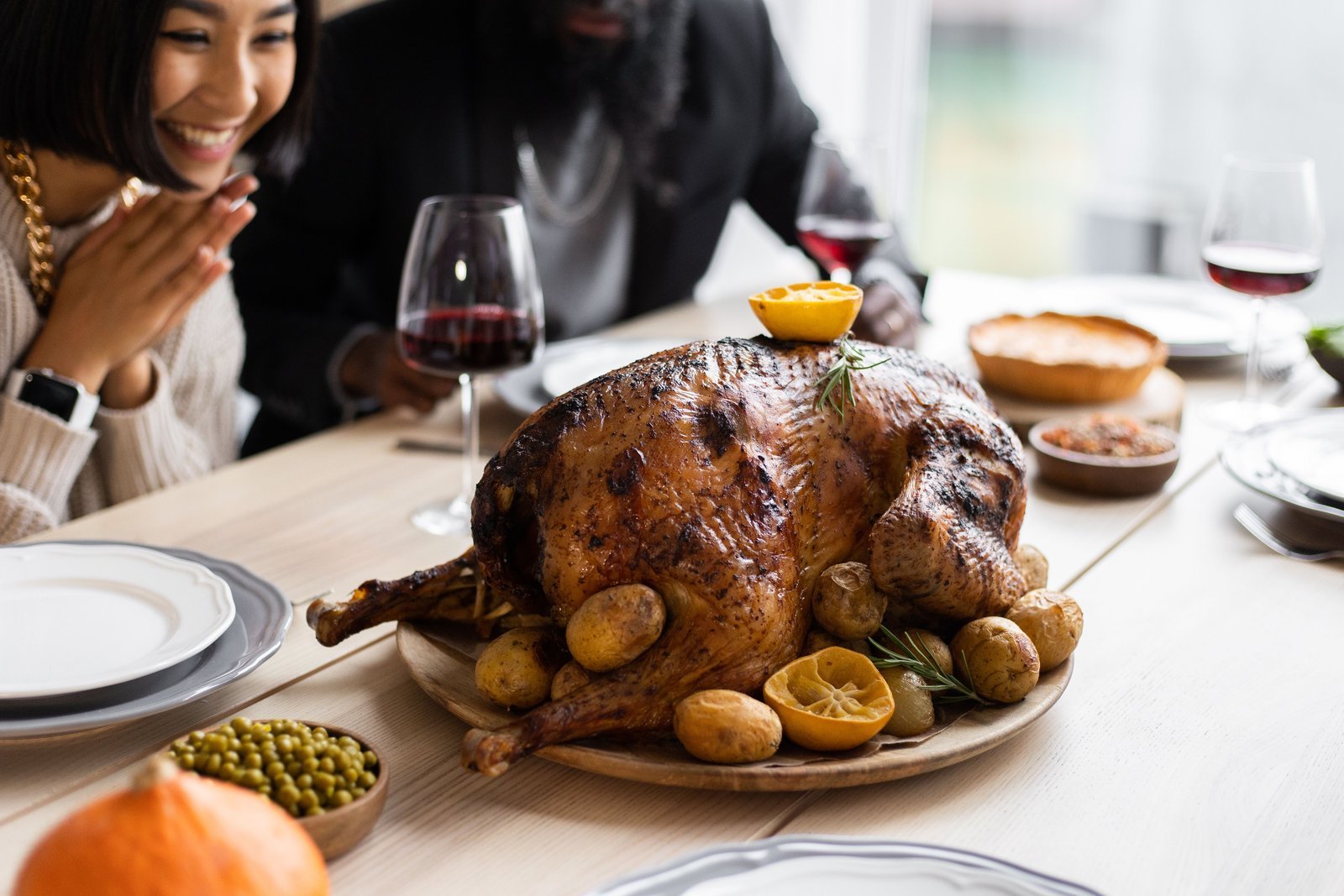
Holiday trash fills with bones, fat, wrappers, and uneaten sides. A bag in an open bin, or a swinging lid a dog already knows how to bump, is not enough on these days. Use a bin with a lid the pet cannot open, and take the bag out before it is stuffed to the brim. If your everyday trash habit is already a struggle, the longer plan lives in stopping a dog from getting into the trash in a small apartment and in a buying guide to pet-proof trash cans for small kitchens. For this meal, the immediate job is a closed lid and a timely trip to the chute or the outdoor bin.
Low cabinets that hold snacks, baking chocolate, or a bag of bones need a close as well. If you already use locks, keep them on during cooking, not only when you leave the house. A guide to pet-proof cabinet locks for apartment kitchens can help you choose hardware later; during the meal, do not leave a cabinet ajar “because you will be right back.”
Brief guests before anyone sits down, in one plain sentence: please do not feed the pets from the table, and please put plates in the sink rather than on the floor. Tell them the no-share list is short and is about safety, not about spoiling the fun. A guest who “always gives the dog a bit of skin” is often trying to be kind. Give them a job, such as carrying covered dishes to the fridge, so they can help without slipping food under the table.
Keep a short no-share list, in plain language
You do not need a symptoms encyclopedia. You do need a short list that you and your guests can remember. Well-known clinic cautions include cooked bones, fatty scraps and gravy, chocolate, anything with xylitol, onions and garlic, grapes and raisins, and alcohol. Cooked bones can splinter. Fatty skin and gravy can be too rich. Chocolate, xylitol, grapes, raisins, onions, garlic, and alcohol are common holiday items that should not be shared. This is not a complete list of every food that can cause trouble, and it is not a chart of “safe amounts.” If you are unsure about a dish, do not share it.
Do not leave chocolate, candy, or gum on a low table, including dessert plates and gift bags. Xylitol can appear in sugar-free candy, some baked goods, and some nut butters, which is why “a little dessert” is not a safe guess. Grapes and raisins show up in salads, stuffings, and cheese boards. Onions and garlic show up in gravies and leftovers. Alcohol sits in glasses that get put down at dog height.
If a pet eats one of these, a cooked bone, or a large fatty meal, contact a veterinarian or a pet poison hotline. Describe what was eaten and about how much, if you know. Do not induce vomiting unless a veterinarian tells you to. Do not give salt, oil, milk, or a home “antidote.”

Feed the pets their own meal, and leave their food storage alone
Feed the dog and the cat their usual meal, on their usual schedule, before guests arrive if you can. A pet who has already eaten is less likely to freelance under the table. If you share a home with both a dog and a cat, keep their stations the way you already do in feeding a dog and a cat in the same apartment, and do not add a platter of scraps to that system for the holiday.
Their own food should stay in its usual closed storage. Holiday cooking is not the moment to leave a bag of kibble open on the floor or a can of wet food on the counter beside the turkey. Everyday storage still follows storing dog food in a small apartment and storing cat food in a small apartment. Mix-ups happen when a guest “helps” by putting leftover gravy into the pet bowl, or by leaving both open on the same counter.

What good enough looks like, and when to get help
Good enough is a meal that can happen in a small kitchen without a pet self-serving from the counter, the coffee table, or the bin. You may still have a dog who sits nearby, or a cat who watches from a chair. That is not a failure. An unattended plate of skin, an open trash bag of bones, or a guest slipping chocolate under the table is.
If ingestion is suspected, call a veterinarian or a pet poison hotline rather than waiting to see if the pet “seems fine.” A pet who is already vomiting, lethargic, or in pain needs that call even more quickly. This guide cannot tell you what will happen next, and it cannot give you a dose that is safe to ignore. Close the food, take the leftover risk out of reach, and get advice from a professional who can hear the details.
FAQ
What foods should I keep away from dogs and cats at a holiday meal?
Keep a short list: cooked bones, fatty scraps and gravy, chocolate, anything with xylitol, onions and garlic, grapes and raisins, and alcohol. This is a set of well-known clinic cautions, not a complete encyclopedia, and it is not a chart of safe amounts. If you are unsure about a dish, do not share it.
How do I stop guests from feeding the pets at the table?
Brief them before anyone sits down. Ask them not to feed from the table and to put plates in the sink rather than on the floor. Give a willing guest a job, such as carrying covered leftovers to the fridge, so they can help without slipping food under the table.
What should I do with leftovers in a small kitchen?
Cover them and put them in the fridge as soon as people are done. Do not leave a roasting pan on the stove or a plate of skin on a low table to cool in a room a pet can enter. Throw out food that sat out too long rather than guessing.
What if my pet eats a cooked bone, chocolate, or a fatty scrap?
Contact a veterinarian or a pet poison hotline and tell them what was eaten, if you know. Do not induce vomiting unless a veterinarian instructs you to, and do not give a home antidote. If the pet already seems unwell, make that call promptly.
Is it enough to just watch the pets during dinner?
Watching helps, but it is not a plan in a tight kitchen. Keep plates and serving dishes out of reach, move leftovers into the fridge, use a bin a pet cannot open, and brief guests. A plate left “for a minute” is still a plate at nose height.