

If you want to know how to choose dog treats, the hard part is rarely finding something your dog will eat. It is the open pouch on the counter, the “just one more” habit after a walk, and a small apartment that makes every extra bite easy to repeat. Treats can be useful for a short training or greeting moment, but they can also quietly replace part of dinner if you never count them.
A useful mindset is this: treats are extras, not a meal. Choose a treat for a clear job, keep the portion small enough that regular food still matters, and read the back of the pack more carefully than the promises on the front.
This is general information for dog parents in the US and UK, not a veterinary diet plan and not a product test. Treats are not a treatment for dental disease, joints, anxiety, or weight loss. Those belong with a veterinarian. If a dog gains weight, has vomiting or diarrhea after treats, or is on a vet-directed diet, contact a veterinarian.
Treats are extras, and they count as food
A treat still adds to the day’s intake. The kindest habit is to count treats against the day’s food rather than stacking them on top of a full ration. If you know you will use treats for a short training session or a doorway greeting, serve a little less of the regular meal. Do not invent a precise number in your head. Use the feeding guidance on your dog’s food, the serving information on the treat packet, and your veterinarian’s advice for the dog in front of you.
Body condition is a better guide than a generous hand. If the waist is disappearing, or you can no longer feel the ribs easily under a light touch, extras are probably doing more work than you meant them to. For portions and body condition in general, use how much you should feed your dog. In a flat, a pouch left on the coffee table invites extras while you answer email or greet a neighbor. Put the pack away when the job is done.
This is a treat guide, not a rewrite of meals or training rewards

The photo above is a beagle with small pieces staged on its paws. It is a reminder that extras add up, not a picture of a measured daily ration and not a feeding method you need to copy.
How much to feed is covered in the guide above. If your dog is sniffing dinner and walking away, that is a picky-eating problem, not a reason to fill the gap with treats; see how to get a picky dog to eat. Tiny, fast rewards for training drills are a different buying job, covered in best training treats for dogs. This article is the everyday treat: the one you use at the door, after a short cue, or as an occasional extra, without spoiling dinner.
Cat treats are a different product and a different mouth. If you also share your home with a cat, use how to choose cat treats rather than assuming one pouch suits both. A slow feeder bowl can help a dog take meals more calmly, but it does not replace a treat plan or cancel extras you add later in the day.
Think of three jobs, not one:
- Choose. Pick a treat that fits the dog and the short job you have in mind.
- Count. Treats come out of the day’s food, not on top of it.
- Stop. When the job is done, put the pack away so the evening does not become a drip of extras.
Small vs large, soft vs crunchy

The photo above is a small treat held up outdoors. Size is easier to see in a single piece than in a handful taken from a bag.
A large biscuit can be a long chew, and it can also be more food than the moment required. If you only needed a brief “yes” at the elevator, break a large piece or choose a smaller one from the start. For a short cue, a tiny soft piece is usually easier to portion than a thick crunchy stick the dog has to sit and work through.
Soft treats are handy when you need the dog to take something quickly: a short sit in the lobby, a calm greeting, or a reward when the leash goes slack. They are easy to tear into smaller bits, but they disappear fast, and it is easy to offer more than you meant to.
Crunchy treats or small dry biscuits can suit a dog who prefers a harder texture, or a reward you can drop into a puzzle. Crunch is not a treatment for dental disease. A hard biscuit does not replace dental care, and questions about your dog’s mouth belong with a veterinarian.
The format should match the job. A tiny soft piece is usually a better training or greeting helper than a large chew used as a casual extra. A long-lasting chew can occupy a quiet afternoon, but it still counts as food. None of these formats is a treatment for joints, anxiety, or weight loss, even when the front of the pack sounds helpful. A piece that is a tiny reward for a large dog may be a mouthful for a small one, so watch the actual piece, not the picture on the pack.
What the ingredient list tells you, and what the front of the pack does not
Front-of-pack language is designed to catch your eye. Words about freshness, “natural” tones, a single attractive protein, or a promise that sounds medical do not tell you how the treat fits into the day. Turn the pack around.
The ingredient list, in order, tells you more than a large photo of a steak or a sweet potato. So does the serving information, and any statement about whether the product is a complete food or only a complementary treat. Many treats are not meant to replace a meal. For the slower work of reading a complete food label, use how to read a dog food label. The same habit helps here: look past the banner, and do not invent percentages or nutrient numbers the pack does not give you in a form you can actually use.
A grain-free banner on a treat pack is not a reason to change the whole bowl, and it is not a health treatment. If you are sorting that wider question, see what to know about grain-free dog food. For everyday treats, the useful work is still the ingredient list and the serving information.
A piece of your sandwich or a leftover from the takeaway is not a treat plan. Some human foods are unsafe. If you are tempted to share from your plate, check human foods that can be safe for dogs and still keep the amount tiny.
If your dog is on a vet-directed diet, ask the prescribing veterinarian before you add a new treat, including ones that sound mild or “simple.” A treat that fights the diet is not a kindness. Once the pack is open, treat it like food: seal it, keep it dry, and do not leave it sitting in a warm window. Storage details for small homes are in how to store dog food in a small apartment.
Use a treat for a short job, not as an all-day drip

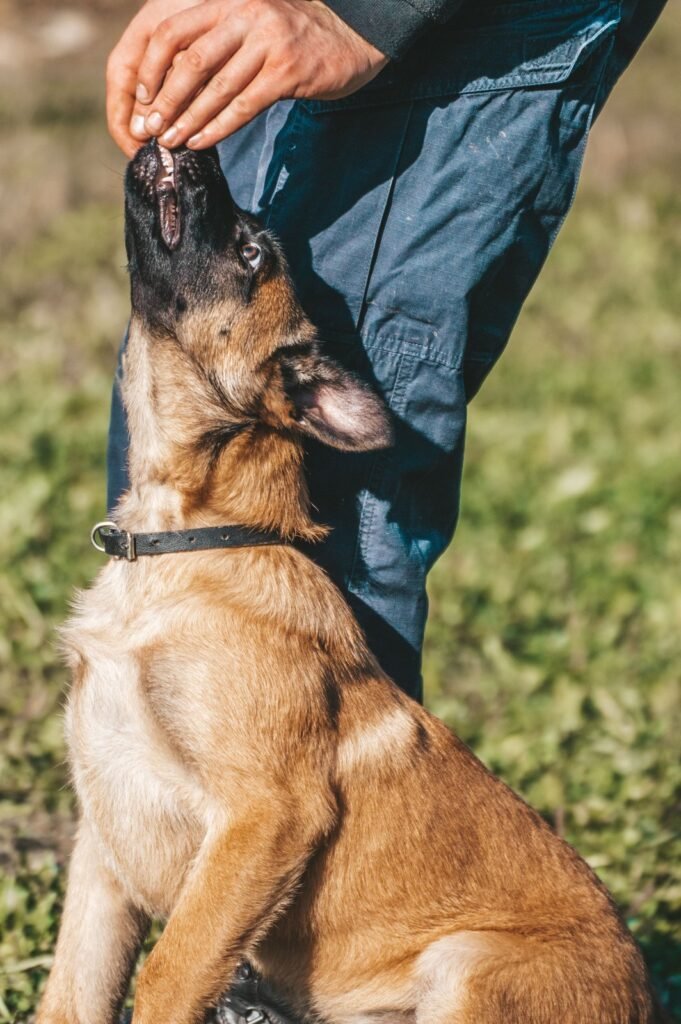
The photo above is a single treat taken from a hand, closer to a short job than an open pouch left out all evening.
A treat works best when it pays for a short, clear job: a sit before the lift door opens, a calm greeting when someone comes in, or a brief “yes” after a cue on a city sidewalk. Keep the piece small, give it, and move on. If you are repeating the same cue again and again, pause. More treats will not fix a confusing setup. A handful of tiny pieces, used one at a time, is usually plenty. Count them before you start if you can, then close the pack when the job is done.
Do not use treats to paper over a skipped meal. If your dog is leaving the bowl, you need the picky-eating plan, or a veterinarian, not a richer snack.

The husky in the photo is taking one treat outdoors. It is a greeting or reward moment, not proof that a longer session needs a larger pile. If several people in the household offer treats, agree on a plan. In a shared flat it is easy for someone else to add “just one” that you did not count. Keep the pack in one place, and let everyone know that extras come out of dinner, not on top of it.
When treats need a second look
A dog who is settling, finishing meals, and holding a steady shape is in a different place from a dog who is gaining weight, leaving dinner, or seeming unwell after extras.
Contact a veterinarian if a dog gains weight, has vomiting or diarrhea after treats, or is on a vet-directed diet and you are unsure what is allowed. Also call if you see sudden thirst, straining, a painful mouth, itching after a new snack, or a dog who seems lethargic. Those are not problems you should solve by switching flavors. Treats do not treat dental disease, joints, anxiety, or weight loss. If one treat consistently causes itching, vomiting, or loose stools, stop offering it and ask your veterinarian before you keep experimenting.
A calm choosing and portioning plan
Use this as a starting draft, then adjust to your dog and the food you already use:
- Decide the job first: a short training moment, a calm greeting, or an occasional extra, not an all-evening snack.
- Choose a format that fits that job, whether small or large, soft or crunchy, and ignore front-of-pack health claims that belong with a veterinarian.
- Read the ingredient list and the serving information, and check whether the product is only a complementary treat.
- Count every treat against the day’s food, and reduce the meal slightly when you know extras are coming.
- Keep human food off the default list, and ask your veterinarian before adding treats to a vet-directed diet.
- Put the pack away when the job is done, and store it as carefully as the rest of the food.
- Watch meals, weight, and stools. If something changes in a way that worries you, contact a veterinarian.
Learning how to choose dog treats is less about finding a perfect flavor and more about keeping extras in their place. The aim is a treat you can use on a tired Tuesday, a dinner the dog still wants, and a portion you can repeat without guessing. If weight, digestion, or a prescribed diet is in the picture, ask a veterinarian for help.
FAQ
How many treats can I give my dog in a day?
There is no honest single number that fits every dog. Treats are extras, not a meal, and they should be counted against the day’s food. Use the serving information on the packet, the feeding guidance for your dog’s regular food, and your veterinarian’s advice if you are unsure. If you already know you will use treats for training or greetings, serve a little less at mealtime. If the dog is gaining weight or leaving dinner, cut the extras back and ask your veterinarian.
Are crunchy treats good for my dog’s teeth?
Crunch may be a texture your dog enjoys, but it is not a treatment for dental disease. A hard treat does not replace dental care, and it should not be used as a home remedy for a sore mouth or bad breath. If you have concerns about your dog’s teeth, contact a veterinarian. Choose a crunchy treat only if it fits the job and the portion you can actually count.
Can I use treats if my dog is a picky eater?
A treat can be a short, high-value reward, but it should not become the reason dinner is left in the bowl. If your dog is regularly walking away from meals, follow how to get a picky dog to eat and speak with a veterinarian if appetite stays low. Filling the gap with treats can make the meal even less interesting, and it makes portions harder to track.
How should I use a treat for training or a greeting without spoiling dinner?
Keep the job short and the piece small. Pay for a clear moment, such as a sit at the door or a calm greeting, then put the pack away. Count those pieces against the day’s food, and serve a little less at the meal if you know extras are coming. Tiny training rewards are covered in more detail in best training treats for dogs. More treats will not fix a confusing cue, and they should not become an all-evening drip.
When should I contact a veterinarian about treats?
Contact a veterinarian if a dog gains weight, has vomiting or diarrhea after treats, or is on a vet-directed diet. Also call if a new treat seems to cause itching, if the dog seems painful around the mouth, or if you notice sudden lethargy, straining, or unusual thirst. Treats are not a treatment for dental disease, joints, anxiety, or weight loss. Those problems need veterinary advice, not a different packet.