

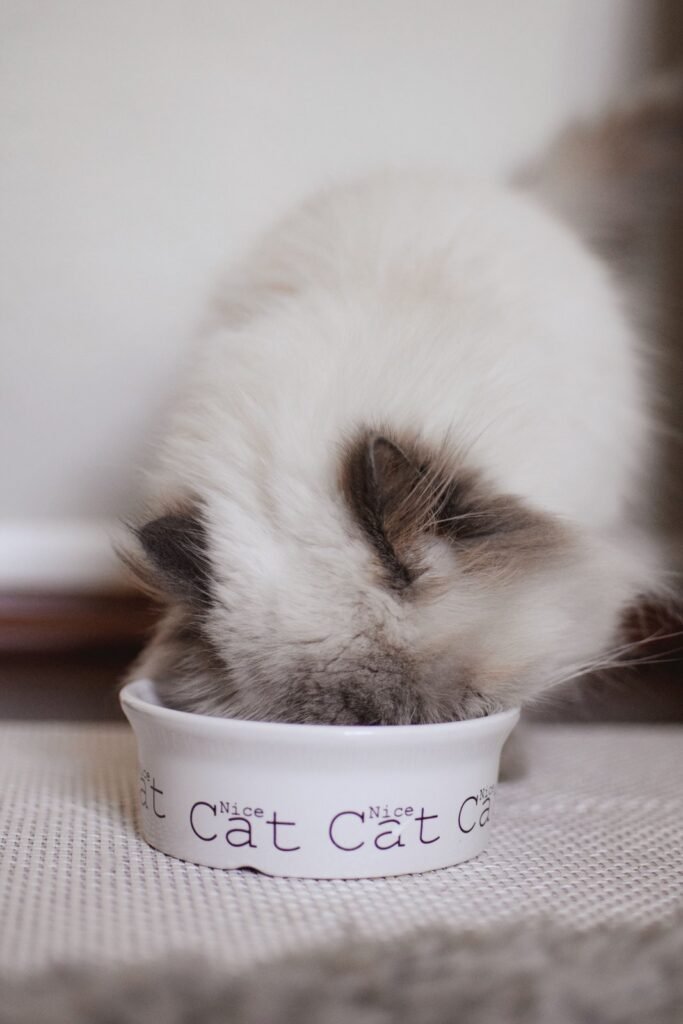
If you are trying to decide how to choose food for an indoor cat, the useful question is not “which bag looks the most premium.” It is whether the everyday food is complete and balanced for an adult indoor cat, whether the format fits the home you actually have, and whether treats, table scraps, and extra handfuls of kibble are quietly turning into a second meal.
Indoor cats spend their days in a smaller world: a kitchen floor, a window perch, a hallway, and a bowl you refill on a schedule. That does not mean they need a miracle formula. It means the daily diet has to do the ordinary job well, and that marketing words on the front of a pack are a weak substitute for what you can see at home.
This is general information for cat parents in the US and UK, not a veterinary diagnosis, and not a diet prescribed for a medical condition. A food does not cure obesity, urinary issues, hairballs, or boredom. If your cat stops eating, vomits repeatedly, has diarrhea that does not settle, drinks far more than usual, or seems unwell, contact a veterinarian rather than swapping bags in a hurry.
This is the overall daily-food decision, not a wet-versus-dry debate
The format question, wet or dry, is real, and it has its own honest comparison in wet vs dry cat food. That guide is about which texture and moisture level to lean on. This article is the broader choice: what should make up an indoor adult cat’s everyday diet, how to tell a complete food from a snack, and how the rest of the day fits around the bowl.
You can land on wet food, dry food, or a planned mix and still have made a sound choice. The mistake is treating the front of the pack as a diagnosis, or buying a new “indoor” recipe every month because the last one did not feel magical.
If you share your home with a dog, keep the bowls separate. Cat food and dog food are not interchangeable, even when the kibble looks similar. A dog-food label is written for a different animal, which is why how to read a dog food label is not a shortcut to feeding your cat.
What “complete and balanced” actually means on the bag or can
Look past the lifestyle photos and find the statement that tells you whether the food is meant to be a full diet. In plain terms, “complete and balanced” (or, in many UK and European packs, a clear “complete pet food” wording) means the maker is saying this product can be the main food for the life stage listed, not a garnish. A “complementary” food, a topper, a broth, or a treat is not a meal by itself, no matter how appealing the can looks.
The life stage matters. An adult indoor cat usually needs a food labeled for adult maintenance, not a growth recipe meant for kittens, and not a product that only says it is a snack. If your veterinarian has already placed your cat on a specific therapeutic diet, this general guide is not a reason to leave that plan.
For the details of where that statement sits, what the ingredient list is useful for, and what the front of the pack is allowed to emphasize, use how to read a cat food label. You do not need to invent a private nutrition lab in your kitchen. You need a complete food for the right life stage, a portion you can repeat, and a willingness to watch the cat rather than the marketing.
A complete food still has to be stored and served in a way the cat will eat. If the bag sits open in a warm cupboard, or the can lingers on the counter, the formula you chose carefully can become food the cat refuses. Apartment storage is its own practical job, covered in how to store cat food in a small apartment.
When a wet-and-dry mix is useful
A mix is useful when it solves a real household problem, not when it becomes two full meals stacked on top of each other. Some indoor cats prefer wet food and eat more reliably when a measured amount of canned or pouched food is part of the day. Some households like the convenience of dry food for a morning departure, then offer wet food when someone is home to sit the bowl down and take it up again. Moisture, routine, and what the cat will actually finish all belong in that decision.
What a mix is not: a free pass to leave a second bowl “just in case” and also serve a generous can. The two formats add up. If you combine them, decide the day’s total first, then split it, using how much you should feed your cat as the portioning guide rather than guessing from the bag’s most hopeful line.

If you change the ratio, treat it as a food change. A sudden jump from all-dry to mostly wet, or the other way around, can upset a stomach. The slow method is in how to switch cat food. Watch stool quality, appetite, and whether food is being left behind, and give the new mix enough days to be a fair test.
Puzzle feeders and timed machines can help with pacing or with a workday routine, but they do not choose the diet for you. A puzzle is only as sound as the complete food you put in it, which is the point of puzzle feeders for cats. An automatic feeder can portion dry food while you are out, which we unpack in automatic cat feeders, yet it cannot turn an incomplete topper into a balanced day.
How treats fit without becoming the meal
Treats are useful for a short job: a pill, a carrier session, or a calm reward. They are not a second breakfast. In a small apartment it is easy for “just one more” to become a pattern, especially if the cat is bored and the treat jar is in reach.
Keep treats clearly separate from the complete food, and keep the amount small enough that the daily meal remains the main diet. For choosing and portioning those extras, use how to choose cat treats. If you like to share from your own plate, check which human foods are safe for cats first, and remember that even a safe nibble still counts toward the day’s intake.

A cat who begs is not proof that the main food is inadequate. It may only prove that begging works. If the cat is leaving complete food but accepting treats and scraps, tighten the extras before you assume you need a new brand.
“Indoor formula” and other marketing words
“Indoor formula,” “hairball care,” “weight management,” and similar phrases are marketing categories. They may describe a recipe the maker has adjusted, but they are not a diagnosis, and they are not a promise you can take as a result. A bag cannot cure a weight problem, a urinary issue, a hairball habit, or a dull afternoon in a studio flat.
What you can actually observe is quieter and more useful: the cat’s body condition over weeks, not days; a stable appetite; normal stool; energy that matches what is normal for that cat; and whether the coat looks reasonably cared for with ordinary grooming. If your veterinarian is already tracking weight or has flagged a medical diet, follow that plan. Do not use a supermarket “indoor” label as a stand-in for advice you were given in the clinic.
If two cats share the home, the marketing on a single bag will not sort out who eats whose food. That is a feeding-management problem, covered in how to feed two cats in a small apartment. Choose a complete food first, then set up the room so each cat can eat their own meal.

A practical choosing plan you can repeat
A calm way to choose looks like this:
- Start with complete and balanced for the life stage. Confirm the adequacy or “complete pet food” statement, and skip foods that are only complementary unless your veterinarian has a reason to use them as extras.
- Pick a format you can sustain. Wet, dry, or a planned mix is fine if the day’s total is measured and the leftover wet food does not sit out for hours.
- Ignore the loudest claim on the front. “Indoor,” “natural,” or a scenic photo is not the same as a complete diet you have watched your cat eat well.
- Change one thing at a time. If you switch, do it gradually and give the new food a fair trial, rather than rotating through half-used bags.
- Keep treats in their lane. They support training and care; they do not replace the bowl.
- Watch the cat, then adjust with help if needed. Appetite, stool, body condition, and behavior tell you more than a new slogan. If something looks wrong, call your veterinarian before you invent a homemade fix.
You do not need a ranked list of brands to do this well. You need a complete food you can buy again, a portion that fits the cat in front of you, and a home routine that does not accidentally feed a second dinner.
When food trouble is a veterinary question
Choosing everyday food is a household job. Interpreting vomiting, sudden weight change, straining in the litter box, a swollen belly, or a cat who stops eating is not. Those signs belong with a veterinarian, who can tell you whether the issue is dietary, medical, or both.
A cat that hides, seems painful, or has a rapid change in thirst or urination also needs clinical care, not a different flavor of the same bag. This guide will not rank prescription diets or suggest that an over-the-counter “urinary” or “hairball” recipe is a treatment.
A calm starting plan you can use this week
This week, take one bag or can you already have and find the complete-and-balanced or complete-pet-food statement. Confirm it matches an adult indoor cat, unless your veterinarian has directed otherwise. Write down what you currently feed, including treats and extras, and notice whether the “just a little more” additions are larger than you thought.
If the current food is complete, the cat is eating steadily, and your veterinarian has no concern, you may not need a change at all. If you do change, switch slowly, keep portions honest, and store the new food so it stays palatable in a small kitchen. The goal is a daily diet you can repeat, not a perfect-looking pack on a shelf.
FAQ
Is an “indoor formula” automatically the right food for a house cat?
No. “Indoor formula” is a marketing category, not a diagnosis and not a guarantee. Look first for a complete and balanced statement for the right life stage, then watch appetite, stool, and body condition at home. If your veterinarian has already recommended a specific plan, follow that rather than the front of a bag.
Can I feed only treats or human food if my cat prefers them?
No. Treats and most table foods are extras, not a complete everyday diet. Keep the main meals as a complete cat food, and use treats in small amounts for a short job. If the cat refuses complete food but still accepts snacks, contact a veterinarian rather than turning extras into the only menu.
Should I mix wet and dry food every day?
A planned mix can be useful if you measure the day’s total and the routine fits your home. It is unhelpful if it becomes two full meals stacked together, or if leftover wet food sits out for hours. Choose a split you can sustain, and change the ratio gradually if you adjust it.
How quickly should I switch to a new food?
There is no honest single timetable that fits every cat. A gradual switch is kinder to the stomach than an overnight swap, and the method is covered in the food-switching guide linked above. If the cat vomits repeatedly, stops eating, or seems unwell during a change, stop and call your veterinarian.
When is a food problem actually a veterinary problem?
If your cat stops eating, vomits repeatedly, has ongoing diarrhea, shows a sudden change in thirst or urination, loses or gains weight quickly, or otherwise seems unwell, contact a veterinarian. Everyday food choice is general information. It is not a substitute for an examination.
[…] article is the growth-stage food you bring home for a kitten. How to choose food for an indoor cat is the adult indoor maintenance bag. How to choose food for a senior cat is the other end of life. […]
[…] adjust with your veterinarian if the cat is a kitten, a senior, or already on a prescribed diet. Choosing food for an indoor cat and choosing food for a senior cat are the life-stage articles; they do not replace a gradual […]