

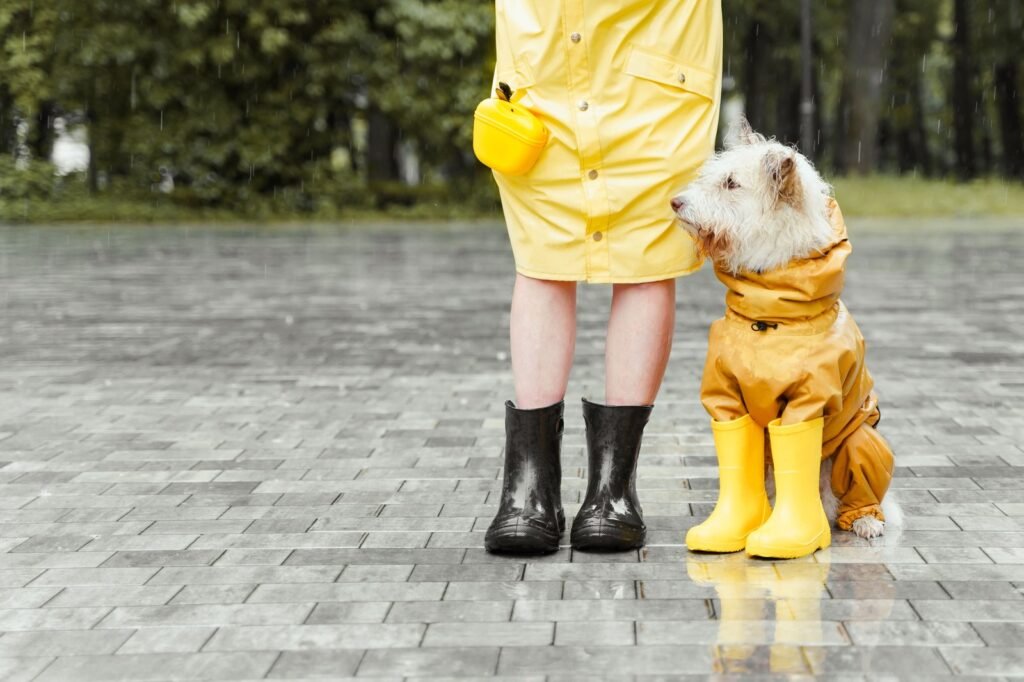
If you are looking for the best dog booties for city walks, the useful question is not “which model won a test.” It is whether a boot or shoe would actually help the dog in front of you on this pavement, in this weather, with these paws. Some city days ask for protection. Many others ask only for a look at the pads and a rinse at the door.
A useful mindset is this: a bootie is a tool for a short, specific job, not a new personality and not a treatment. Fit, grip, and a calm first step in the lobby will do more than a pair that looks the part and then sits in a cupboard because the dog will not walk.
This is general information for dog parents in the US and UK, not a product ranking and not a veterinary plan. Booties are not treatment for a cut, a burn, or a cracked pad. A dog that limps, licks constantly, or has a sore, burned, or cracked paw belongs with a veterinarian.
When a boot actually helps, and when a rinse is enough
City pavement can be hard on paws. Hot sidewalks in midsummer, winter salt and slush, broken glass, rough concrete, and a tender pad after a walk are the usual reasons people reach for boots or shoes. In those conditions, a well-fitted bootie can keep the pad off a surface you would not want to stand on in bare feet. You do not need a precise temperature to make a heat decision. If the pavement is uncomfortable under the back of your hand, it may be uncomfortable for the dog, and a shorter route or a later walk may be kinder than a long outing on bare pads.
A healthy dog with comfortable paws may not need footwear on an ordinary outing. What they may need is a quick paw check when you get home, and a rinse if the street was salty, dusty, or wet. That aftercare routine lives in how to care for your dog’s paws after city walks. This article stays on the bootie itself: when to put one on, how it should sit, and when to take it off.
Do not use a boot as a bandage. If you can see a cut, a burn, or a cracked pad, or if the dog is limping or licking one foot constantly, contact a veterinarian. A boot may be part of a plan a veterinarian has already given you for a recovering paw. It is not a substitute for that visit.
The same is true after a walk that went wrong. A dog who suddenly starts hopping, sitting down, or chewing at a paw needs a look from you and, if the pad is damaged or the limp does not settle, a veterinarian, not a tighter strap.
This is the bootie, not the walk and not the aftercare

The photo above is a dog cleaning a snowy paw. It is not a city sidewalk, and the dog is not wearing booties. Winter weather still matters to this choice. Salt, slush, and packed ice are common reasons a city dog needs footwear, but the walk itself, and the rinse afterward, are separate jobs.
Rain, cold, and dark evenings already have their own plans. For wet weather, use how to walk a dog in the rain in the city. For short, cold days, use how to walk a dog in cold weather in the city. For lighting and visibility after dark, use how to walk a dog at night in the city. A coat can help a dog stay warm; it does not protect the pads. That buying and fit question is in best dog coats for cold-weather walks.
How often you go out is also a different article: how often you should walk your dog. Booties do not change the need for regular, suitable outings. They only change what is on the paws for some of those trips.
Think of three jobs, not one:
- Decide. Is today’s surface a reason for footwear, or is a paw check and a rinse enough?
- Fit. The boot should sit around the dewclaw and wrist without rubbing or twisting.
- Take it off. The bootie is for the street, not the sofa.
Fit around the dewclaw and the wrist
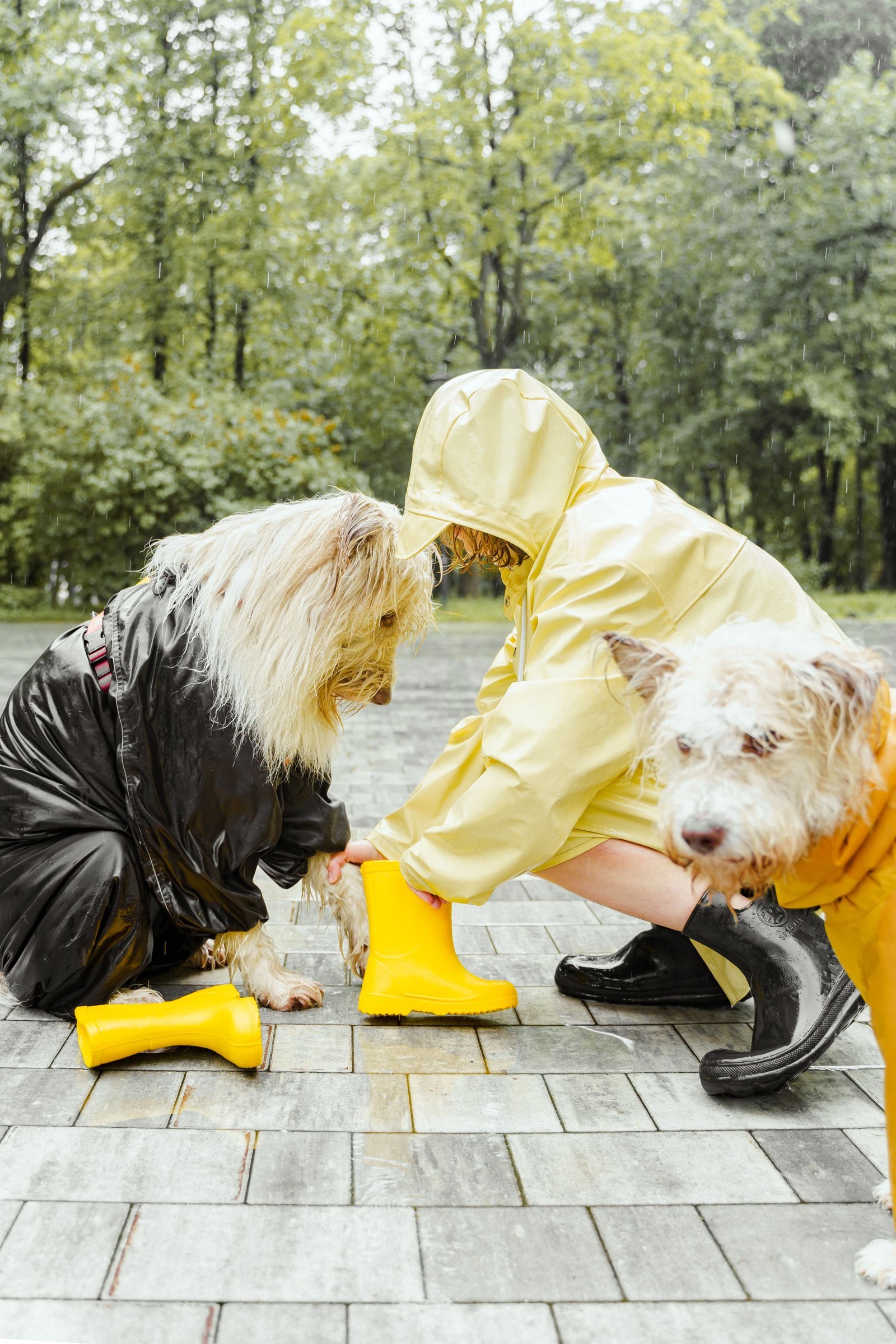
The photo above is someone easing a yellow rubber rain boot onto a dog’s paw in a wet park, not in a building lobby. The idea still holds: fit happens before the first step, and it should be calm and unhurried.
Measure the paw the way the maker asks you to, usually by standing the dog on a piece of paper or on a firm floor and noting the width and length of the pad. Front paws and back paws are often slightly different, so check both. A boot that is too short can press the toes. A boot that is too wide can twist and make the dog slip.
Pay attention to the dewclaw and the wrist. Some dogs also have dewclaws on the back legs; check those if they are there. The cuff or strap should sit high enough to stay on, and not so tight that it pinches the dewclaw, rubs the wrist, or leaves a mark after a short wear. You should be able to slip a finger between the strap and the leg. If the boot slides, add the adjustment the design already has; do not improvise a tight knot that cuts in.
Hair can make a boot feel tighter than it is, especially on a longer-coated dog. Smooth the fur down the leg before you put the boot on, and check again after a few minutes. If the skin looks red, or the dog keeps shaking a foot, take the boot off and try a different size or style another day, rather than hoping the dog will “get used to” pain.
There is no honest shortlist of model names here. Materials vary: some boots are a flexible sock-like cover with a rubbered sole, others are a more shoe-like rubber boot, like the rain boots in the photos. Choose for the job and the fit, not for a ranking you cannot verify. If a boot will not stay on a particular dewclaw or shape of paw, that is information, not a failure of the dog.
Grip on wet pavement, and a first step in the lobby
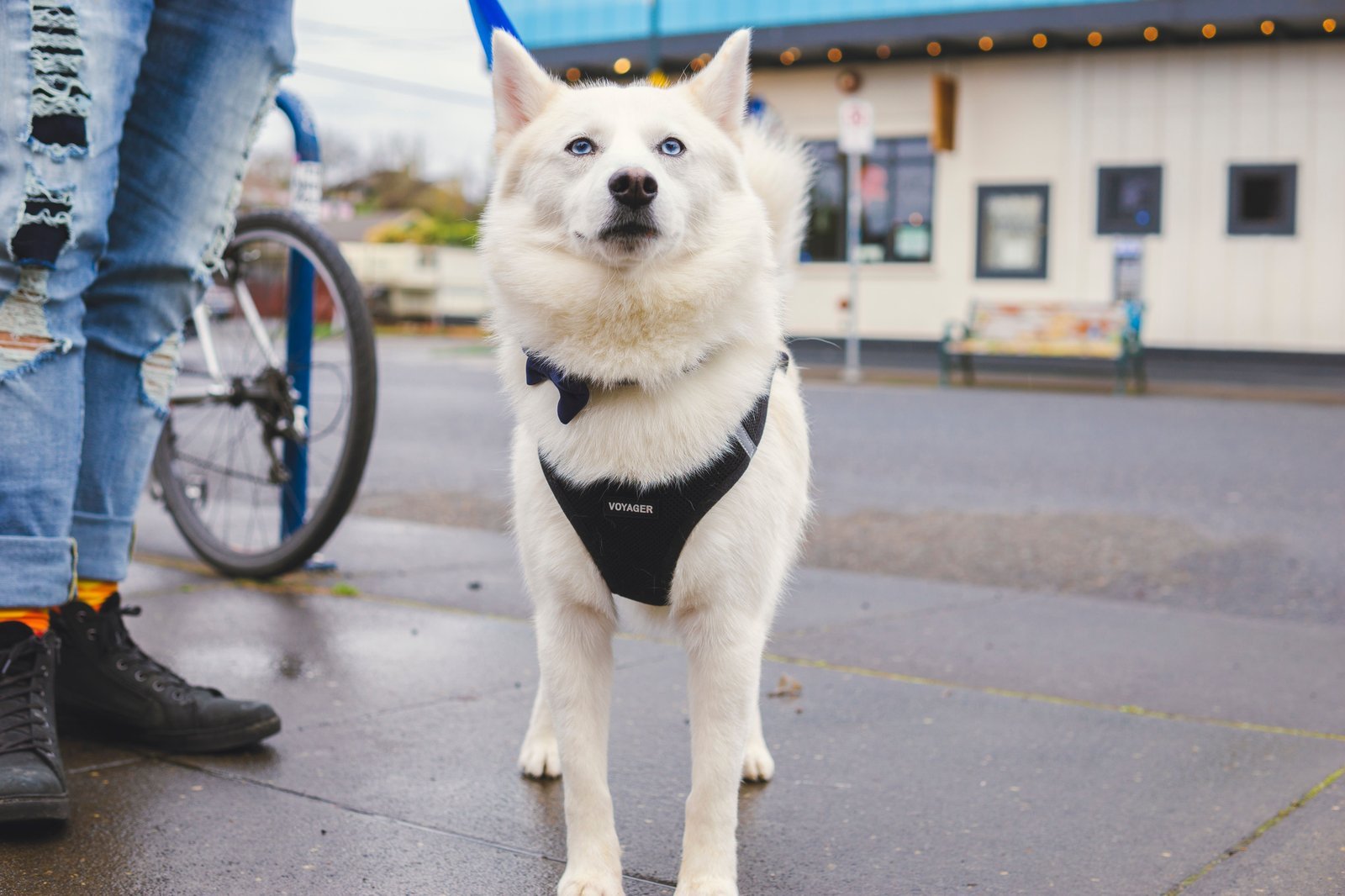
The photo above is a dog standing on a wet city sidewalk without booties. Wet pavement is exactly where grip matters if you do use footwear. A smooth sole can be worse than bare pads on rain-slick tiles, metal threshold strips, or a polished lobby floor. Look for a sole with some texture, and test it on the building’s own surfaces before you commit to a long walk.
The first step is often the hard one. Many dogs will lift a foot, sit down, or walk as if they are wearing buckets. Do not drag the dog through the door. Put the booties on in the flat, offer a moment to stand, then ask for one or two steps in the hallway or lobby, where the floor is familiar and you are not yet in traffic.
Keep that first practice short and dull. A calm word, a pause, and another step are kinder than a stream of excitement. If the dog freezes, wait, then try again, or take the boots off and try a shorter session later. A lobby with a slippery floor may need a slower start than a textured doormat.
Your leash still matters. A sudden pull can twist a boot or knock a dog off balance while they are learning the new feel of the ground. A steady, loose lead and a route you already know are easier than a new path on the first booted outing. For leash choice and handling on city walks, see best dog leashes for city walks.
If a boot twists, stops, or comes off in the first minutes, go back to fit. No amount of “just walk it off” will fix a boot that is rubbing the dewclaw or sliding over the pad.
Take them off before they hit the sofa

The dog on the sofa above is not wearing booties, which is the point of coming home. Footwear belongs on the street. As soon as you are through the door, take the boots off, check the paws, and then let the dog onto the rug or the sofa.
Leaving booties on indoors can trap moisture, rub the wrist, and spread street grit onto the floor and the furniture. It also teaches the dog that the strange feeling on the feet never ends. Make removal as predictable as putting the leash down: same mat or towel by the door, boots off, a brief paw check, then rest.
Look at the skin around the dewclaw and the wrist, and at the pads. If you used the boots in salt or slush, rinse the paws even after the boots come off, because brine can still sit on fur at the cuff. The fuller aftercare steps are in the paw-care guide linked above.
If a boot is wet, sandy, or salted, let it dry before the next walk. A damp boot put back on a few hours later is uncomfortable and can rub. In a small apartment, a tray or mat by the door is enough; you do not need a special rack, just a place that is not the sofa cushion.
A calm city-bootie plan
Use this as a starting draft, then adjust to your pavement, your building, and the dog in front of you:
- Decide whether today’s surface actually needs a boot, or whether a paw check and a rinse will do.
- Measure both front and back paws, and check the fit around the dewclaw and the wrist before you leave the flat.
- Look for a sole that can grip wet pavement and lobby floors, not only a boot that stays on in the living room.
- Practice the first steps in the hallway or lobby, without dragging the dog into the street.
- Take the booties off at the door, check the paws, and keep wet boots off the sofa.
- Contact a veterinarian if the dog limps, licks constantly, or has a cut, a burn, or a cracked pad. Booties are not treatment for those injuries.
Choosing the best dog booties for city walks is less about a ranked list and more about a pair the dog can actually walk in, on the days the pavement requires it. The aim is a short, repeatable routine you can keep on a wet Tuesday, and a dog who is not asked to wear footwear as a costume. If a paw looks sore, or the dog will not bear weight, ask a veterinarian to help you sort a gear problem from a medical one.
FAQ
Does my city dog need booties on every walk?
No. Many healthy dogs do well with bare paws on ordinary pavement, plus a paw check and a rinse when they come in. Booties are more useful when the surface itself is the problem: hot sidewalks, winter salt and slush, broken glass, rough concrete, or a tender paw after a previous outing. If you are unsure, start with aftercare and add footwear only for the conditions that actually bother the dog.
How should dog booties fit around the dewclaw?
The cuff or strap should stay on without pinching the dewclaw or rubbing the wrist. You should be able to slip a finger between the strap and the leg, and the boot should not twist when the dog stands. Front and back paws can need slightly different sizes. If the skin looks red, or the dog keeps shaking a foot, take the boot off. A tight boot is not a better boot.
How do I get my dog to take a first step in booties?
Put them on at home, give the dog a moment to stand, then ask for one or two calm steps in the hallway or lobby. Do not drag the dog through the door or into traffic. Keep the first practice short and familiar. If the dog freezes, wait, or try again later. If a boot twists or comes off, go back to fit before you try a longer walk.
Should I leave booties on in the apartment?
No. Take them off as soon as you are through the door, before the dog gets on the sofa or the rug. Leaving them on can trap moisture, rub the wrist, and spread street dirt indoors. Check the paws, rinse if the street was salty or slushy, and let wet boots dry before the next outing.
When should I contact a veterinarian instead of using booties?
Contact a veterinarian if the dog limps, licks a paw constantly, or has a cut, a burn, or a cracked pad. Booties are not treatment for those injuries. A veterinarian may later include footwear in a recovery plan, but the first job is to have the paw examined. Sudden hopping, sitting down mid-walk, or obvious pain is also a reason to call, not a reason to tighten a strap.