

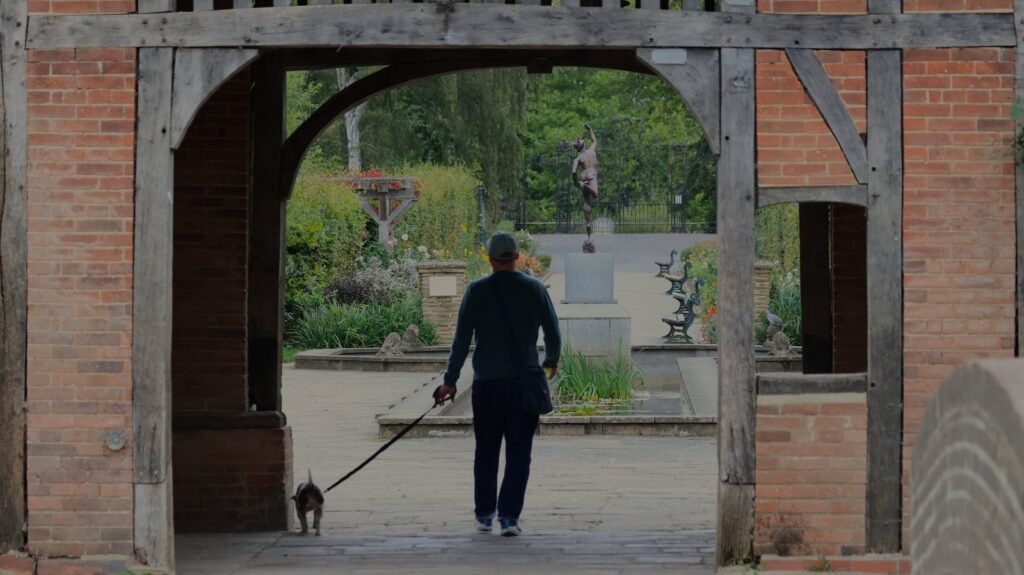
If you want to help a dog use a building dog run or courtyard pet area, treat the space as a shared, short visit, not as a city-park recall session and not as a general neighborhood walk. The useful goal in week one is a calm ten-minute stay you can leave cleanly, not an off-leash free-for-all the first time the gate closes.
This is general information for apartment dog parents in the US and UK, not a veterinary diagnosis and not a promise that every dog will like a fenced amenity. Do not use shock, prong, or citronella collars. If the dog seems panicked, in pain, or unable to take food, leave and, if that is new, contact your veterinarian.
Why a building run is a different skill
A building dog run or courtyard pet area is a fenced or semi-shared amenity that belongs to the property, not to you. Visits are often short. Posted hours may limit when you can go down. Some buildings require a leash even inside the run, or cap how long a visit may last. Other residents’ dogs may already be mid-session when you arrive. The bag station may be empty. Neighbors may watch from windows or a bench. That mix is different from teaching a dog recall in a city park, which is a wider, more open training job, and different from helping a dog stay calm around other dogs on city walks, which is about passing on a sidewalk, not sharing a small enclosure.
It also sits next to, but is not the same as, walking two dogs on city sidewalks, loose-leash walking in the city, or taking a dog to an outdoor cafe or patio in the city. Use those skills if you have them. This article is the short, shared, on-property visit.

A fenced run with more than one dog already inside is closer to the real job than an empty backyard. The official title mentions dogs playing together; what you can see is a close greeting beside a chain-link fence, with a person at the gate and a sign on the fence. That mid-session, other-dog picture is why a first visit should stay short and why you should be ready to leave if the space is already busy.
Prep before you go down
Give the dog a potty option before you leave the apartment if you can. A building run is not a guaranteed toilet, and a dog that is already bursting is harder to walk through a lobby, elevator, or courtyard gate. If the dog usually toilets on a walk, keep that as the backup rather than hoping the amenity will do all the work.
Keep the leash short until you know the posted rules. Some runs allow off-leash play only after a dog has settled, or not at all. A short leash also gives you a way to pause at the gate, look inside, and decide whether to enter. Bring more bags than you think you need. Building stations run out, and you are still responsible for pickup. A simple poop-bag dispenser for city walks on the leash is enough; you do not need special courtyard gear.
Check posted hours, leash rules, and visit-length caps on the way in. Follow what is written, even if another resident is doing something else. Do not invent a universal building policy, and do not argue with staff or neighbors about the rule. If the hours are closed, take a regular walk instead. How often you should walk your dog still matters; a courtyard visit is a supplement, not a full replacement for getting outside.
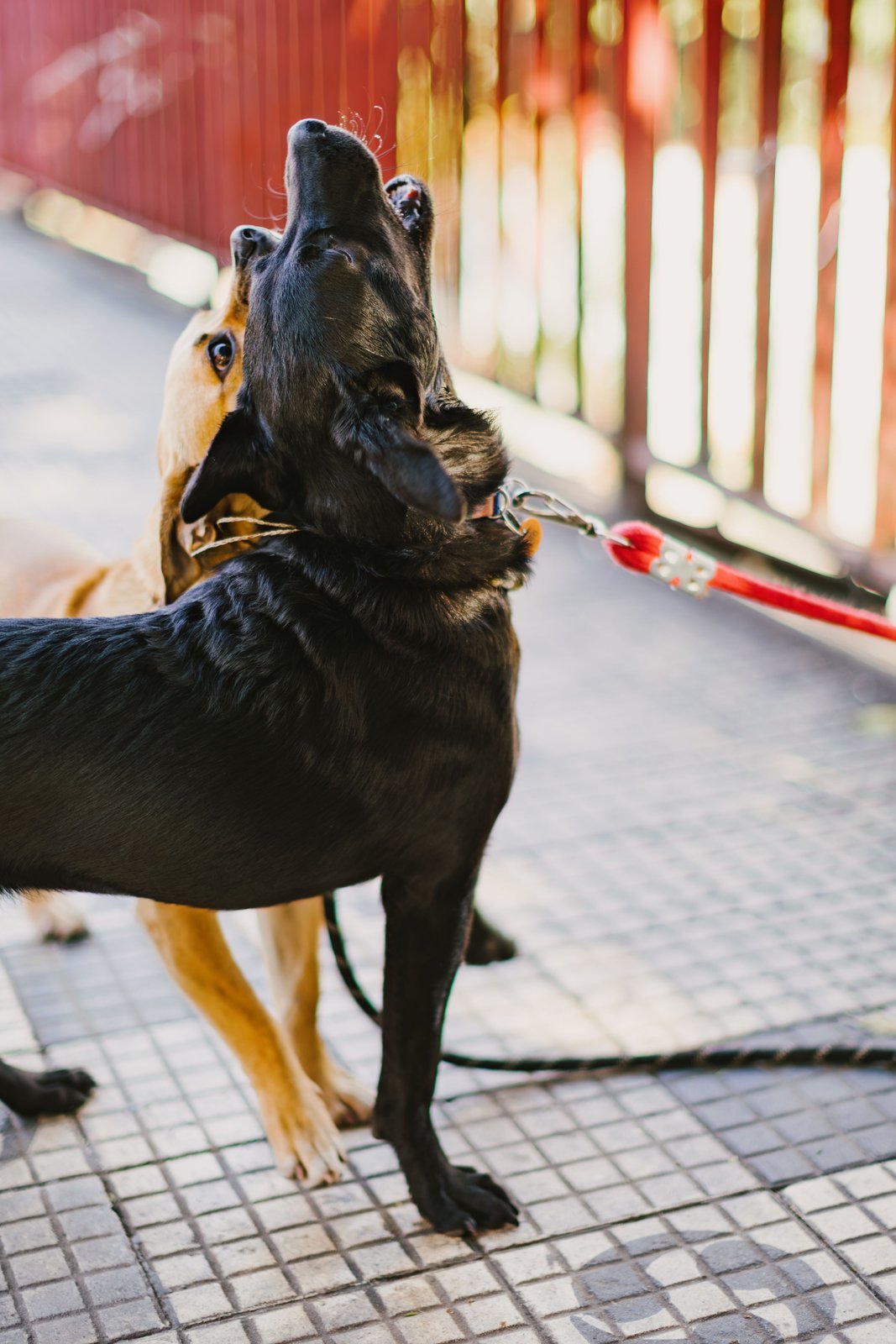
Two dogs meeting on leash beside a fence is a fair picture of the first minutes, not a guarantee of easy play. The official title mentions dogs playing outdoors on leash; what you can see is a close, upright greeting on a tiled walkway. If that greeting gets tight, noisy, or stuck, walk a loop and try later, or skip the visit.
A short first visit
Walk in, pause, and let the dog sniff the edge of the space before you head to the middle. Keep the first sessions to about ten minutes, even if the dog seems happy. A short, clean exit is a better first lesson than a long stay that ends in a scramble at the gate.
If the run or courtyard is already crowded, leave and come back. “Crowded” is a judgment call, but a useful rule is this: if you cannot keep a comfortable gap, or if you would have to squeeze past a loose dog at the gate, the visit can wait. A high-energy dog that still needs more work can get that at home with indoor ways to tire out a high-energy dog in an apartment, then try the amenity at a quieter hour.
Do not make week one an off-leash free-for-all. If the posted rule allows a dropped leash after the dog has settled, wait until the dog can walk in, toilet or sniff, and come back to you without charging the gate. If the posted rule requires a leash at all times, keep the leash on. Either way, “good enough” is a calm ten-minute visit you can repeat, not a perfect social hour.
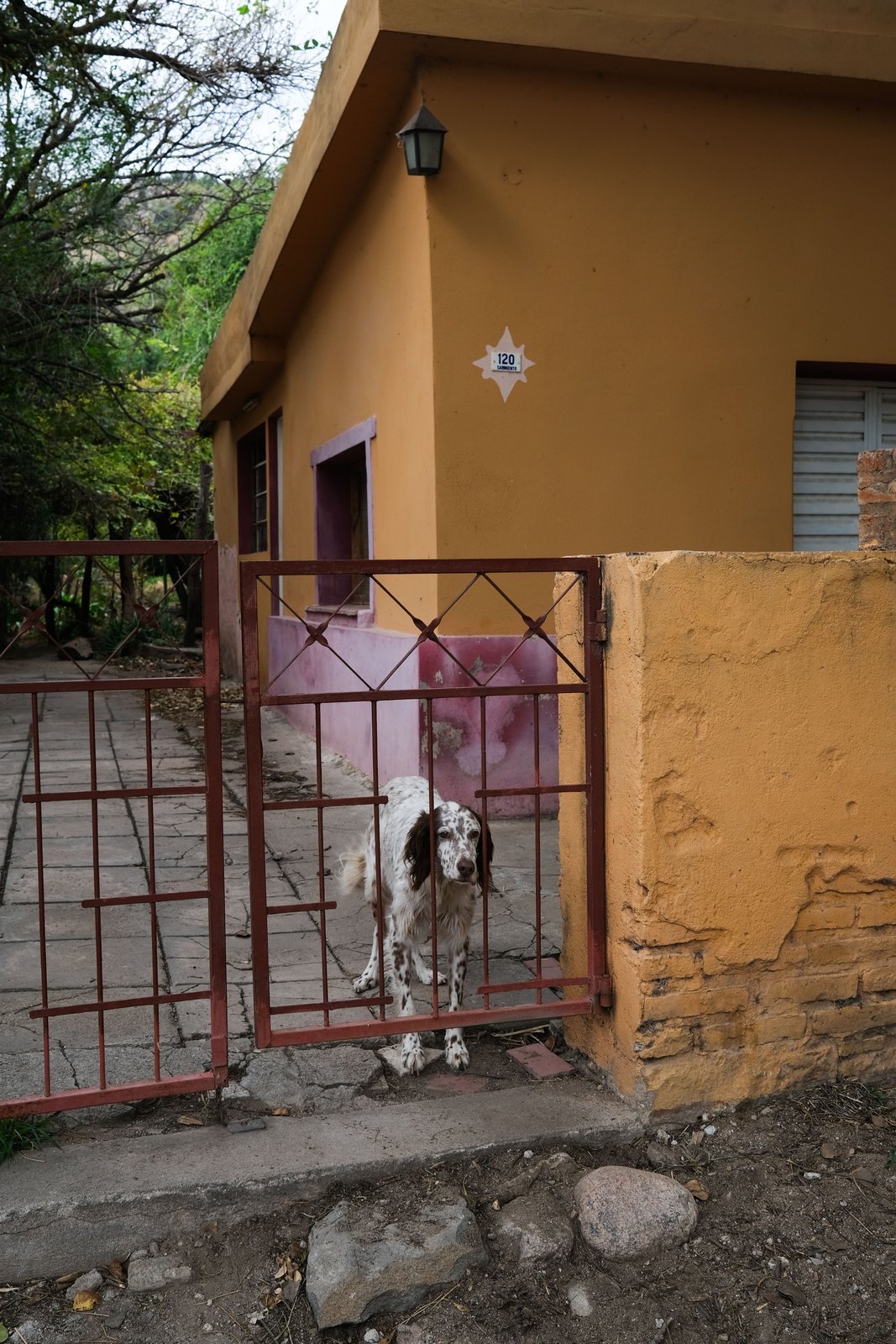
The photograph is a house gate, not a labeled building dog-run gate, but the open-gate problem is the same. A dog standing in a gap can slip out, and a loose dog on the other side can rush in. Close the gate as soon as you are through, and do not stand in the opening to chat.
Other dogs, gates, and posted rules
Have a simple plan if a loose dog rushes the gate as you enter or leave. Pause outside until the other person has their dog, or wait until that visit ends. If you are already inside, step away from the opening, keep your dog close, and let the other person come through and close the gate before you move. Do not block the gate with your body and a tangle of leashes. Do not try to “correct” someone else’s dog.
If your dog stiffens, stares, or cannot take a treat around another dog, this is not the session to practice greetings. Leave, then use a sidewalk pass or a quieter time of day. A courtyard is a poor place to test a dog that is already over threshold, because there is often only one exit.
Follow posted rules even when they feel strict. A leash-inside rule, a ten-minute cap, or a “no toys” note is there because the space is shared. Staff and neighbors should not have to debate it with you. If a rule is unclear, ask the office once, then do what they say. If the amenity is closed for maintenance, treat that like a closed hour and walk elsewhere.
A dog that is still settling into the building may need more time in the hall and elevator before the courtyard feels easy. That work belongs with helping a dog adjust to a new apartment and teaching a dog to settle in a small apartment, not with a longer stay in the run.
Pickup and being a decent neighbor
Pickup is part of using the space, not an extra courtesy. Bag waste as soon as you see it, including if another person missed a spot you just watched your dog make. If the station is empty, use the bags you brought and take the bag to the proper bin, not to a hallway trash can that is not meant for it.

The photograph is a posted no-toileting sign near an apartment building and a drying rack, not a sign inside a labeled dog run. The point still holds: buildings post rules about waste, and those rules apply whether or not a bag station is stocked. A neighbor hanging laundry a few yards away is a fair reminder that this is a shared outdoor space, not a private yard.
Keep toys and long-line play out of the first visits unless the posted rules clearly allow them and the space is empty. A flying toy in a small run can start a scuffle or hit a person at the fence. If you want more exercise than a short sniff visit, add a walk or an indoor game rather than turning the amenity into a private playpen.
Watch your voice and your dog’s barking. Courtyard walls bounce sound, and windows sit close. A noisy first visit makes later visits harder with neighbors and with the dog. Leave while you can still go quietly.
What “good enough” looks like
In week one, success is a short visit with a clean exit. The dog walks in on a short leash, sniffs or toilets, stays out of the gate opening, and walks back inside the building without a fight at the door. You pick up, you follow the posted hours, and you do not need a long debrief in the lobby.
The dog does not have to play with every dog in the run. The dog does not have to go off leash. The dog does not have to stay for twenty minutes because another resident is staying that long. If the dog is able to take a treat, check in with you, and leave when you ask, you have enough to repeat tomorrow or later in the week.
If several short visits go well, you can slowly add a few minutes, or try a slightly busier hour, still with a leave-when-crowded rule. If visits stay tight, keep them short and quiet, and put the extra energy into walks and indoor work. The amenity should stay useful, not become a daily argument.
When to skip the visit and get more help
Skip the courtyard or run if the dog is already over threshold in the hallway, if a loose dog is waiting at the gate, or if the space is so full that you cannot enter and close the gate cleanly. Skip it if the dog has been sick, if waste looks unusual, or if you see a fight starting. A regular walk is a better choice than a forced session.
If the dog repeatedly panics in the enclosure, lunges at every dog, or cannot walk back through the lobby afterward, this is beyond a “try a shorter visit” fix. Talk with your veterinarian to rule out pain, and consider a qualified trainer who can work with you in person. This article cannot replace that help, and it cannot tell you that a particular dog should be off leash in a shared run.
Used well, a building dog run or courtyard pet area is a convenient, short outdoor option on days when a longer park trip is not possible. Used poorly, it becomes a crowded, noisy box at the bottom of the elevator. Start with a plan you can keep, leave while the visit is still going well, and treat posted rules as part of the training, not as optional fine print.
FAQ
Should I let my dog off leash in a building dog run on the first visit?
Not in week one, and not if the posted rules require a leash. A short, on-leash visit with a clean exit is a better first goal than an off-leash free-for-all. If a dropped leash is allowed later, wait until the dog can come back to you and stay out of the gate opening.
What if the run is already full when I get downstairs?
Leave and come back, or take a regular walk. A crowded enclosure with one gate is a poor place to squeeze in. “Good enough” includes skipping a visit that you cannot enter and exit cleanly.
What should I do if a loose dog rushes the gate?
Pause outside until the other person has their dog, or wait if you are already inside and step away from the opening. Close the gate as soon as you are through. Do not stand in the gap to chat, and do not try to handle someone else’s dog.
Does a courtyard visit replace a daily walk?
No. Treat it as a supplement. Your dog still needs a realistic walking plan, and a short amenity visit does not automatically cover potty, sniffing, and exercise for the day.
What if my building requires a leash even inside the run?
Follow the posted rule. Do not invent a different policy because another resident is off leash, and do not argue with staff or neighbors about it. You can still have a useful ten-minute visit on a short leash.