

If you need to transition a puppy to adult dog food, treat it as a life-stage handoff from a growth formula to an adult maintenance food, not as a first-food decision and not as a same-stage brand swap. The puppy food was doing a growth job. The adult food needs to do a maintenance job. The useful work is deciding when that change is approaching, then overlapping the two bowls slowly enough that you can watch stool, appetite, and weight.
This is general information for dog parents in the US and UK, not a veterinary diagnosis and not a feeding prescription. Dogs vary, and there is no single month that is medical law for every breed or every body. If your puppy stalls, has diarrhea, vomits, loses weight, or already has a special feeding plan, contact your veterinarian before you change the bag.
This is a life-stage handoff, not a first bag and not a brand swap
Choosing the growth food in the first place is a different job. How to choose food for a puppy is about a complete puppy-stage or all-life-stages statement, texture, and a schedule you can actually keep. This article assumes that growth food is already in the kitchen and the question is when, and how, to leave it.
A brand or formula change at any age is also a different job. How to switch dog food without an upset stomach covers a gradual mix when you are changing bags for price, availability, or preference, including during adulthood. You may use a similar overlap here, but the reason for the change is the life stage, not a preference for a new label. Do not treat this handoff as a chance to change brand, texture, and life stage in the same week if you can avoid it. One change is easier to read than three.
Ideal stills of two bags side by side, or a puppy mid-meal during a mixed bowl, were scarce, and many of the closest food-bowl photographs were already used on the site. This is a puppy portrait, not a feeding scene. Use it as a reminder that the dog in front of you is still growing, and that the calendar on the bag is a starting point rather than a photograph of the switch itself.
When the switch is approaching
Start with the label on the food you already use, and with your veterinarian, especially if the puppy is a large or giant breed, has been on a joint or calorie plan, or has had stomach trouble. Many dogs move from a puppy food to an adult maintenance food around one year of age. Some larger or slower-maturing dogs wait longer. That is a common pattern, not a required cutoff, and it is not a reason to flip the bowl on a birthday.
Watch the dog, not only the calendar. A puppy that is still growing quickly, that is underweight, or that has a feeding plan from the clinic is not a candidate for a casual switch. A dog that has reached a more adult body, is keeping a steady weight, and has a label or a veterinarian pointing toward a maintenance food is closer to the handoff. If you are unsure, ask the clinic rather than inventing a month.
What actually changes, in plain language, is the job of the food. A growth formula is built for a puppy that is adding bone, muscle, and body weight. An adult maintenance food is built for a dog that is mostly staying the same size. Calorie density can change too. Some adult foods are less calorie-dense than the puppy food you are leaving, and some are not. That is why you should not pour the same cup count on day one of the new bag and assume the portion is already right. How much you should feed a dog is a practical portion guide, not a growth chart, and it becomes more useful once the dog is on a maintenance food.
How to read a dog food label helps you confirm that the new bag is complete for adult maintenance, and that you are not accidentally buying another growth food, a treat, or a topper. Wet and dry can both work at this stage. If you already have a texture that agrees with the puppy, wet versus dry dog food is worth rereading before you change life stage and texture at the same time.
The official title of this photograph mentions a bowl, but the object is a rusted metal tub, and the setting is not a tidy indoor feeding corner. Treat it as a puppy still, not as proof of a mixed meal or a kitchen routine. The switch still happens in the bowl at home, on a schedule you can repeat.
Make the change gradually
Do not flip the bowl overnight. A sudden swap is a common way to get loose stool, gas, or a day of picky eating, and in a small home those messes are hard to ignore. Overlap the two foods instead. Mix them in the same bowl so the dog is not eating one food and leaving the other. A practical starting pattern for many dogs is a week or a little longer: a small amount of the adult food in the familiar puppy food at first, then a more even mix, then a bowl that is mostly the new food. That pattern is a starting point, not a medical timetable. If stool softens, go slower and spend extra days at the last mix that looked comfortable. If the dog refuses the mix, pause and do not keep increasing the new food just to stay on a calendar. Keep fresh water available, and try not to add a new treat or a new chew in the same week, because those extras make it harder to tell what the bowl itself is doing.
Watch stool, appetite, and energy every day of the overlap. A slightly softer stool that firms up as you slow down is different from watery diarrhea, vomiting, blood in the stool, or a puppy that will not eat. The first can mean you should stretch the mix. The second is a reason to call your veterinarian and stop pushing the new bag.
Keep the rest of the day as steady as you can. How to use dog food toppers without overfeeding matters here because a new topper can hide whether the adult food itself agrees with the dog. If you use a topper, keep it small and consistent, or drop it during the overlap so you can read the food.
If the puppy still has food down all day, the overlap is harder to measure. How to switch a dog from free-feeding to scheduled meals is the routine article for that change. If you can, put the dog on meals you can see before you also change the life-stage food, so you know how much was eaten and how the stool looked after a known portion.
A close puppy portrait is not a feeding chart. It is a reminder to watch this dog, not a generic calendar. The useful notes during a transition are simple: what went in the bowl, what came out, whether the dog was eager or off, and whether the body looks the same from one week to the next.
Portions, picky days, and the new bag
Once the bowl is mostly adult food, recheck the portion. An adult maintenance food can fill the same cup and still feed a different amount of energy. Use the new bag’s feeding guide as a starting range, then adjust with your veterinarian if the dog starts to look lean or heavy. Weigh or feel the dog on a consistent schedule during the first few weeks, rather than guessing from one glance. Training treats still count in the day’s food.
A dog that suddenly turns picky during the mix may be reacting to the new food, to a too-fast overlap, or to something unrelated. How to get a picky dog to eat has practical steps for a dog that walks away from the bowl. Do not keep adding toppers in a panic, and do not starve the dog into the new bag. If the refusal lasts, or the dog seems painful or dull, contact your veterinarian.
A new open bag also has to stay in good condition. How to tell if dog food has gone bad and how to store dog food in a small apartment are the freshness and storage plans. A rancid bag can look like a failed transition. Close the bag, keep it dry, and do not run two stale open bags at once just because you are mixing.
The later life-stage handoff is senior food, and that is a different article. Best dog food for seniors is for older dogs, not for a puppy leaving a growth formula. Do not skip from puppy food to a senior food as a shortcut.
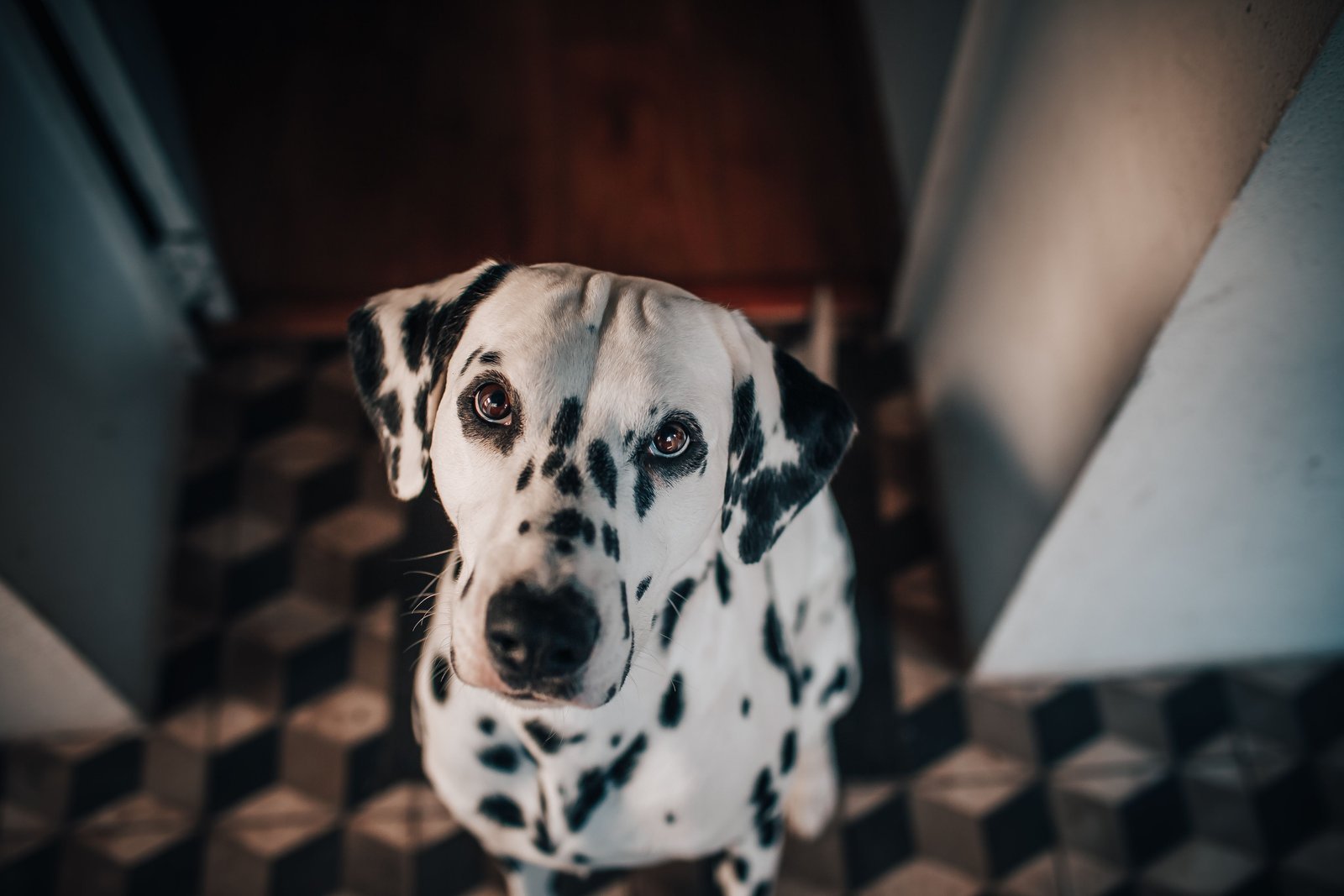
An adult dog looking up in a hallway or doorway is a stand-in for the destination of this change, not a photograph of a mixed bowl. The goal is a dog that has left the growth formula, is eating a complete adult maintenance food, and is holding a steady body on a portion you can repeat.
What not to do, and when to call the veterinarian
Do not flip the bowl overnight to save a few days. Do not invent a hard medical cutoff such as a required month for every dog. Do not change brand, texture, and life stage all at once if you can separate those decisions. Do not use an adult-only food early just because it is cheaper, and do not use a senior food as a substitute for a normal adult maintenance food.
Call your veterinarian if the puppy stalls, has diarrhea that does not settle when you slow the mix, vomits, loses weight, has blood in the stool, seems painful or lethargic, or already has a special feeding plan. Those are not problems to wait out with a new bag. A gradual overlap is a practical way to change life stages. It is not a treatment plan.
FAQ
When should I transition a puppy off puppy food?
Follow the label on the food you use and your veterinarian’s advice. Many dogs move on around one year, and some larger or slower-maturing dogs wait longer. That is a common pattern, not a required month for every dog.
Can I switch from puppy food to adult food overnight?
It is better not to. Overlap the two foods and watch stool and appetite. A sudden swap is a common way to get loose stool or a day of picky eating, and it makes it harder to tell whether the new food agrees with the dog.
Do I keep the same cup count after the switch?
Not automatically. An adult maintenance food can have a different calorie density than the puppy food you are leaving. Use the new bag’s feeding guide as a starting range, then adjust if the dog starts to look lean or heavy, and ask your veterinarian if you are unsure.
What if my puppy has loose stool during the mix?
Slow the overlap and keep the rest of the diet steady. If the stool turns watery, there is blood, the dog vomits, or the puppy seems dull or painful, contact your veterinarian rather than pushing the new food.
Is this the same as switching dog food brands?
No. A brand or formula switch can happen at any age. This handoff is specifically from a growth food to an adult maintenance food. You may use a similar gradual mix, but the reason for the change is the life stage.