

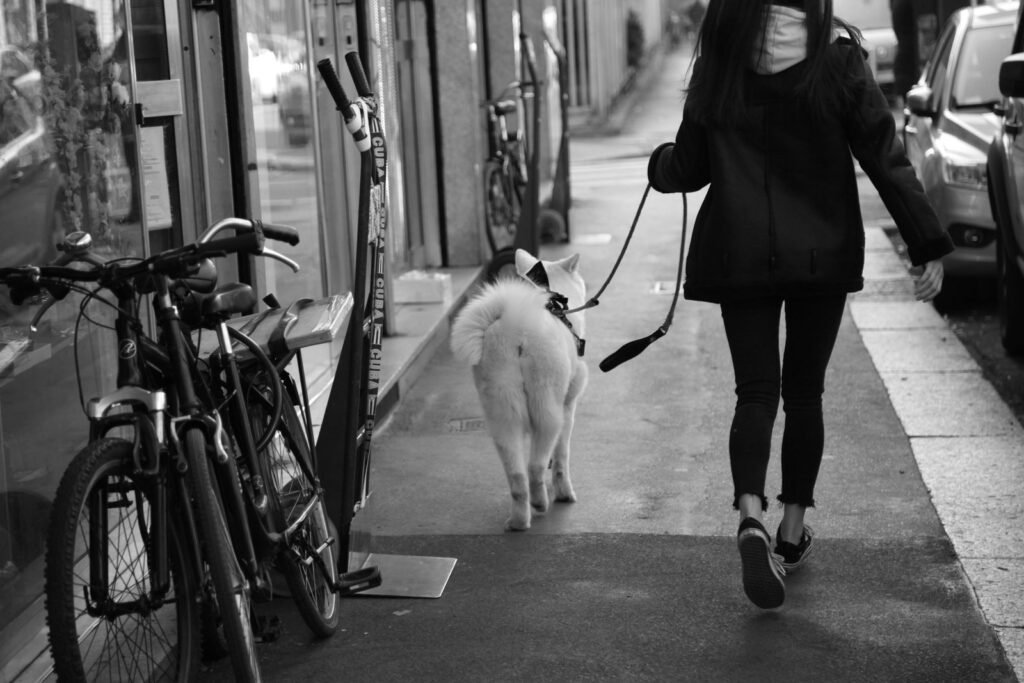
If you want to stop a dog from lunging at bikes and scooters, the useful work starts before the wheels are two feet away. It is the sudden stiffen, the tight leash, the bark, or the dart toward a passing bike, e-scooter, skateboard, or delivery rider on a narrow sidewalk or next to a bike lane.
This is general information for US and UK dog parents in flats and small homes, not a veterinary diagnosis and not a behaviorist plan. There is no honest promise that the habit will fade in a week. A dog that has already bitten, or that panics and gets worse on these walks, needs a qualified professional who can see the dog in real conditions. Do not use a shock, prong, or citronella collar, and do not reach for leftover medication. This article is about the specific lunge at moving wheels. Loose-leash walking on city sidewalks is the everyday slack-leash skill. Teaching a dog to ignore food and trash on city sidewalks is a different attention problem, aimed at scraps on the ground rather than a rider going past.
Why city sidewalks make moving wheels hard
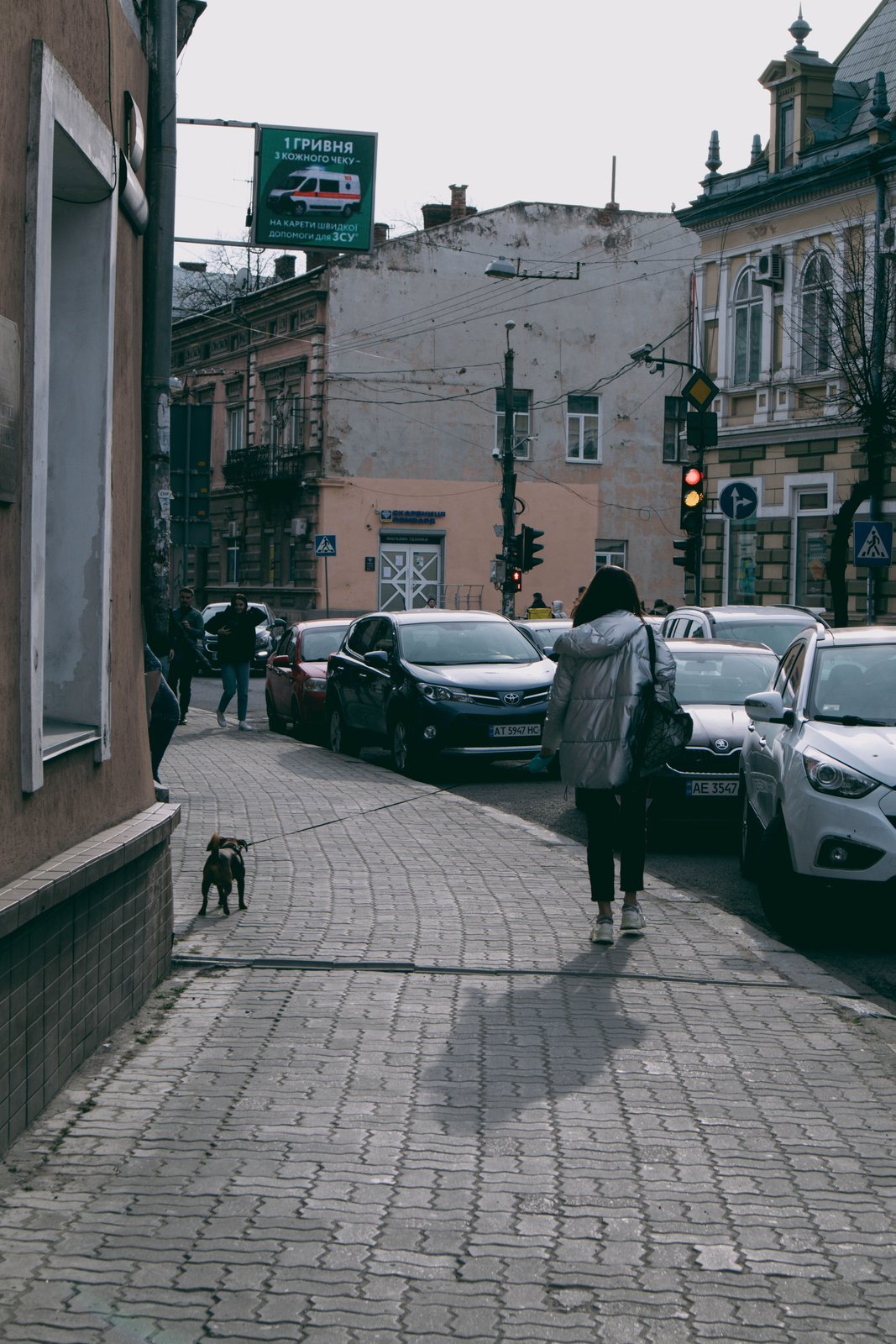
A country lane often gives you a verge. A city pavement often does not. The rider may be quicker than a pedestrian, and a modern e-scooter or a well-maintained bike can approach with very little sound, especially from behind. Wheels sit at about dog-eye height. On a narrow sidewalk, or on the strip beside a marked bike lane, there may be no honest place to step aside without walking into a doorway, a stoop, or the curb.
That combination is enough to startle many dogs who are otherwise pleasant on a quiet block. The dog is not being difficult for the sake of it. A fast shape, a whir, and a tight space can look like something to chase, to warn off, or to get away from. You may see a freeze, a hard stare, a lean into the leash, a bark, or a lunge. Some dogs recover as soon as the wheels are gone. Others stay amped for the rest of the block.
Watch the early signs as carefully as the lunge itself. A closed mouth, a still tail, the white of the eye, or a sudden stop in sniffing can be the moment you still have a choice. Signs your dog is stressed can help you read those smaller changes so you are not waiting for the full dart.
Management first: more distance, a doorway, and a slightly shorter leash
Training is slower when every walk is a surprise at close range. Management is what you do this afternoon so the dog does not keep practicing the lunge.
Start with distance. If you can see or hear a rider early, move to the building side of the pavement, step into a recessed doorway, or pause on a stoop or a front step until the wheels have gone by. A doorway is not a punishment. It is a legal place to stand when the sidewalk is too thin. Face your dog if that helps them look at you instead of tracking the rider, and keep the leash from sweeping into the path.
On the worst blocks, shorten the leash a little so a sudden dart cannot reach the wheels or tangle a rider. This should feel like a tidier hold, not a fight and not a constant tight correction. If the leash is already tight because the dog is pulling toward every smell, you will have no spare slack to use when a bike appears. Everyday slack-leash work belongs in its own plan; this article will not rewrite that skill. A well-fitted harness can make a brief shorter hold more comfortable than a collar pop. If you are still choosing fit, best dog harnesses for pullers is the place for that decision, and best dog leashes for city walks covers everyday lead choices. A hands-free leash can be convenient on a quiet path, but it is a poor match for a narrow sidewalk where you may need both hands and a quicker gather when wheels appear. Do not use a long line next to a bike lane. A trailing lead is a trip hazard for a rider and a tangle for you.
If your dog is already over threshold – barking, lunging, or unable to take food – change the route rather than drilling through it. A quieter side street, a slightly earlier or later walk, or a block with fewer delivery riders is management, not failure. How often you should walk your dog can help you split toilet trips from the walks you use for practice, so you are not asking a full neighborhood loop from a dog who is already over the line.
Do not step into a bike lane to practice. Do not plant yourself in a rider’s path and hope the dog will get used to it. The goal is a safer pass for both of you and for the person on the wheels.
Notice the wheels early, then mark and pay for looking at you
Once management is giving you a little space, you can teach a better job than lunging. The job is simple: notice the bike or scooter early, then look at you, and get paid for that look.
Start by scanning farther ahead than you usually do. A rider two or three buildings away is useful. A rider at your elbow is already late. The moment you see or hear wheels, get your dog’s attention with a cheerful “watch me,” their name, or a kissy sound you already use, and mark the instant they glance at you. Pay right there with a small, easy-to-eat treat. If they offer a sit, you can pay that too, especially in a doorway or on a stoop where standing still is safer than drifting back into the path.
If they cannot look at you, you asked from too close or the dog is already over threshold. Increase distance and try again. Do not wait for the lunge and then correct it. The payment should land on the look, or even on a softer body, before the dart. A late “no” usually arrives after the dog has already practiced the habit you wanted to change.
Keep sessions short. A few clean passes on one block are worth more than a long walk full of rehearsed lunges. End while the dog can still think. You can return to ordinary sniffing once the wheels have gone and the leash feels ordinary again.
Practice with distant, predictable passing, not a surprise at two feet
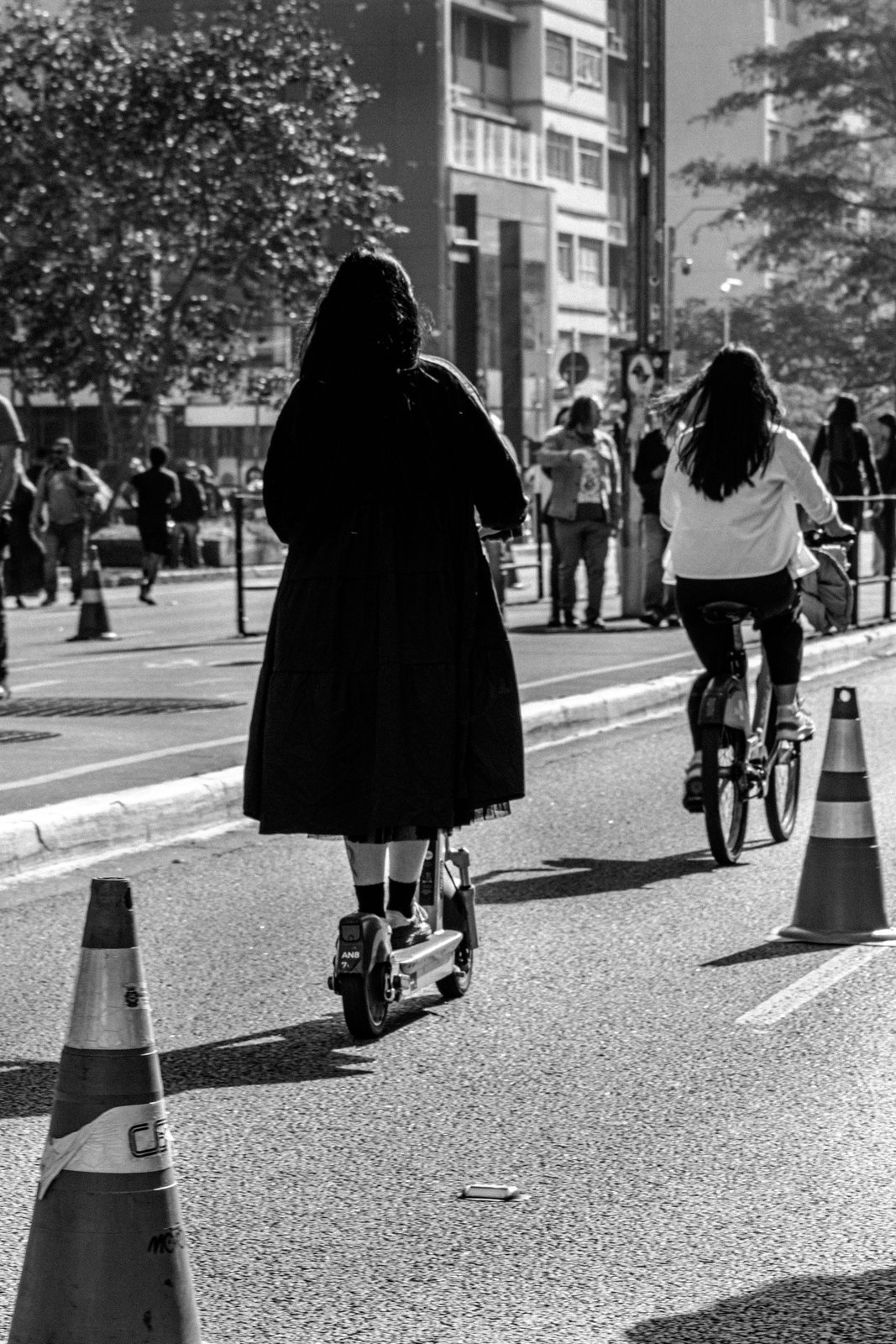
The hardest practice is a silent e-scooter that appears at two feet on a crowded pavement. The useful practice is a rider you can see early, at a distance your dog can still notice and look back to you.
If you have a friend who can bike or scoot past on a wide, quiet street, start with a long gap and several uneventful passes. Stay on the sidewalk or a generous verge. Do not use the bike lane as a training lane, and do not let a loose or long leash drift where a wheel could catch it. If you do not have a helper, use real streets that already have predictable, slower passing: a wide path where you can step well aside, a quieter hour, or a corner where you can see traffic before it reaches you. Repeat the same look-and-pay pattern until it feels ordinary, then slightly reduce the distance over many sessions, not in one weekend.
Weather and light change the problem. Walking a dog at night in the city can make a dark, quiet approach even harder to notice. Walking in the rain can hide sound and shrink the already thin pavement. Hot-weather walks and cold-weather walks can leave a dog less patient, more startled, or simply less able to work. On those days, lean harder on management: more distance, shorter outings, and a route with fewer wheels, rather than treating the walk as a formal training session.
Other tight city moments are not the same skill. Taking a dog on public transit is about platforms, doors, and close human traffic, not a sidewalk pass. Stopping a dog from door dashing in an apartment is the surge through the front door, not the lunge at wheels once you are already outside. Recall in a city park is an off-leash come-when-called problem. Keep those jobs in their own plans so this one stays clear: a calmer response when wheels go by.
When this is more than a sidewalk habit
Most dogs who stiffen or bark at bikes are still a management-and-training project. Some are not. If your dog has already made contact with a rider, has torn clothing or skin, or has bitten, stop treating this as a casual homework plan and speak with a qualified professional, and with a veterinarian if there was an injury. If the dog panics, shuts down, or gets worse as you add practice, you also need in-person help. Online general advice cannot replace someone who can see the timing, the leash, and the real street.
This guide will not promise a date by which the dog will ignore bikes. Progress looks like earlier notices, more looks at you, fewer lunges, and walks you can take without dreading a certain corner. That can take many careful repetitions. If something about the dog’s movement, hearing, or sudden new reactivity looks painful or unwell, contact your veterinarian rather than adding a harsher tool.
A calm plan you can repeat
Use this as a starting draft, then adjust to your streets:
- Scan early for bikes, e-scooters, skateboards, and delivery riders, especially from behind.
- When you need space, step into a doorway or stoop, or move to the building side of the pavement, and keep the leash out of the rider’s path.
- On the worst blocks, hold a slightly shorter leash without turning the walk into a fight. Skip long lines next to a bike lane.
- Mark and pay your dog for looking at you as the wheels pass, starting at a distance they can handle.
- Practice with distant, predictable passing. Do not drill a surprise at two feet, and do not practice in a bike lane.
- Change to a quieter side street when the dog is already over threshold.
- Get qualified in-person help if there has been a bite, or if panic is getting worse.
A city walk can still include sniffing, toilet stops, and ordinary slack on quieter stretches. The aim is not a dog who never notices wheels. It is a dog who can notice them, look back to you, and let the rider go by on a pavement that was never designed for a lunge.
FAQ
Why does my dog lunge at bikes and scooters on a sidewalk but seem fine in the park?
A narrow city pavement often gives the dog almost no room to move away, and the wheels can appear quickly, quietly, and at eye height. A park usually offers more distance and a clearer line of sight. The sidewalk problem is often about space and surprise, not a dog who only misbehaves in town.
Should I shorten the leash on every city block?
Not as a constant tight hold. Use a slightly shorter leash on the worst stretches, where riders come close and a dart could reach a wheel or trip someone. On quieter blocks, a more ordinary length is kinder and still lets you gather the lead when you see wheels early. A long line next to a bike lane is a trip hazard.
Can I practice by standing in a bike lane so my dog gets used to riders?
No. Do not practice in a bike lane, and do not block a rider’s path. Use a sidewalk, a doorway, a stoop, or a wide, quiet street where you can keep real distance. A helper who passes at a generous range is useful. A surprise at two feet is not.
How long will it take before my dog stops lunging?
There is no honest week-by-week guarantee. Some dogs improve after many calm, distant passes; others need more management and professional help. Look for earlier notices and more looks at you, not a promise that the habit will vanish on a set timetable.
What if my dog has already bitten a rider, or gets worse with practice?
That is beyond a general sidewalk plan. Speak with a qualified professional who can assess the dog in person, and contact a veterinarian if anyone was injured. Do not use a shock, prong, or citronella collar, or leftover medication, in place of that help.
[…] and do not reach for leftover medication. This article is about the reaction to another dog. Lunging at bikes and scooters is a different problem, aimed at moving wheels rather than another animal. Loose-leash walking on […]