

If you hope to stop a cat from meowing excessively, start by looking at the pattern, not by trying to win an argument at the kitchen or the front door. Frequent or loud meowing at any hour can wear a small home down, including the people who share a wall. Some cats have always been talkative. A sudden change in how often, how loud, or how the voice sounds is a different problem, and it should not be treated as a training plan until a veterinarian has ruled out a medical cause.
Say this first, before any advice about play or puzzles. A new, hoarse, or suddenly much louder meow, or meowing paired with straining in the litter box, vomiting, hiding, drinking more, or a change in appetite, is a veterinary question. This is general information for cat parents in the US and UK, not a veterinary diagnosis, and not a promise that a chatty cat will go quiet after a set number of days. Do not invent a supplement, a special diet, or a label such as hyperthyroidism, pain, a urinary problem, or cognitive decline from the other side of a wall. Take those signs to a veterinarian.
Request meows versus a change in pattern

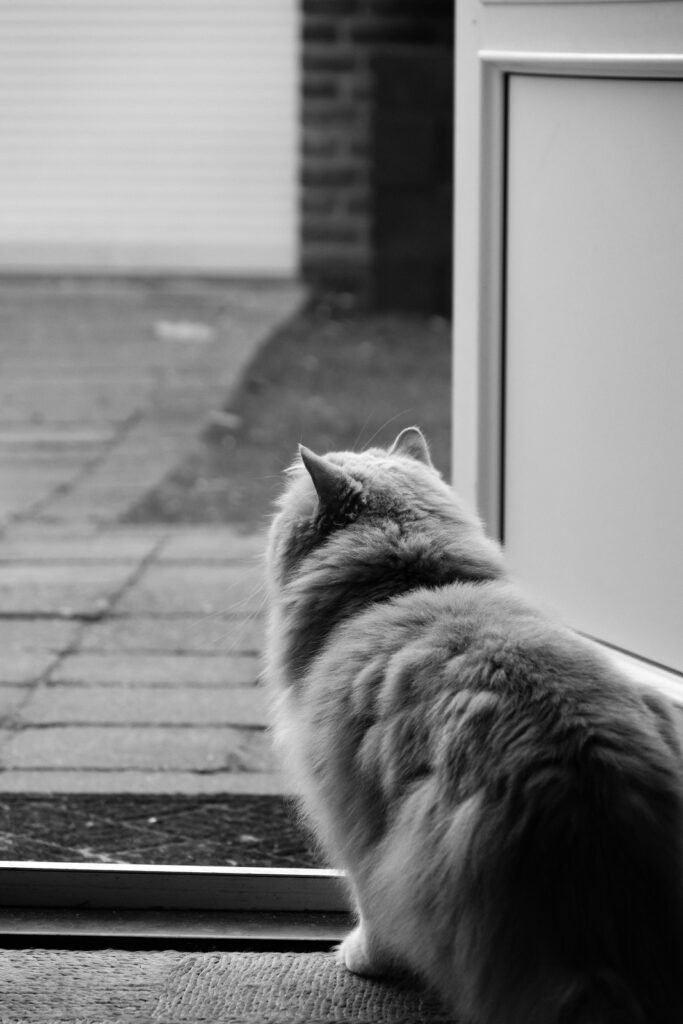
A request meow is often tied to a place and a payoff. The cat stands by the kitchen and is fed, or stands by the front door and is picked up, let onto a landing, or given a fussed-over greeting. The sound can be frequent and loud in a small home, and it can wear you down, but the pattern is usually familiar: same spot, same time of day, same thing the cat is asking for.
A change in pattern looks less tidy. The voice is new, hoarse, or much louder than usual. The meowing happens at odd times, lasts longer than the old request, or comes with other changes in eating, drinking, litter box use, or where the cat chooses to rest. Neighbors may notice it through a thin wall even if you have heard this cat talk for years, because the quality of the sound has shifted. When that happens, book a veterinary visit first. Training advice cannot sort out a medical problem, and waiting to “see if it settles” can waste useful time.
Look at the whole cat, not only the sound. An open mouth in a photo can be a yawn. A long meow in the hallway can be a request, a greeting, or a sign that something else is wrong. If you are also seeing hiding, clinginess, or a cat who no longer uses favorite resting spots, broader welfare patterns are covered in signs your cat is stressed. A shy cat who calls from a hiding place when the flat feels too busy may need a safer layout first, which we unpack in helping a shy cat feel safe in an apartment.
Do not accidentally reward demand meowing at the kitchen or the door
In a small kitchen or a short hallway, it is easy to teach the very cycle you want to fade. The cat meows at the bowl, you put food down to buy a little quiet, and the next meow arrives sooner. The cat meows at the front door, you open it, pick the cat up, or start a long conversation, and the doorway becomes a stage.
A calmer plan is to meet real needs on a schedule you can repeat, then make the meow itself a poor way to rush you. Feed meals at fairly consistent times, with portions that fit the cat, rather than topping up the bowl every time you hear a voice. For the amount itself, see how much you should feed a cat. If the cat is asking at the door, wait for a pause, then quietly move the cat away from the threshold with a toy or a chance to sit somewhere else, instead of opening the door on the loudest note.
This is not the same problem as a cat who wakes you at 3 a.m. by calling at the bedroom door. That overnight pattern has its own plan in how to stop a cat from waking you at night. This article is frequent or loud meowing at any hour, including toward the hallway, the kitchen, or a closed door during the day and evening.
Do not use a spray bottle, a citronella spray, or a shock device to punish the sound. Those tools can make a cat more anxious, can damage trust, and can turn a request into fearful calling. Walking away from a demand meow, after you have already met the cat’s needs, is kinder than startling the cat into silence.
Offer play and food puzzles, then a quieter evening wind-down

Many request meows get louder when the day has been short on hunting-style play and on work that involves the mouth and paws. A small flat does not give a cat a garden to patrol, so you have to build that work indoors. Two or three short play sessions, especially a burst in the late afternoon or early evening, can take the edge off the dinner-time chorus by the kitchen.
A wand toy is one of the simplest tools for that burst of chase and pounce. How to choose and use one is covered in wand toys for indoor cats. Keep the session short enough that you will actually repeat it, then end with a catch the cat can “win” and a little food or a meal so the sequence feels finished. A fuller daily rhythm, including timing around work and sleep, belongs in a daily play routine for an indoor cat, and wider ideas for making a small home more interesting are in indoor cat enrichment ideas.
Food puzzles can fill the gaps between those sessions, especially when you are in another room or when the cat’s meow at the kitchen is really a request to forage. Puzzle feeders and similar tools are covered in puzzle feeders for cats. Use a puzzle the cat already understands, start easy, and do not treat a feeder as a way to skip meals or to “fix” a medical appetite change. If the cat is home alone for a workday, keeping the flat from going quiet and empty of activity is a separate planning job, unpacked in keeping an indoor cat busy while you are at work.
Guests can also set off a wave of calling, hiding, or both. That visit-day plan is in helping a cat stay calm when guests visit, and it should not replace the everyday meal-and-play rhythm in this article.
Be a good neighbor when walls are thin
Thin walls, shared hallways, and a quiet building after supper change the cost of a loud voice. You cannot promise a neighbor that the cat will go silent, and you should not pretend a training plan works on a deadline. What you can do is keep the evening predictable, move play away from a shared wall when you can, and avoid a late, noisy game that leaves the cat wound up when the building has gone still.
A quieter wind-down helps more than one last burst of excitement at bedtime. After the last play session and meal, dim the fuss: fewer sudden games, a familiar resting place, and less traffic in and out of the front door. If you must leave or come home during a quiet period, do it calmly so the hallway does not become a stage. If a neighbor has already mentioned the noise, a brief, honest update that you are checking health first and adjusting the daily rhythm is more useful than a guarantee. You do not need to share private medical details; you only need to show that you are taking the noise seriously and that you are not using punishment to chase a quick silence.
If the cat is calling toward the front door because the hallway is interesting, resist opening the door “just to show them.” That turns a shared corridor into a reward. Close the loop inside the flat with play, a puzzle, or a resting spot, and keep greetings at the threshold short and dull.
When meowing is a veterinary question, not a training plan

Repeat the health line whenever the sound itself changes. A new, hoarse, or suddenly much louder meow is a reason to call the clinic, even if the cat still eats and still uses the box. Meowing paired with straining in the litter box, vomiting, hiding, drinking more, or a change in appetite is a reason to go sooner, not to add a new toy and wait.
A veterinarian may need to examine the cat, ask about the timeline, and decide what, if anything, to test. That process is theirs. Your job at home is to describe the pattern clearly: when it started, whether the voice changed, where the cat stands to call, and what else shifted. Do not start a punishment plan on the way to the appointment, and do not add an over-the-counter product marketed to “calm” a cat without veterinary advice.
If the veterinary exam does not find a medical cause, you can then return to the request-and-rhythm plan in this article, or ask the clinic to refer you to a qualified behavior professional if the calling is intense, distressing, or paired with other difficult behavior. That is still not a promise of a quiet week.
A calm starting plan you can repeat
You can keep the first changes small and observable.
- Rule out a medical change first. If the meow is new, hoarse, suddenly louder, or paired with other health changes, call the veterinarian before you change the training plan.
- Map the request. Notice whether the loudest meows happen at the kitchen, the front door, or another closed door, and what you usually do next.
- Meet needs on a schedule. Keep meals consistent, add short play sessions, and use a food puzzle the cat already understands.
- Wait for a pause. After needs are met, do not open the door or put food down on the loudest note. Reward a quieter moment instead.
- Wind the evening down. End with play and a meal, then keep the last hour of the night calmer, especially when walls are thin.
- Skip punishment. No spray bottles, citronella, or shock, and no invented deadline for silence.
A talkative cat may always have a voice, and that is not a failure of the plan. The useful goal is fewer frantic request loops, a faster call to the vet when the pattern changes, and a home that is easier on you and on the people who share the wall. That is a quieter plan, not a guarantee.
FAQ
My cat has always been talkative. Is that still a problem?
A long-standing, familiar request meow at a usual time and place is often a habit you can work on with meals, play, and by not rushing to the loudest call. A new, hoarse, or suddenly much louder voice, or meowing with other health changes, is a veterinary question first, even if the cat has always liked to talk.
Will my cat stop meowing after a week of this plan?
No. There is no honest timeline like that. Some request meows fade when the daily rhythm is more predictable and the meow stops being the fastest way to get food or a door. Some cats stay vocal. A sudden change in the sound itself is not something to wait a week to judge.
Can I use a spray bottle, citronella, or a shock device to stop the meowing?
No. Never use punishment, spray bottles, citronella, or shock to stop meowing. Those tools can increase fear and can make the calling worse. Meet the cat’s needs, then wait for a quieter pause rather than startling the cat into silence.
What if most of the meowing happens at 3 a.m. at the bedroom door?
Overnight waking at the bedroom door is a different pattern, with its own plan, than frequent or loud meowing at the kitchen, the front door, or a hallway at other hours. Use the night-waking guide for that specific problem, and still call a veterinarian if the voice itself has changed or other health signs have appeared.
When should I see a veterinarian instead of changing the routine?
See a veterinarian first if the meow is new, hoarse, or suddenly much louder, or if meowing comes with straining in the litter box, vomiting, hiding, drinking more, or a change in appetite. Those signs are not a training puzzle, and this article is not a diagnosis.
[…] meowing was already a habit, those plans live in how to stop a cat from waking you at night and how to stop a cat from meowing excessively. Use them as longer-term reads, not as something to overhaul at midnight after a […]