

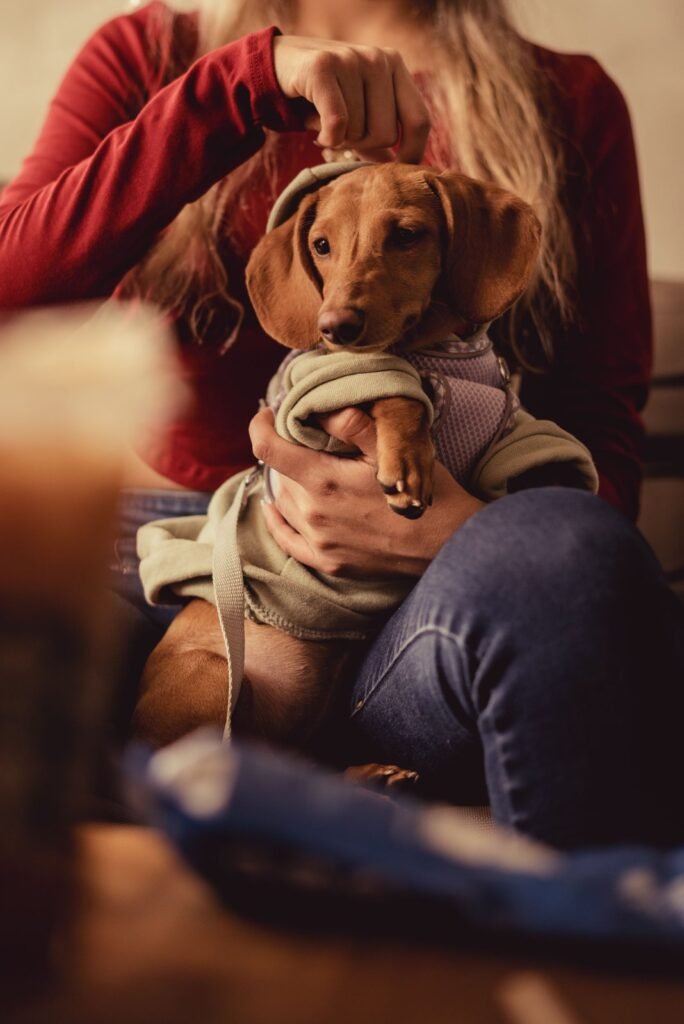
If you need to help a dog get used to a winter coat and booties, treat the work as an indoor skill, not as something you improvise at the curb. Many dogs freeze, shake the garment off, or try to walk out of sleeves and paw coverings the first time the gear appears in a hallway. Forcing all four booties on while you are already late makes the next attempt harder. A better plan is a series of short indoor sessions: let the dog sniff the gear with food, wear the coat for a few seconds, add one bootie at a time, check the fit, practice standing and a few indoor steps, and only then take a short outdoor loop.
This is general household advice for dog parents in the US and UK, not a veterinary diagnosis, and not a promise that the dog will enjoy getting dressed. A good result is simple: the dog can wear the coat, and eventually the booties, for a short winter walk without a shutdown. Do not pin the dog in a hallway, leave a tight coat on unsupervised, or treat a costume as a training plan. If the dog limps, has raw skin or swollen paws, or suddenly cannot bear weight, stop and call a qualified professional. Do not push through a sore paw with more bootie practice.
Why indoor practice is its own skill
Choosing a coat and choosing a set of booties are shopping jobs, and they are already covered in guides to dog coats for cold weather walks and dog booties for city walks. This article assumes you already have gear that is close to the right size. The skill here is getting the dog comfortable enough to wear that gear without a wrestle.
A winter walk itself is a different skill again. How long to stay out, how to read wind and wet pavement, and when to turn back belong in a plan for walking a dog in cold weather. Rain gear is also a separate product and a separate routine; a raincoat does not replace this indoor practice, and a coat-and-booties plan does not replace advice on walking a dog in the rain or dog raincoats for city walks. Keep those topics in their own lanes. Your job today is the few minutes before you even open the door.
In a small flat, that work happens in a hall or just inside the front door, where a scuffle is easy to hear. Short sessions are kinder than one long fight.
Start with sniffing, then a few seconds in the coat
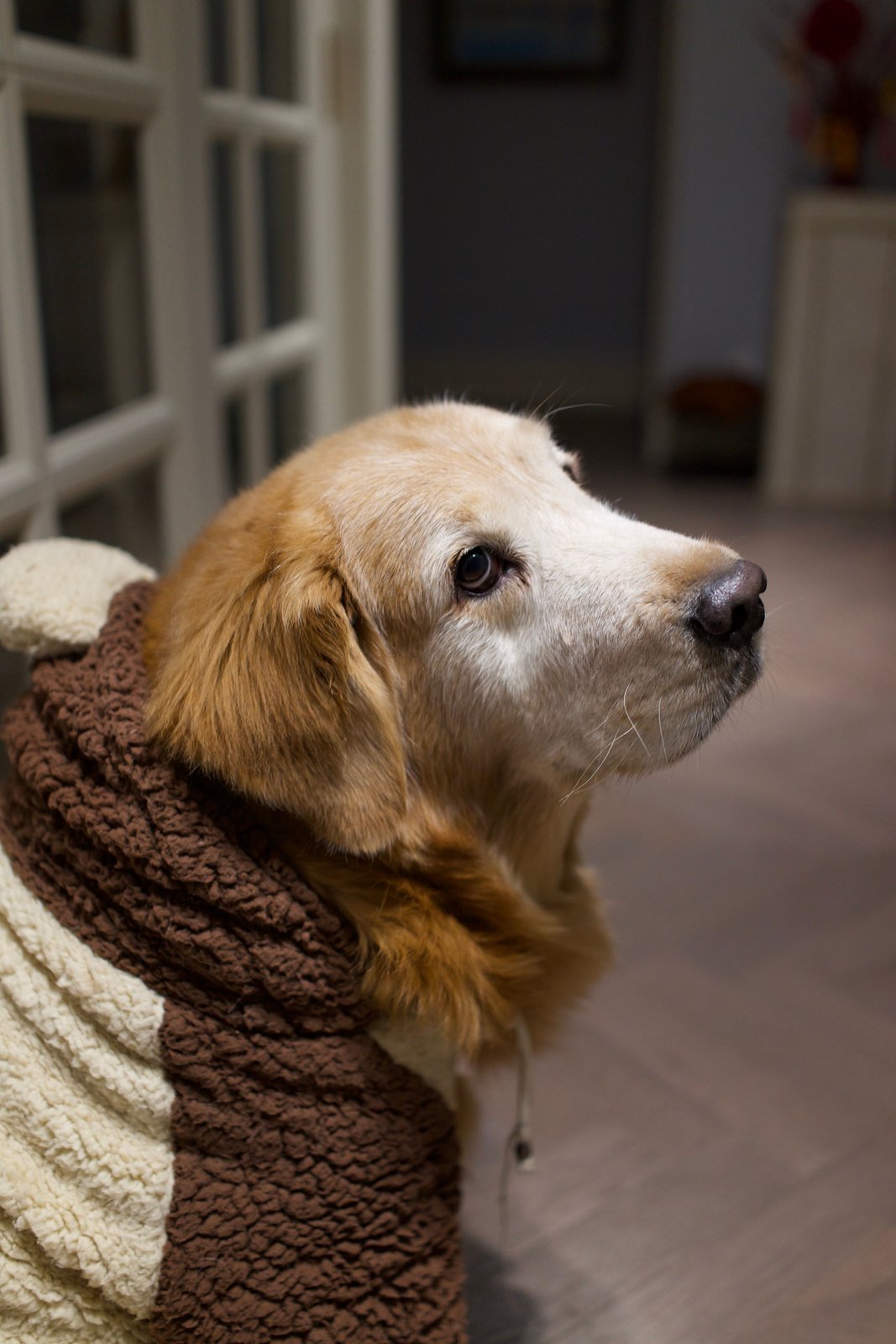
Bring the coat and the booties out when the dog is already fairly calm, not at the exact moment you need to leave. Sit on the floor or on a low stool so you are not leaning over the dog. Let the dog sniff the fabric. Feed a few ordinary treats for looking at the gear, then for standing near it, then for letting the coat touch the back.
Put the coat on for only a few seconds the first time. Fasten it loosely enough that you can slide two fingers under the chest and under each armpit. Unfasten it, take it off, and feed again. End the session while the dog can still take food and has not tried to back out of the sleeves. You can add a few more seconds at the next session, then a short stand, then a few indoor steps. Check fit every time you put the coat on, not only on the day you bought it. Nothing should rub the armpits raw, press into the throat, or cut circulation at the legs. If the dog hunches, keeps lifting a front leg, or tries to chew at a seam, take the coat off and look at the skin. A tight coat should not be left on when you are not watching, even for a short indoor test. If you need to answer the door or step into another room, take the coat off first.
Add booties one at a time
Booties are usually harder than a coat because they change how the paws feel on the floor. Do not start with all four. Pick up one paw, slip the bootie on, fasten it so it stays on without spinning, feed, and take it off. Repeat on a later pass, then try two paws in the same session only if the dog is still taking food and can stand.
Watch the feet. A bootie that twists under the pad, bunches at the dewclaw, or leaves a tight ring around the leg is a fit problem, not a training problem. Take it off and adjust or change the size. The bootie should stay on for a short walk without spinning, but it should not squeeze the paw. If a toenail is catching in fabric, fix that before you ask for steps.
Once one or two booties can stay on for a minute, ask for a stand, then two or three steps on a rug or a yoga mat, where the floor is less slick than bare tile. Indoor steps tell you whether the dog can walk in the gear at all. If the dog pads along, even slowly, you are ready to add the remaining booties in later sessions. If the dog refuses to move, freeze, or tries to remove the booties with its mouth, go back to one bootie and a shorter stand. Do not drag the dog down the hall to “get it over with.”
Check the paws, then practice standing and indoor steps
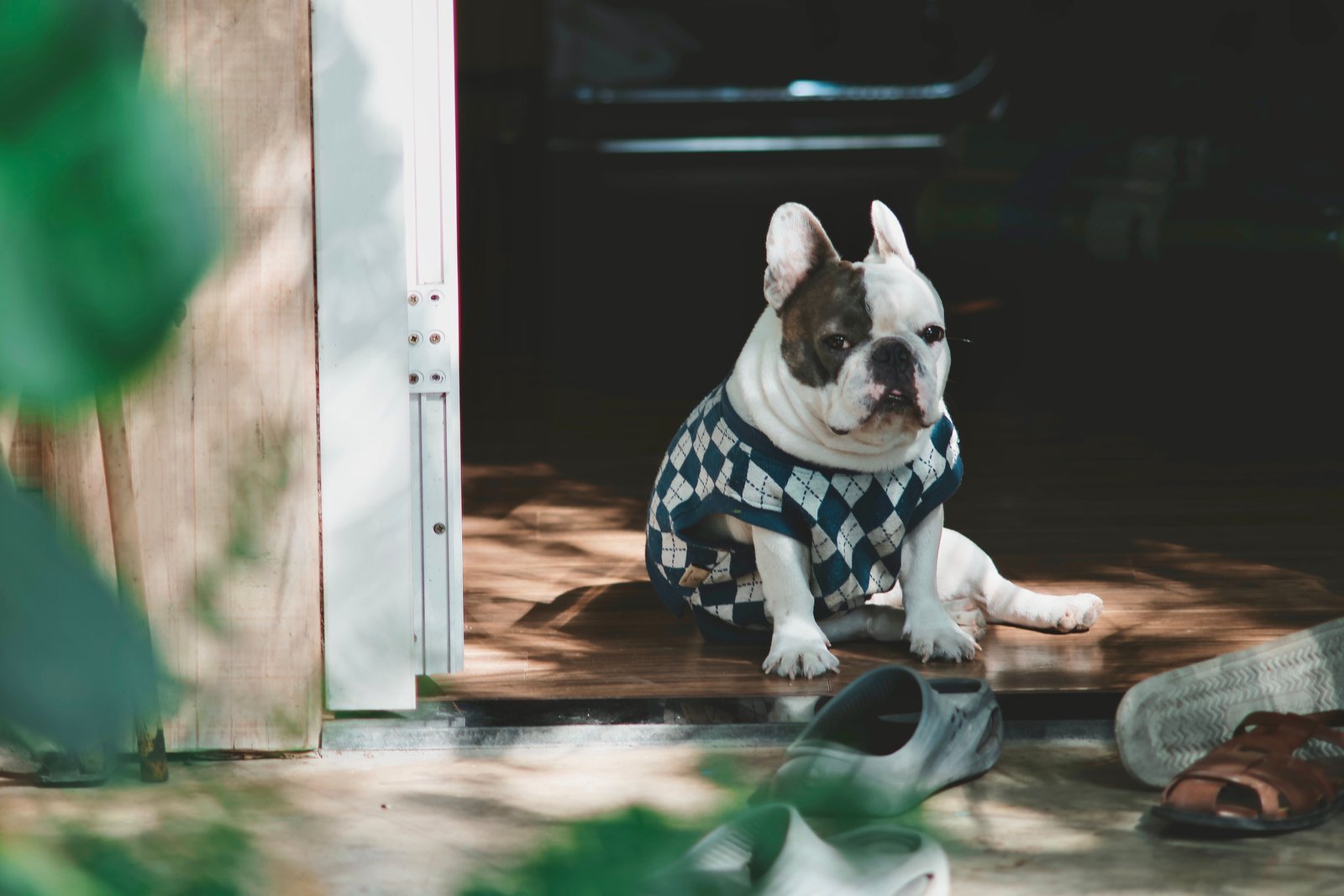
Before you add more time in booties, look at the paws themselves. City paw care is a separate routine for salt, cracks, and after-walk checks, and this article will not rewrite it. You still need a quick look before practice: no raw pads, no swelling between the toes, and no cut that will be rubbed by a bootie. If you already know a paw is sore, skip the bootie work and call a professional instead.
A useful indoor sequence is simple: coat on, one or two booties on, a stand for a few seconds, a few steps, then all the gear off and a little food. You can do this once or twice a day for a minute or two. In a studio, a path from the mat to the door is enough.
If the dog lies down and will not stand, take the gear off and go back to sniffing and a brief coat-only stand at the next session. If the dog stands but walks with a sudden limp, stop. A limp, raw skin, a swollen paw, or a dog that suddenly cannot bear weight is a reason to call a professional, not a cue to add more practice.
Build a calm on-and-off routine at the door
The walk should not start with a wrestle in the doorway. Once the dog can wear the coat and, later, the booties for a few indoor steps, practice the same sequence at the door: gear on, a short stand, the lead attached, a pause, then the door. If the dog starts to fuss, take the gear off, step away from the door, and try a shorter version later. The door is a cue for leaving, so it is a poor place to introduce brand-new gear for the first time.
A short settle before you dress the dog can help, but only if the dog already has a settle you can use. A full plan for teaching a dog to settle in a small apartment is a different project. Here you only need the dog to stand or sit long enough for you to put the coat on without a chase.
Keep the lead, keys, and treats in the same place so you are not rummaging while the dog is half dressed. If you live in a walk-up, put the gear on inside the flat, not in a shared hall. Take the coat off when you come back in. A tight coat is not a house sweater, and it should not stay on unsupervised.
The first short outdoor loop
When indoor steps look ordinary, keep the first outdoor loop short. The goal is to come home with the coat still on and the booties still in place, not to complete your usual route. How often you walk, and how long a winter outing should be, still belongs in your ordinary plan for how often you should walk your dog. This first loop is a test of the gear, not a replacement for that plan.
If you usually walk after dark in winter, the lighting and visibility questions live in walking a dog at night in the city. Do not add night traffic, new gear, and a long route on the same first outing. A short daylight loop around the block is enough.
Watch the same fit points outside that you watched inside. A bootie that stayed put on a rug can slip on wet pavement. If one spins, stop and fix it or take it off and go home. If the dog suddenly lifts a paw, refuses to walk, or tries to sit and chew at a bootie, end the outing. After you get in, take the gear off, look at the paws and the armpits, and dry the dog if the walk was wet, using your ordinary routine for drying a dog after a rainy or muddy walk. That drying routine is its own job. This article will not turn into a bath or towel guide.
A short outing in a coat and booties is the end of this process, not a product test, and not proof that every dog will walk that way on the first try.
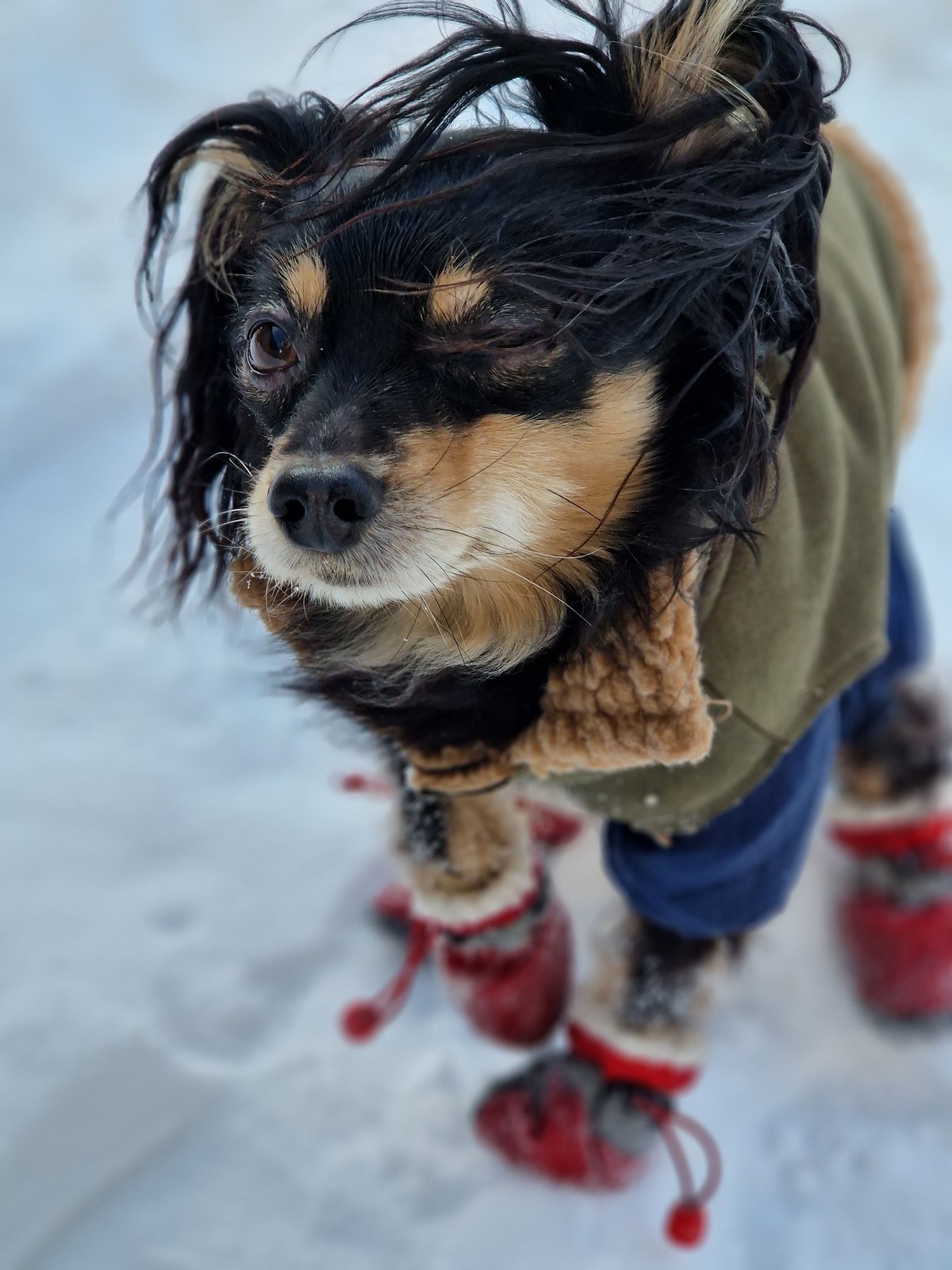
What not to do, and when to stop
Do not pin the dog against a wall or hold the muzzle shut to get the last bootie on. Do not leave a tight coat on while you go out or while the dog naps unattended. Do not use a costume, a party outfit, or a tight wrap as a stand-in for this plan. Those things are not a training method, and they do not prove the dog will accept a winter coat.
Do not invent calming products, oils, or a promise that the dog will love boots. Some dogs will only tolerate the gear for a short walk, and that is enough. Some dogs will do better with a coat and no booties, or with booties only on the worst days. That is still a useful result.
Stop and call a qualified professional if you see limping, raw skin, swollen paws, or a dog that suddenly cannot bear weight. Those signs are a health or pain question. More indoor practice will not fix a sore paw, and walking anyway can make it worse.
If the sessions stay short, the fit stays comfortable, and you wait for indoor steps before the first outdoor loop, most dogs can learn to wear the gear long enough for a winter walk. You need a dog that can get down the steps and back home without a shutdown, not a dog that poses in the hallway.
FAQ
How long should the first indoor session last?
Keep it to a minute or two. Let the dog sniff the gear, put the coat on for a few seconds, take it off, and stop while the dog will still take food. You can add a short stand or one bootie at a later session.
Do I have to use all four booties from the start?
No. Start with one bootie, then two, and only add the rest when the dog can stand and take a few indoor steps. A spinning or tight bootie should come off and be refitted before you ask for more time.
What if my dog freezes and will not walk in the booties?
Take the booties off, go back to a coat-only stand, and try one bootie again on a later day. Do not drag the dog down the hall. If the freeze comes with a limp, raw skin, or a swollen paw, stop and call a qualified professional.
Can I leave the coat on around the apartment so the dog gets used to it?
Not if the coat is tight or you will not be watching. A short supervised stand is useful. Leaving a tight coat on unsupervised, or treating it as all-day clothing, is not part of this plan.
When is this a reason to call a veterinarian or trainer?
Call a veterinarian if the dog limps, has raw or swollen paws, or suddenly cannot bear weight. Call a qualified trainer or behavior professional if the dog panics, tries to bite when you reach for a paw, or cannot get through a short sniffing session without shutting down.