


If you need to help a dog share an apartment with a roommate, plan for everyday life together, not for a twenty-minute visit. A roommate has their own schedule, food, door habits, and quiet hours. They are in the kitchen at breakfast, coming through the shared entry with bags, taking calls in the only living room, and going to bed on the other side of a thin wall. That is a different job from a guest who rings the bell and leaves.
This is general household advice for dog parents in the US and UK, not a veterinary diagnosis and not a promise that the dog will be perfectly behaved in a week. A good result is simple: the dog can settle when the roommate is home, and both people can come and go without a scramble at the door. Do not ask the roommate to become a trainer. If the dog suddenly guards food or a doorway, snaps, or bites, treat that as a safety issue and get help from a qualified professional. Do not invent a calm supplement, and do not treat a tense standoff as a roommate skills problem.
Why a roommate is different from a guest
A new dog arriving in your home is one kind of change, and that plan lives in our guide on introducing a new dog to an apartment. A dog who is still settling after a move has a broader job, covered in helping a dog adjust to a new apartment. Sharing the same small home with another adult is narrower than either of those. The second person will open the door every day, cook at odd hours, and walk through the dog’s favorite rest path to get to the bathroom.
Guest skills still matter, but they are not the whole plan. If the dog jumps on people at the door, use how to stop a dog from jumping on guests for that habit, then still make a roommate-specific door routine. If the dog erupts when the bell rings, keeping a dog calm when the doorbell rings is the right extra read, because delivery people are not the same as a roommate using their own key. Hallways and elevators have their own plan in helping a dog stay calm in elevators and hallways. Maintenance visits are a third event; use keeping a dog calm during apartment maintenance visits when that is the actual problem.
Barking, settling, and being left alone are related, and they are not this article. A courtesy plan for quiet hours is below, but the longer barking habit belongs in how to stop a dog from barking in an apartment. Teaching a settle on a mat is in how to teach a dog to settle. Days when both people are out belong in how to leave a dog home alone. The roommate question is what happens when another person is home and trying to live their own life in the same few rooms.
Start with a slow, supervised introduction
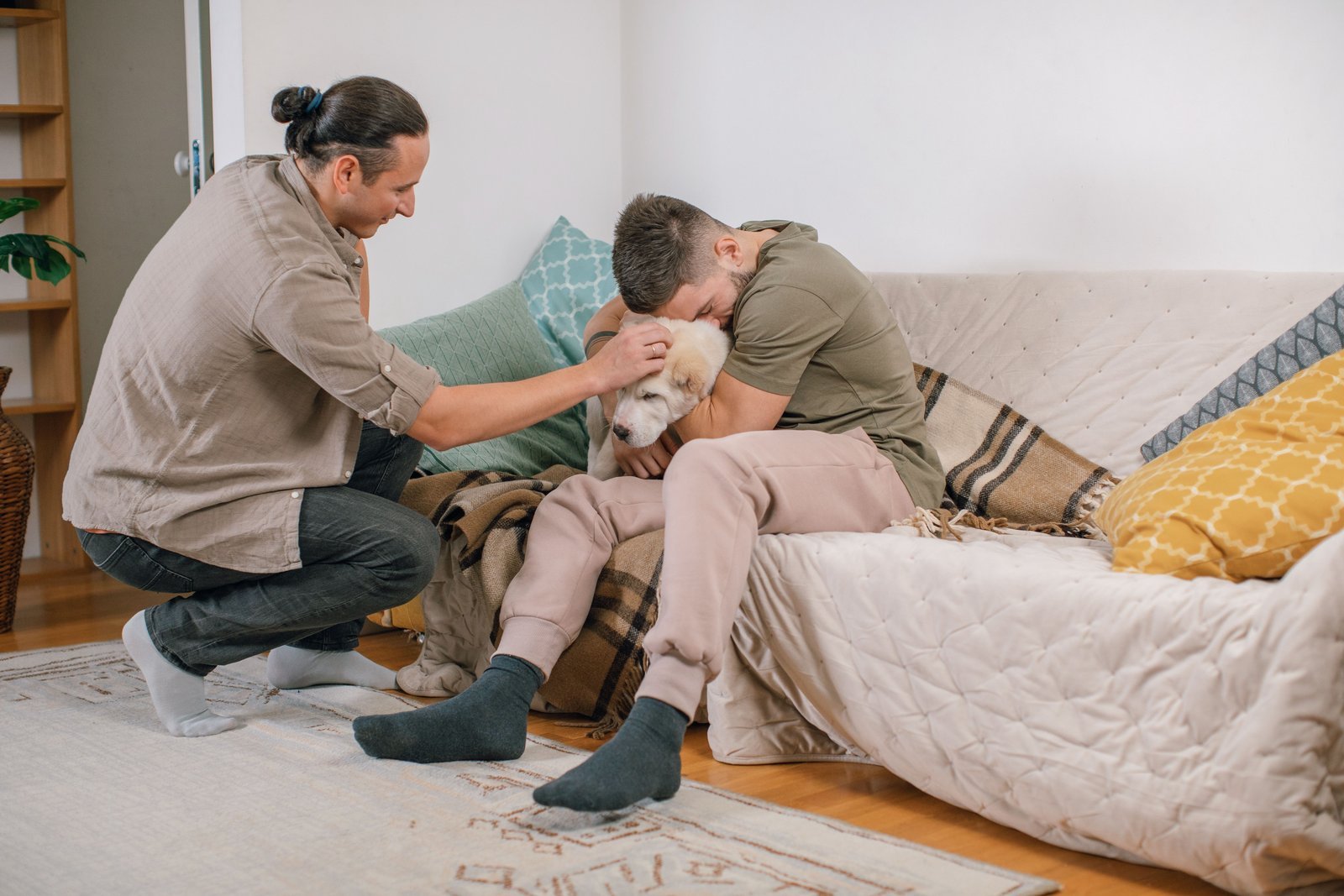
If the dog already lives in the apartment, the roommate is the new piece. If you are moving the dog into a shared flat, the rooms and routes are new as well. In either case, keep the first meetings short and boring. Let the dog see the roommate on a leash or with a light hold on the collar if needed, in a room with an exit path, and end the greeting before the dog gets fizzy or stiff. The roommate can stand or sit sideways, drop a treat on the floor, and avoid looming over the dog’s head.
Give the dog a rest spot they already like: the bed or crate they already use, a mat in a quiet corner, or a tucked place behind a chair. Do not invent a brand-new “roommate zone” in a busy hallway and expect the dog to love it on day one. If the dog walks away, let them. A forced sit-and-stay greeting is not a bonding exercise.
For the first several days, keep shared time in sight of the owner. The roommate can move around and sit on the sofa, but they should not be asked to “practice training” while you are in another room. If the dog is tense, shorten the session and add space. If the dog can lie down, that is enough progress.
Write down a few house rules so they are not improvised at 11 p.m. Who feeds the dog, who does the early walk, where the leash lives, and whether the dog is allowed on the roommate’s bed are easier to agree on before the first conflict. A short note on the fridge is enough.
Make a door and entry plan the roommate can follow
Most scrambles start at the door, not on the sofa. Decide how the dog is held, leashed, or asked to wait when someone comes in with groceries, and practice that plan when no one is in a rush. The roommate should be able to follow it without a second person always being there. If the dog bolts for the opening, that is door dashing, and it needs its own management: a leash already on, a baby gate, or a wait in another room until the door is closed.
In a walk-up, the first problem may be the shared stair, not the apartment door. In a building with an elevator, it may be a tight lift with neighbors. Use the same calm, short-leash habits you would in the elevator guide, and agree that the roommate can skip a hallway greeting if the dog is already over threshold.
Keep the entry itself boring. Keys, bags, and shoes go down before anyone invites a jump. If the dog already jumps, the jumping guide is the training plan; the roommate plan is simply to avoid rehearsing the jump at every homecoming. If one person wants an excited hello and the other wants a quiet entry, pick the quieter version for the first weeks.
Agree where the dog stays when someone works from home
A roommate on video calls in the only living room is not the same as leaving the dog home alone. The dog may want company, or they may bark at keyboard sounds or the roommate walking to the kettle. Give the dog a rest spot that is not under the desk and not in the work-room doorway. A bed in the bedroom, a mat just out of reach, or a closed door with a chew the dog already likes is often enough for a meeting block.
Do not ask the roommate to entertain the dog all day. That turns the work day into an attention slot and makes the evening harder. If the dog already has a settle skill, use it. If not, management comes first: a walk before the longest call, a legal chew, and a closed door if the dog cannot settle in the same room.
When both of you leave, switch to the home-alone plan. A dog who is fine with a roommate on the sofa can still struggle with an empty apartment. Be honest about what the dog can do for two hours, and do not use the roommate as a default sitter without asking.

Keep food and trash where the dog cannot self-serve
Shared kitchens fail when leftovers sit open on the counter and one person assumes the dog “knows better.” Put food away, close the trash, and agree that plates do not linger at dog height. If the dog already raids bins, use how to stop a dog from getting into trash for the setup, then make sure the roommate uses the same lid or cupboard.
Begging at the table is a separate habit, and how to stop a dog from begging at the table is the right guide if meals have already turned into a second feeding. In a shared flat, the extra problem is mixed rules: one person feeds from the plate and the other says no. Pick one rule and stick to it, including takeout on the sofa, and feed at agreed times.
If the dog guards a bowl, a chew, or a doorway to the kitchen, stop casual self-serve experiments and get professional help. That is not a “share better” issue. In the meantime, feed the dog in a quiet spot, pick up empty bowls, and do not let the roommate approach while the dog is eating if the dog is already stiff over the food.

Courtesy for early walks, barking, and thin walls
Write down the morning walk time, or at least a window, so the roommate is not woken by a jingling leash at 5:30 a.m. unless that was the deal. If you work late and the roommate works early, split the walks in a way that is repeatable, not renegotiated every night.
Barking through a thin wall is a courtesy problem and, if it is already a habit, a training problem. Use the barking guide for the habit. For courtesy, agree on a simple interrupt: bring the dog in from the window, start a short settle, or move them to a quieter room. Do not promise a silent dog. Do promise that you will get up and handle it.
Quiet hours should be specific. “Be considerate” is too vague for a studio or a one-bedroom. Decide when fetch ends, when the squeaky toy is put away, and whether the dog sleeps in a crate, on a bed, or in your room.
When it is a safety issue, and what good enough looks like
A roommate arrangement is going well when the dog can rest while the other person is home, the door routine is predictable, and food and trash are not a daily argument. It does not require the dog to love the roommate or sleep on their bed. Polite distance is a success.
If the dog stiffens, growls, snaps, or bites around food, a doorway, a sofa spot, or the roommate’s body, stop treating it as a personality clash. Keep the dog and the roommate apart, manage doors and meals, and contact a qualified trainer or behavior professional, and your veterinarian if the change was sudden. Do not use a “see if they work it out” week when teeth are already involved.
You cannot buy a guaranteed quiet, and you should not hand the roommate a product and call that a plan. What you can do is make the daily paths clear, keep the dog’s rest spot available, and take the training and safety jobs yourself.
FAQ
How do I introduce my dog to a new roommate?
Keep the first meetings short, supervised, and easy to end. Let the dog approach or leave, give them a rest spot they already like, and ask the roommate to be calm and sideways rather than leaning in for a hug. Repeat brief shared time over several days instead of one long “meet the family” night.
Where should the dog sleep in a shared apartment?
Use a rest spot the dog already likes, in a place that is not the main walkway and not on the roommate’s bed unless that was clearly agreed. A familiar bed, crate, or mat in your room or a quiet corner is enough. A brand-new bed in a busy hallway is a poor first choice.
What if my roommate works from home and the dog wants attention all day?
Give the dog a rest place outside the work zone, add a walk or a legal chew before the longest call block, and do not ask the roommate to be the daytime entertainer. If the dog cannot settle in the same room, use a closed door for meeting blocks. Days when the apartment is empty still need a separate home-alone plan.
Who should walk and feed the dog?
Agree on this in writing, even if it is only a note on the fridge. One clear feeding time and a morning walk window prevent most resentment. The owner should still own training and safety. The roommate can help with a routine walk or meal if they want to, but they should not be turned into a trainer.
When is a sharing problem actually a safety problem?
If the dog guards food, a chew, a doorway, or a person, or if there is a snap or a bite, stop casual introductions and get help from a qualified professional. Manage space in the meantime. That is not something to “work out” as a roommate issue, and it is not a sign that you only need a stricter house rule.