


If you want to stop a cat from scratching doors and doorframes, start with the door the cat is actually using, not with a scolding after the paint is already peeling. It is the bedroom door shredded at 5 a.m., the frame with strips of paint hanging off, or the bathroom door that has become a vertical scratch post.
This is general information for US and UK cat parents in flats and small homes, not a veterinary diagnosis. There is no honest promise that the scratching will stop in three days. Sudden new scratching, especially alongside hiding, changes in appetite, litter box trouble, or other new behavior, can be medical, so contact your veterinarian if the pattern appears quickly or the cat seems unwell. Do not use paint-damaging sprays, sticky traps that yank claws, or declawing. This article is about the door and the frame, including “let me in” scratching at a closed bedroom door. Stopping a cat from scratching furniture is a different job, aimed at sofas, chairs, and furniture corners. Stopping a cat from climbing curtains and window screens is about fabric and screens, not a painted frame. The broader 3 a.m. wake-up problem belongs in how to stop a cat from waking you at night, even when the door is part of the noise.
Why a small apartment makes the door an easy target
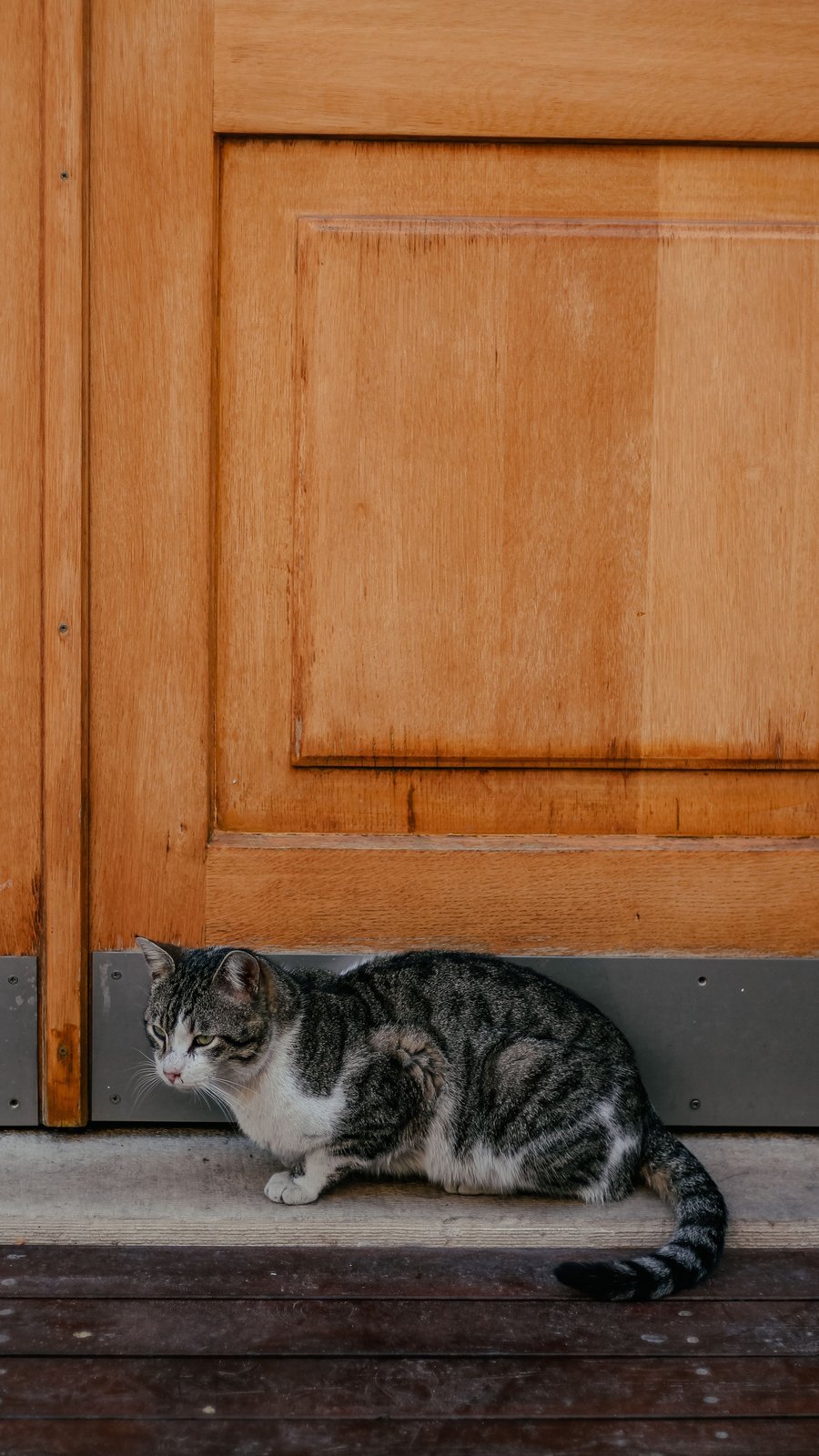
Hollow interior doors and painted frames are soft, vertical, and always in the way. A cat who wants to stretch claws, leave a scent mark, or get through a closed door does not need a sofa when a bedroom door is right there. In a small apartment the hallway is often too narrow for a full scratch post, and some leases limit what you can attach to walls. The same closed door that gives you sleep also sits between the cat and you, which can turn ordinary scratching into a loud, repeated request.
A new closed door can start the habit even if the rest of the flat was fine. A bathroom door shut for guests, a spare-room door that used to stay open, or a bedroom door closed for the first time after a move can all become targets. Under-stimulation does the same work in a quieter way: a cat who has had little play, little hunting-style activity, and a long gap since the last meal may arrive at the door already restless.
Look at the door itself. Is the damage at handle height, at the base, or along the frame? Base and frame scratches often mean stretching and claw care. Repeated, noisy work at a closed bedroom door, especially around dawn, often means “let me in” as much as it means “I need a scratcher.” Both can be true at once. If the cat also tries to slip through when the door opens, that dash is a different problem, covered in how to stop a cat from door dashing.
Look at the trigger before you buy more gear

Management works better when you know why that door is the target. Spend a couple of days noticing when the scratching happens, not only where the marks are.
Common patterns include:
- Overnight shut-out, with the loudest work in the early morning at the bedroom door.
- A newly closed door the cat used to walk through freely.
- Scratching on a bathroom or cupboard door at quiet times, which may be stretch-and-scratch more than a request to come in.
- A burst after a dull afternoon, when the cat has had little play.
If the cat is shut out of the bedroom, you have two honest options: change the night routine so the cat has a legal way to settle before the door closes, or protect the door and give a better scratch target while you keep the door closed. Forcing the door open all night is not required, and it is not kind if you cannot sleep. The goal is a plan you can keep, not a rule that the cat must have the bedroom.
Play and a late meal before you close the door can take the edge off a dawn protest. A short hunting-style session with a wand, then food, then a quiet wind-down, is more useful than a sleepy pat as you turn out the light. A daily play routine for an indoor cat can help you place that session at a time you can actually repeat. Yelling, slapping the door, or spraying the cat with water usually teaches the cat that the closed door is an even more emotional place. It rarely teaches a legal scratch target.
If the same cat is also batting objects off shelves or learning to open cupboards, treat those as related restlessness, not as the same project. Stopping a cat from knocking things off shelves and stopping a cat from opening cabinets and drawers cover those habits. For the door, stay with the door.
Put a legal scratcher next to the target

The most useful scratcher is the one that sits right next to the damaged door or frame, not the one in the living room that the cat already ignores. Sisal posts and sturdy cardboard scratchers both work for many cats; the better choice is the surface your cat already tries to use. If the door is getting long vertical scratches, start with a tall sisal post or a sisal-covered board. If the marks are lower or look like a horizontal scrape, a sturdy cardboard scratcher on the floor beside the frame may be a closer match.
Place it so the cat can use it without moving to another room. In a narrow hallway that may mean a slim post, a door-hanging sisal pad that does not damage the paint, or a cardboard scratcher that sits flat against the base of the frame. If you need help choosing something that fits a tight floor plan, see best cat scratching posts for small apartments. A cat tree chosen for a small apartment can add a legal vertical stretch in the same hall or just inside the nearest room, and wall-mounted cat shelves can give a legal high route when floor space is almost gone. Do not expect a tree in the far corner of the living room to pull the cat off a bedroom door at dawn.
When the cat uses the legal scratcher, pay it in a quiet way: a word you like, a short play burst, or a small treat, depending on what that cat actually wants. Then leave the scratcher in place. Moving it after one good night often sends the cat back to the door.
If the cat ignores a brand-new post, make the legal option obvious. Stand it at the same height and angle as the marks already on the door or frame. A little catnip, or a scent the cat already likes, can help some cats start, but placement next to the target matters more than a new smell. If you catch the cat heading for the door, calmly steer them toward the scratcher and reward any use of it. Do not grab paws, and do not slap the frame. One redirected scratch on the legal surface is more useful than a long scolding at the door.
Protect the door while the new habit takes hold
A renter-safe guard buys time. A clear, removable door shield, a runner or covering that hangs over the lower half of the door, or a thick mat against the frame can stop new damage while the scratcher becomes the easier option. Choose something that does not peel paint when you take it down, does not use a sticky surface that can catch claws, and can be removed without leaving holes you cannot fill. Check your lease before you drill or use a strong adhesive.
You do not need to cover every door in the flat. Protect the one that is being used, and any second favorite if the cat switches. If a temporary cover makes a sound the cat dislikes, that is not a substitute for a legal scratcher. The cover is there to save the paint. The scratcher is there to give the cat a job.
Skip the products and shortcuts that cause more harm than they prevent. Do not use sprays that damage paint or finish. Do not use sticky traps or tapes that yank claws when the cat pulls away. Do not consider declawing as a way to save a door. Those options are not part of a rental-safe plan, and they do not teach the cat where to scratch.
If the cat seems tense, hides, over-grooms, or starts scratching many new surfaces at once, look at signs your cat is stressed and speak with your veterinarian if the change is sudden. A wider cat-proofing plan for a small apartment can help you tidy other temptations in the same hallway, but it is not a substitute for dealing with this door.
A rental-safe starting plan you can repeat
Use this as a first draft, then adjust to your lease, your hallway, and your cat:
- Name the actual target: the bedroom door, the frame, the bathroom door, or more than one.
- Put a legal sisal or cardboard scratcher immediately beside that target, matched to the height and direction of the marks.
- Add a renter-safe guard or runner on the damaged door or frame so new scratches land on the cover, not the paint.
- If the scratching is a dawn “let me in” request, add play and a late meal before you close the bedroom door, then keep the night routine consistent.
- Reward use of the legal scratcher, and ignore the door as much as you safely can. Do not yell or slap the door.
- Give the plan more than a few nights. There is no honest three-day guarantee.
- Contact your veterinarian if the scratching is sudden and comes with other behavior or health changes.
A closed door in a small apartment is not a failure of cat care, and a scratched frame is not a reason to panic. The useful work is to make the legal option obvious, protect the paint while the cat learns it, and reduce the overnight protest when the door is the only way the cat can ask for you. If the damage spreads, the cat seems unwell, or nothing changes after a consistent plan, get in-person help rather than reaching for a harsher shortcut.
FAQ
Why is my cat scratching the bedroom door at 5 a.m.?
A closed bedroom door often sits between the cat and you, and early morning is a natural time for a cat to wake and want food, company, or a stretch. In a small apartment that door may also be the nearest vertical surface. Play and a late meal before you close the door can help. Yelling through the door usually does not. Protect the door and put a legal scratcher beside it while you work on the routine.
Should I just leave the bedroom door open all night?
Only if that is a plan you can sleep with. Some households are happier with the door open. Others need it closed. You do not have to give up a closed door, but you do have to protect it and give the cat a legal scratch target and a calmer wind-down. An open door is one option, not a requirement.
Will a scratcher in the living room be enough?
Usually not, if the damage is on a bedroom or bathroom door. The useful scratcher is the one right next to the target, with a surface that matches how the cat is already scratching. A post or tree in another room can still be valuable, but it rarely pulls a cat off a closed door at dawn by itself.
Is it all right to use sticky tape or a strong spray on the door?
Skip sticky traps or tapes that can yank claws, and skip sprays that damage paint or finish. A renter-safe, removable guard or runner is a safer way to protect the door while a legal scratcher takes over. Check your lease before you attach anything that could leave marks.
When should I worry that the scratching is medical?
Contact your veterinarian if the scratching is new and sudden, or if it arrives with hiding, changes in appetite, litter box trouble, over-grooming, or a cat who seems unwell. Claw need and a closed door explain many cases, but a medical problem can look like a door habit. It is kinder to check than to keep covering a door around a cat who is uncomfortable.