AdvertisementReserved · below header
FurSift

FurSift

How to Stop a Cat From Biting During Play

A white cat crouches on a parquet hardwood floor and pins a black feather teaser attached to a thin black string, with a blue throw on a bed to the left and gray curtains in the background

If you want to stop a cat from biting during play, the work is less about a scolding and more about ending the session before the cat gets overstimulated, and keeping hands and ankles out of the game. This guide helps US and UK cat parents in flats and small homes use a wand or another toy instead of fingers, let the cat catch the toy, take a short break, and restart later at a calmer pace. You will also see how to handle nips and ankle grabs in the middle of play without slapping, startling, or turning your hands into the toy. The advice is everyday play manners, not a treatment for aggression, fear, or pain, and it is not a promise that biting will disappear on a set timetable. If bites break the skin, the cat suddenly becomes aggressive, or the cat bites when touched away from play, contact a veterinarian or a qualified behavior professional.

How to Walk a Dog at Night in the City

Two people seen from behind walk three small dogs on leashes down a wide city sidewalk at night: one person in a dark puffer jacket, blue gloves, and tan boots walks a fluffy cream dog and a tan dog, while a second person in a dark hooded coat walks a small brown dog, with shop windows, streetlights, bare trees, and car lights ahead

If you need to walk a dog at night in the city, the work is less about copying your daytime loop and more about a short, well-lit plan you can repeat from a small home. This guide helps US and UK dog parents in flats choose a familiar sidewalk route with decent lighting, keep the outing shorter than a daytime walk when visibility is poor, and use a shorter leash around driveways and corners. A light or a reflective detail on the leash or your jacket is only an option, and a quick paw-and-belly check in a small entry should happen before the dog reaches the sofa. The advice is general and practical, not a veterinary diagnosis, and it does not use hard temperature cutoffs or crime figures. If the dog is limping, shivering hard, disoriented, or will not put weight down, go inside and contact a veterinarian if it does not settle.

Best Litter Box Enclosures for Apartments

A woman with dark wavy hair, wearing an olive-green jumpsuit, white ruffled socks, and brown shoes, sits on a long black wood sideboard with gold handles, while a black cat sits at the far end; this is a sideboard, not a litter-box enclosure, and no litter box is visible

If you are looking for the best litter box enclosure for apartments, the work is less about hiding the box at any cost and more about choosing cabinet-style furniture a cat will still use in a small home. This guide helps US and UK cat parents decide when an enclosure helps — for visual clutter, a box that has to live in a living area, or odor control with real ventilation — and when an open box or a regular hood is the better choice. You will also see what to check for interior size and entry height, airflow, a mat at the opening, and easy cleaning access, plus what to do if a cat refuses a cave-like box. The advice is general and practical, not a treatment for house soiling, and it does not rank models, prices, or test scores. Sudden litter-box avoidance can be medical; contact a veterinarian if your cat stops using the box.

How to Give a Cat a Pill at Home

A fluffy white-and-orange cat with green eyes is held under the chest by a person’s hand as it sits on a sofa with a red, white, and beige striped cushion and a floral pillow; this is a home hold, not someone giving a pill

If you need to know how to give a cat a pill, the work is less about forcing a tablet down and more about a calm, short method you can repeat at home. This guide helps US and UK cat parents start with a pill pocket or a small soft treat, add a pill giver only if needed, and keep a stable hold without cranking the cat's head far back. You will also see why one short attempt and then a break is kinder than a long struggle, how a little water or a wet-food chaser can help afterward, and what not to do — including not crushing or splitting a pill unless the veterinarian or the label says it is safe. The advice is general and practical, not a veterinary diagnosis. Follow the veterinarian's directions. If the cat panics, has trouble breathing, foams, or you cannot get the medication in, stop and call the clinic.

Best Snuffle Mats for Dogs

A cream-and-white dog lies on a cream patterned rug, holding a small brown plush toy in its paws with its nose on the toy, while a tan-and-white dog lies near a white sofa with a white cloud-shaped plush and a tan teddy toy sits on the rug; these are plush toys on a regular rug, not a snuffle mat

If you are looking for the best snuffle mats for dogs, start with what the mat is actually for: foraging, turning a small snack into slower mental work, and giving a dog an indoor job on a rainy day. This guide helps US and UK dog parents in flats and small homes compare fabric and rubber styles, think about size, washability in an apartment laundry setup, and difficulty level, and see when a puzzle toy or a slow-feeder bowl is the better fit. You will also get basic safety: supervise at first, and stop if the dog tries to shred or swallow the mat. The advice is general and practical, not a treatment for gulping, anxiety, or weight loss, and it does not invent model rankings, prices, or test scores. If a dog coughs, chokes, or has a vet-directed diet, ask a veterinarian before you change how food is offered.

How to Feed Two Cats in a Small Apartment

A calico-and-white cat and an orange-and-white cat eat from separate gray ceramic bowls on small wooden stands, set close together on a wooden surface, with a third white bowl to the left; the photo is taken through slightly marked glass

If you need to feed two cats in a small apartment, the work is less about buying a new bowl and more about a feeding system you can repeat in a tight kitchen. This guide helps US and UK cat parents in flats set up separate bowls or stations, leave enough space that one cat cannot easily guard both, and choose a meal timing that lets a slower eater finish without being pushed off. You will also see how to clean up in a small kitchen after wet or dry food, and when a covered or microchip feeder is worth considering as an option rather than a must-buy. The advice is general and practical, not a veterinary diet plan, and it does not rank brands or prices. Weight loss, vomiting, or one cat aggressively guarding all the food belongs with a veterinarian or a qualified behavior professional.

How to Help a Shy Cat Feel Safe in an Apartment

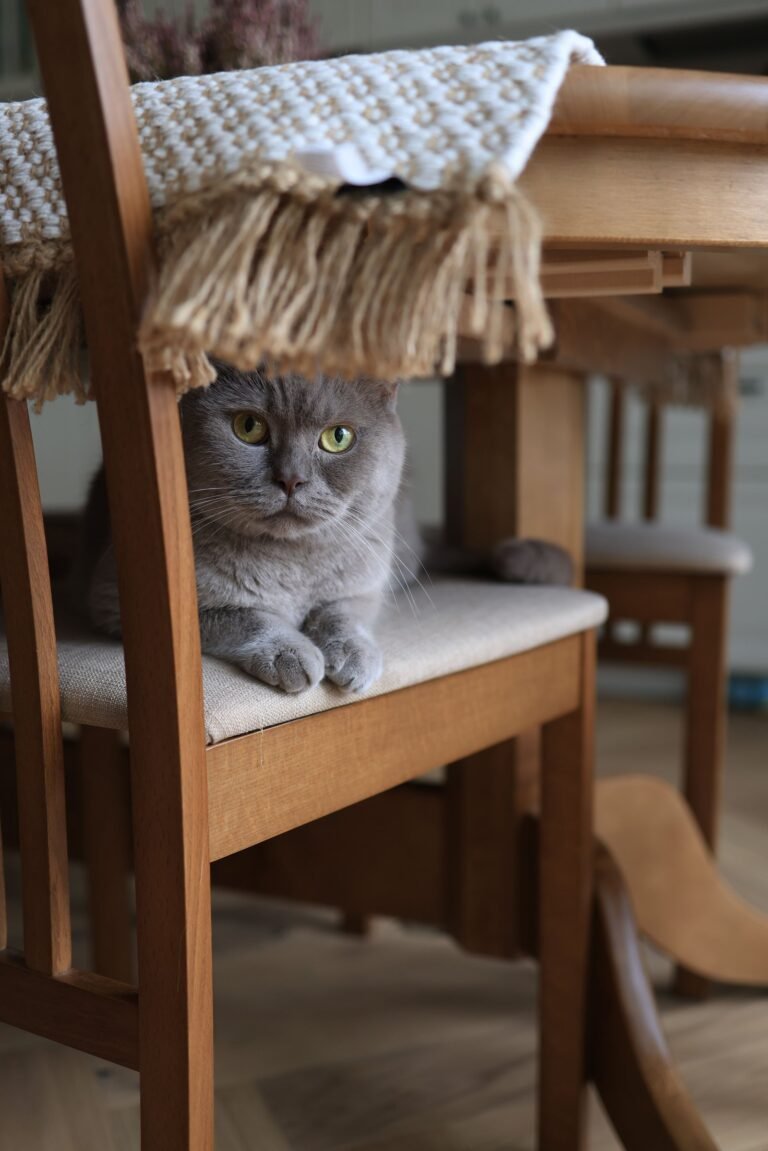
A gray cat with yellow-green eyes sits on a beige cushion of a wooden chair, looking toward the camera from under a light wooden table, with a cream woven runner and long beige tassels hanging in front of it and a wooden floor in the background

If you want to help a shy cat feel safe, the work is less about coaxing them into the middle of the room and more about a calm, low-pressure setup you can repeat in a small home. This guide helps US and UK cat parents in flats and apartments give a hiding, freezing, or people-wary cat a quiet safe room, hiding spots that are not a punishment, and predictable meal and play times. You will also see how to let the cat come to you, and how to use a simple guest protocol so visitors do not corner the cat in a hallway or on a sofa. The advice is general and practical, not a veterinary diagnosis, not a treatment for anxiety, aggression, or trauma, and not a promise that a shy cat will become confident in a week. If hiding is sudden, the cat stops eating, or a once-outgoing cat is suddenly withdrawn, contact a veterinarian.

How to Walk a Dog in the Rain in the City

A person in a purple and black puffer jacket, black trousers, black-and-white sneakers, and a black beanie stands with their back to the camera on a wet tiled city sidewalk beside a large black dog, with shopfronts, an orange awning, a zebra crossing, and an overcast sky; a leash is not clearly visible

If you need to walk a dog in the rain city sidewalks and short loops, the work is less about waiting for a dry day and more about a wet-weather plan you can repeat from a small home. This guide helps US and UK dog parents in flats decide whether to go out, choose a shorter route that avoids the deepest puddles, and set up a towel station in a small entry so paws and belly can be dried before they reach the sofa. You will also see when a raincoat is a useful option, how it differs from a winter coat, and how to keep an indoor sniff or play backup when the rain is too heavy. The advice is general and practical, not a veterinary diagnosis, and it does not use hard rainfall cutoffs. If the dog is limping, licking paws raw, shivering hard, or will not put weight down, go inside and contact a veterinarian if it does not settle.

Best Indoor Dog Potties for Apartments

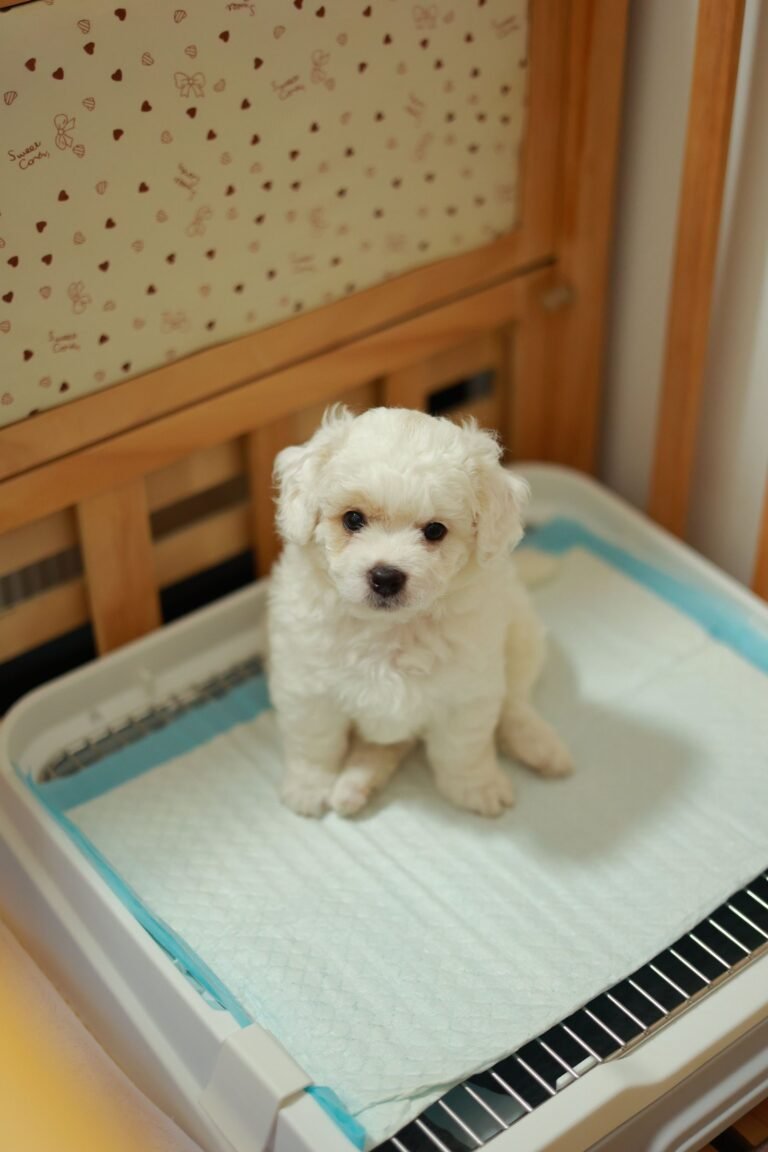
A small white Bichon Frise or Bichon-type puppy sits on a white disposable training pad with a blue border, inside a white plastic indoor potty tray with a black grate at the front, next to a light wooden crib with heart-patterned fabric

The best indoor dog potty for apartments is not a ranked list of winners. It is the option that actually fits your building, your dog, and a floor you may not own: useful in a high-rise, for a young puppy, in bad weather, or during a short-term recovery, and a problem if it quietly replaces walks or a housetraining plan. This guide helps US and UK dog parents in flats and small homes decide when an indoor toilet is a fair tool, compare pads with a tray that holds real or artificial grass, and think through a balcony setup that stays lease- and neighbor-safe. It also covers odor, washability, and a waterproof layer that protects rental floors. An indoor potty is a backup or a specific living-situation tool, not a substitute for walks. This is practical buying information, not a set of test scores, star ratings, or prices, and not a medical recovery protocol.

How to Get a Cat Comfortable at the Vet

A man in a white T-shirt and latex gloves, with a navy stethoscope in his ears, examines a golden or tan shorthair cat lying on a scratched metal veterinary exam table against a plain white wall

If you want to get a cat comfortable at the vet, the most useful work usually happens at home, in short, calm rehearsals, not in a busy waiting room. This guide helps US and UK cat parents in flats and small homes build a familiar visit: the carrier is already a known place, a towel or blanket that smells like home travels with the cat, and you have practiced lifting and gentle handling. It also covers a quieter wait at the clinic and a slow unpacking once you are back in the apartment. The aim is to make the visit feel more familiar, not to promise that your cat will enjoy the vet. This is general information, not a veterinary diagnosis, and not a treatment for fear, panic, or aggression. It does not recommend sedatives, supplements, or medications. If your cat is severely frightened or may bite, contact the cat's veterinarian rather than pushing at-home practice.