

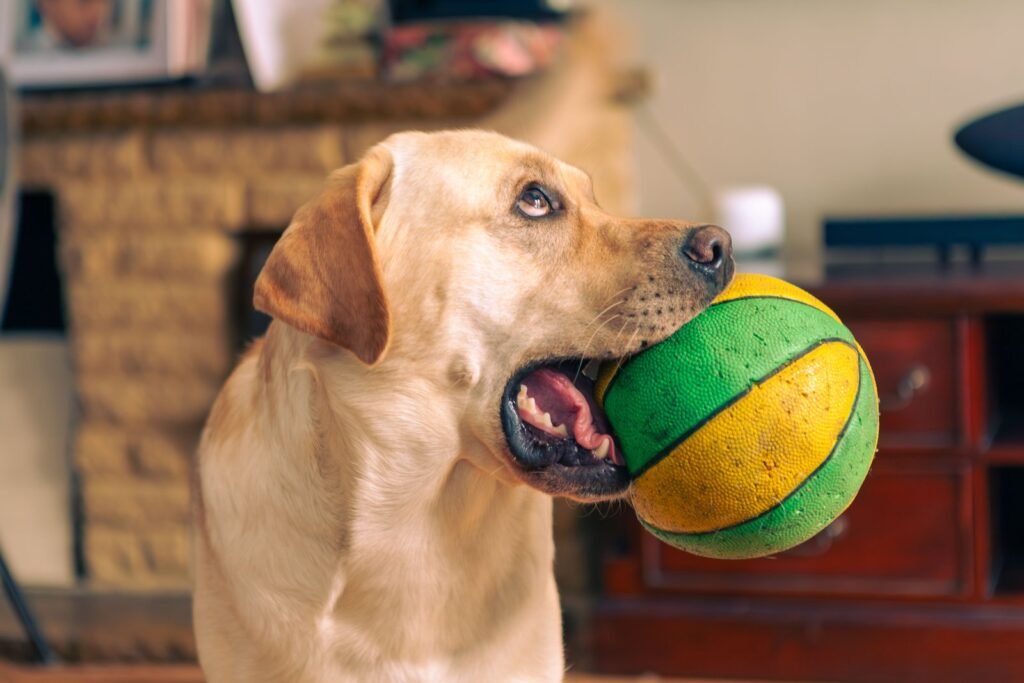
The best indoor fetch toys for apartment dogs are the ones that stay soft, predictable, and easy to put away, not the ones that fly farthest. In a hallway or a small living room, a classic tennis ball can ricochet off a wall, scuff a floor, and wake a neighbor below. Indoor fetch only works if you can toss or roll a toy, the dog can bring it back, and you can end the game before someone knocks into a shin or a lamp.
This is general play advice for dog parents in the US and UK, not a veterinary diagnosis and not a ranked review. You will not find brand names, prices, test scores, or a yearly roundup here. A couple of soft retrieve toys, inspected for damage and put away after a short session, is enough. If a toy is torn and the dog is swallowing pieces, or if the dog guards the toy, stop the game. A fetch toy cannot “fix” boredom, and it is not an outdoor park substitute.
What indoor fetch is, and what it is not
Indoor fetch is a short retrieve: you toss, roll, or gently bounce a toy, the dog goes to it, and the dog brings it back, or at least brings it close enough that you can start again. The room is a hallway, a living room, or another clear indoor path. The toy has to be safe to throw in that space.
It is not tug. If you want a pull game, use best tug toys for apartment play and keep fetch as a retrieve. It is not a puzzle or a snuffle game, even if the dog also enjoys those; see best puzzle toys for dogs and best snuffle mats for dogs when the job is sniffing and problem solving. A flirt pole is a chase on a stick, covered in best flirt poles for apartment play. Nose work has its own setup in best nose work and scent toys. Quiet evening toys and lick mats are different again; compare best quiet dog toys for apartments and best lick mats for dogs when the goal is a calmer, lower-movement option.
Fetch also does not replace a real walk or a broader plan for a dog who still has energy after a short indoor game. If that is the larger problem, how to tire out a high-energy dog in an apartment is the better next read. A hallway retrieve is one tool.
Why a tennis ball is often the wrong indoor toy
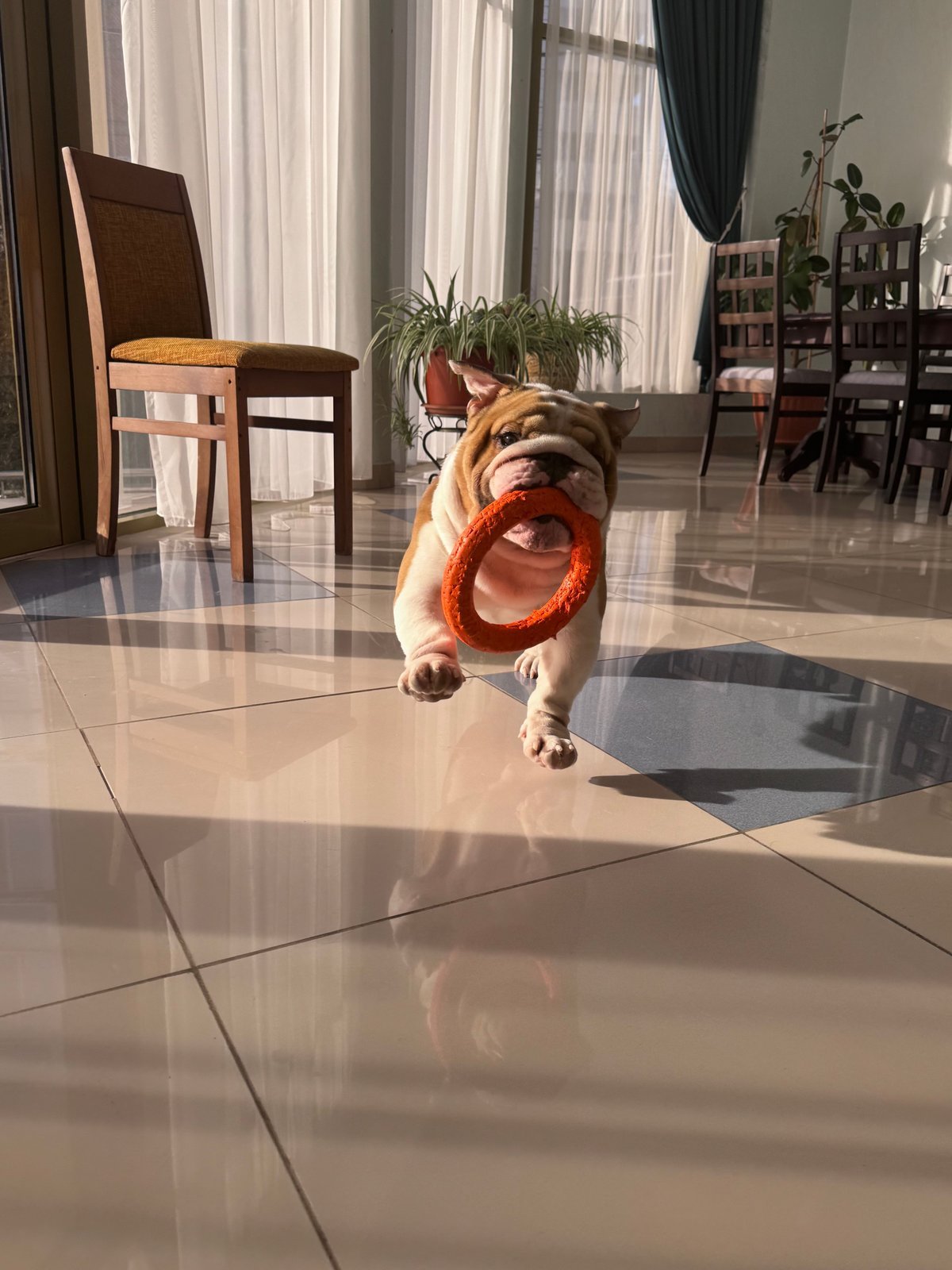
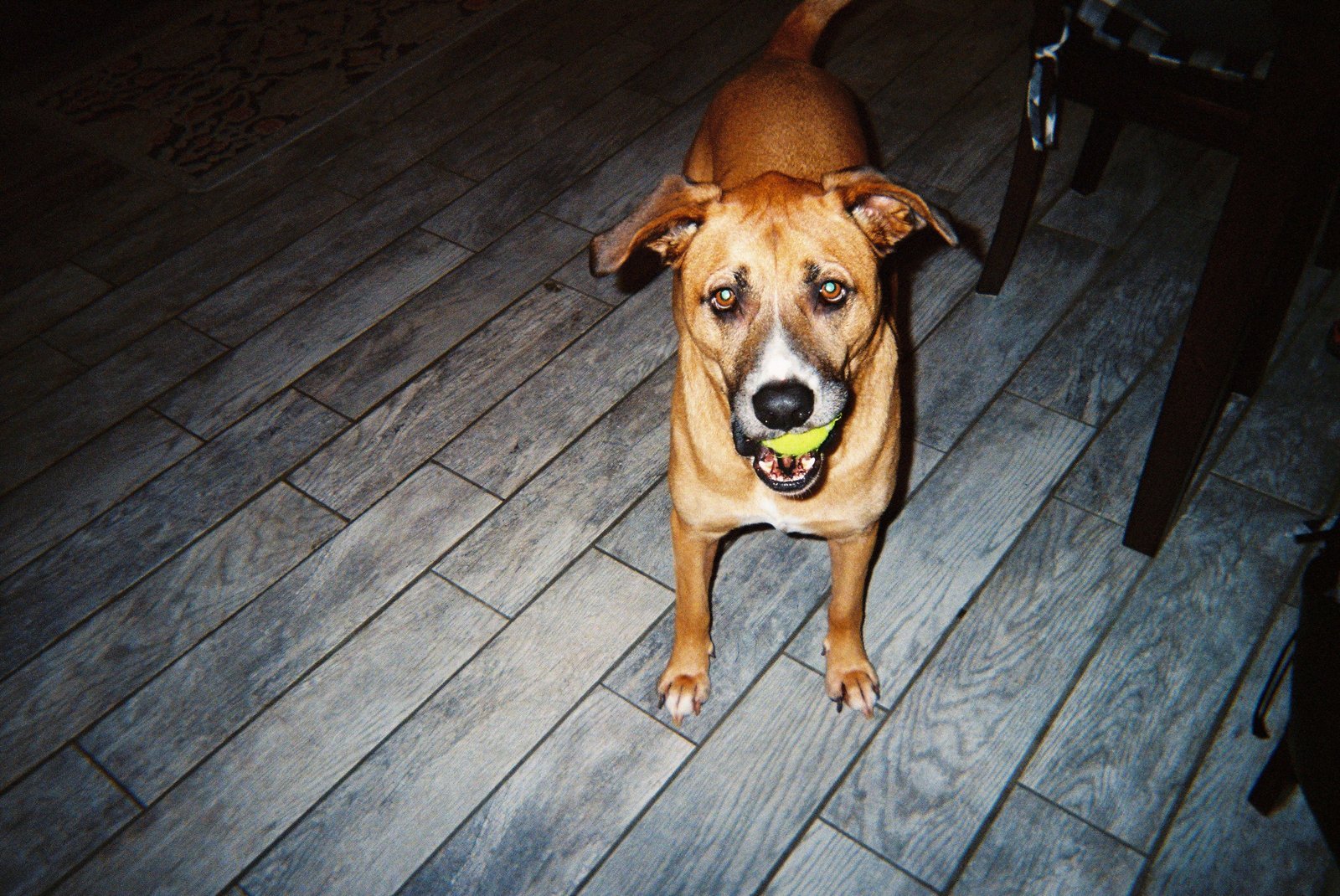
A tennis ball is easy to buy and many dogs already love it. In an apartment it is also lively in the wrong ways. It bounces high, shoots off baseboards, and can roll under a sofa and stay there. On a hard floor it is loud. Near a TV, a glass table, or a shins-height coffee table, that bounce is a genuine hassle, not a feature. A felt cover can also pick up grit from the hallway and then get chewed into damp fuzz, which is one more reason to keep that style of ball for outdoor play when you can.
If you still want a ball shape, look for a soft or limited-bounce version, and test it in the actual room with a short underhand toss before you play for ten minutes. A ball that feels “fun” in a park can be a missile in a hallway. Bounce it once with your hand at the start of the path you will actually use. If it jumps to chest height or veers into furniture, it is not an indoor toy. If the only ball you have is a standard tennis ball, use it outside, or skip indoor fetch that day and pick a toy that rolls more slowly or flies less.
Size matters as much as bounce. The toy should be large enough that the dog cannot swallow it, and small enough that the dog can pick it up and carry it back. A huge ball that the dog can only nose around is not fetch. A tiny ball that disappears in the mouth is a choking risk, especially for a large dog or a dog who gulps toys.
What to look for in an indoor retrieve toy
Start with the dog’s mouth, not the packaging. A soft fabric toy, a felt or cloth ball, a rubber toy with little bounce, or a ring the dog can grab and carry can all work if the dog will actually bring it back. Some dogs prefer a toy with a bit of weight. Some prefer something floppy they can hold without it bouncing away after the first drop. If you can, have the dog hold the toy in the shop or in your hallway before you commit to a full game. A toy that is awkward to pick up will not become a retrieve toy just because you throw it more often.
Shape affects the return. A round toy that rolls under the sofa is a daily frustration in a studio. A ring, a short soft dummy, or a toy with a bit of handle can be easier to pick up and harder to lose. The best toy is the one your dog will drop or offer near you, not the one that looks most like a park ball. If the dog will not bring anything back, indoor fetch may not be the right game yet; a short roll to the dog’s feet, then a trade, is a more honest start than a long hallway throw. You can still have a useful indoor retrieve with two or three rolls and a clear drop, even if a long-distance fetch never develops in that space.
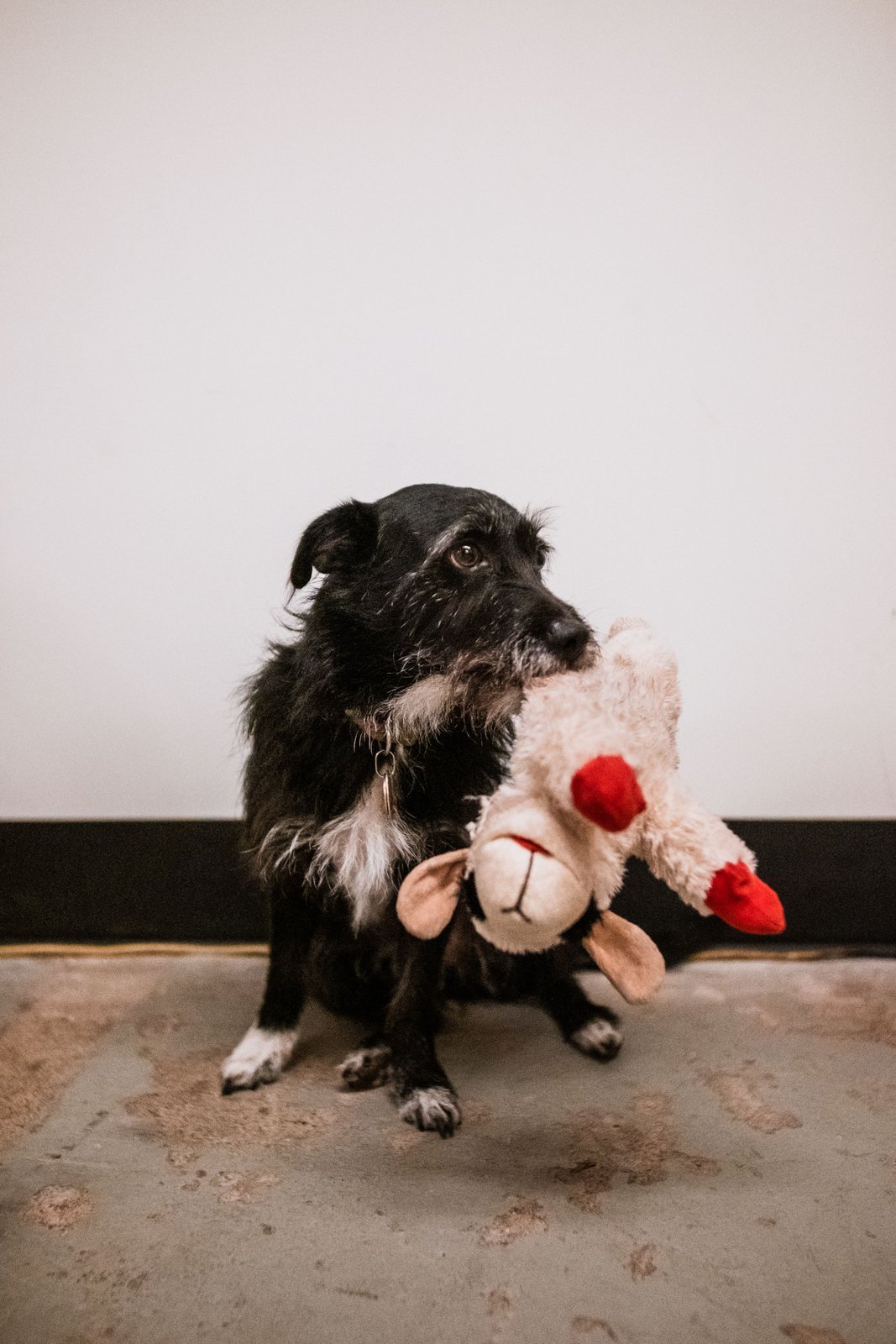
Cleaning and storage matter in a small home. Pick a toy you can wipe or wash, and give it a known home: a basket, a hook, or a bin by the door. Indoor fetch toys should not live under the sofa or in the middle of the only walkway. After the game, the toy goes away. That also keeps the game special and keeps a soft toy from becoming an unsupervised chew.
If your dog is a heavy chewer, a soft fetch toy may not survive as an all-day object. That is expected. Use a fetch toy for the retrieve, then put it up, and give heavy chewing its own toys; best toys for aggressive chewers is the right guide for that job. For a teething puppy, use best teething toys for puppies for chewing, and keep indoor fetch brief and well supervised.

How to try a short indoor game
Clear a path first. Move the lamp, close the bedroom door, and pick a direction that does not end at the TV or a glass door. Start with a roll or a low toss along the floor, not a high bounce off the ceiling. If the dog races and skids, shorten the toss. A few clean retrieves are better than a long rally that wakes the downstairs neighbor. If you live above someone, listen once: a soft toy on a rug is a different sound from a rubber ball on bare boards, and you will hear that difference faster than a neighbor can text.
Keep the session short on purpose. A few minutes, then the toy goes away, is a successful indoor game. If the dog gets fizzy, starts slamming into furniture, or begins to guard the toy, end sooner. Trade for a treat or a different allowed object if the dog will not drop the toy, and do not turn the drop into a wrestling match.
You do not need a long hallway. A roll across a living room rug, a gentle toss to the far end of a studio, or a back-and-forth in a clear kitchen doorway can be enough. If the only open path is a slick floor, go slower and consider a toy that does not skid as far. Shoes or a rug runner can help you keep your own footing, which matters when a dog comes back at speed. If the dog slides into a wall, the game is already too big for the room, even if the toy itself is soft.
If you share the home, agree when indoor fetch happens. A squeak or a bouncing ball at 10 p.m. in a building with thin floors is a courtesy problem even if the toy itself is “quiet enough” on the package. A fabric toy with no squeaker is often the better late-day choice.
What to avoid, and when to retire a toy
Avoid hard balls near screens, shins, and glass. Avoid toys that disappear under a sofa on the first roll, unless you are willing to get them out every time. Avoid leaving a fetch toy down as an all-day chew. A retrieve toy is often softer than a chewing toy, and a bored dog can open a seam while you are on a call. If a toy repeatedly vanishes under furniture, it is the wrong shape for that room, no matter how much the dog likes it at the park.
Retire a toy when the seam splits, stuffing shows, a squeaker or plastic piece is exposed, or a chunk can come off in the mouth. Throw the stuffing out with the toy. Watch the game for swallowed pieces, especially with a dog who shreds fabric or foam. If the dog coughs, gags, or you think they swallowed a piece, stop and call your veterinarian.
If the dog stiffens, growls, or snaps over the toy, end fetch and put the toy away. Guarding is a safety issue, not a sign that you need a “better” toy. You can try trading later in a calm moment, but do not reach in for a toy the dog is already defending.
A good-enough indoor fetch setup is small: one or two toys that the dog will bring back, a clear path, a short session, and a place to put the toy when you are done. That is plenty for a hallway. It will not replace a walk, and it does not need to.
FAQ
Can I use a tennis ball for indoor fetch in an apartment?
You can, but it is often a poor fit. A standard tennis ball bounces high, can scuff floors, and may ricochet into furniture or a TV. If you try one, use a short, low toss and stop if it becomes a missile. A softer or limited-bounce toy is usually a better indoor choice.
What makes a good indoor fetch toy?
It should fit the dog’s mouth, be easy to pick up and carry back, and stay predictable in a tight space. Soft fabric, a low-bounce rubber toy, or a ring can all work. It should also be easy to clean and easy to put away. The dog has to want to bring it back, or at least bring it close.
How do I keep indoor fetch from wrecking the hallway?
Clear a path, start with a roll or a low toss, and keep the session short. End the game while the dog is still in control, not after they have started slamming into furniture. Put the toy away when you are done so it does not become an all-day projectile.
Should I leave a fetch toy out all day?
Usually no. A fetch toy left down often becomes an unsupervised chew, and soft retrieve toys can tear. Put the toy away after a short game. If the dog needs something to chew, use a toy made for that job, not the retrieve toy.
When should I throw the toy out?
Retire it when a seam splits, stuffing or a squeaker shows, or a piece can come off in the mouth. Stop the game if the dog is swallowing pieces or guarding the toy. If you think the dog swallowed a chunk, call your veterinarian.