

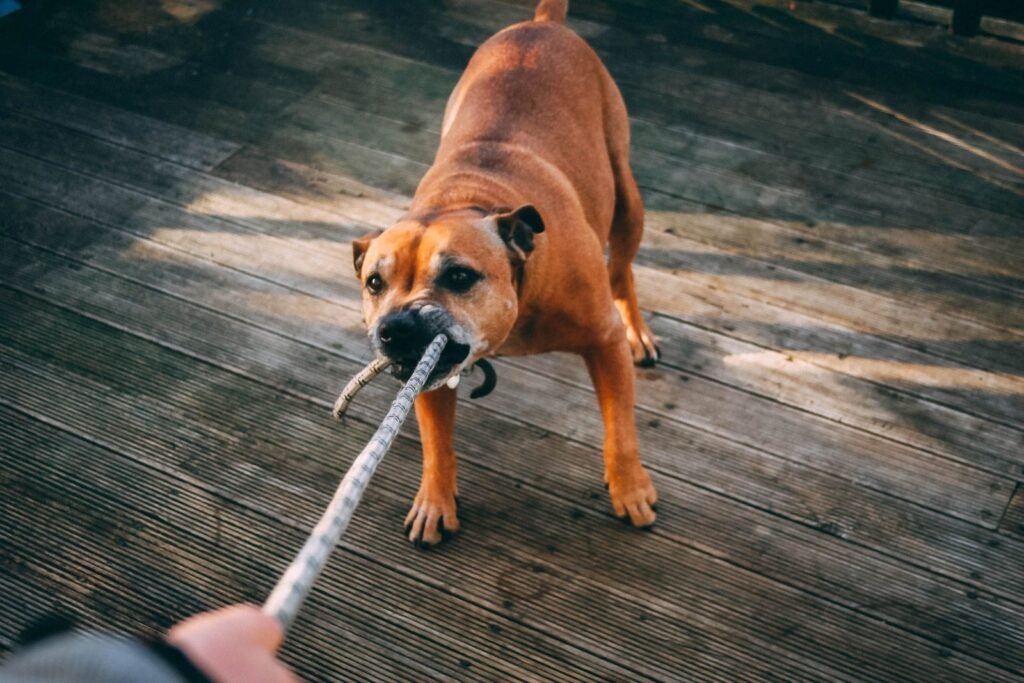
If you are looking for best tug toys for apartment play, you are not shopping for a scorecard. You are choosing one toy you will hold in a tight floor plan: a short, clear game that can burn a little energy without turning the living room into a collision, and without leaving a shredded rope in the puppy’s stomach.
This is general information for US and UK dog parents in flats and small homes, not a veterinary diagnosis and not a behavior plan. Tug is not a substitute for walks. It is also not the right tool for a dog that resource-guards the toy, redirects onto hands, or cannot come down after a game. Stop if the toy unravels into pieces that could be swallowed, or if the dog is slipping, overheating, or crashing into the room. There are no honest model lists, prices, or test scores in this guide.
A tug is also not the whole indoor-exercise plan. How to tire out a high-energy dog in a small apartment is the wider daily shape. This article is just the toy in your hands.
When a short tug helps, and when another tool is safer
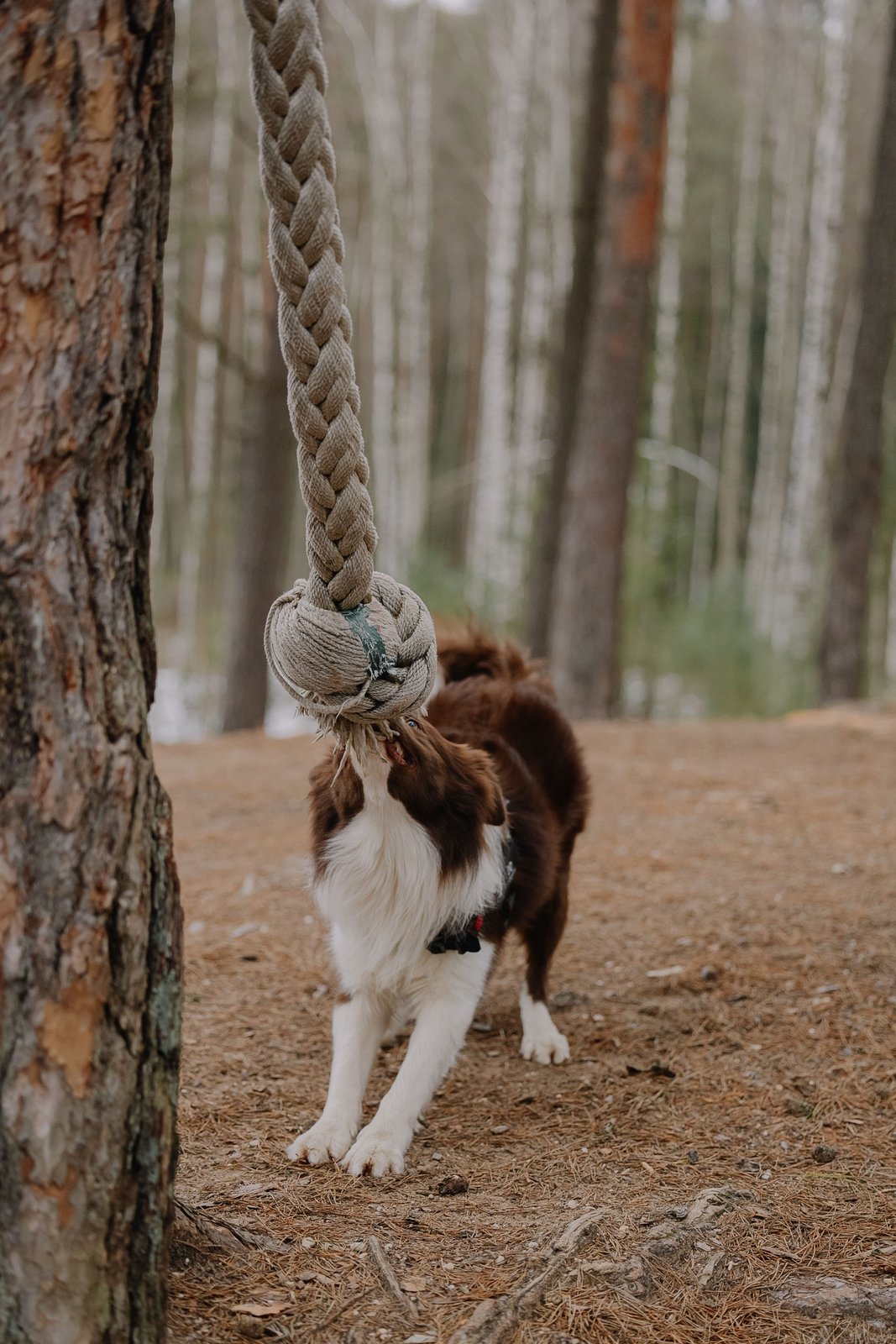
A short tug can be useful when you are home, the dog still has a burst of energy, and you can clear a small patch of floor for one or two minutes of controlled pulling. It gives you a start cue, a stop cue, and a toy you can put away. Ten focused seconds of pulling, a drop, and a pause can be a better burst than a long, sloppy wrestle that spreads into the hallway. It is less useful when the dog is already over-aroused, when the floor is slippery, when the room is full of corners and furniture, or when you need quiet for neighbors or a work call. If the dog has just come in from a frustrating hallway, wait until the body is softer before you offer the toy.
In those moments, another tool is often kinder. An unsupervised chew is for when you will not be holding the other end; best toys for aggressive chewers is that category, not a held game. A snuffle mat or a lick mat slows the dog down instead of winding the game up; see best snuffle mats for dogs and best lick mats for dogs. Best quiet dog toys for apartments and best puzzle toys for dogs are better when the job is occupation without slamming. A walk still matters, and it is not replaced by three extra tugs in the hallway. If the dog has already had a short outing and still has a little fizz, a tug can fill a gap. If the dog has been indoors all day, start with the walk, then decide whether a tug is even needed.
A flirt pole is a different toy altogether: a pole, a line, and a lure, built for a chasing arc. That is best flirt poles for apartment play, not a tug you hold at both ends. Do not treat a wand, a stick, a leash, or a ball as a tug just because the dog will pull on it. If the object is a leash, you still need it for walking, and a chewed leash is a safety problem of its own. If the object is a ball, the game is usually a chase or a grab, not a held tug with a drop you can use in a small room.
Two-ended toys, rope, or fleece
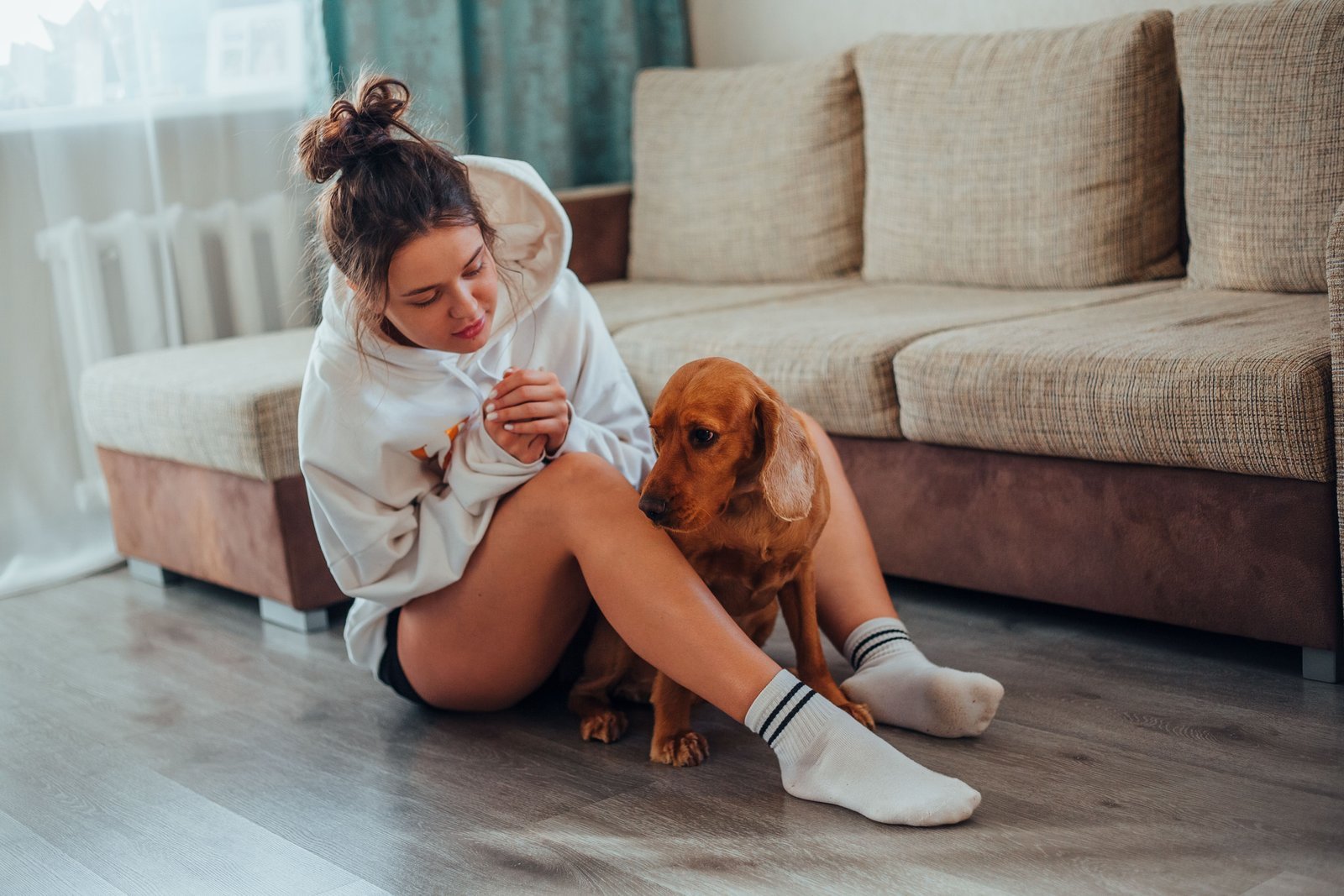
The toy itself should give you a handhold that is not the dog’s mouth. A two-ended tug, with a handle or a second knot for you and a section for the dog, makes it easier to keep your hands off teeth and to steer the game. A rope can work if it is long enough for a clear handle and stout enough that it does not fray in the first session. Fleece can be softer in the mouth and quieter than a heavy rope slapping the floor, which helps in a flat, but it can also shred into strips if the dog is a dedicated shredder.
There is no single “best” material for every dog, and this guide will not rank fabrics or brands. Choose a toy you can grip, that the dog can bite without reaching your fingers, and that you can inspect after each game. If the dog is a strong chewer even during a held game, pick a sturdier tug and still put it away when you are done. The chew you leave behind when you leave the room is a different product, already covered in the chewer guide above. A held tug that you later leave on the floor often becomes an unsupervised chew, which is how many ropes start to come apart.
Size the toy to the dog and to the room. A long rope in a narrow gallery kitchen will whip into cabinets. A tiny fleece in a large dog’s mouth disappears, and your hands get closer than they should. Leave space around lamps, a TV, coffee tables, and the balcony door before the game starts, not after someone has already slid. In a studio, that may mean pushing a chair back and closing a laptop. In a one-bedroom flat, it may mean using the bedroom doorway only if the floor is clear and the dog can turn around without hitting a frame.
Teach “take” and “drop,” then keep the game on the floor
A tug without a “take” and a “drop” is just a wrestle. Teach both on a calm day, in short rounds. “Take” means the dog is invited to the toy, not that the toy is waved in the dog’s face until they lunge. “Drop” means the dog lets go, you praise or pay the let-go, and you may offer the toy again or end the game. If the dog cannot drop, the game is already too hard. Make the tug shorter, use a second toy as a trade, or stop and try again later. Practice the drop when the dog is only mildly interested, not at the peak of a Friday-night wrestle. A drop that only works when you pry the toy out is not a drop yet.
Keep the dog’s feet on the floor. No jumping at faces or hands, and no body-slamming into your legs or the sofa. If the dog leaps, the toy goes still and the game pauses. If the dog slips, stop. Socks on a polished floor are a common reason a short game turns into a crash. A rug with a non-slip back, or a pause to dry paws, is more useful than a pep talk. If your building has slick wood or tile, keep sessions on the rug and end them the moment the dog starts to skate.
Do not let the game travel into lamps, a TV, or a hallway full of shoes. You are allowed to stand in one clear patch and keep the toy low. If the only open floor in your flat is a narrow runner over a neighbor’s ceiling, keep the sessions very short and quiet, or choose a lick mat or a puzzle instead. Downstairs neighbors hear thudding more clearly than you do. A jumping, skidding tug is a noise problem as well as a safety problem. Early mornings, late evenings, and buildings with thin floors are moments to keep the toy low or to skip tug altogether. A quiet chew or a lick mat is a fair swap when the people below are likely to be asleep or working.
End the game, put the toy away, and watch for shredding
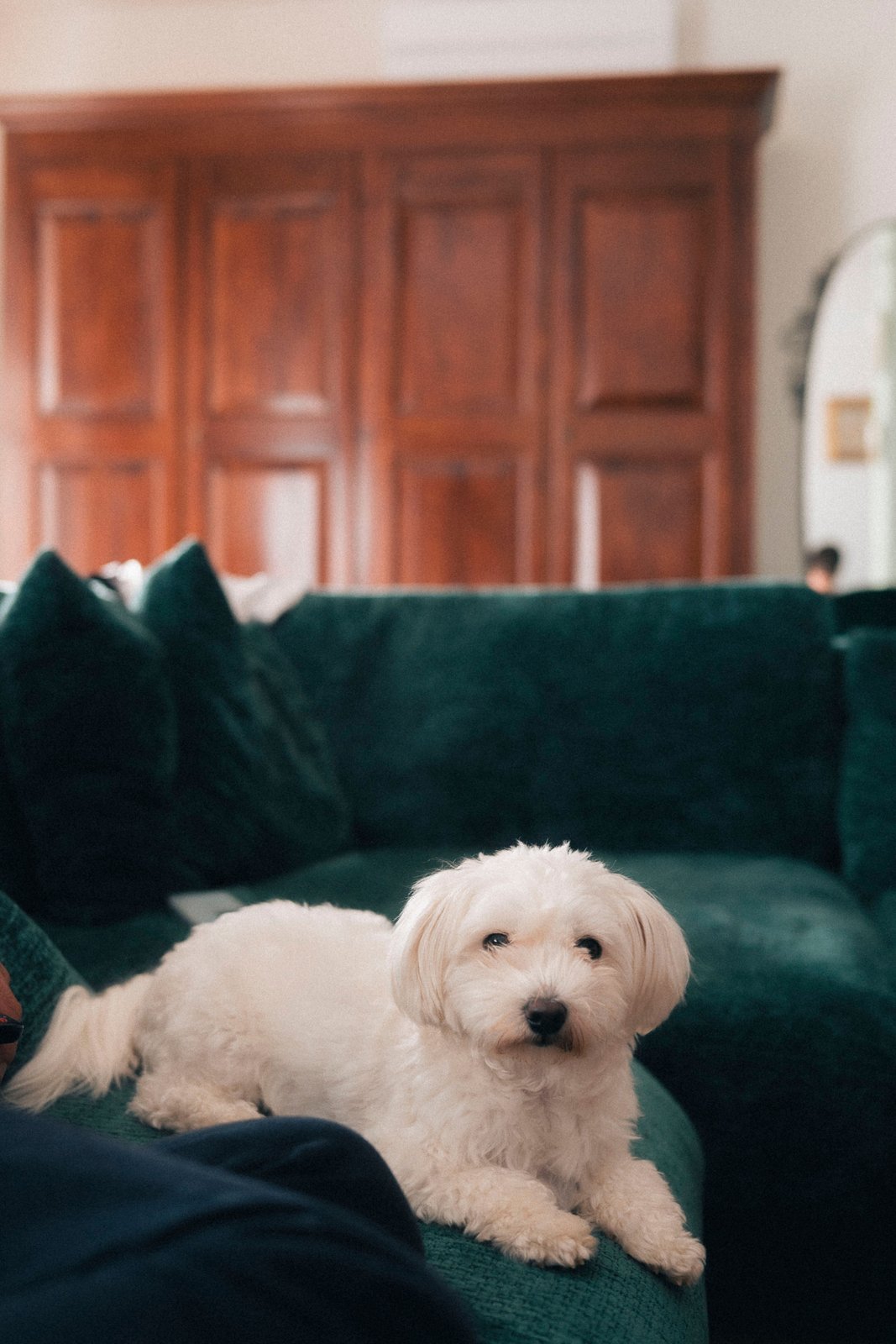
A useful tug has an ending. After a short run of take, tug, and drop, ask for the drop, put the toy out of sight, and give the dog a chance to drink and settle. Teaching a dog to settle in an apartment is the skill that makes that landing possible. If you leave the tug on the sofa as a 24/7 trigger, some dogs will bring it back, pace, or start a game you did not ask for, especially in a studio where the toy is always in view. A basket on a high shelf, or a cupboard the dog cannot open, is part of the toy, not an afterthought. If you play in the same room where you later want the dog to rest, put the tug away before you ask for a settle, so the toy is not lying in sight as a prompt to start again.
If the dog starts shredding the tug, stop the game and inspect the toy. Loose threads, a burst seam, or pieces already on the floor are a reason to retire that tug, not to play “one more round.” Swallowed fabric or rope is a veterinary emergency if you think the dog has eaten it, or if the dog later strains, vomits, or seems painful. A shredded tug can also slide into ordinary chewing of furniture and household objects; if that is already happening, use how to stop a dog from chewing furniture in an apartment as the separate plan, and still put the damaged toy away.
Skip a tug altogether if the dog stiffens, growls, or guards the toy; if mouthing turns into a snap at hands; or if the dog cannot come down after a minute or two. Those are reasons to get help from a veterinarian or a qualified behavior professional, not reasons to buy a tougher rope and try again in a smaller room. A dog who stiffens over a toy is telling you the game has a guarding problem. A dog who cannot come down may need a quieter plan for the rest of the evening, and sometimes a professional look at why arousal stays high.
A held tug can be a short, useful burst in an apartment when the floor is clear, the cues are clear, and the toy goes away afterward. You do not need a long session to make the game count. Two or three clean rounds, a drop, and a settle will often do more for the rest of the evening than a dragged-out match that ends in panting and a knocked lamp. Choose a two-ended, rope, or fleece toy you can actually hold, keep the game off faces and furniture, stay aware of the neighbors below, and stop as soon as the toy or the dog tells you the session is over. If you are unsure whether the dog can come down, start with a quieter activity and save tug for a calmer day.
FAQ
Is a short tug game a substitute for a walk?
No. A tug can be a useful indoor burst, but it does not replace time outside. If the dog still needs an outing, take the walk. If the room is too tight or the dog is already wound up, choose a quieter job, such as a snuffle mat, a lick mat, or a settle, instead of stacking more tugs.
What kind of tug should I use in a small apartment?
Choose a toy with a clear handhold, such as a two-ended tug, a rope with a handle section, or a fleece you can grip without meeting teeth. There is no single best material. Pick a size that fits the dog and the room, inspect it after each game, and put it away when you are done.
How do I teach the dog to drop the toy?
Practice “drop” in short, calm rounds. Stop moving the toy, wait for the let-go or trade for a second toy or a small treat, then praise the drop. If the dog cannot let go, the game is too hard. Shorten the tug, lower the excitement, and try again later rather than pulling harder.
What if my dog jumps at my hands or slams into the furniture?
Pause the game. Keep the toy still and low, and only start again when all four feet are on the floor. Move lamps and clear space around a TV before you begin. If the floor is slippery or the dog keeps crashing, stop and use a different activity.
The rope is starting to fray. Can we finish the game first?
No. If the toy is unraveling or pieces are coming off, end the game and retire that tug. Pieces that could be swallowed are a safety problem. If you think the dog has already eaten some of the toy, or the dog later vomits, strains, or seems painful, contact a veterinarian.
[…] is not tug. If you want a pull game, use best tug toys for apartment play and keep fetch as a retrieve. It is not a puzzle or a snuffle game, even if the dog also enjoys […]