


If you want to help a dog get used to apartment noise, the useful work is not a promise that city life will suddenly feel easy. It is a thinner wall, a hallway you cannot control, and a dog who startles, paces, or barks at sounds that are ordinary in a flat: footsteps, a slammed door, a pipe ticking, a trash-chute thud, an elevator ding, a chair scraping upstairs, street traffic, or a short burst of construction or a moving day.
This is general information for US and UK apartment dog parents, not a veterinary diagnosis and not a training guarantee. Dogs vary, and a dog who has lived in the same building for months can still struggle with the soundtrack. Helping a dog adjust to a new apartment is a first-week move-in plan. This article is about acclimating to everyday building sound in a home you already share. There is no honest promise that a dog will love city noise in a week. If your dog is trembling, hiding, not eating, or getting worse over days, that is a veterinary or qualified-behavior question. If the sound is a true emergency alarm, get to safety first; this is not a training moment.
A startle is not the same as a barking habit
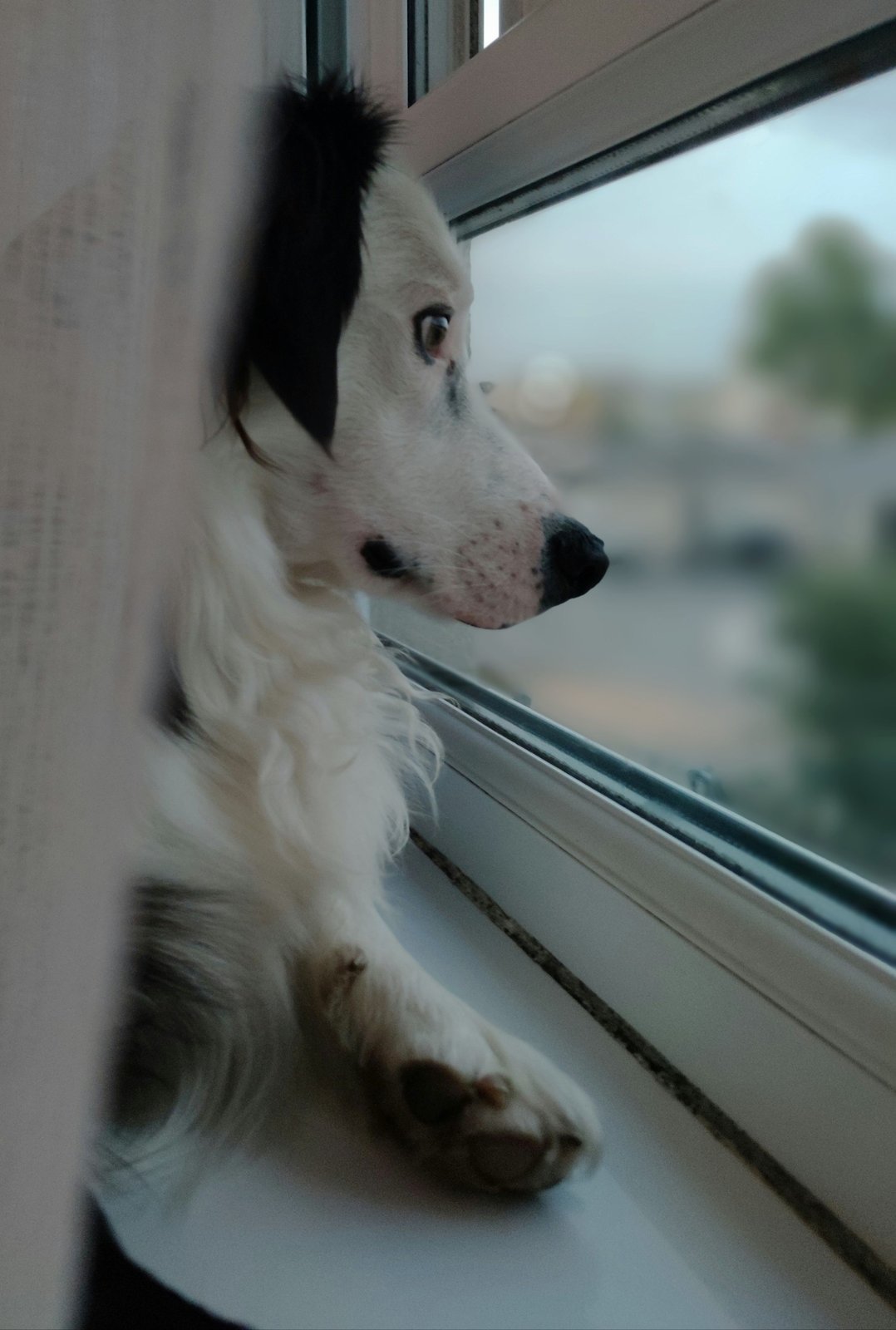
A single flinch when a door slams is information. A pattern of charging the hallway wall, pacing the same route, or barking at every footstep is a habit forming around that information.
A one-time startle often looks brief. The dog’s ears go up, the body freezes, then the dog sniffs, blinks, and returns to a chew or a rest spot. You may see a short bark and then quiet. The dog can still take a treat, come when called, and lie down again.
A barking habit looks more like a loop. The sound happens, the dog rushes a door or a window, and barking continues after the sound has stopped. The dog has a hard time coming away, even for food you know they like, and rest gets shorter. You may start to predict the 6 p.m. trash-chute hour or the upstairs chair scrape, because the dog already does. If barking has already become the main problem, how to handle barking in an apartment is the broader plan for that output.
Watch the rest of the body, not only the voice. Pacing, panting, clinginess, a tucked tail, restlessness at the door, or a dog who cannot settle after the building goes quiet can be signs a dog is stressed. A startled dog can still recover in the same minute.
Some apartment sounds belong to other plans. A doorbell is a cue at your own door, and keeping a dog calm when the doorbell rings is practice for that arrival, not for a random thud two floors away. A plumber in the kitchen is a stranger with tools inside your home, which is why keeping a dog calm during apartment maintenance visits is a visit-day holding plan. Helping a dog stay calm in elevators and hallways is about walking through those spaces, not about hearing the lift ding from the sofa. For everyday building sound you hear from inside, stay with the settle work below.
Pair ordinary sounds with a settle spot and a predictable routine

The goal is not to narrate every pipe tick. It is to give the dog a place and a pattern that still make sense when the building is noisy. Pick one settle spot the dog already uses: a bed, a mat, a crate they already rest in, or a quiet corner farther from the thinnest wall. Use that same spot on ordinary days, not only when a truck idles outside.
Teaching a dog to settle in a small apartment is the skill underneath this plan. Practice when the building is relatively quiet, in short sessions, so the mat means “this is a rest place” before you ask for it during a moving day. A settle cue is useful. A brand-new cue used only at the worst moment is just more noise.
A simple pairing looks like this. A familiar sound happens at a level the dog can notice without panic. You stay matter-of-fact. You guide the dog to the settle spot if they are up and pacing, or you quietly reinforce if they are already lying down. If the dog can take food, a few small treats on the mat after the sound is fair. If the dog cannot take food, skip the treats and use distance and management instead. A stuffed chew can help a dog stay on a mat through a predictable window, such as the evening elevator rush, but only if the dog can still chew.
Keep the rest of the day predictable too. Meals, a walk, a rest block, and a wind-down at roughly the same times give the dog fewer surprises to stack on top of hallway traffic. You do not need a military timetable. You need a shape the dog can learn: after breakfast you go out, then the mat is available, then a chew, then another short outing before the late-afternoon door slams if that is your building’s busy hour.
A crate can be part of this only if it is already a rest place. Crate training a dog in an apartment should happen on calm days, with the door closed for short, comfortable periods, before you use the crate during a noisy afternoon. If you still need a crate that fits a small home, best dog crates for apartments can help you choose size and placement. A crate is management, not a timeout. Do not send a barking or shaking dog into a crate as a penalty for reacting to a sound. If the dog panics with the door closed, use an open crate, a gated corner, or a bed in a farther room instead.
Placement matters as much as the object. A bed against the hallway wall puts the dog next to footsteps. The same bed in a room that faces away from the corridor, or behind a closed interior door the dog already accepts, can take the edge off the same sounds. Try that change on a normal day, not in the middle of a construction window.
Honest management during a noisy week

Some weeks are louder than your training plan. Painters in the stairwell, a neighbor moving out, or a short stretch of roadwork are weeks to lower the difficulty so the dog can still sleep, eat, and come down after a startle.
A farther rest spot is the first lever. Close the door to the room closest to the hallway or the street, and set up the bed, water, and a familiar chew in the quietest room you have. If you work from the sofa beside the thinnest wall, move your own work for a few days if you can, so the dog is not asked to rest in the loudest seat in the home. White noise is a second lever, not a magic mask. A fan or a white-noise machine, placed so it does not blow directly at the dog, can soften sudden edges like a chute thud or a slammed door. Keep the volume steady and moderate. A machine that starts and stops, or a playlist that jumps from quiet to loud, can become one more surprise.
A short walk before the worst window is the third lever. If trash collection, school-run hallway traffic, or a daily construction stretch has a predictable start, go out before it and come back to the settle spot with a chew already waiting. The walk does not have to be long, but it does have to be early enough that you are not rushing back through the noisiest half hour. If leftover energy is clearly part of the pacing, how to tire out a high-energy dog in a small apartment can help you shape the rest of the day without turning every outing into a frantic run.
Management also matters when you are not home. This is not the full plan for leaving a dog home alone in an apartment. It is a check on whether hallway noise, not only departure, is driving the restless period. A well-placed camera can show you whether the dog startles, barks, and then rests, or whether the loop continues. If you need help choosing one for a small home, see best pet cameras for apartments. Use that information to move the rest spot, add a fan, or change the walk timing, not to scold a dog who already finished reacting before you walked in.
During a truly loud stretch, it is fair to cancel extra practice, skip a guest visit, and keep evenings simpler so the settle pattern can return when the building is ordinary again.
What not to try in one evening

Do not try to finish this job after dinner. Playing construction audio at full volume, opening the door on every footstep “for exposure,” or stacking a new crate, a new cue, and a noisy night is more likely to flood the dog than to teach a settle. If you use recorded sound at all, keep it quiet enough that the dog can still take food and lie down, and stop if the dog tenses, hides, or starts to bark. Many dogs do not need a soundtrack. They need a quieter rest spot and a few calm repetitions of the real building.
Do not use a shock, prong, or citronella collar to stop a startle or a bark at pipes and footsteps. Those tools add a sudden, unpleasant feeling on top of a sound the dog already finds hard, and they do not teach a settle. Do not give leftover medication or sedating herbs. If a veterinarian has already prescribed a plan for stressful events, follow that advice. Otherwise, stay with management and ask a veterinarian if the dog’s panic is more than this plan can handle.
Skip the pep talk that “they’ll get over it by Friday.” Some dogs settle into a building’s soundtrack over weeks, with a routine and a better rest spot. Some need qualified behavior help. A dog who trembles, hides, refuses food, or gets worse over days is not failing a DIY schedule. That is a veterinary or qualified-behavior question, and it is fair to ask for that help early.
If the sound is a true emergency alarm, stop training. Get yourself and the dog to safety first, and follow the building’s instructions. You can return to settle work when the emergency is over. The alarm is not a practice rep.
Everyday apartment noise is a long, ordinary project. A clear settle spot, a routine the dog can predict, honest management during a loud week, and the sense to stop when a dog is truly struggling will do more than a single intense evening.
FAQ
Is a one-time startle at a slammed door something I need to fix the same night?
Not usually. If the dog startles, then sniffs, takes a treat, and returns to rest, make a quiet note of the sound and keep the settle spot available. A same-night “training session” often adds more commotion. Watch for a pattern over the next days: repeated rushing, barking that continues after the sound stops, or a dog who can no longer settle.
Should I play construction or hallway sounds on a speaker to speed this up?
Not in one evening, and not at a high volume. Some dogs can work with a very quiet recording while they rest on a familiar mat, but many do better with the real building at a manageable distance. If the dog tenses, hides, stops eating, or starts barking at the speaker, turn it off and go back to a farther rest spot, a fan, and short, calm practice with ordinary life.
Is a crate the right place when the hallway gets noisy?
Only if the dog already rests there calmly with the door closed. A crate is management, not a timeout, and it is a poor choice if the dog panics inside. An open crate, a gated corner, or a bed in a farther room can be the more honest setup. Teach any closed-door crate work on quiet days first.
What if my dog only barks at building noise when I am not home?
Treat that as information, not a reason to scold the dog after the fact. A camera can show you whether the dog startles and recovers or whether the loop continues. Move the rest spot farther from the sound, add a steady fan or white-noise machine, and take a short walk before the usual noisy window if you can. If the dog also struggles with departures, use a separate home-alone plan rather than mixing the two jobs in one evening.
When should I call a veterinarian or a qualified behavior professional?
Call if the dog is trembling, hiding, not eating, or getting worse over days, or if you see panic that does not come down after the sound stops. This guide is general information, not a diagnosis and not a promise that every dog will settle into building noise on a set timetable. A professional can help you decide whether this is a training and management problem, a medical problem, or both.
[…] footfall, and neighbors moving furniture are worth a separate, slower plan, which we unpack in how to help a dog get used to everyday apartment noise. A doorbell, a maintenance visit, or a tight lift are different triggers too. Those have their own […]