


If you need to stop a cat from scratching carpet and rugs in a small apartment, treat it as a floor-covering problem, not a furniture problem and not a doorframe problem. The cat rakes the living-room rug, a hallway runner, or the carpet at a door threshold because that surface is already underfoot, easy to grip, and right where the cat wants to stretch. The fix starts with a scratcher the cat will actually use, placed on that same path, plus a temporary cover or lift of the favorite corner while the new habit sticks.
This is general information for cat parents in the US and UK, not a veterinary diagnosis and not a training guarantee. Cats vary, and a sudden change in scratching can be a comfort or health question. If scratching ramps up quickly, or the cat seems painful, hides, or walks as if a paw hurts, contact your veterinarian before you rearrange the whole room.
Why a small apartment makes rug damage harder to hide
In a larger home, a frayed patch of carpet can sit in a spare room or under a chair almost no one uses. In a studio or one-bedroom flat, the same patch is often in the only living space, on the only runner down the hall, or at the threshold everyone crosses. Guests see it. You see it every time you open the door. There is no extra room to hide a ruined corner behind a closed door.
The layout works against you in another way. The places cats like to scratch (the edge of a rug, the end of a runner, the strip of carpet that meets a hard floor) are usually also the places people walk. A hallway runner is a long, tempting stretch. A living-room rug sits beside the sofa where the cat already loafs. The carpet at a bedroom or bathroom door is a natural pause point. In a small apartment, those surfaces are close together, so one cat can work several favorite spots in a single circuit.
Keep this article on floor coverings: area rugs, runners, and wall-to-wall carpet. Upholstery is a different job, covered in how to stop a cat from scratching furniture. Vertical wood, including doors and frames, belongs with how to stop a cat from scratching doors and doorframes in an apartment. Use those guides when the sofa or the door is the target. Do not treat a rug plan as a rewrite of either one.
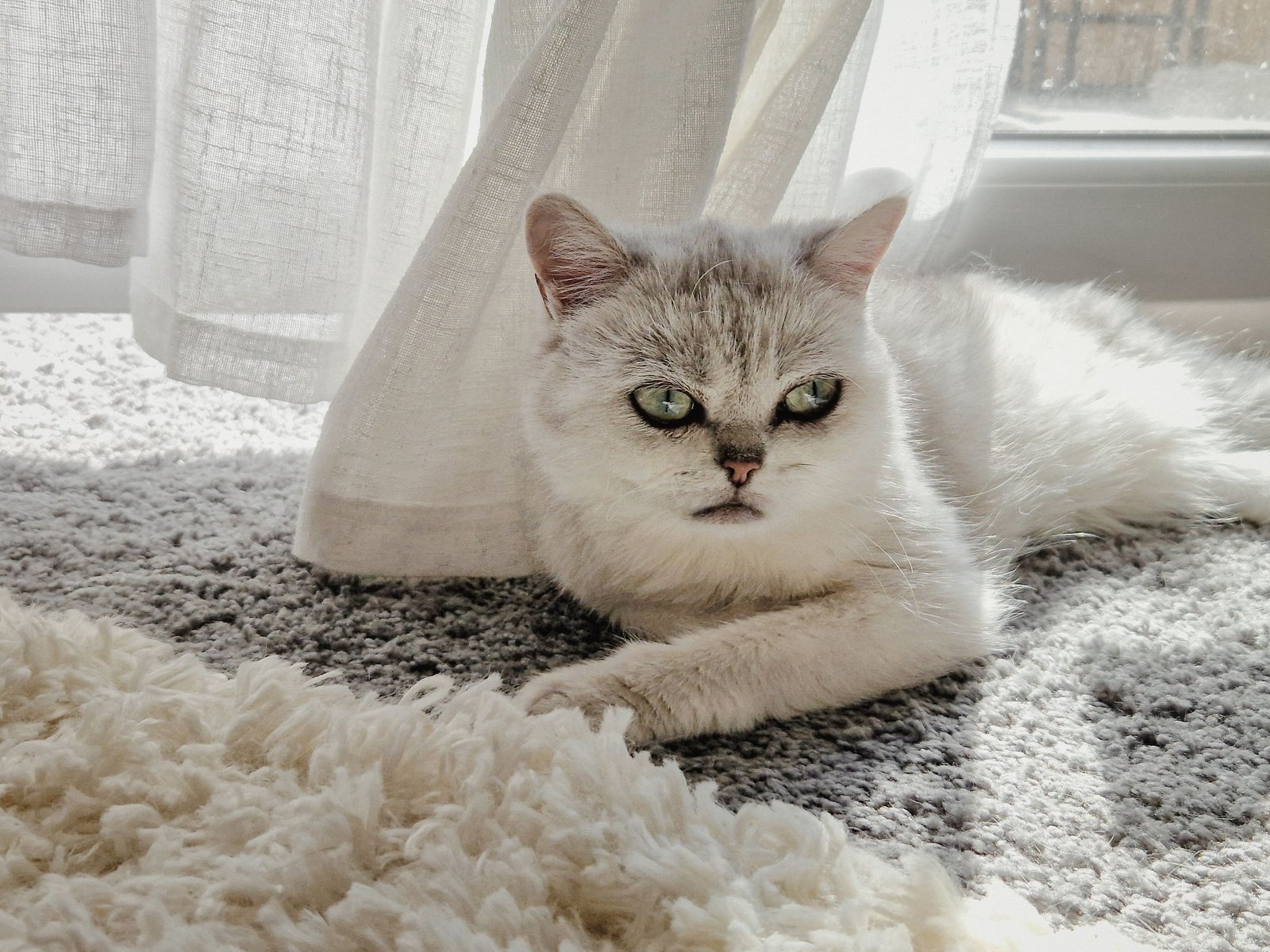
A cat on a living-room rug is a useful picture of the setting, even if the cat in the frame is resting rather than raking the pile. The risk is the floor covering itself, in the same room where you sit, and that is where the legal scratcher needs to go.
Put a scratcher the cat likes where they already scratch
Management comes first. Cats scratch to stretch, to mark, and to condition their claws. If the only satisfying surface in that spot is the rug, the rug will keep losing. Offer a scratcher the cat actually likes, and put it on the exact path they already use, not in a forgotten corner behind a plant.
Watch the motion before you buy or move anything. Some cats prefer a horizontal pull, the same motion they use on a rug or a hallway runner. Those cats often ignore a tall post and go back to the floor. A flat cardboard pad, a sisal mat, or another horizontal scratcher, placed on or right beside the damaged area, is usually a better first match than a decorative tower across the room. Some cats will also use a low-angle ramp. If your cat already reaches up onto a sofa arm, that is furniture scratching, not this article. If the cat’s paws stay on the floor and rake forward, stay with a horizontal option first.
The scratcher has to feel good, not only look tidy. If the pad slides on a hard floor, the cat may go back to a rug that stays put. Use a heavy pad, a non-slip backing, or a mat underneath so the legal surface does not skate away mid-stretch. If you already have posts or a tree the cat likes for climbing and vertical scratching, keep those in the mix, and use best cat scratching posts for small apartments and best cat trees for small apartments when you need buying help. Those guides are about posts and trees. This plan is about giving the floor a legal alternative.
Place the new pad where the damage is, then reward use. A small treat, a calm word, or a short play session near the pad can help the cat notice it. Do not pick the cat up and pin their paws on the scratcher. That often ends the session and can make the pad something to avoid.

Ideal stills of a cat using a flat cardboard pad were scarce, and many close matches were already used on the site. This photograph is a tabby on a dark, striped surface with a beige cat tree behind, not a horizontal scratcher in use. Keep posts and trees the cat already likes, and still add a floor-level pad at the rug they rake. The photo is the vertical equipment in the mix, not proof that a tall post will replace a runner.
Cover or lift the favorite corner while you retrain
The legal scratcher will not win if the favorite fringe is still the easiest thing to grab. Temporarily cover or lift that corner while the new pad becomes the habit. A washable runner over a damaged section, a tightly fitted rug gripper with a cover the cat cannot easily hook, or, when the rug is small enough, lifting that rug for a couple of weeks can break the loop. The point is a short management window, not a permanent plastic-wrapped living room.
Be honest about what the cover can do. A loose throw that bunches will become a new toy. A slippery plastic sheet may send the cat to the next uncovered patch of carpet down the hall. Cover the actual favorite spot, and put the legal scratcher beside it or on top of a stable base in that same place, so the cat does not have to hunt for the new option.
If the damage is at a door threshold, think about traffic. People will kick a floppy mat out of place. Choose something flat and stable, and keep the scratcher just to the side so it is not in the way every time the door opens. If the cat also claws the door itself, that is the doorframe article, not a thicker hallway rug.
This is also the moment to look at the wider room, without turning this into a full cat-proofing rewrite. If the only soft, hookable surfaces in a tight home are the rug and the sofa, the rug will stay popular. A broader setup plan lives in how to cat-proof a small apartment. Use it for the rest of the rooms. Keep this article on the floor.
Trim nails as support, and skip the chase
Shorter nails do less visible damage when a cat still takes a rake at a runner, but a trim is support, not a complete fix. A cat with tidy nails can still shred a favorite fringe if no legal scratcher is in that spot. Learn a calm home trim from how to trim a cat’s nails at home, and keep the scratcher plan in place. If the cat will not allow trims, or a nail looks torn or the toe looks swollen, contact your veterinarian rather than forcing the issue.
Do not turn the habit into a chase or a spray-bottle fight. Running after the cat, clapping at the rug, or spraying water when you catch a rake may stop the moment you can see, then move the scratching to a time when you are in another room. In a small apartment, that often means the same rug, later. Interrupt calmly if you catch the start of a rake, guide the cat toward the legal pad, and reward any interest in that pad. Then walk away. The cover and the well-placed scratcher should do most of the work when you are not watching.
Play and enrichment help some cats because a long stretch often follows a burst of energy. A daily play session can take the edge off, and those plans live in indoor cat enrichment ideas and how to build a daily play routine for an indoor cat. Use them as support. A tired cat can still prefer the hallway runner if that is the best horizontal scratch in the home.
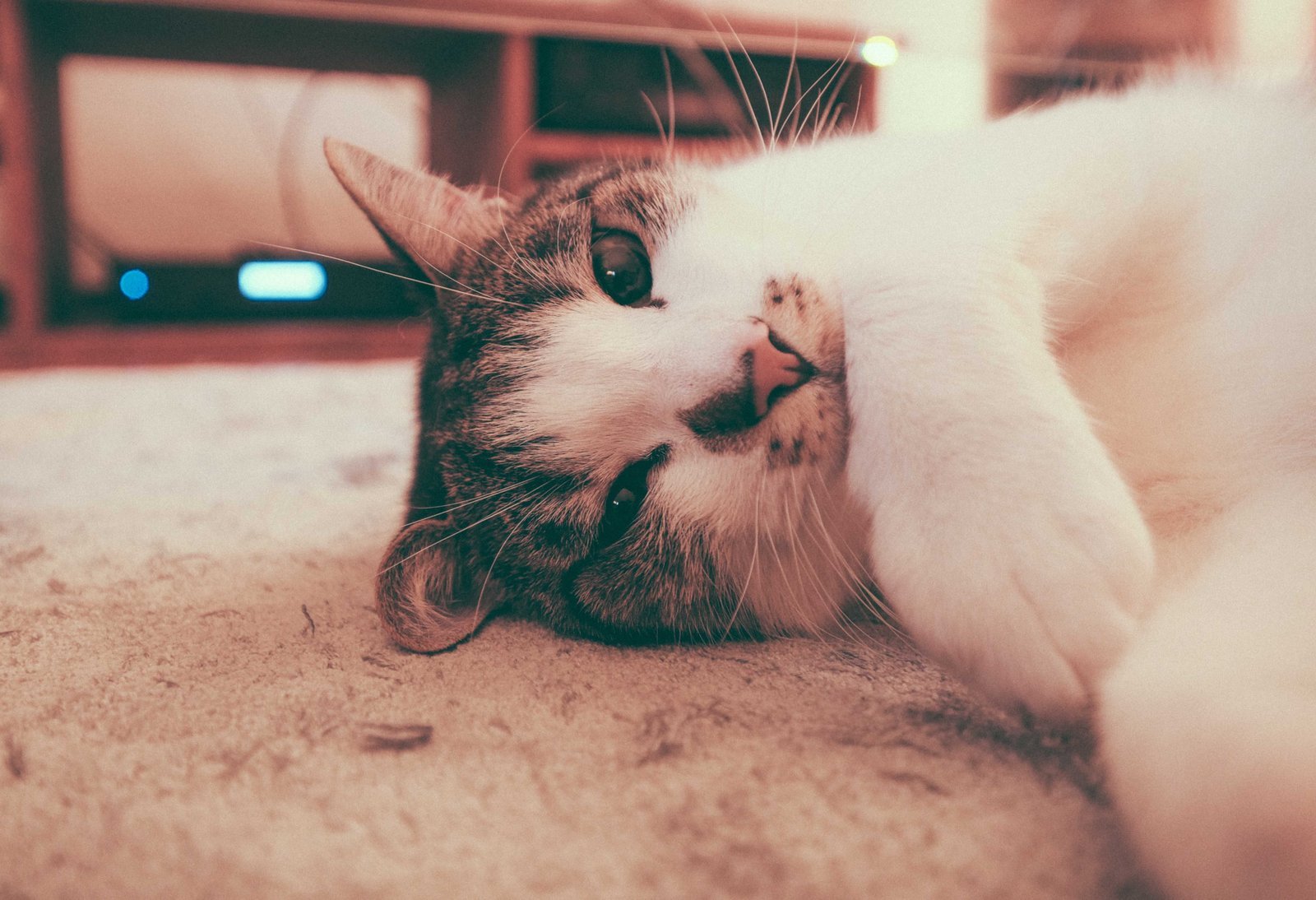
A calm indoor scene with a cat on a beige carpet is a reminder that the floor covering is part of everyday life in a small home, even when the cat is not scratching in the photograph. The work is to make a legal pad easier to use than that same stretch of carpet, and to keep the favorite corner covered until that switch starts to stick.
What not to expect, and when to get help
Do not promise yourself that the rug will be saved in three days. A long-standing favorite corner can take a stretch of consistent management, and some rugs will already need repair or replacement of a small section while you retrain. Deterrent sprays are not a miracle. A scent on the pile may be ignored, may bother people in a tight room, or may simply move the cat two feet down the same runner. If you try a spray, use it only as a minor aid on a covered area, and still provide a legal scratcher the cat likes. Do not soak an area rug in anything that can stain, irritate paws, or linger in a small, poorly aired room.
Skip punishment, shouting, and any plan that makes the cat afraid to move through the hallway. The cat still needs a place to scratch. Your job is to pick that place and make the old one less available for a while.
Contact your veterinarian if scratching suddenly increases, if the cat seems painful or lame, if a claw is torn, or if the cat hides, stops playing, or licks one paw obsessively. A new, frantic interest in the carpet can be a comfort or medical question, not only a training gap. This guide is general information, not a diagnosis, and not a promise that every rug will be left alone on a set timetable.

A white cat sitting on a patterned rug is the everyday backdrop for this problem, without a mid-rake in the shot. Put the scratcher on that path, cover the favorite corner for a while, keep nails trimmed as support, and give the new habit time. That is a more honest plan than a spray, a chase, or a deadline.
FAQ
Why does my cat scratch the rug and ignore a tall scratching post?
Many cats who rake carpet want a horizontal pull, the same motion they use on a runner or a rug edge. A tall post offers a different angle. Try a flat cardboard pad, a sisal mat, or another horizontal scratcher placed on or beside the damaged spot, and keep it from sliding. If the cat already uses a post or a tree for climbing, keep those too, but do not expect a vertical post alone to replace a floor-level habit.
Should I just pick up every rug until the cat stops?
Lifting a small favorite rug for a while can help, especially if you put a legal scratcher in that same place. You do not have to strip the whole apartment of floor coverings. Cover or lift the actual target, offer a scratcher the cat likes right there, and bring the rug back only after the new habit is in use. A bare floor with no legal scratcher just moves the problem to the next carpeted threshold.
Will trimming my cat’s nails stop the damage?
Trimming helps reduce how visible each rake is, but it is support, not a complete fix. A cat with shorter nails can still work a hallway runner if that is the best horizontal scratch in the room. Keep up a calm trim routine, and still place a scratcher where the cat already scratches. If trims are a fight, or a toe looks sore, contact your veterinarian.
Can I use a deterrent spray or a spray bottle to protect the carpet?
Do not treat sprays as a miracle, and do not turn the habit into a spray-bottle fight. A scent on the rug may be ignored or may push the cat to another patch of the same runner, and a water spray often teaches the cat to wait until you leave the room. If you use a spray at all, keep it minor, avoid anything that can stain or irritate paws in a small room, and still provide a scratcher the cat actually uses.
When is rug scratching a veterinary issue rather than a setup problem?
Contact your veterinarian if scratching suddenly increases, if the cat seems painful or lame, if a claw is torn, or if the cat hides or licks one paw obsessively. A sudden change can be a comfort or health question. This guide is general information, not a diagnosis and not a promise that every rug will be left alone on a set timetable.