


If you want to stop a cat from reacting to outdoor cats at the window, the useful work is less about scolding the chatter and more about changing what the glass makes easy. An indoor cat can sit at a pane for a long stretch, then chatter, pace, swat the glass, or stay amped up after a neighborhood cat has already left the walkway. Birds on a nearby ledge or tree can set off the same loop.
This is general information for US and UK cat parents in flats and small homes, not a veterinary diagnosis. There is no honest promise that the cat will ignore the window in three days, or that one new perch will end the habit. Sudden spraying, urinating outside the box, or a new aggressive change can be medical, so speak with your veterinarian rather than treating those signs as a window problem alone. Do not leave a reactive cat unsupervised on a balcony to “get used to” outdoor cats.
What the window reaction actually is
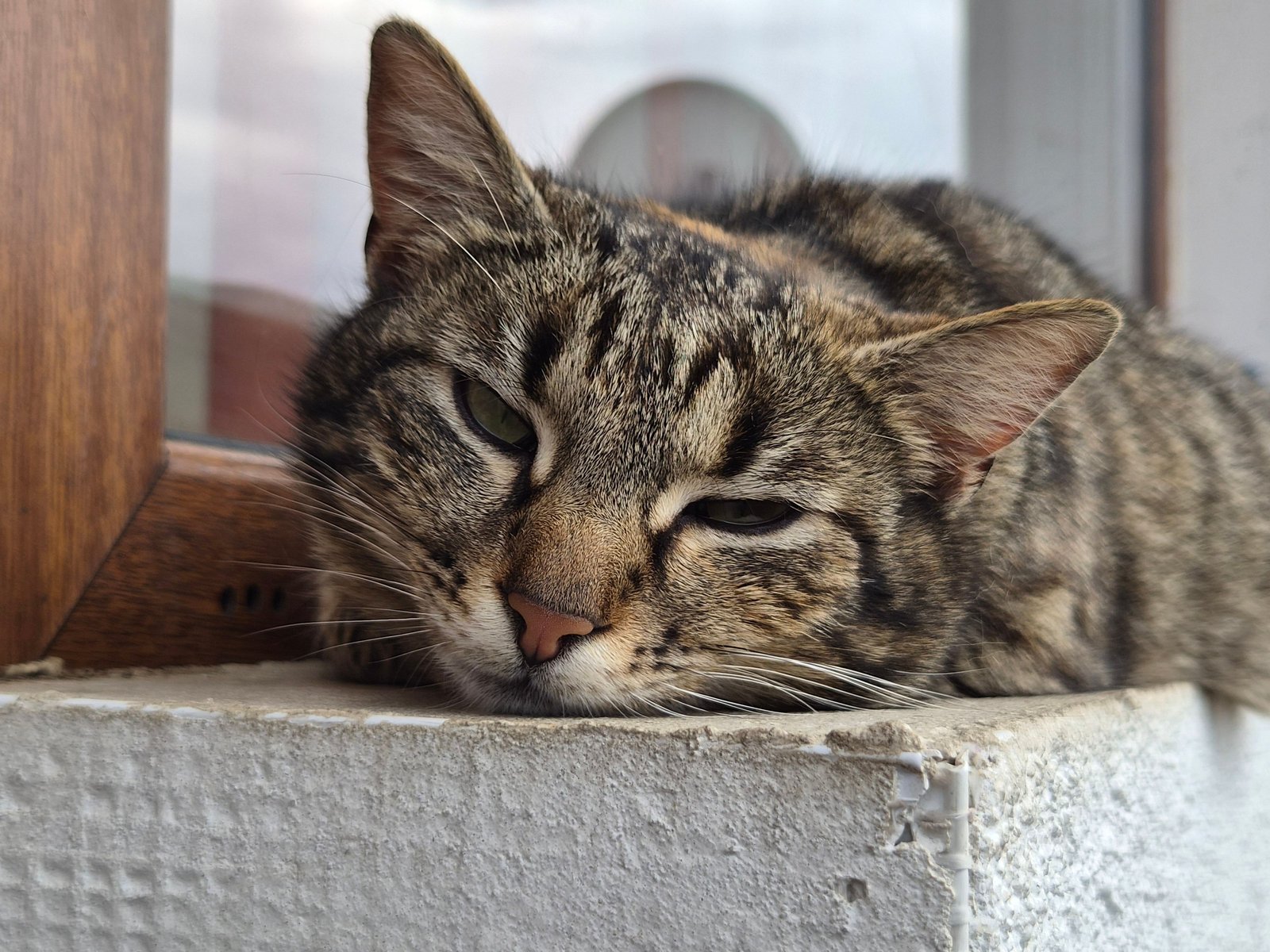
The trigger is visual. A cat on a walkway, a ledge, or a garden wall appears at the glass. The indoor cat stares, chatters, flicks the tail, or slaps the pane. When the outdoor cat leaves, the body may not leave with it. Many cats pace, vocalize, or stay wound up for a while after the “show” is over. That leftover heat is easy to miss in a small flat. The outdoor cat may already be gone, but the indoor cat is still at the glass, still vocal, or still looking for a fight with a housemate who happens to walk by. Closing the sheer a few minutes earlier, or calling the cat to play in another room, is often more useful than waiting for the mood to burn off on its own. Birds at a feeder, a roof, or a tree can produce the same leftover arousal, even though this plan is built around the outdoor-cat problem.
A perch that makes that view too easy all afternoon can keep the loop going. If the favorite seat is fixed to the most active pane, the cat can watch the same walkway from late morning until dusk. In a small apartment, that one window may be the most interesting thing in the home, so the cat returns to it the way another cat might return to a play session that never quite ends.
This is not a fall-safety guide. Screens, window locks, and balcony barriers matter, and how to keep an indoor cat safe around windows and balconies covers that work. It is also not a lesson in stopping a cat from climbing fabric. If the reaction includes climbing curtains or screens, how to stop a cat from climbing curtains and window screens is the better companion, while this article stays on what the cat is reacting to outside.
Watch the whole picture, not only the chatter. A cat who cannot settle after a window session, hides, over-grooms, or becomes sharp with people or other pets may be more than “interested.” Signs your cat is stressed can help you read those changes without turning this into a general stress article. A shy cat who already finds the flat hard may also use a busy window as a tense lookout, and how to help a shy cat feel safe in an apartment is a different, slower safety plan.
Change the view without taking every window away

You do not have to block every pane. Many indoor cats enjoy a view, and a blank wall all day can leave them with too little to do. The small-apartment plan is more precise: keep one good perch, dull the most triggering glass, and move the lookout when a regular outdoor cat is on the walkway.
Start with the pane that causes the most trouble. That is often the window over an alley, a shared walkway, a courtyard, or a neighbor’s terrace where the same outdoor cat appears. You can dull that view with a sheer curtain, a translucent film, or by closing a blind during the hours the outdoor cat usually patrols, while leaving a quieter window available. A sheer is often enough. You are reducing the “front row” seat, not turning the flat into a cave.
Keep one good perch that still works after you change that pane. The perch can move to a less triggering window, sit slightly to the side of the same window, or face a calmer courtyard. If you are choosing a seat for a small window, best window perches for indoor cats can help you think about fit and stability without turning this into a buying guide. In a tight room, best wall-mounted cat shelves for small apartments and best cat trees for small apartments give you a second height that is not glued to the most active glass. The point is a place the cat still likes, not a pile of new furniture.
Rotate the favorite lookout through the week if you can. A stool or a small perch that moves is easier in a studio than a heavy tree. When you know a regular outdoor cat walks past at a certain time, close the sheer or shift the seat before that hour, then open the quieter view again later. If the favorite lookout is a chair or a stool you can move, shift it before the usual walkway hour rather than waiting until the outdoor cat is already in view. A seat that still has a slice of sky, or that faces a quieter courtyard, gives the cat somewhere to sit without a front-row view of the rival. You are teaching the indoor cat that the walkway is not an all-day broadcast.
If two cats share the same window, leftover arousal can spill from one to the other. Give them space to watch from different spots, or close the most triggering pane before both are amped. How to help two cats get along in a small apartment is the broader household plan. This article only needs you to notice that a shared “front row” can turn one outdoor cat into an indoor argument.
Play before peak hours, then help the cat come down

The other half of the plan is timing. If the birds are busiest in the early morning, or the alley cat walks past in the late afternoon, play before that window. A short, genuine play session can take the edge off before the glass becomes the main event.
Use a wand, a fishing-rod toy, or another toy the cat already chases, then end with a meal or a snack if that is part of your usual rhythm. How to build a daily play routine for an indoor cat and best interactive cat toys for indoor cats are the places to build that habit, not this article. The job here is simply to put play on the clock before peak bird or alley-cat hours, so the window is not the only outlet in a small home.
After a window session, help the cat come down. Call them to another room if they will come, start a short play burst away from the glass, or offer a quiet seat that does not face the walkway, such as an armchair or a bed in an interior corner. Do not drag the cat off the sill. If they stay at the pane, dull the view and wait. A cat who is still staring is not ready for a forced cuddle.
The rest of the day still needs something to do, especially if you work away from home and the outdoor cat’s schedule falls in the middle of the afternoon. Indoor cat enrichment ideas and how to keep an indoor cat busy while you’re at work can fill that gap with food puzzles, a second rest spot, and planned play, so the triggering pane is not the only interesting object in the flat. Enrichment is support for this plan. It is not a substitute for changing the view.
Do not punish, and skip the balcony “exposure”
Do not punish chattering or swatting the glass. A hiss, a spray bottle, a clap, or a shove off the sill does not teach the cat to ignore an outdoor animal. It teaches the cat that you become part of a frustrating moment, and it can make the next session sharper. Chatter is often just the sound of a cat who can see prey or a rival and cannot reach it. Swatting the glass is the same problem with nowhere to go. Redirect when you can, change the view, and leave the scolding out.
Do not leave a reactive cat unsupervised on a balcony so they can “get used to” outdoor cats. A balcony puts the indoor cat closer to the trigger, often with less of a barrier, and it adds a fall risk that this article is not meant to solve. If you use a balcony at all, it should already be a safe, enclosed space, and a cat who lunges at outdoor animals is a poor candidate to stay there alone.
If the cat damages a screen or climbs a curtain during these sessions, manage the window first, then use the climbing article for the fabric itself. Do not wait for a torn screen to become an open window.
A starting plan, and when a change may be medical

Use this as a first draft, then adjust it to your windows and your cat:
- Notice which pane, which hours, and which outdoor animals set the cat off, including leftover pacing after the outdoor cat has left.
- Keep one good perch, and move or rotate it so the most triggering view is not an all-day seat.
- Dull that pane with a sheer, a film, or a closed blind during regular walkway hours, and leave a calmer window available if you can.
- Play before peak bird or alley-cat hours, then offer a quieter seat away from the glass afterward.
- Do not punish chattering or swatting, and do not leave a reactive cat unsupervised on a balcony.
- If two cats share the lookout, separate the viewing spots or close the busiest pane before both get amped.
A cat who chatters, then comes away for play and rest, may only need this kind of management at certain hours. A sudden change is a different picture. If the cat starts spraying, urinates outside the box, or becomes newly aggressive toward you, a visitor, or another pet, contact your veterinarian. Those signs can have a medical cause, and a window plan should not be the only response. There is no honest three-day deadline for ignoring the glass. A calmer week is a better measure than a promise that the walkway will stop mattering by Friday.
FAQ
Should I block every window so my cat cannot see outside?
No. Many indoor cats enjoy a view, and taking every pane away can leave a small home with too little to do. Dull or close the most triggering window during the hours a regular outdoor cat appears, and keep one good perch at a calmer pane if you can. A sheer or a shifted seat is often enough. The aim is to make the “front row” less available, not to turn the apartment into a room with no daylight.
Is chattering at birds or outdoor cats something I should stop?
Chattering is often just the sound of a cat who can see an animal and cannot reach it. You do not need to punish it, and you may not need to stop every brief chatter. It becomes a problem when the cat cannot leave the glass, swats until the session stays heated, or remains amped up long after the outdoor animal has gone. In that case, change the view and add play before peak hours, rather than scolding the sound.
Will a new window perch fix this in a few days?
There is no honest promise that it will. A well-placed perch can help if it gives the cat a comfortable seat at a less triggering pane, or if you can move it when the outdoor cat is due. A perch stuck to the busiest glass can make the watching easier, not harder. Give the new setup a fair stretch of consistent days, and combine it with sheers, timing, and play. Do not expect the habit to vanish by the end of the week.
Can I put my cat on the balcony to get used to outdoor cats?
No. Do not leave a reactive cat unsupervised on a balcony as exposure practice. That puts the cat closer to the trigger, often with less of a barrier, and it adds a fall risk this guide is not meant to handle. If you use a balcony at all, it should already be a safe, enclosed space, and a cat who lunges at outdoor animals should not stay there alone. Do the work at the indoor window instead.
When should I speak with a veterinarian about this behavior?
Contact your veterinarian if the cat suddenly starts spraying, urinates outside the box, or shows a new aggressive change toward people or other pets. Those signs can be medical, and they are not something a sheer curtain can sort on its own. You should also get help if the cat is injuring themselves on the glass or cannot settle at all after window sessions. A long-standing chatter at birds, without those changes, is usually a management problem rather than an emergency.