

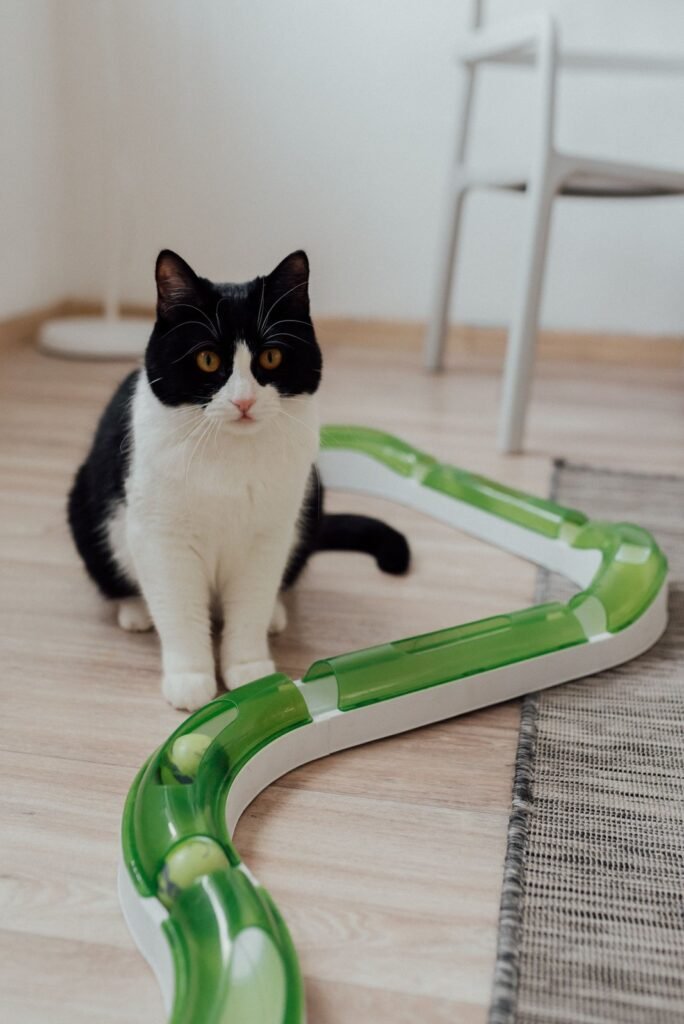
If you are looking for the best motion-activated cat toys for indoor cats, start with a narrower question than “which gadget is best.” The useful question is whether an automatic or motion-activated toy earns a place in your home versus a wand you have to hold. In an apartment, noise, size, power, and where the toy will actually live matter more than a long feature list. A toy that startles the hallway at 2 a.m., or that drags a cord under a lamp, is not a good fit no matter how clever the motion sensor sounds.
This is general information for cat parents in the US and UK, not a ranked review and not a promise that a gadget will replace play with you. Prices, brand ladders, and “best for 2026” lists go out of date and are easy to invent; this guide does not use them. Choose by the room you have, the noise you can live with, and whether you can place the toy safely. If a toy has dangling cords the cat can chew, or small parts that can be swallowed, leave it on the shelf.
When an automatic toy earns a place, and when a wand is still the better tool
A wand or feather teaser is still the most direct way to play with an indoor cat. You control the speed, you can end the session before the cat overheats, and you can aim the movement away from a breakable shelf. That human-powered play is covered in best wand toys for indoor cats. The broader mix of toys you use together belongs in best interactive cat toys. A motion-activated or automatic toy is a narrower job: it can offer a short burst of movement when you are cooking, on a call, or in another room, if the cat actually uses it and if the house can tolerate the sound.
It earns a place when the cat already has a play routine with you, and you want a second, supervised-or-at-least-sensible option for the gaps in between. It does not earn a place as the whole plan for a workday, a shy guest visit, or a cat that hunts ankles. Those are different problems, handled in how to keep an indoor cat busy while you are at work, how to help a cat stay calm when guests visit, and how to stop a cat from attacking ankles and feet. A spinning gadget will not teach a cat to leave feet alone, and it will not stand in for a daily play session you still need to run.
If you work long hours, an automatic toy can fill a mid-afternoon gap, but only after the cat has already had a real session and a place to rest. Leaving a noisy unit running from breakfast until you walk in is how apartments get a 2 a.m. problem and how toys get ignored. Short, defined windows are kinder: a clear floor, the toy on for a stretch you choose, then off and put away.
Think of automatic toys as one item in a rotation, not as a personality transplant. A tunnel, a puzzle feeder, a window perch, and a short wand session each do a different job. See best cat tunnels and hideaways for apartments, best puzzle feeders for cats, best window perches for cats, and best cat trees for small apartments when you are choosing those pieces. For the shape of the day, use how to build a daily play routine for an indoor cat and indoor cat enrichment ideas. This article stays with the motion-activated or automatic toy itself.
Noise, power, and size in a small home
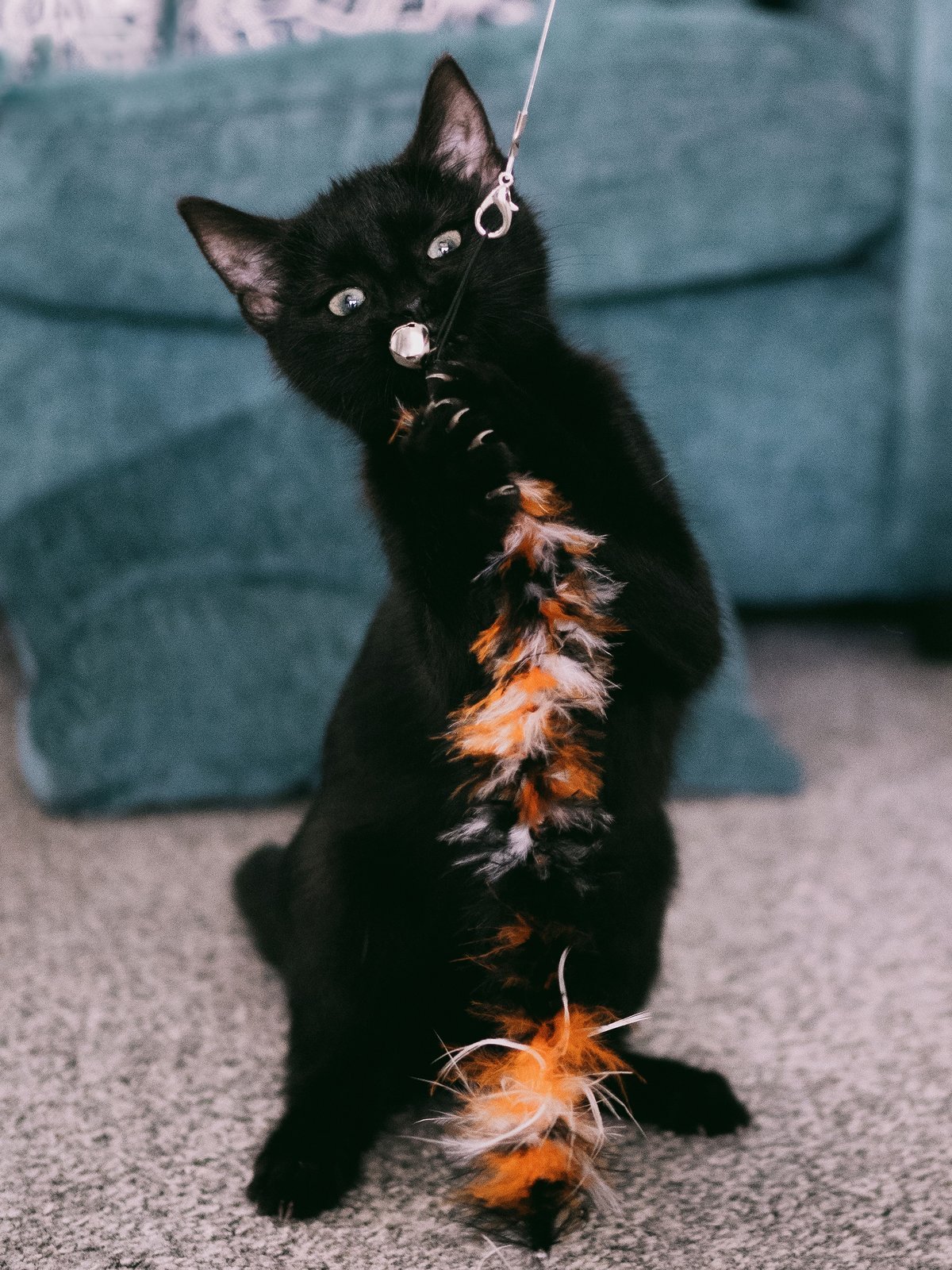
In a small apartment, noise is often the first filter. A toy that ticks, beeps, or rattles across hard floors can be fine at noon and unkind at night, both for you and for neighbors through a thin wall. If you can, test the sound on a similar surface to your own, or choose a toy you can switch off completely and put away. “Motion-activated” should mean the toy rests until the cat approaches, not that it restarts itself every few minutes in an empty room.
Battery power is simpler to place because you are not tied to a wall outlet. The trade-off is that batteries die, often in the middle of a week, and a fading motor can become noisier or weaker. USB power can run longer and may cost less over time, but a cord across a walkway is a chewing risk and a trip hazard. If you use a corded toy, place it so the cord is short, covered, or completely out of reach, and unplug it when you are not using it. A toy that only works when you can see the cord is safer than one that lives plugged in behind a sofa.
Size matters as much as power. A wide circular track or a long wand-style automatic arm needs a clear floor so it does not bounce off a lamp, a water bowl, or a narrow hallway runner. Measure the space before you bring a large toy home. In a studio, a smaller track, a compact moving ball, or a toy you can pick up and put in a closet may be the better fit. If the only open floor is a hallway the cat uses at night, that is a poor home for a toy that takes off when it senses movement.
A compact toy you can pick up with one hand is easier to rotate and easier to retire if a part loosens. If a unit is heavy, awkward, or has a wide sweep, you are less likely to put it away at night, and that is when hallway dashes start. Choose something you will actually move, not something that becomes furniture.
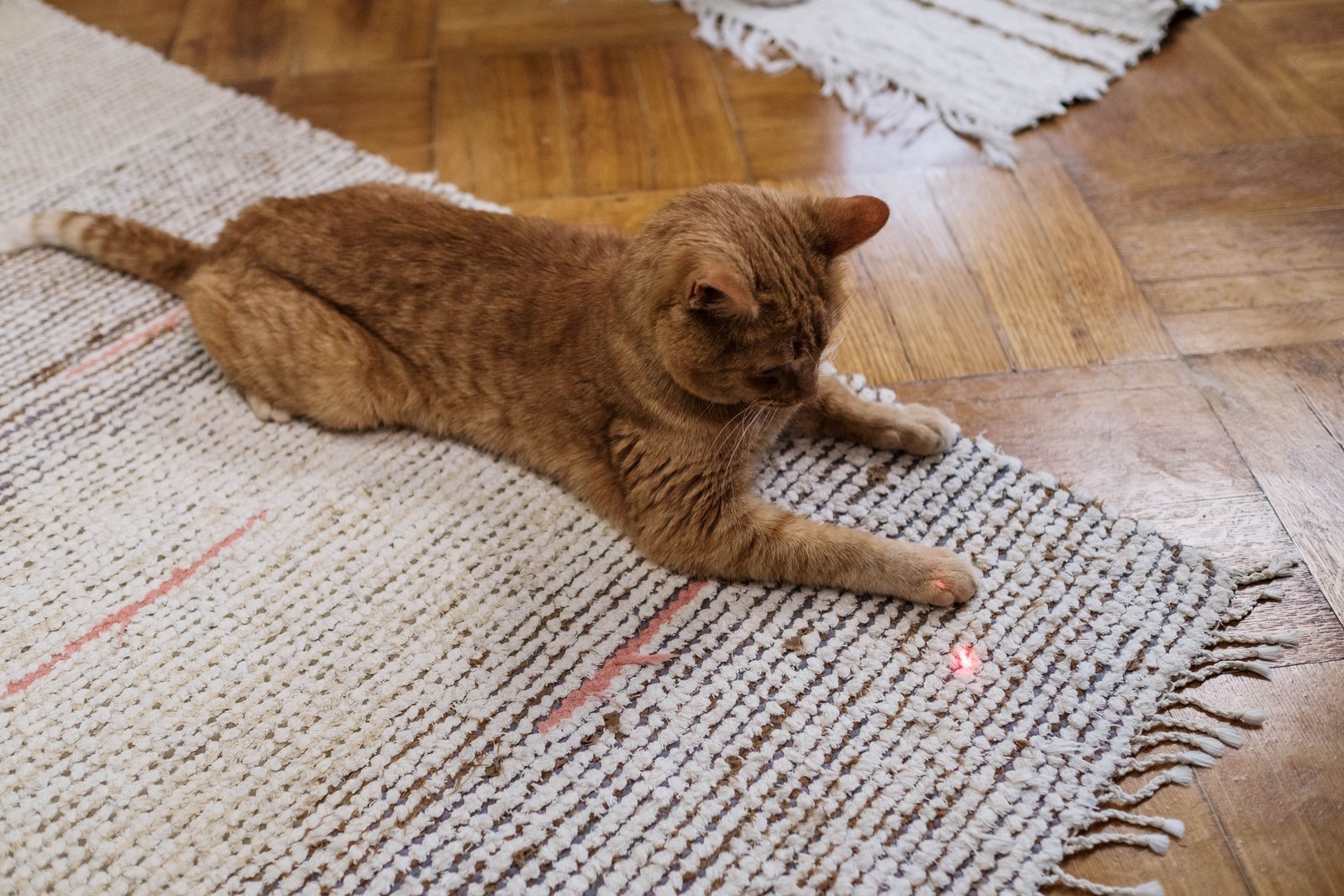
A laser pointer, even a bright one, is not a motion-activated toy. It still needs you to aim it, and it offers no object the cat can catch. If you use a laser at all, end the session with a real toy or a treat the cat can hold. The photo is a useful reminder that “movement the cat chases” is not the same as an automatic gadget you can leave on the floor.
Place it where a sudden dash will not do damage
Placement is most of the safety work. Set the toy on a clear, stable stretch of floor, away from shelves, plants, cords, and a glass of water. Give it enough room to travel without hitting a chair leg. If the toy can roll, block the path to the kitchen or a steep step. In a tight apartment, a bedroom with a closed door, or a living room corner you have cleared, is usually better than a hallway that leads to the front door.
Night hours deserve a separate decision. A motion-activated toy that wakes itself at 2 a.m. can turn a still home into a racetrack. Use an off switch, a timer if the toy has a simple one, or the most honest option: put the toy away when you go to bed. You can bring it back out in the morning. A cat that wants to play at night needs a routine and a last play session with you, not a gadget racing toward a lamp.
If you share walls, listen once with the toy on the same surface it will use every day. A click that is mild on a rug can be sharp on bare wood. If you would not want to hear it through a bedroom door, your neighbor may not want to hear it either. That test takes one evening and can save a return.
Watch the first few uses. If the cat startles, hides, or only bats once and leaves, the sound or the movement may be too abrupt. Move it to a quieter room, lower any volume you can control, or try a simpler toy in the same rotation. If the cat chews the housing, the cord, or a dangling ribbon, take the toy away. Do not wait to see whether a swallowable bell or a frayed string becomes a problem.
Rotate, then put it away
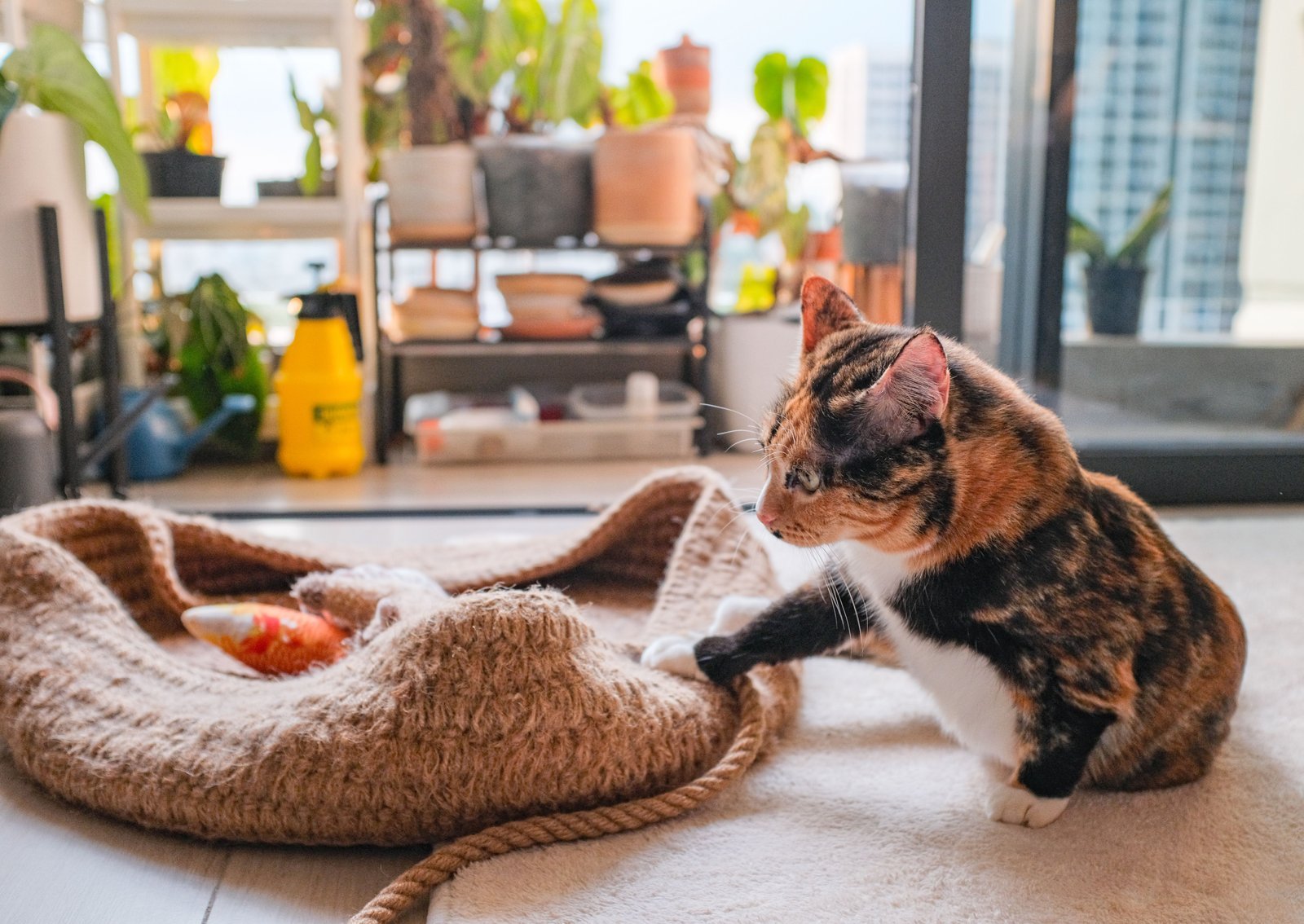
Automatic toys go stale in the same way other toys do. If the same unit sits in the middle of the room for a month, many cats walk around it. Keep two or three play objects in circulation and put the rest out of sight. A ball track, a kick toy, and a wand session can take turns during the week. The motion-activated toy should come out for a defined stretch, then go back in a closet or a high cabinet the cat cannot open.
Rotation also helps you notice damage. Check for cracked plastic, loose parts, chewed cords, and anything small enough to swallow. If a part has come off, retire the toy. A cheap replacement is not worth an emergency visit.
Be honest about what you are seeing. Some cats love a moving track. Some prefer a simple object they can carry. Some only come alive when you pick up a wand. None of those preferences is a failure of the gadget, and none of them is a reason to leave an automatic toy running all night in the hope that it will finally “work.” If the cat ignores it after a fair try in a clear space, pack it away and spend the play time with something they already use.
Keep a simple note of what you tried: the room, the time of day, and whether you were present. Some cats will only join in when you are in the room; that is still useful, because the toy then becomes a helper during a wand session rather than a solo entertainer. If the cat only plays when you are there, treat the gadget as a second toy in your hands-on routine, not as a workday substitute.

A hanging toy under a table can be part of a rotation, but it is not automatically safer than a floor gadget. Watch the string or ribbon. If the cat can wrap it, chew it, or pull a clip loose, take it down. The same rule applies to automatic toys with wands or dangling feathers: if you cannot see the parts and stop the motion, do not leave the toy running in an empty room.
The success test is quiet and practical. The cat plays, the toy stays in its zone, the noise is tolerable, and you still have a short daily session that does not depend on a motor. When those pieces are in place, a motion-activated toy can be a helpful extra. When they are not, a wand, a clear floor, and a toy the cat can catch will do more than a gadget you do not trust after dark.
FAQ
Can a motion-activated toy replace playtime with me?
No. An automatic toy can add short bursts of movement when you are busy, but it should not be the whole plan. Most cats still need a daily session with you, often with a wand or another toy they can actually catch. Use the gadget as a supplement, and keep the off switch nearby so it does not become the only activity in the house.
How do I keep a toy from being too loud in an apartment?
Choose the quietest option you can live with, test it on your actual floor, and give it a defined on-and-off window. Hard floors make rattles worse; a rug in a clear zone can help a little, but it will not fix a noisy motor. If the toy restarts itself in the night, put it away before bed. Neighbors and a sleeping household are part of the buying decision, not an afterthought.
Is a USB-powered toy better than a battery one?
Neither is automatically better. Batteries are easier to place away from outlets, but they run down and should be checked. USB power can last longer, but only if the cord is short, covered, or out of reach, and only if you unplug the toy when it is not in use. If you cannot place a cord safely, choose a battery model you can switch off and put in a closet.
Where should I put the toy in a small apartment?
Give it a clear, stable patch of floor away from lamps, cords, bowls, and a hallway that leads to stairs or the front door. Watch the first sessions and move it if the cat startles or if the toy hits furniture. At night, putting the toy away is often safer than hoping a motion sensor will stay quiet until morning.
What if my cat ignores the toy after a few days?
That is common. Put it away and rotate it with other play objects rather than leaving it in the middle of the room. Try it again in a clearer space, or after a wand session when the cat is already in a playful mood. If the cat still ignores it, spend your time on play they already enjoy. A gadget that is not used is not a failure you have to fix by leaving it on longer.