

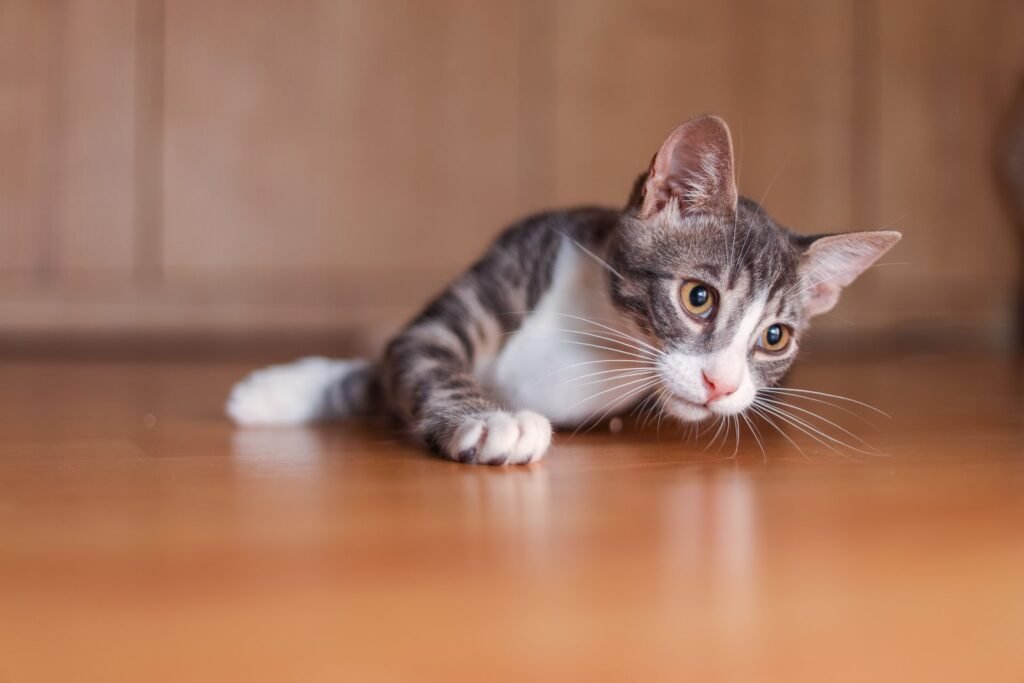
If you want to stop a cat from attacking ankles and feet, treat the habit as a sneak-attack on moving toes, not as a cat who has suddenly turned mean. In a small apartment, the hallway, the bedroom doorway, and the path from the sofa to the kitchen are short hunting grounds. A cat who waits, then grabs a passing ankle, is often practicing a play or predatory sequence that has been paid by movement, noise, or a chase.
A practical plan is to offer a real hunt before the busy parts of the day, use a wand or another toy instead of your feet, give the cat a way to cool down, and stop accidentally rewarding the pounce. Do not use your hands or feet as toys. Do not kick or spray the cat as training.
This is general information for cat parents in the US and UK, not a veterinary diagnosis, and not a promise that the habit will vanish in a week or after a few play sessions. A sudden change in aggression, a bite that breaks skin, or a cat that seems painful or unwell is a veterinary question, not a wait-and-see.
This is a sneak-attack on moving feet, not play-biting
The job here is the ambush as you walk through the home: a cat hiding by a doorway, under a chair, or along the hall, then wrapping paws or teeth around an ankle or toe. It is not a rewrite of how to stop a cat from biting during play, which is about manners once a toy or a hand is already in the game. Play-biting is the interaction after play has started. This article is the surprise pounce on feet that were only trying to get to the kettle.
It is also not a full daily play routine for an indoor cat, though you will borrow a short hunt-and-cool-down pattern from that rhythm. It is not a tour of indoor enrichment ideas, keeping a cat busy while you are at work, stopping a cat from waking you at night, or a checklist of signs your cat is stressed. Those guides matter when the ambush is part of a bigger day or a welfare question. They are not the doorway pounce itself.
A shy cat who hides and then swats may also need more safety, which is a different job from this play habit; helping a shy cat feel safe in an apartment can sit beside this plan if fear is part of the picture.
Think of four jobs, not one:
- Give the cat a real hunt first. A wand or chase session before you are busy walking around.
- Keep feet out of the game. Toys move. Skin does not.
- End the hunt clearly. A catch, a snack, and a quiet place to settle.
- Stop paying the ambush. Hopping, squealing, or chasing the cat can become the prize.
Schedule real play before the busy times of day

Ankle attacks often cluster at the same times: when you first get up, when you come home, when you walk back and forth while cooking, or when you cross the room on a work-from-home call. The cat has energy and a moving target. The fix is not to tiptoe forever. It is to empty some of that hunt drive before the traffic starts.
A useful shape is a short, genuine play session, then the busy stretch. In the morning, play before you rush for shoes and coffee. In the evening, play soon after you come through the door, before you start pacing between rooms. If the cat tends to ambush you on the way to the bathroom at night, move a play session earlier in the evening rather than adding a midnight wrestle.
You do not need a long production. A few minutes of stalking, chasing, and catching can be enough for one block of the day, then another later if the cat still looks charged. The daily routine guide above is the place to map a whole day. Here, the point is timing: play first, walk past later.
Solo toys can fill the gaps when you cannot be the moving part, including during a workday. They are a support, not a replacement for the sessions you do with a wand. If you are choosing objects the cat will actually use, interactive toys for indoor cats is a practical next read. A laptop and a few toys on the rug will not, by themselves, stop a hallway pounce, but they can give the cat something else to do when you sit down after play.
Use a wand or other toy, not your feet
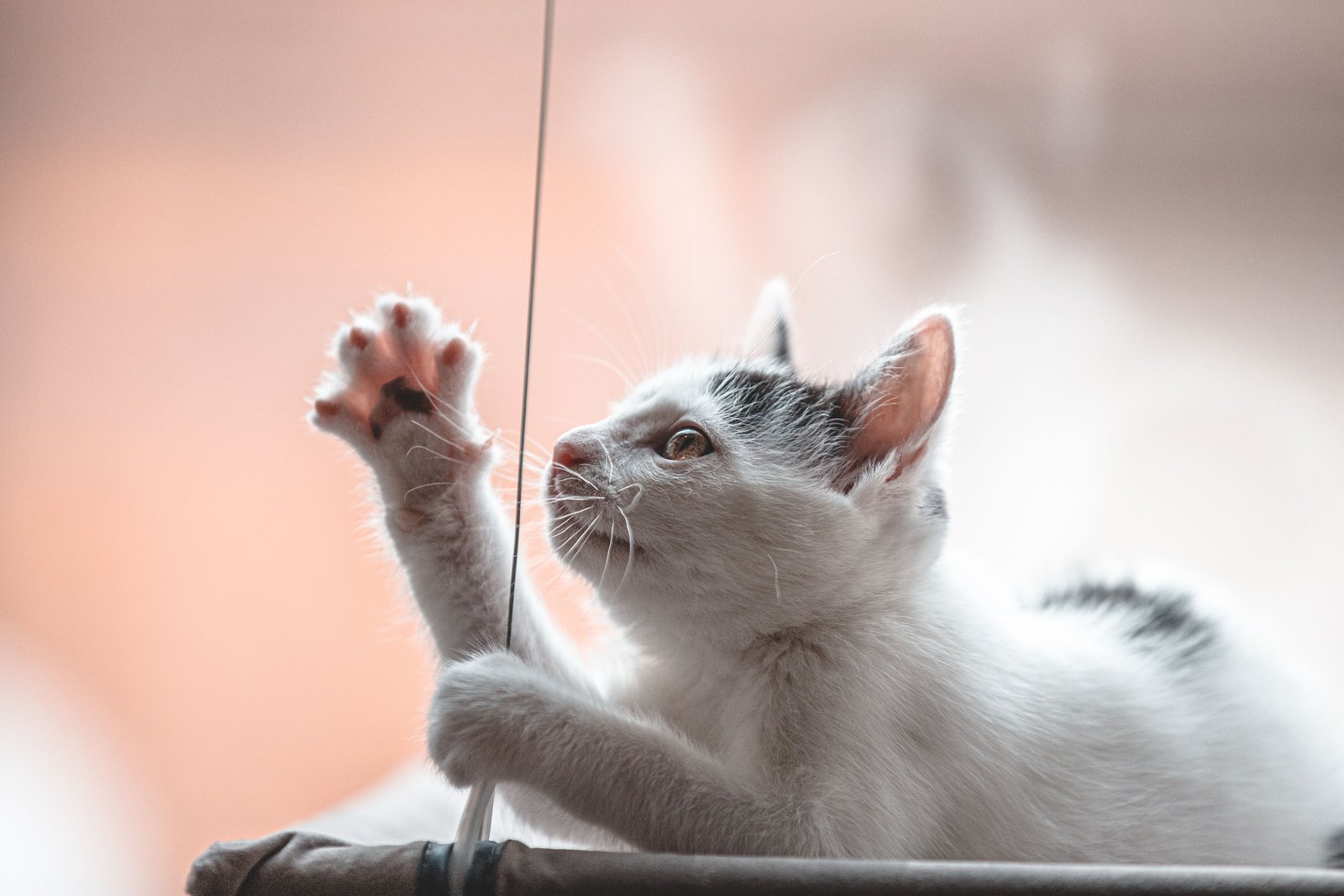
Feet are a bad toy for a simple reason: they are attached to you, they move at the height a cat already likes to hunt, and they teach the cat that grabbing skin starts a game. Hands have the same problem once the cat has learned that fingers wriggle and then retract.
Use a wand, a fishing-rod toy, or another object that keeps your skin out of the bite. Drag the lure along the floor, around a doorframe, and up onto a chair so the cat can stalk and leap at the toy, not at you. Let the cat catch it. A hunt that never ends in a catch can leave the cat still hunting the next thing that moves, which is often your ankle when you stand up.
Wand toys for indoor cats are built for this job. A simple string can work in a pinch, as long as you supervise and put it away so it cannot be swallowed. Do not leave loose thread or long yarn out as an unattended toy.
If the cat comes for your feet during play, freeze, move the wand into the game, and stop using your toes as a lure. If you have already been wiggling feet under a blanket, retire that habit. It is funny once and expensive later.
Never kick the cat away, and never spray them as a training method. Those responses can make the cat more aroused, more fearful, or more likely to grab harder. Step out of range, end the contact, and restart with a toy when everyone is calmer.
Give the cat a way to cool down
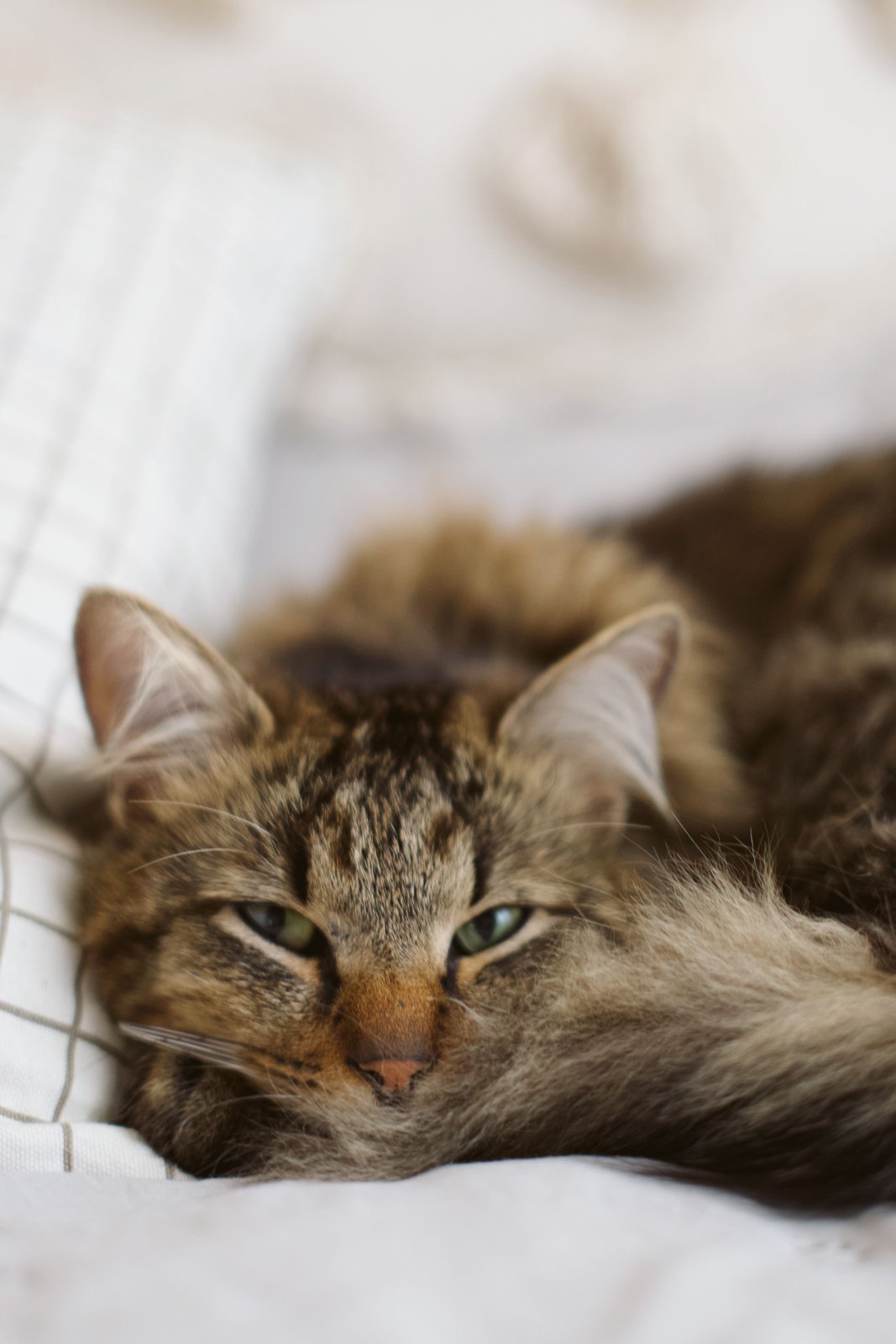
A play session that stops at the peak can dump the leftover energy onto the next pair of socks. After the last catch, slow the wand, let the cat bite and hold the toy, then offer a small snack or a lick of wet food if that fits your feeding plan. Dim the excitement. Sit still for a minute. Point the cat toward a bed, a perch, or a familiar rest spot.
This is the wind-down, not a second workout. If the cat still looks wide-eyed and ready to sprint, do another brief catch on the toy rather than walking away and hoping the hallway will be quiet. Then end again.
A cool-down is easier in a small home if the cat already has a place that feels finished: a bed, a window perch, or a hideaway they like. You do not need to rebuild the whole apartment to start this plan, but a clear rest spot helps the session have an ending.
Stop accidentally rewarding the pounce
Cats repeat what works. If a pounce makes you hop, shout, run, or flop onto the floor, the cat has just been given a lively prey response. If you then wrestle with your hands, the skin game continues.
When you see the crouch, or you know the doorway is a usual ambush point, get a toy down before you walk past if you can. Toss a lure ahead, or pause and trail a wand along the floor so the cat has a legal target. If you have already been grabbed, stop moving your feet, unhook yourself calmly, and switch to a toy. Do not kick, and do not turn it into a dance.
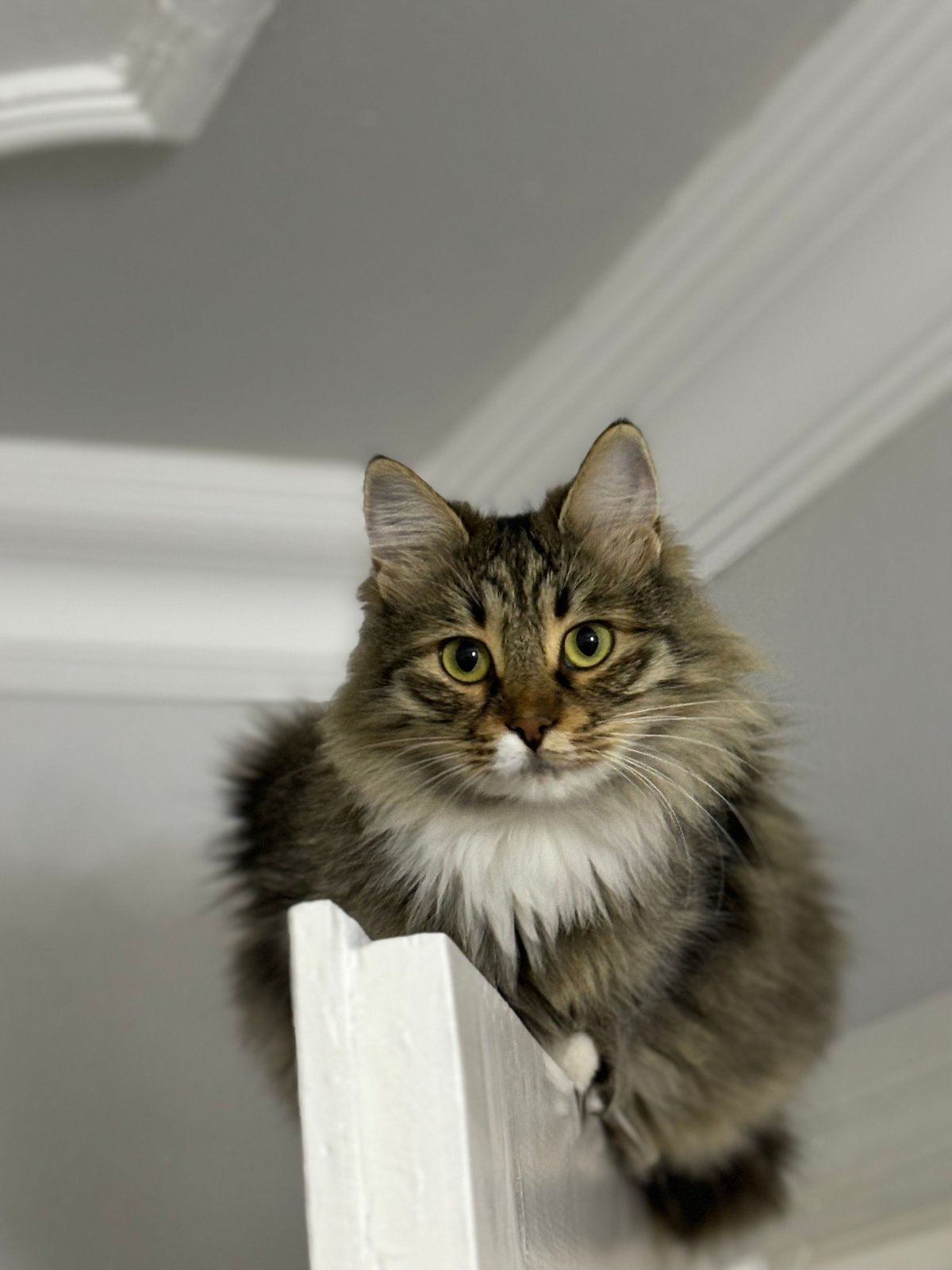
Some cats use a high perch or the top of a door as a lookout. That is not automatically a problem, but it is a reminder that doorways are interesting. Walk a slightly different line if one path always triggers the pounce, and keep a wand near the rooms you cross most. You are changing the ending of the sequence, not trying to punish the crouch after it has already paid off.
Avoid miracle promises. Essential oils are not a training plan, and some are unsafe around cats. Scent products sold for calm are not a substitute for play, a cool-down, and a boring response to the ambush. If a product claims to end pouncing on its own, treat that claim with caution and keep the practical routine in place.
When this is a veterinary question
Most ankle pouncing in an otherwise well cat is a play or predatory habit. This guide will not diagnose pain, fear, or a sudden change in mood.
Contact a veterinarian if the habit appears suddenly in a cat who did not do this before, if a bite breaks the skin, or if the cat seems painful, lame, withdrawn, or unwell. A cat who is sore may strike when you walk close. A cat who is stressed may hide and then lash out. The stress-signs guide above can help you notice patterns, but it is not a diagnosis. For a person, a bite that breaks skin may also need medical advice of your own; do not ignore a deep puncture.
Do not wait to “see if they grow out of it” when the behavior is new, intense, or paired with other changes. The training plan is for the everyday hallway ambush, once the cat is otherwise well.
A calm starting plan you can repeat
Use this as a first draft, then adjust to your rooms and your day:
- Play with a wand or similar toy before the times you walk around most.
- Keep feet and hands out of the game, including under blankets.
- Let the cat catch the toy, then slow down, offer a small snack if it fits, and show a rest spot.
- When a pounce happens, freeze, unhook, and redirect to a toy. Do not kick or spray.
- Put a toy near usual ambush paths so you are not empty-handed in the hallway.
- Call your veterinarian if aggression changes suddenly, a bite breaks skin, or the cat seems painful or unwell.
Ankle attacks in a small home are often a hunt that found the wrong target. The aim is a cat who has already had a real play session, a toy that takes the pounce, and a hallway that no longer pays off. If something about the grabbing looks painful, fearful, or suddenly different, ask your veterinarian to help you sort a play habit from a health problem.
FAQ
Why does my cat pounce on my ankles when I walk by?
In many homes it is a play or predatory habit. Moving feet are the right height, they appear suddenly in a doorway or hall, and they often produce a lively reaction. Hunger, leftover energy, or a quiet day with little hunting can make the ambush more likely. It is not usually a sign that the cat dislikes you, but a sudden change still belongs with a veterinarian.
Will this habit stop after a week of play?
There is no honest date that fits every cat. Some households see fewer ambushes once play is timed before busy walking and feet are no longer used as toys. Others need longer, especially if the pounce has been paid for months. Aim for a safer routine you can repeat, not a promise that the behavior will be gone in a week.
Can I use my feet or hands as toys if I am careful?
It is a poor idea. Feet and hands teach the cat that grabbing skin starts the game, and it is hard to keep that rule tidy when you are only walking to the kitchen. Use a wand or another toy, let the cat catch that object, and retire foot-wiggling under blankets.
Should I kick or spray my cat when they grab me?
No. Kicking or spraying is not part of this plan. Those responses can frighten the cat, raise arousal, or make the next pounce harder. Step out of range, end the contact, and restart with a toy when it is calm enough to do so.
When should I contact a veterinarian?
Contact a veterinarian if the grabbing appears suddenly, a bite breaks the skin, or the cat seems painful, lame, withdrawn, or unwell. This article is general information for an everyday play habit, not a diagnosis. A person who has a bite that breaks skin may also need their own medical advice.