


If you need to handle dog zoomies in a small apartment, treat the burst as a short safety problem, not as proof that you failed to “tire the dog out.” Zoomies are those sudden, frantic running loops that show up after a bath, in the evening, or when leftover energy spills over. In a tight flat they happen around coffee tables, chair legs, kitchen corners, and floors that get slick the moment paws are wet. The thumps also travel through thin floors to the people downstairs.
This is general household advice for dog parents in the US and UK, not a veterinary diagnosis, and not a promise that the dog will never zoom again. A good result is simple: the burst ends without a crash, and the next one is shorter or less chaotic. Do not yell, corner the dog, or shove furniture into the path mid-sprint. If the running looks disoriented, the dog slams into walls again and again, or circling starts suddenly and does not stop, that is a health or pain question for a qualified professional, not a cue to add more “zoomies training.”
Why a tight home makes zoomies their own skill
A general plan for tiring out a high-energy dog in an apartment still matters, but it is a different job. That work happens earlier in the day, on a walk, or with a legal indoor game. Zoomies are short and messy. The dog is already moving, often too fast to steer, in a room full of edges. A coffee table that is only a mild nuisance at walk speed becomes a shin-level barrier, and a hallway that seems long enough still ends in a bathroom, a balcony door, or a glass table.
Thin apartment floors add a neighbor problem that a house with a yard does not have. The burst may last a minute, but the thumps can sound like dropped furniture. That is not the same problem as dog barking in an apartment, and shouting over the noise usually adds arousal. Your job in the moment is to keep the path clear and let the run finish, then help the dog come down.
Watch the pattern, not just the speed. Many dogs get a recognizable “pre-zoom” look: a play bow, a wide-eyed stare, a sudden spin after you put the towel down, or a sprint that always starts at the same doorway. If you can see that coming, you may have a few seconds to close a door. If you cannot, stand still and do not turn the burst into a chase.
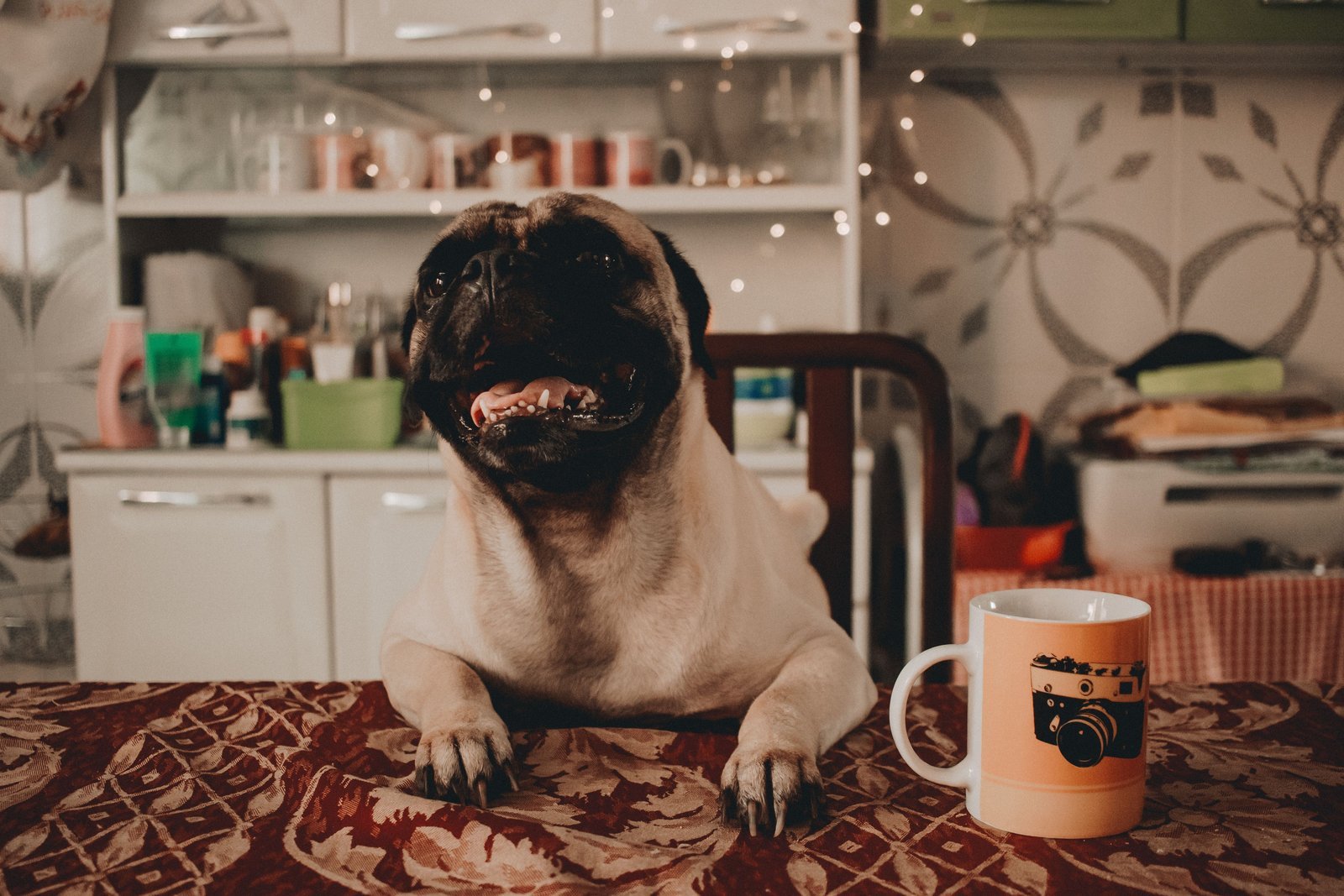
If you can see a burst coming, clear a short, straight path
You do not need a clear apartment. You need one short, straight path with the worst hazards closed off. Push a coffee table or a floor lamp closer to the wall if you can do it before the dog takes off. Pick up the mug, the laptop, and anything glass at tail height. Close the bathroom door so the dog cannot ricochet off a slick tub. Close the balcony door, even if you usually leave it on the latch. A balcony is not a longer runway during a frantic burst.
If the dog always loops from the sofa to the front door, leave that corridor open and close the rooms that dead-end in a tight corner. A straight hall is safer than a living room stuffed with chair legs. Do not build a maze of baby gates at the last second. A gate the dog did not expect can become something to slam into. The aim is fewer sharp turns, not a new obstacle course.
If the burst starts in the kitchen, close off the tightest corner, move the trash if it is in the path, and step out of the loop. You do not have to catch the dog at the far end. Standing in a doorway to block an exit mid-sprint is how people and dogs get knocked down. Get yourself to a wall or a sofa edge, then wait.
What to do while the dog is actually running
Stand still. Let the burst end. Chasing turns a short loop into a longer game, and in a small room it also puts your knees and the dog’s face in the same tight space. Do not corner the dog against a wall or a crate. Do not throw a toy into the path to “redirect” a dog who is already at full speed. A toy on a slick floor is one more thing to slip on.
Talking in a low, ordinary voice is fine if it helps you stay calm. A sharp “no,” a clap, or a laugh that rises into a squeal can feed the frenzy. If children are in the room, ask them to stand still, or step with them into a bedroom until the loop ends. The dog is not being naughty in a way that needs a scold mid-sprint. The dog is discharging energy in a space that was not designed for it.
Keep your hands off the collar unless you are preventing an immediate crash into glass and can do it from the side, without leaning into the path. Grabbing a running dog from the front is a good way to get a bruise. If you miss the chance to close a door before the burst, let that door wait. Mid-sprint furniture moving is how lamps fall.
After a bath, dry the paws before the floor gets involved
Baths are a classic trigger, and a small bathroom makes the next thirty seconds more slippery, not less. If you already follow a careful plan for bathing a dog in a small apartment bathroom, add one extra step before you open the door to the hall: dry the paws, including between the pads if the dog will allow it. Damp paws on wood, tile, or vinyl are how a joyful sprint becomes a slide into a cabinet.
If you use a dryer, keep that work in the bathroom where the towels already are, and follow the space limits in blow-drying a dog in a small apartment bathroom. A dog who is still dripping does not need a “celebration lap” through the living room. If the dog starts the pre-zoom wiggle while you are still holding the towel, keep the bathroom door closed, finish the paws, and only then open a short, straight path.
Brushing can wait until the dog is no longer winding up. A calm brush on a dry dog is useful; a brush mid-wiggle is just another object in a tight room. When you do brush later, the ordinary routine in brushing your dog at home is enough.
After the burst, offer water and a calm job
When the running stops, many dogs pant, look a little wild, and still have a leftover buzz. Offer water in the usual bowl. Then give one calm job the dog already understands, not a new exciting game. A snuffle mat on a known rug is a good example: the dog has to lower the head and search, which is a different posture from sprinting. A simple puzzle toy can do the same work if the dog already uses one without getting frantic.
A short settle on a bed the dog already likes is also enough. That is not a full settle training rewrite. You are only asking the dog to land on a familiar spot and rest while the arousal drops. If the dog already uses a crate as a rest place, they can go there if they choose. Do not herd a still-wired dog into a crate to end a burst they have not finished. Crate training in an apartment is a separate skill, and mid-sprint crating is not what that skill is for.
Skip the hallway fetch, the tug that ramps the dog back up, and one more lap. Indoor fetch and tug are useful earlier in the day, which is why guides to indoor fetch toys for apartment dogs and tug toys for apartment play belong in the leftover-energy plan, not in the minute after a crash-prone sprint. If the dog wants to keep bouncing, keep the job quiet and end it while they can still lie down.
Prevent some bursts with a leftover-energy plan, not a last-minute hall run
Some zoomies will still happen, especially in young dogs and in the evening. You can still reduce the messy ones by giving the dog a legal outlet earlier, before everyone is tired and the living room is full of dinner plates. A walk, a training game, or a short indoor play session in the afternoon is more useful than asking the dog to run it off in the hall once the burst has started. Hall laps at the last minute add noise for neighbors and still end at a wall.
Match the earlier plan to the space you actually have. A long fetch game may be too much in a studio; a snuffle, a short tug with clear start and stop cues, or a walk that includes some sniffing may be enough. If you work long days, the unravelling when you walk in the door can look like zoomies and like lagging restlessness at the same time. A dog who cannot cope with being left is a different problem, and that plan lives in leaving a dog home alone in an apartment. Do not treat every excited greeting as a home-alone crisis, and do not treat a home-alone crisis as just zoomies.
Build the earlier outlet into days when a bath is already on the calendar. A short walk before the bath, or a calm chew after paws are dry, often prevents the post-bath ricochet. You will not delete every burst, and you do not need to. You only need fewer chaotic ones.
What good enough looks like, and when to get help
Good enough is a burst that ends without a crash, a slip, a smashed mug, or a dog who keeps slamming into the same wall. The next burst may still happen, but it should be shorter, or it should stay on the path you cleared. A dog that never zooms is not the goal, especially if the dog is young, freshly bathed, or coming down from a quiet day in a small home.
Learn the difference between a familiar, joyful sprint and a dog who looks stressed or unwell. A tight face, pinned ears, frantic panting that does not ease, or a dog who cannot settle after several minutes is worth a closer look. Our guide to signs your dog is stressed can help you describe what you are seeing, but it is not a diagnosis. If the running looks disoriented, if the dog slams into walls repeatedly, if they seem blind to furniture they usually dodge, or if circling starts suddenly and will not stop, call a veterinarian or another qualified professional the same day. Do not add a calm supplement, CBD, or a guaranteed quiet chew as a substitute for that call.
Some dogs will always have a brief evening loop in a small flat. If you close the dangerous doors, dry the paws, stand still, and offer water and a known calm job, you are already doing the work this skill asks for.
FAQ
What should I do when my dog suddenly starts running around the apartment?
Stand still, keep your hands off the collar unless you are preventing an immediate crash, and let the burst end. Do not chase, corner, or shove furniture into the path mid-sprint. When the running stops, offer water and a calm job on a known bed or mat.
How can I make zoomies safer after a bath?
Dry the paws, including between the pads if the dog will allow it, before you open the bathroom door to a slick hall or living-room floor. Keep the bathroom door closed if the dog is already winding up. A celebration lap on wet paws is how many slips start.
Should I try to tire my dog out in the hallway when zoomies start?
No. A last-minute hall run adds noise for neighbors and still ends at a wall. Save walks and legal indoor play for earlier in the day, and during a burst just keep a short path clear and wait for it to finish.
Is it normal for a dog to have evening zoomies in a small flat?
Yes, many dogs have a short evening burst, especially if they had a quiet day or a bath. It is common, and it does not automatically mean the dog is unhappy in an apartment. The goal is a safer, shorter loop, not a dog that never zooms.
When are zoomies a reason to call a veterinarian?
Call a qualified professional if the running looks disoriented, the dog slams into walls repeatedly, they seem unable to avoid furniture they usually dodge, or circling starts suddenly and does not stop. That is a health or pain question, not a cue to add more exercise.