

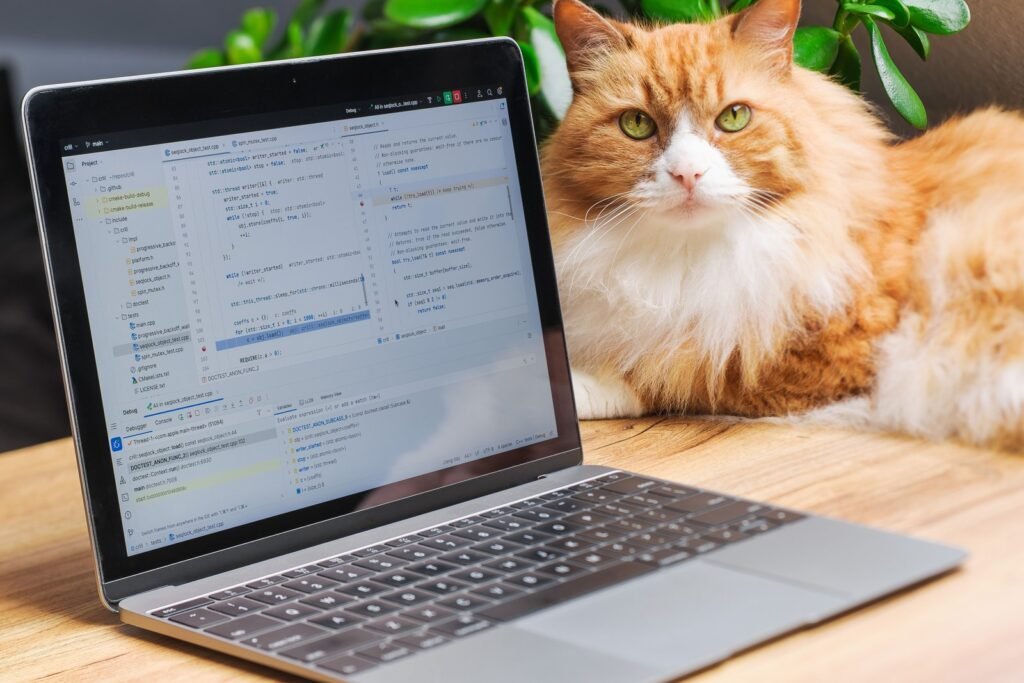
If you need to keep a cat off your desk while you work from home, you are not dealing with a vague manners problem. You are sharing a small apartment with a cat who has found the warmest, highest, most interesting seat in the room: the keyboard, the trackpad, a water glass, a charging cable, or your lap in the middle of a call.
This is general information for US and UK cat parents, not a veterinary diagnosis and not a training guarantee. There is no honest promise that desk habits will change in three days. If your cat is suddenly clingy, restless, or vocal all day, that may be a health or environment question. Contact a veterinarian if that change is new or getting worse. This article is about the desk you are sitting at. Keeping an indoor cat busy while you are at work is the plan for hours you are gone.
Why the desk is so tempting
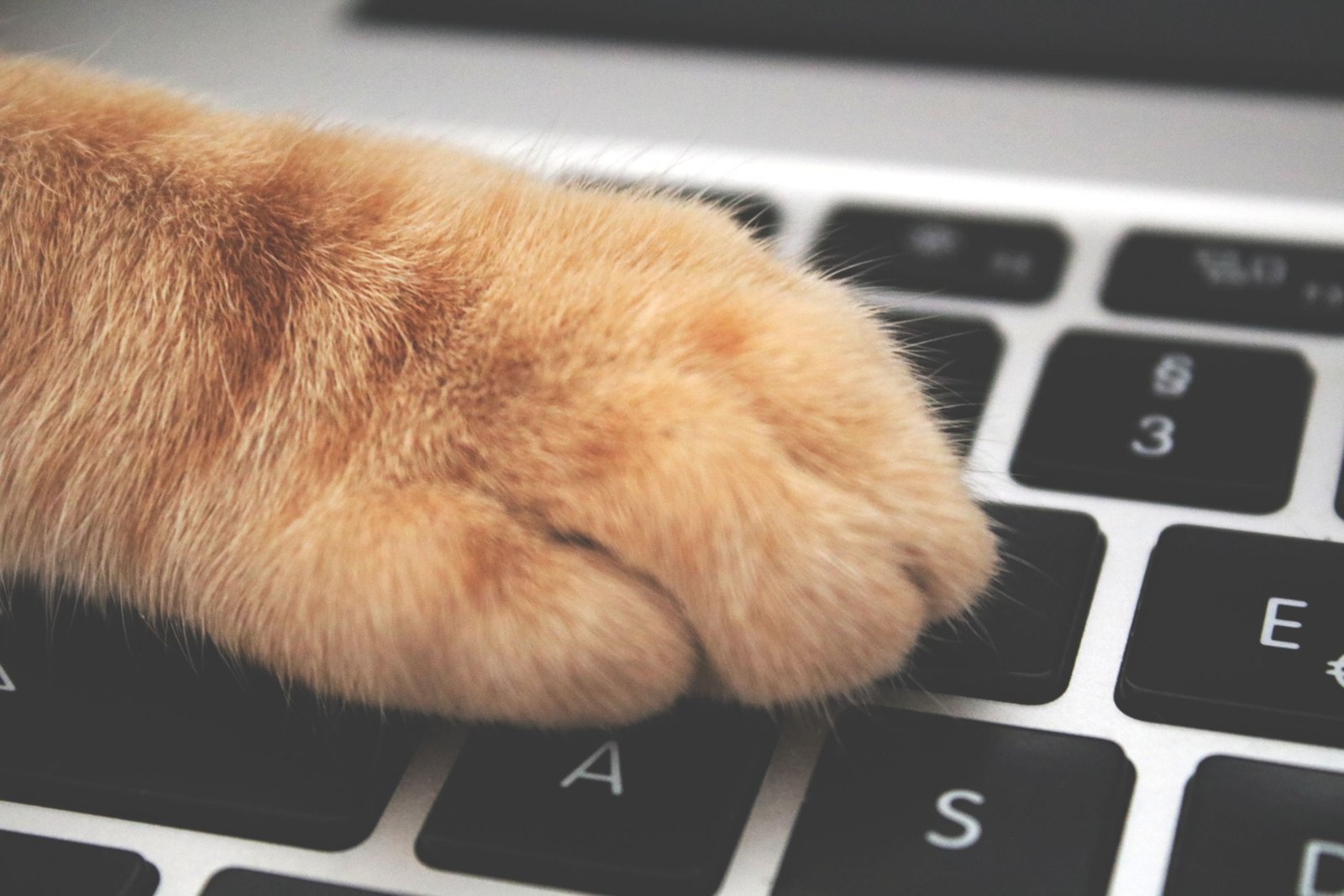
The desk wins for ordinary reasons, not because your cat is plotting against a spreadsheet. Laptops and monitors give off warmth. The surface is higher than the sofa, so it offers a view of the room and, often, of the window behind or beside you. You are there, typing and talking, which is attention even when you are trying not to give any. A water glass moves when tapped. A cable dangles. For a cat, that is a rich little landscape.
Name the draw so you can outcompete it. If the cat wants height and a view, a legal perch needs those, not only a cushion on the floor. If the cat wants to be near your hands, the perch should be beside or just behind the monitor. If the cat wants warmth, a familiar blanket on that perch can matter more than a scolding at the keyboard.
This is a different problem from the kitchen worktop, where food and crumbs do the tempting. For that surface, use how to keep a cat off kitchen counters, not a desk plan. It is also different from a cat who bats objects off a bookcase; how to stop a cat from knocking things off shelves is the guide for that habit. If the main damage is furniture, not the keyboard, how to stop a cat from scratching furniture is a separate plan.
A desk also collects things a cat can hook: loose papers, a swinging lamp cord, a mug handle. Before you change the cat’s options, do a two-minute clear. Move the glass back, cap the mug, and get loose cables off the front edge.
Give your cat a legal perch that beats the keyboard
The reliable swap is a legal perch beside or behind the monitor that is easier to use than the keys. “Easier” means closer to the view, already warmed up, and large enough for the cat to lie down without spilling onto the laptop. A narrow corner of the desk that still overlaps the keyboard is not a perch; it is a halfway point.
A window perch can do a lot of this work if the desk already sits near a window. The cat gets height, outdoor movement, and a reason to look away from your hands. If you are choosing one for a small home, see best window perches for cats. Place it so the cat can reach it without crossing the keyboard, and try it on an ordinary day first.
A compact cat tree or a sturdy shelf at desk height can play the same role when the window is on the other wall. It has to offer a stable platform at or a little above keyboard height, close enough that the cat can still be near you. Best cat trees for small apartments is a useful companion if floor space is tight. A second chair can work only if it is not the chair you need to sit in, and only if it also has a view or a blanket.
Set the legal spot up before you sit down, not after the cat is already on the keys. Put a familiar blanket or bed on it, and on the first days you can scatter a few treats there. When the cat uses the perch, a quiet word and a brief stroke, if the cat wants it, are enough. When the cat steps onto the keyboard, slide a hand under the cat, lift them to the perch, and return to typing. Do not shove, and do not spray the cat as a surprise. A startled cat may leave once and then start a game of returning, or may begin to distrust hands near the laptop.
Repeat the lift-and-place often enough that the perch becomes the default landing. If the cat immediately hops back, do not turn it into a chase. Pause, move the cat again, and if needed, close the door for the next short work block. Consistency for a week or two is more honest than a single dramatic session.
A short play session before a work block
Play is not a side hobby here. It is how you spend some of the hunting energy that otherwise lands on a moving cursor or a dangling cable. A short session before you sit down, even ten minutes, can change the first hour at the desk.
Use a wand or fishing-rod toy and move it like prey: along the floor, behind a chair leg, then up and across, with pauses. Best wand toys for indoor cats and best interactive cat toys can help you pick tools that fit a small room. Follow the pattern in a daily play routine for an indoor cat if you want a repeatable weekday shape: a burst of the hunt, then a chance to catch, then a small snack, then rest. A session that stops mid-chase, with you sitting down while the cat is still amped, often sends the cat straight to the trackpad.
A few reliable toys, rotated so they do not go stale, plus indoor cat enrichment ideas for the rest of the day, will do more than a setup you cannot repeat on a busy weekday. If play turns into ankle ambushes in the hallway, how to stop a cat from attacking ankles and feet is the guide for that habit. If the cat bites your hand during the session, stop the game and use how to stop a cat from biting during play rather than improvising at the desk.
Keep the play in a space the cat can leave. A closed-door wrestling match right before a call can leave both of you wound up. Aim to finish a few minutes before you open the laptop, so the cat can drink, use the litter box, and settle on the perch.
Cord management and a small-apartment room plan
Cables dangle, warm slightly, and twitch when you move the laptop. Tucking, covering, and routing cords behind the desk or through a sleeve makes the keyboard edge less interesting and lowers the chance of a chewed charger. Whole-home cable safety, including chargers in other rooms, belongs in how to stop a cat from chewing cords and chargers. Do not use essential oils, citrus sprays, or “bitter” home recipes as training, on the desk or on the cords. Many of those mixtures are a poor match for cats, and a surprise taste or smell is not a perch.
In a studio or a one-bedroom, you also need a room plan, not only a perch. A closed-door plan is honest when you have a short, important call and a cat who will not stay off the keys. Set up the litter box, water, a bed, and a toy in the other space first, then close the door for the meeting, then invite the cat back to the legal perch. A closed door is a time-limited tool. Used all day, it can add frustration, especially for a cat who wants you in sight.
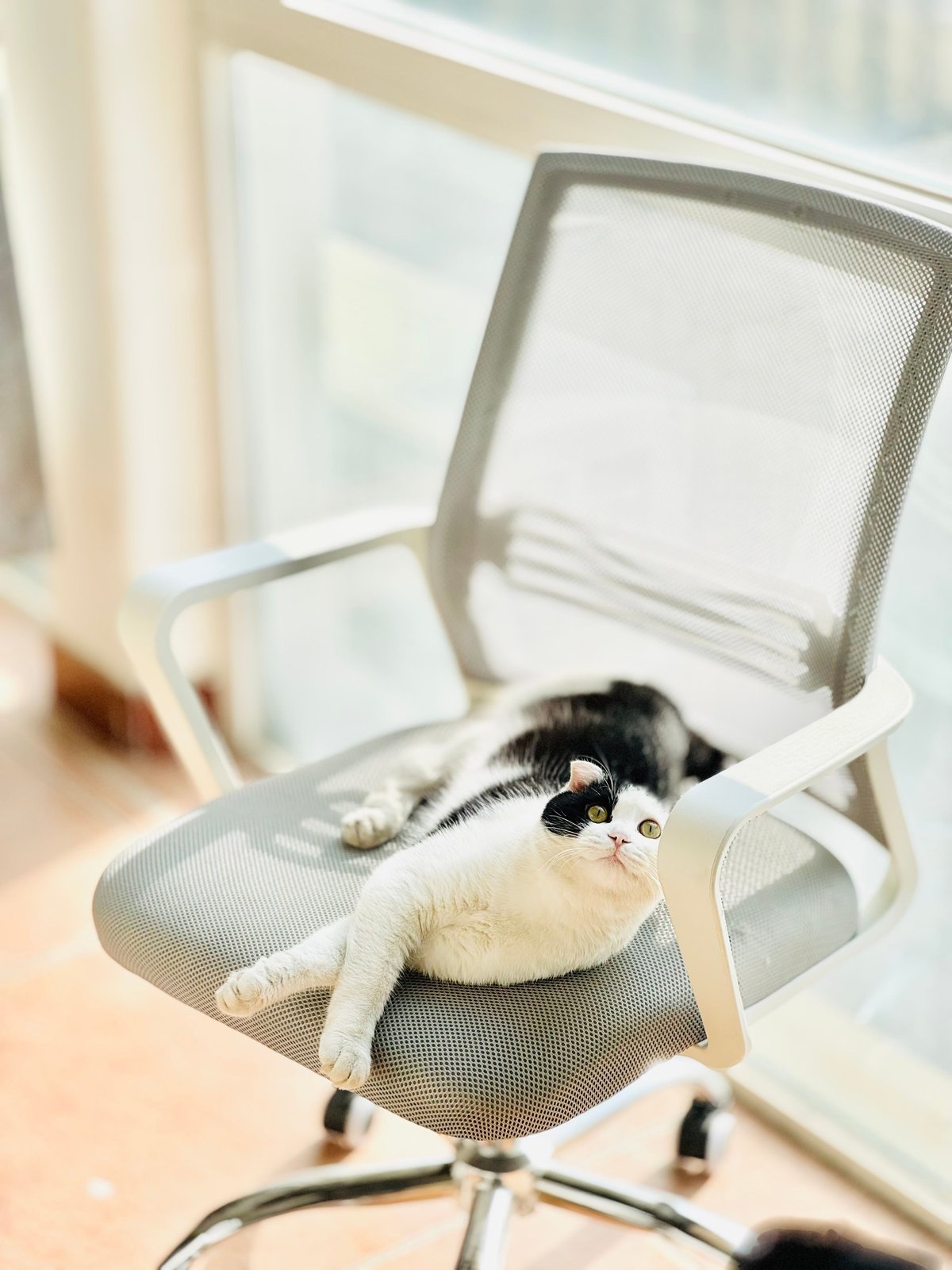
A shared-room plan is the weekday default for many small apartments. The legal perch stays in the work area, play happens before you sit, cords stay tucked, and the cat is allowed in the room as long as the keyboard stays clear. If you have a spare chair by a window, it can be a second legal seat, but it should not be the only chair you need for work. Give the cat an equally good alternative rather than a long contest over the seat you have to use.
You can mix the two: shared-room for writing and email, closed-door for a client call, then back to the shared plan. What does not work well is switching rules at random, or closing the door only after you are already late and annoyed. The cat learns the pattern you actually repeat.
In the middle of a call, skip the chase
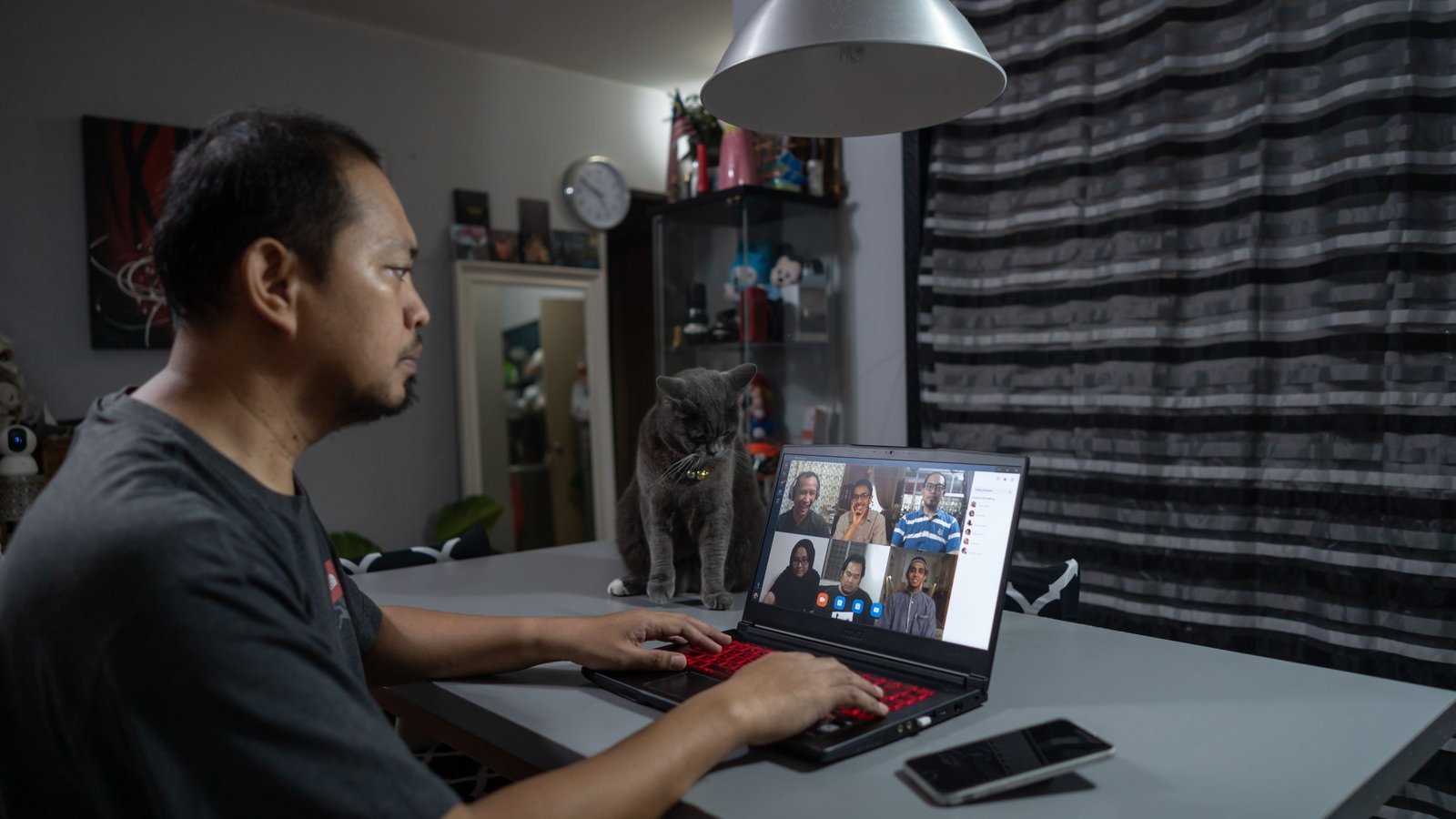
When a cat steps onto the keys or into your lap mid-call, the useful move is small and quiet. Mute if you can, slide a hand under the cat, place them on the legal perch or the window seat, and go back to the conversation. If you have no legal spot within reach, you will feel stuck, which is why the perch has to exist before the meeting starts.
Do not shove the cat off the table. Do not spray the cat, clap in their face, or jump up and give chase. A scare may clear the desk for a moment and then teach the cat that the desk is where exciting things happen. A chase turns a work block into play, which is the opposite of what you want in a meeting.
If the cat returns twice, it is fair to pause, close the door, and finish the call with the cat in the prepared other space. That is management for one block, followed by another play-and-perch cycle later in the day. If a meeting is too important to interrupt, set the closed-door plan before you join, not after the cat is already on camera.
A lap visit during a call is often a bid for warmth and contact. If the cat will settle beside the laptop rather than on the keys, you can allow that for a minute and then place the cat on the perch. If the cat kneads the keyboard or blocks the camera, lift and place sooner. You do not owe a full cuddle in the middle of a meeting.
The weekday pattern is simple on purpose. Make the desk a little duller, make a legal perch warmer and easier, spend some hunting energy before you sit, manage cords, and choose a closed door or a shared room on purpose. Give the plan more than three days, and get veterinary advice if your cat’s need to be on you all day is new, restless, or paired with other changes. That is a more honest path than a miracle “desk training” claim.
FAQ
Should I close the door for every meeting?
Only when you need an uninterrupted block and you have already set up litter, water, and a bed in the other space. A closed door is a time-limited tool, not an all-day rule in a small apartment. For ordinary writing and email, a legal perch in the same room is usually the more sustainable plan.
Is a second chair enough of a perch?
It can be, if it is not the chair you have to sit in and if it offers height, a little warmth, and a view. If the cat’s favorite seat is your only office chair, add a window perch, a compact cat tree, or a sturdy platform beside or behind the monitor. A halfway corner of the desk that still overlaps the keyboard is not a legal perch.
Can I use a citrus spray or a bitter home recipe on the desk?
No. Do not use essential oils, citrus sprays, or “bitter” home recipes as training, on the desk or on cords. A surprise smell or taste is not a perch, and many of those mixtures are a poor match for cats. Tucking cables and offering a better spot will do more than a homemade deterrent.
What if my cat suddenly will not leave me alone all day?
Treat a sudden change as a health or environment question, not a sign that you need a stricter desk rule. Contact a veterinarian if your cat is suddenly clingy, restless, or vocal all day, especially if appetite, litter habits, or hiding have also changed. You can still use a perch and a short play session, but do not assume this is only a work-from-home habit.
Will this be solved in three days?
No. There is no honest three-day desk-training promise. Many cats learn the new landing spot over a week or two of consistent lift-and-place, a pre-work play session, and a perch that is truly easier than the keys. Some need a closed-door plan for calls for longer. If the habit is getting worse, or the cat seems unwell, get veterinary advice rather than adding harsher methods.